A Year On The Allotment
James Aufenast
Starting October 2025. 12 Visits. Four seasons.
James didn’t need convincing. He was all in from the start.
Here is what unfolded, through his hands, and through my lens.
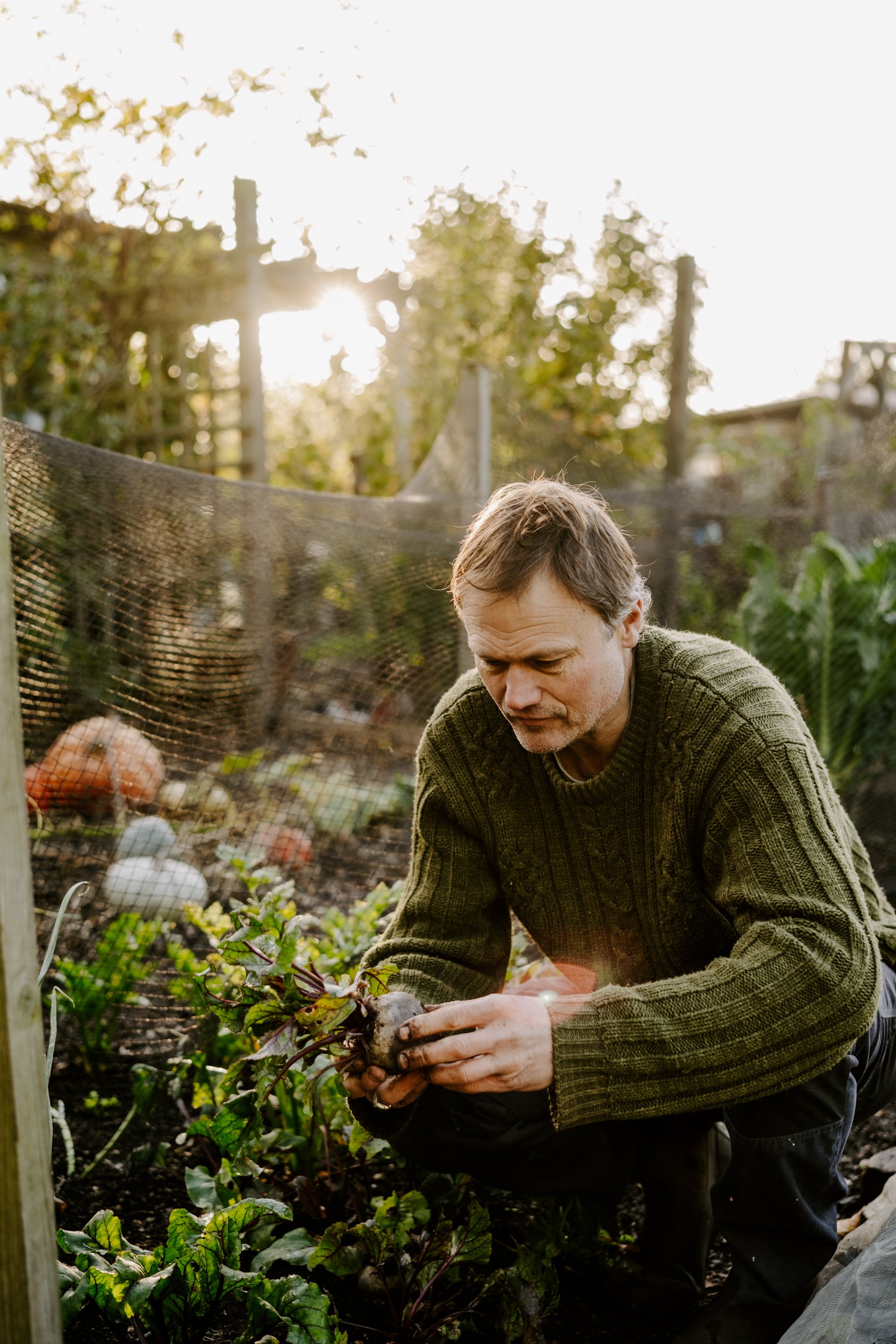
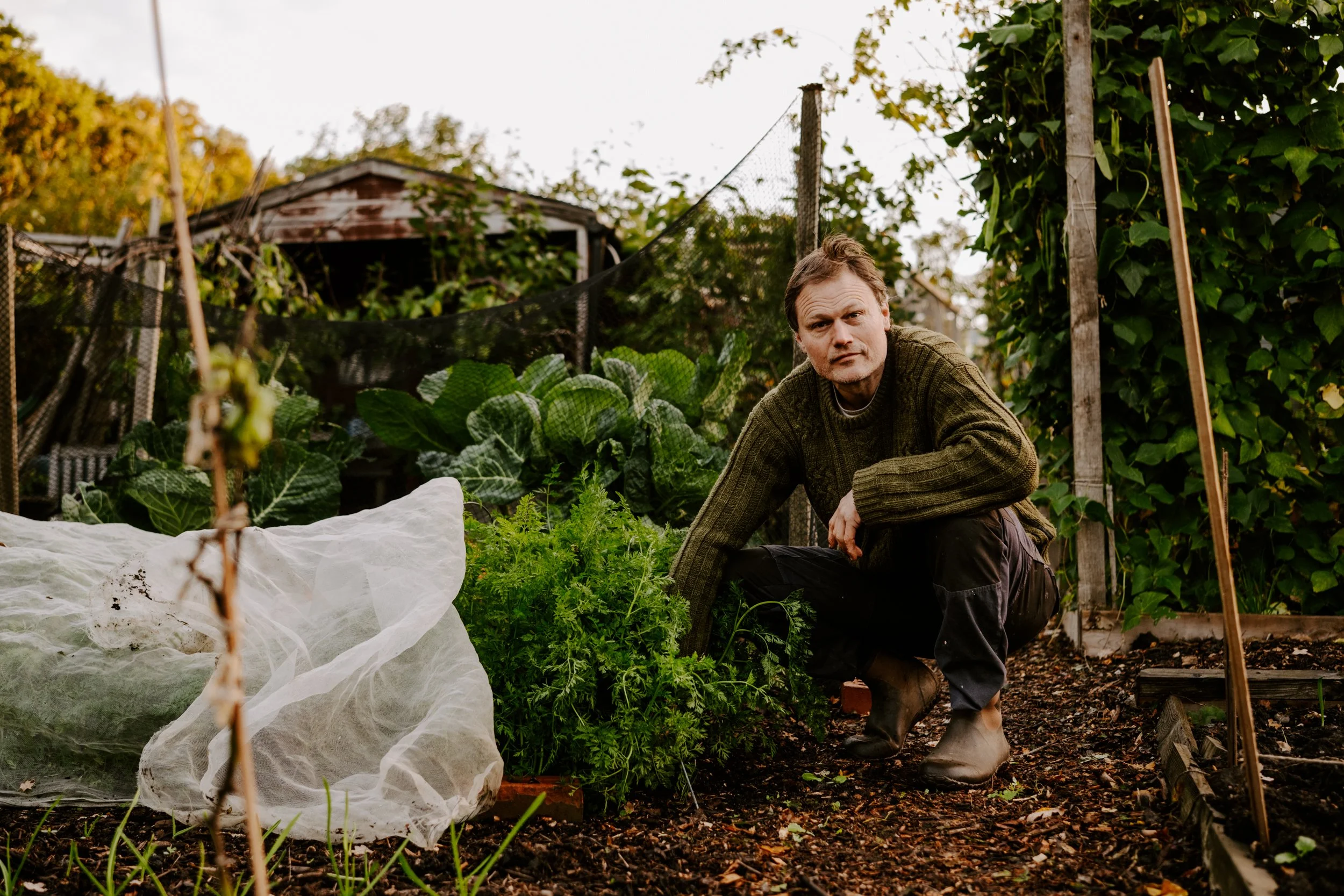

We stand at the edge of the plot, boots sinking slightly into damp ground, as the conversation naturally glides towards the why. Why an allotment. Why this space. Why now.
He grew up hearing about his grandfather. A vicar in Leicestershire. The old vicarage - Church Langton. A beautiful old house with an orchard behind it. Wide lawns. Growing space.
His mum would tell stories about it all the time. About her father, the garden, the fruit trees. “I want that,” he used to say. “I want that. Said like a little kid”
And now here we are. Years later.
Same urge. Different soil.
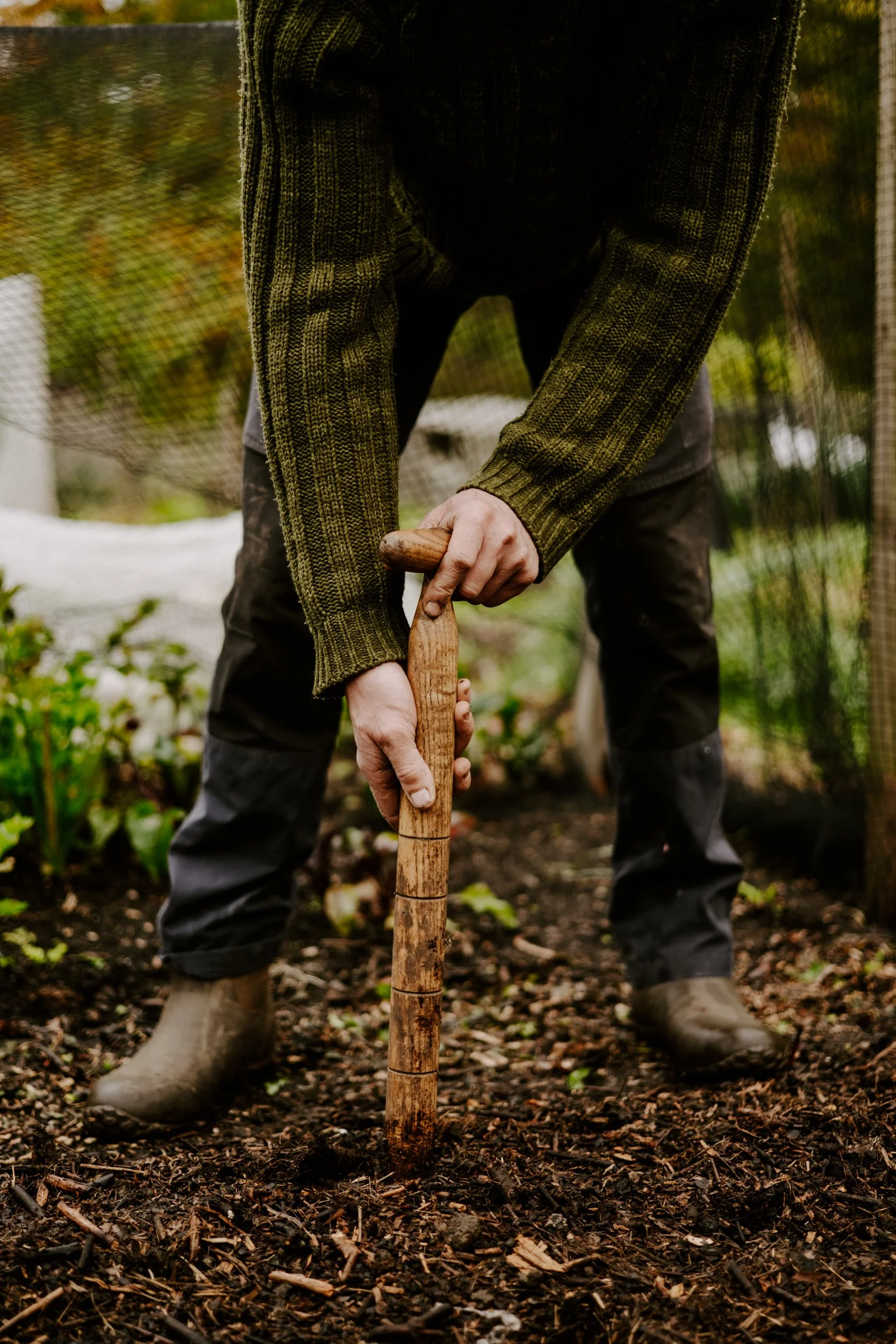
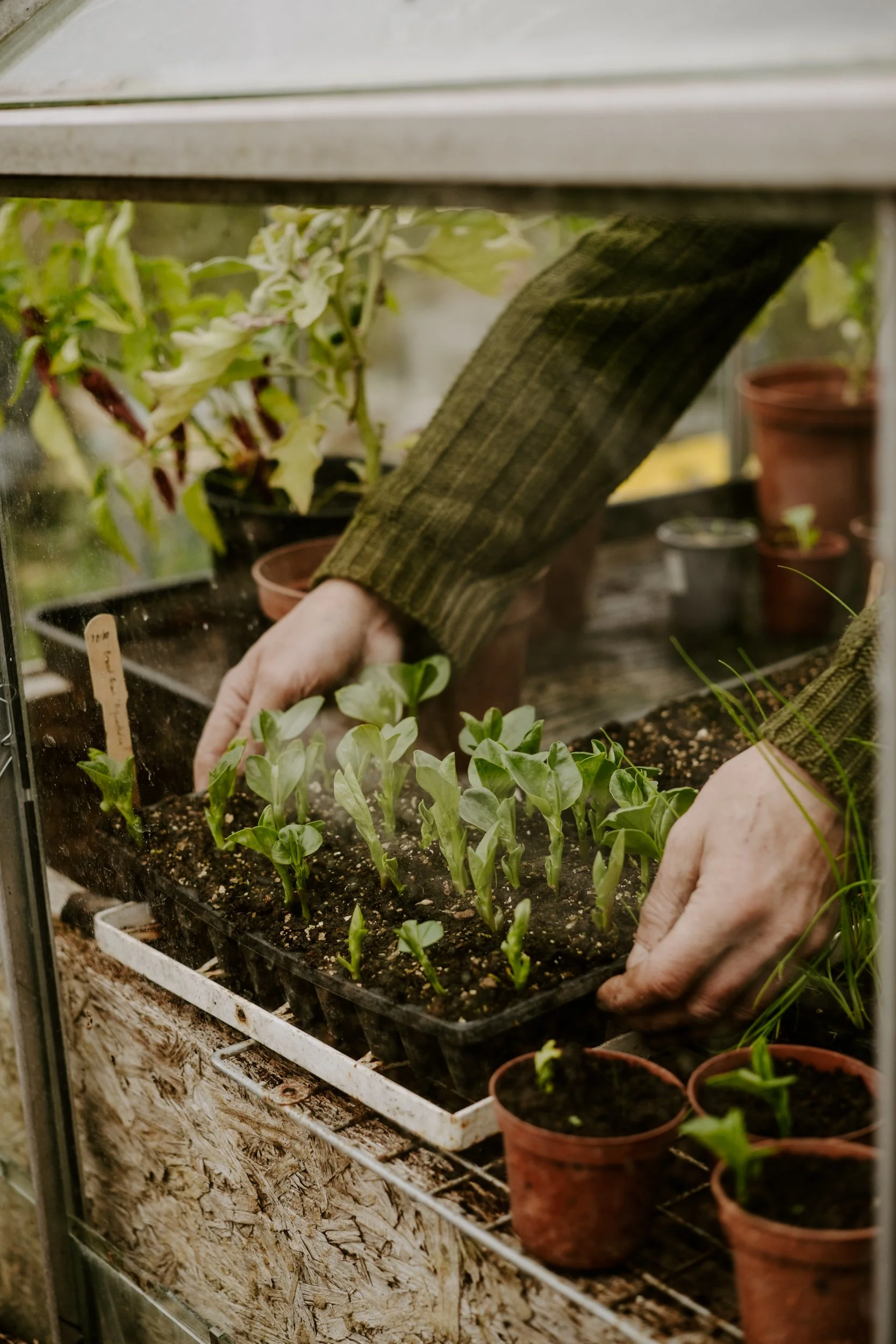
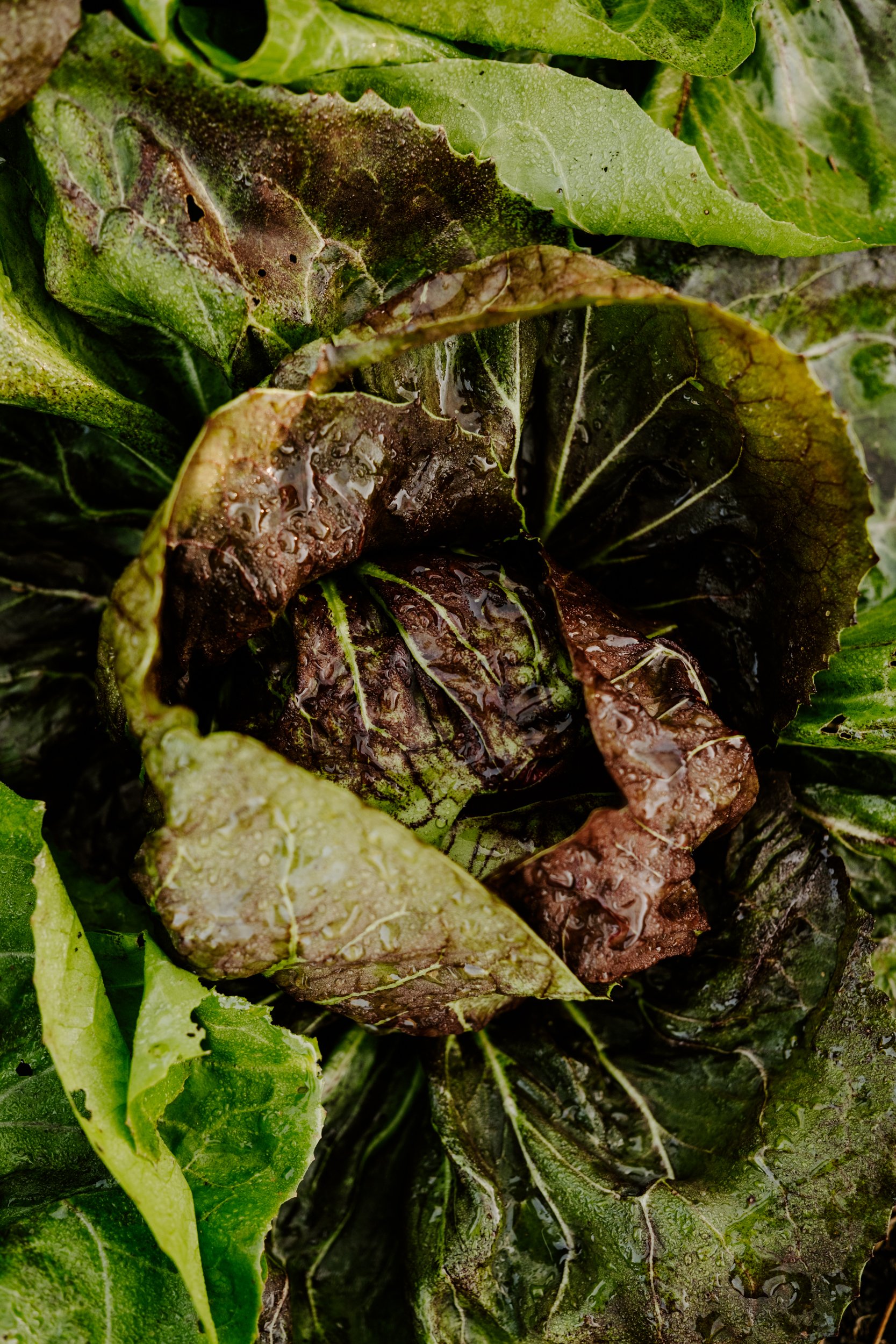
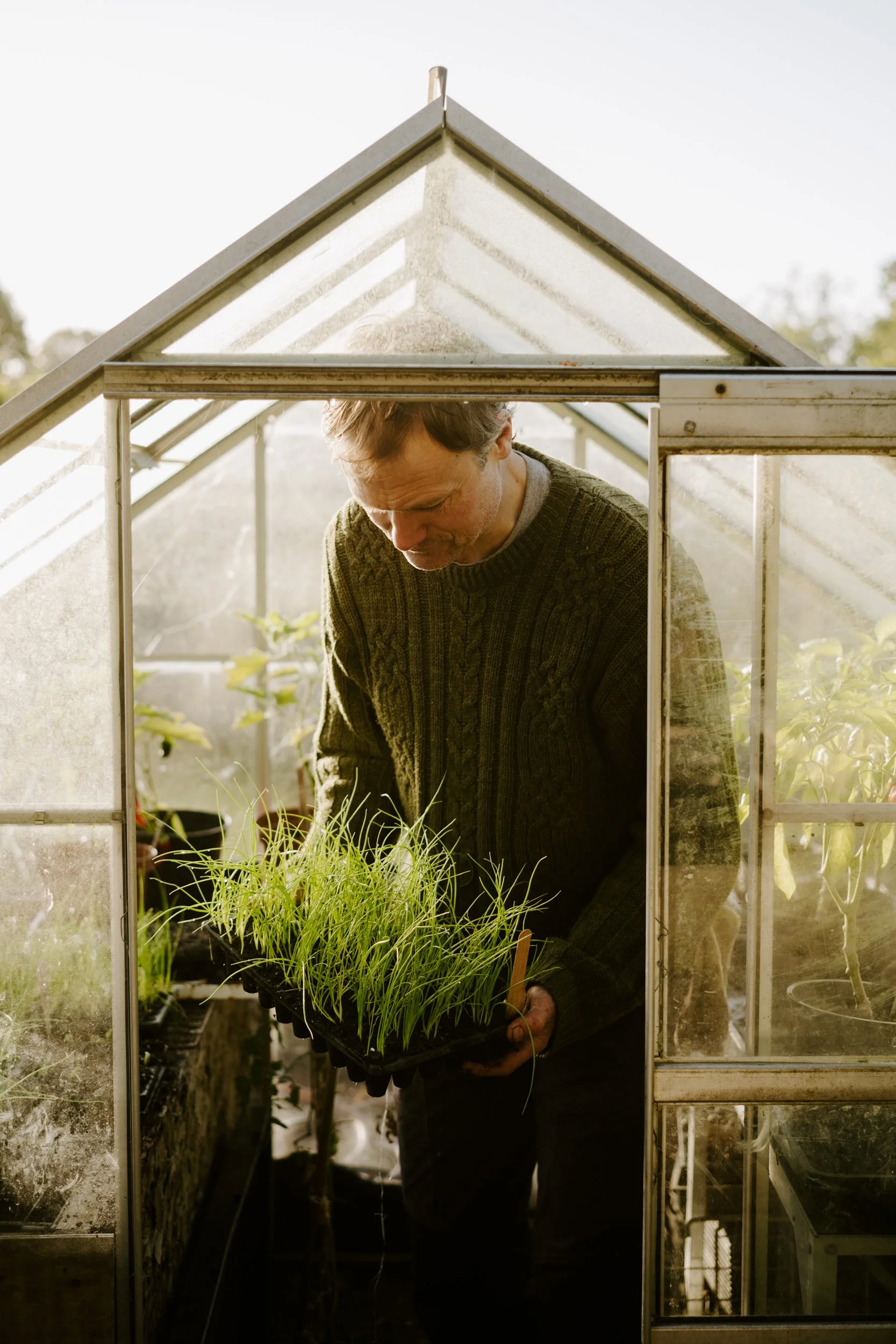
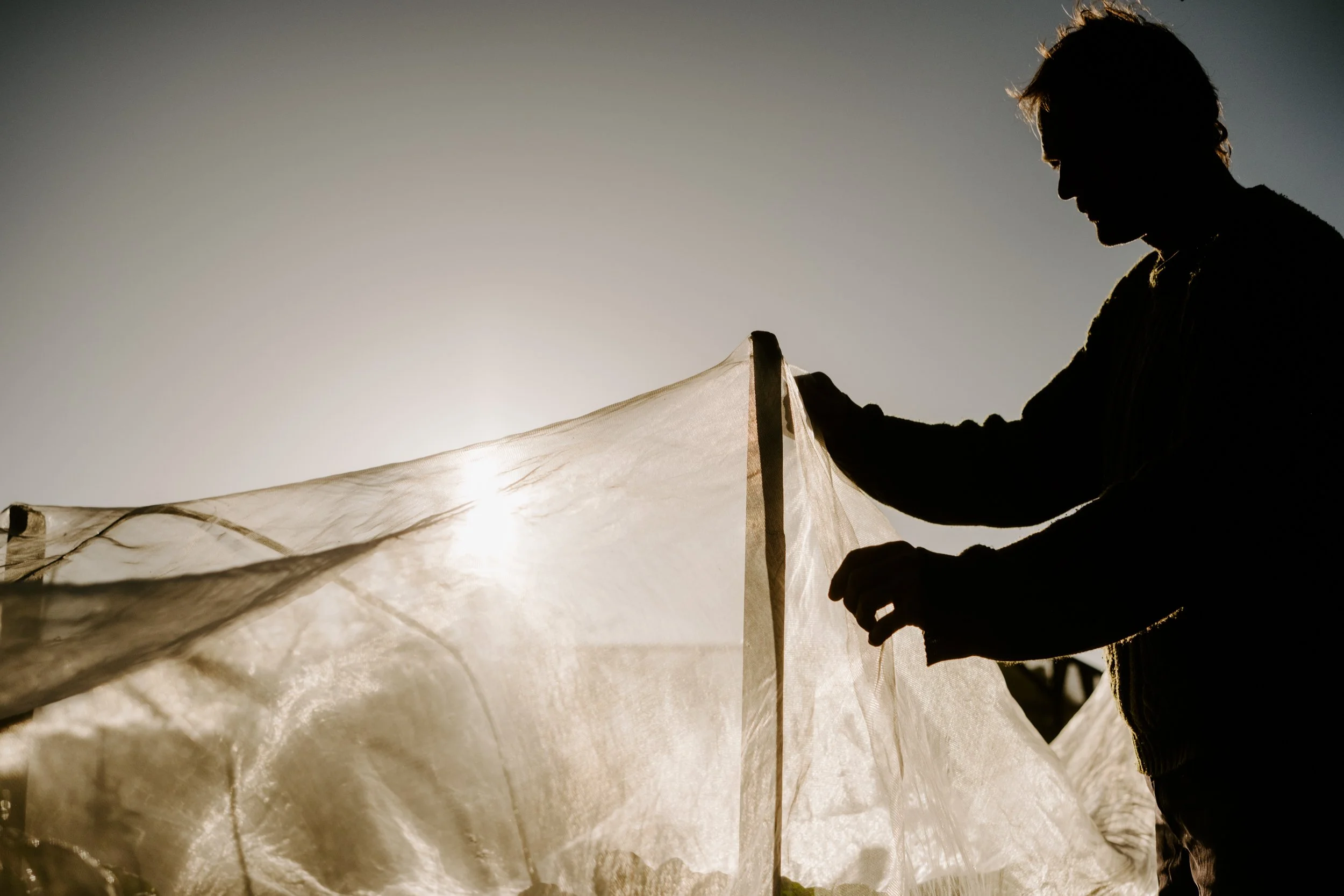
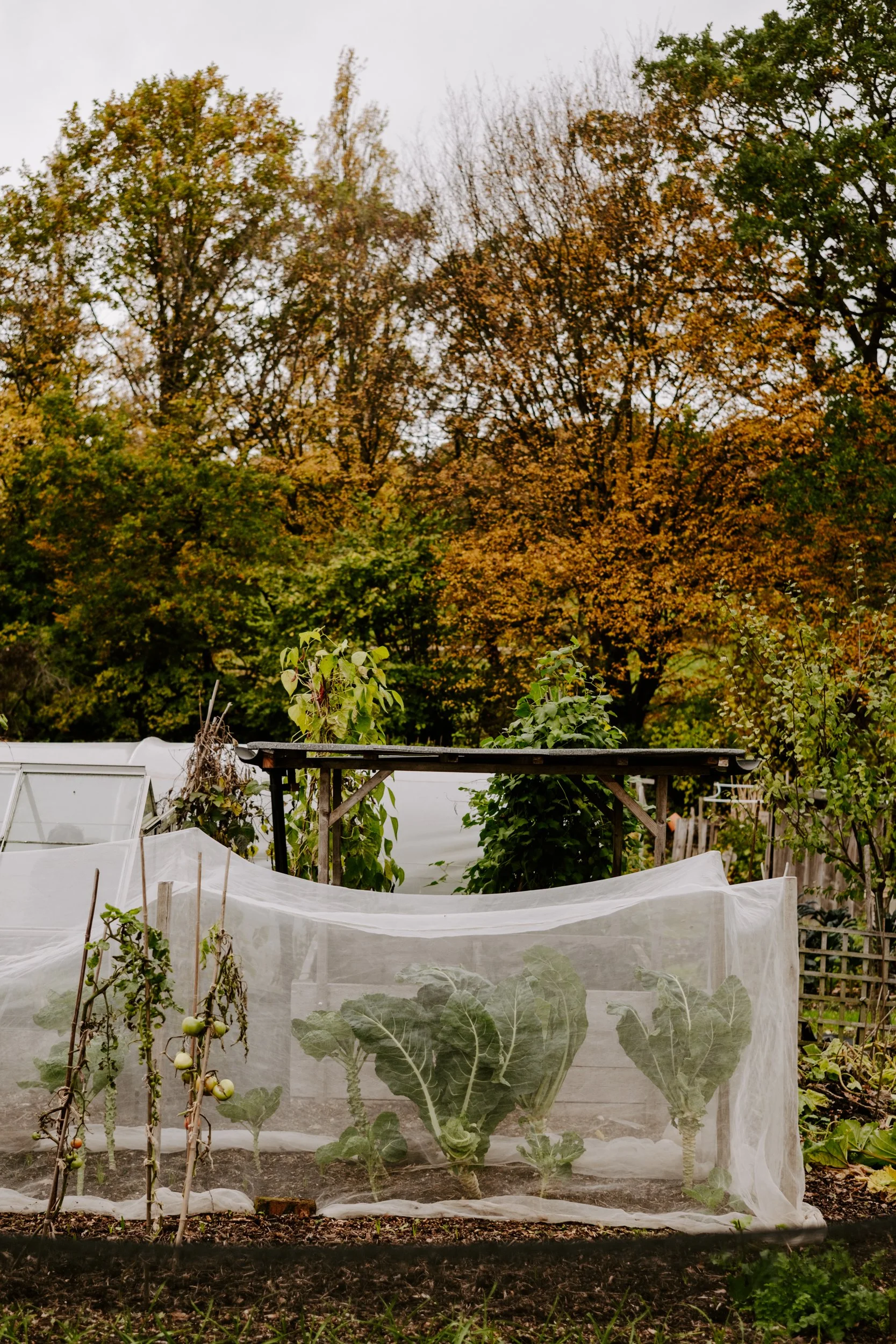
He’s always cared about food - real food, clean food. The kind you follow from seed to plate. So when they moved here, and there was space behind the house, the decision was easy. Apply for an allotment. Start.
He tells me he’d had one before, before Chloe was born. Had to give it up then. Life moved on. But now he’s back. Close to home. The timing right again.
And now here, on this plot, memory and desire merge. The allotment becomes more than soil and compost. It’s a way to live deliberately. To slow down. To witness growth, decay, and renewal - all in one small, crowded, perfect space.
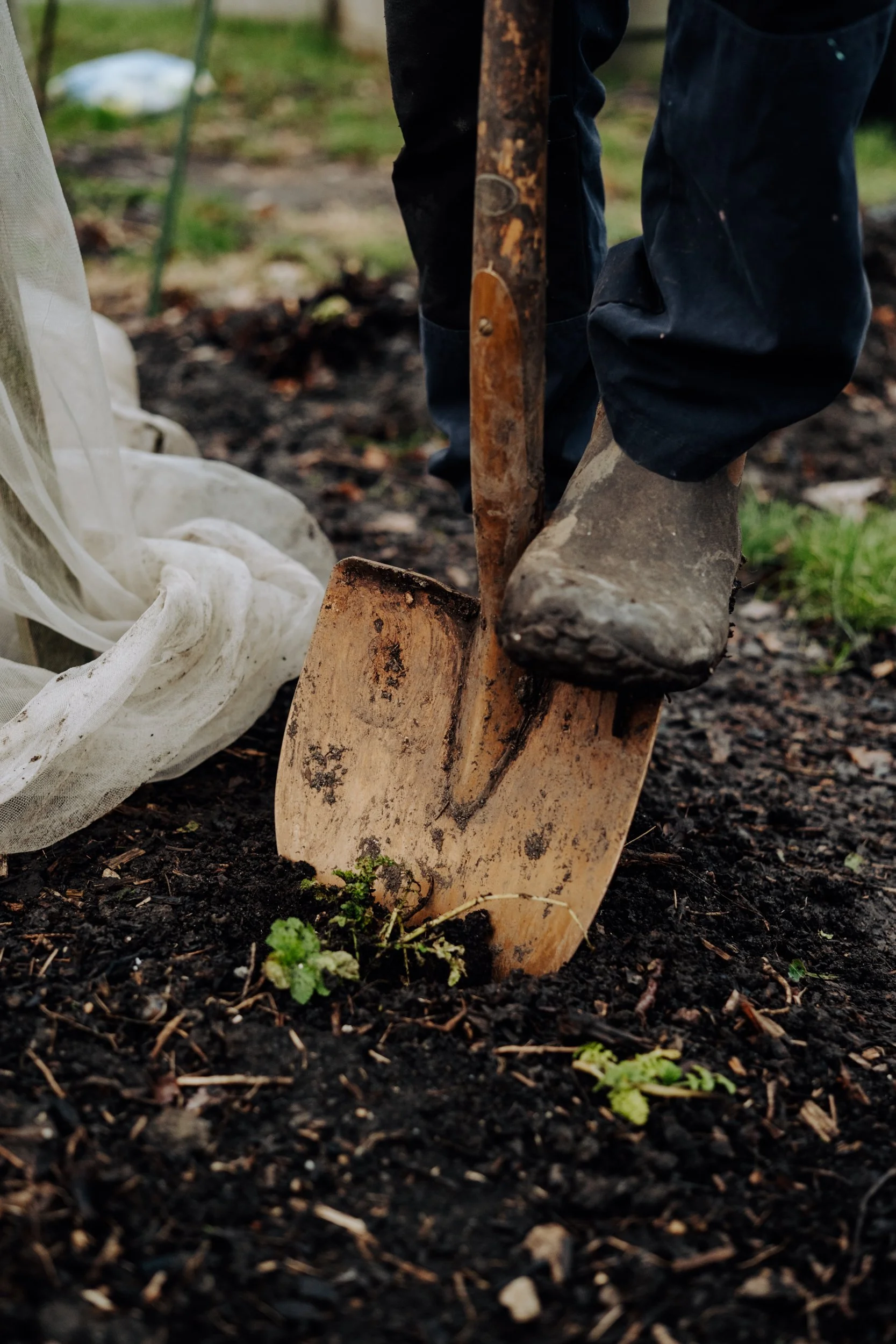
He follows the no-dig method - Charles Dowding’s way. Has taken his courses, watched his videos, even worked with him. He’s immersed himself in the techniques, learned to understand the process.
Most of what Dowding teaches isn’t just clever - it actually makes things easier, quicker, more effective.
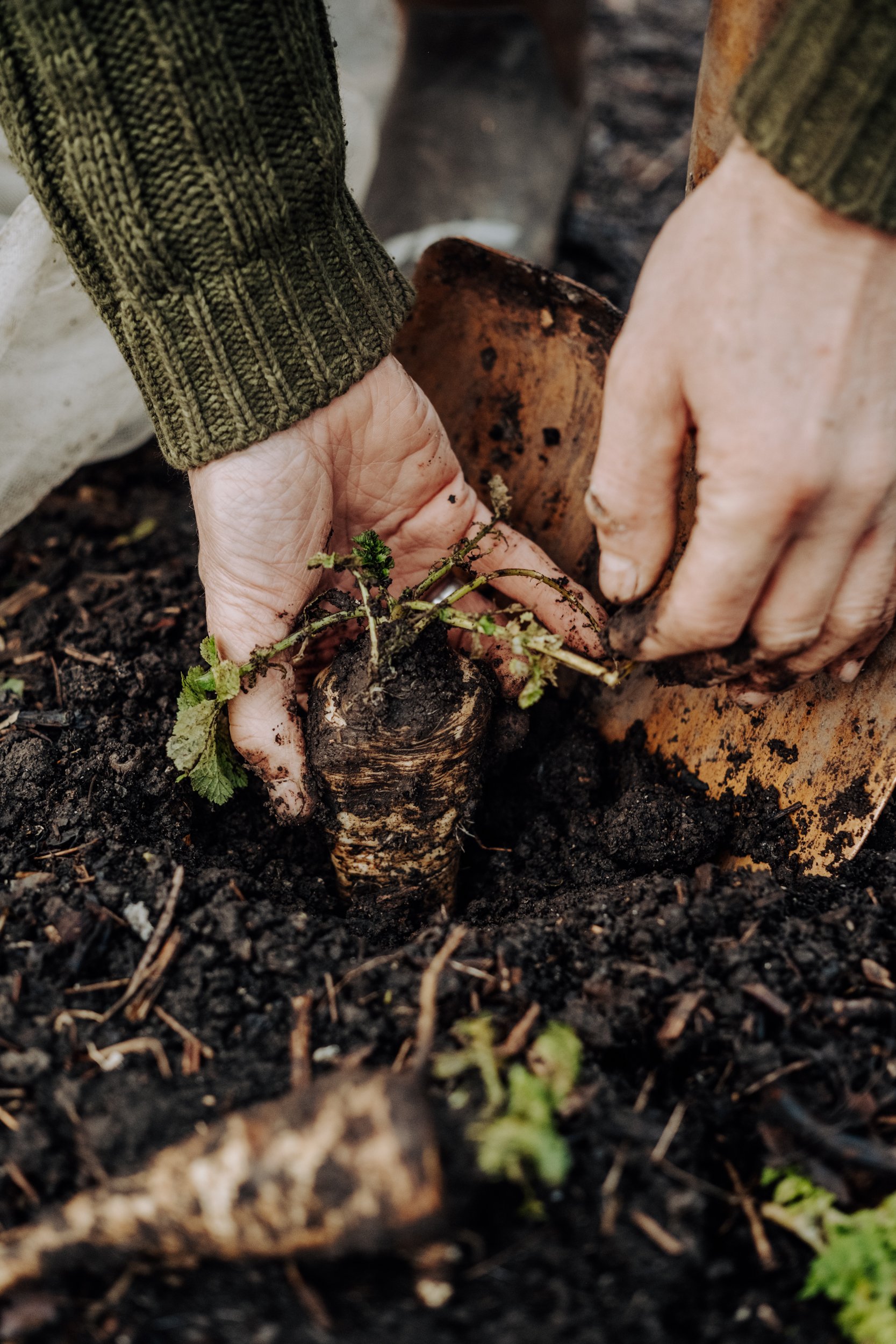
He points at the patch where the pumpkins once sprawled. “Most people pull the roots out,” he says. “I just cut them at the base. Let them rot back in. Feed the soil.”
The key, he says, is to disturb it as little as possible. Soil is alive - layers of bacteria, each type in its own place, doing its work. When you dig, you disrupt all of that, break the balance the soil has built for itself.
“There are these fungal networks,” he adds, crouching to touch the surface. “Tiny threads running through the soil. They help the plants grow - share nutrients, keep everything connected.”
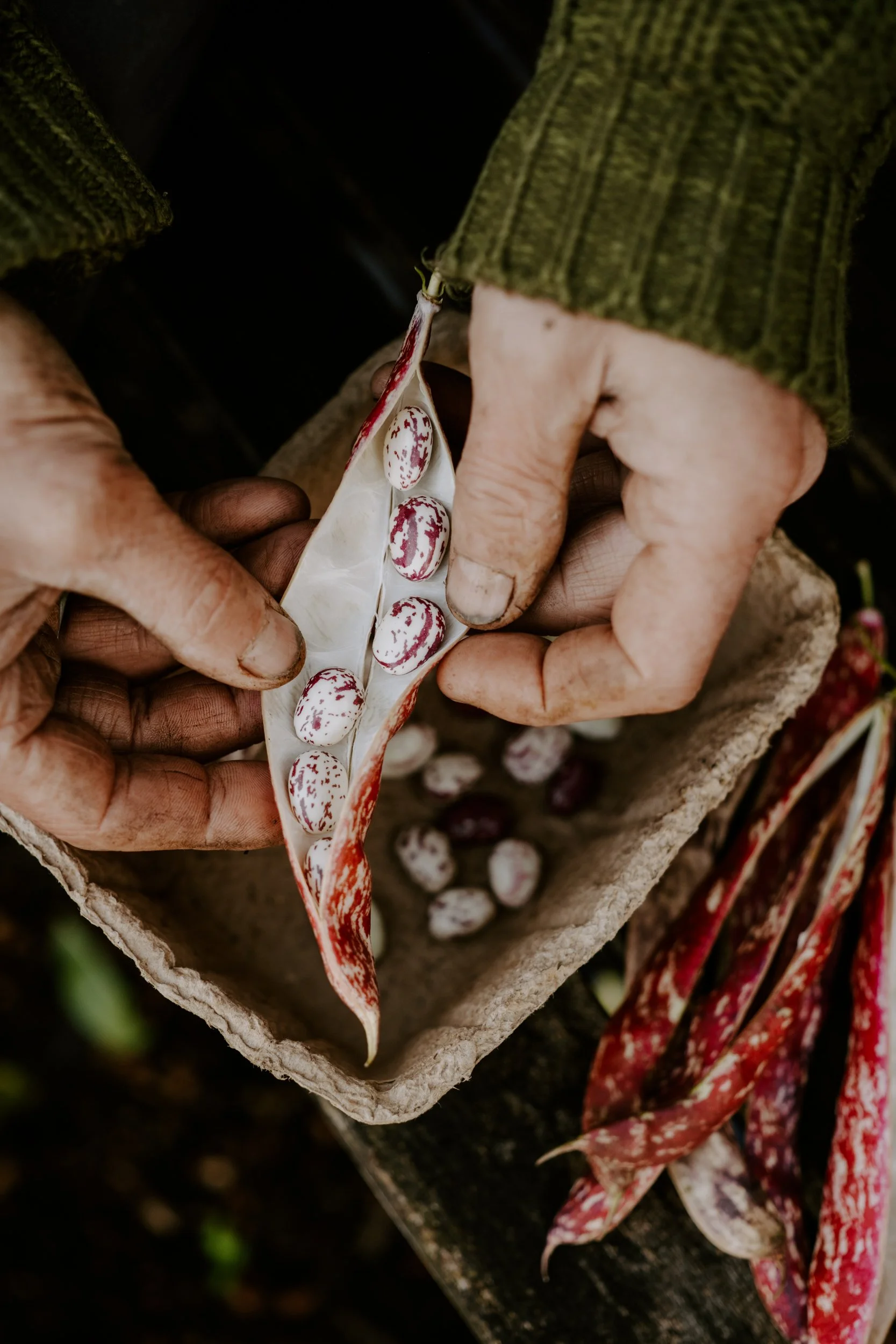

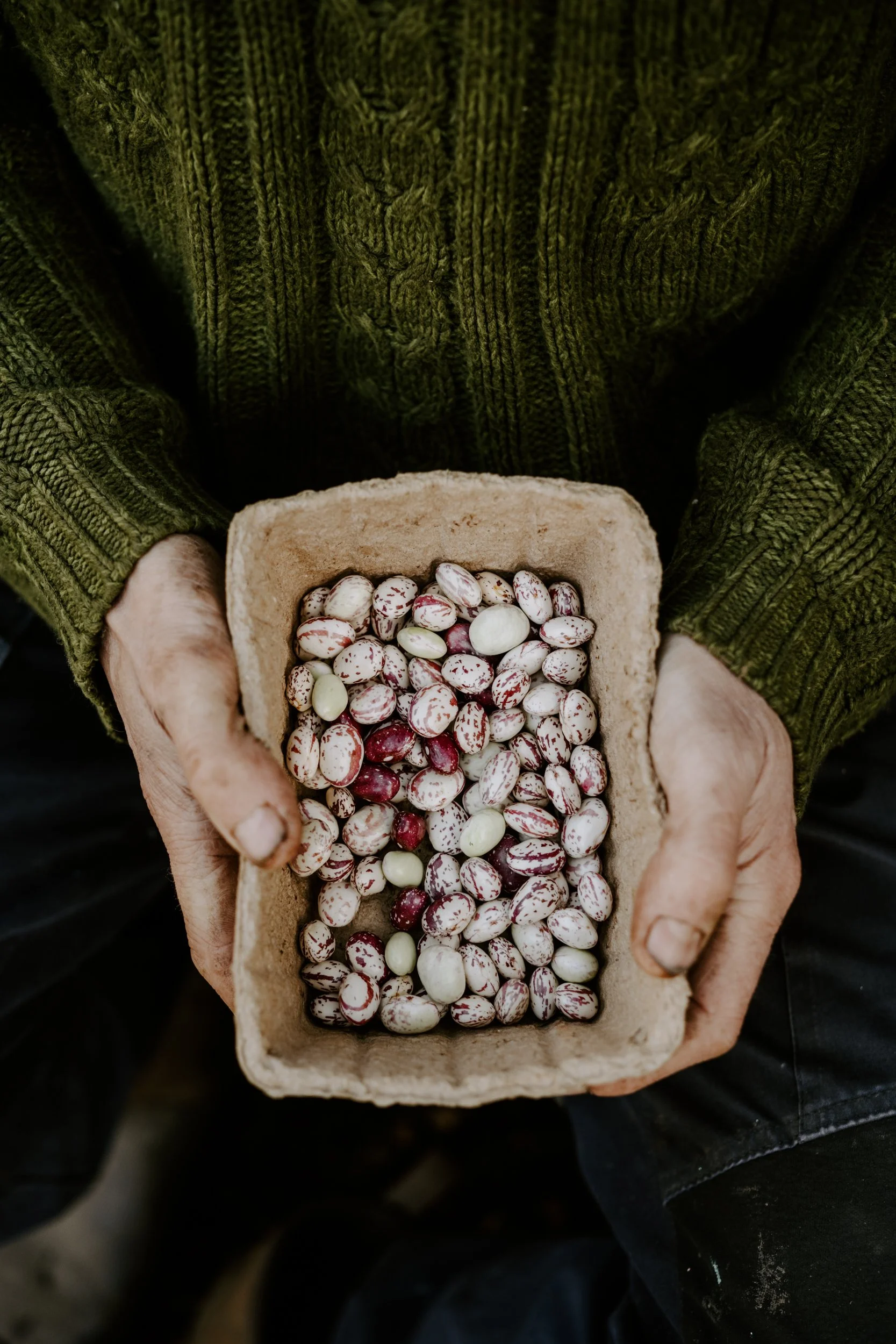
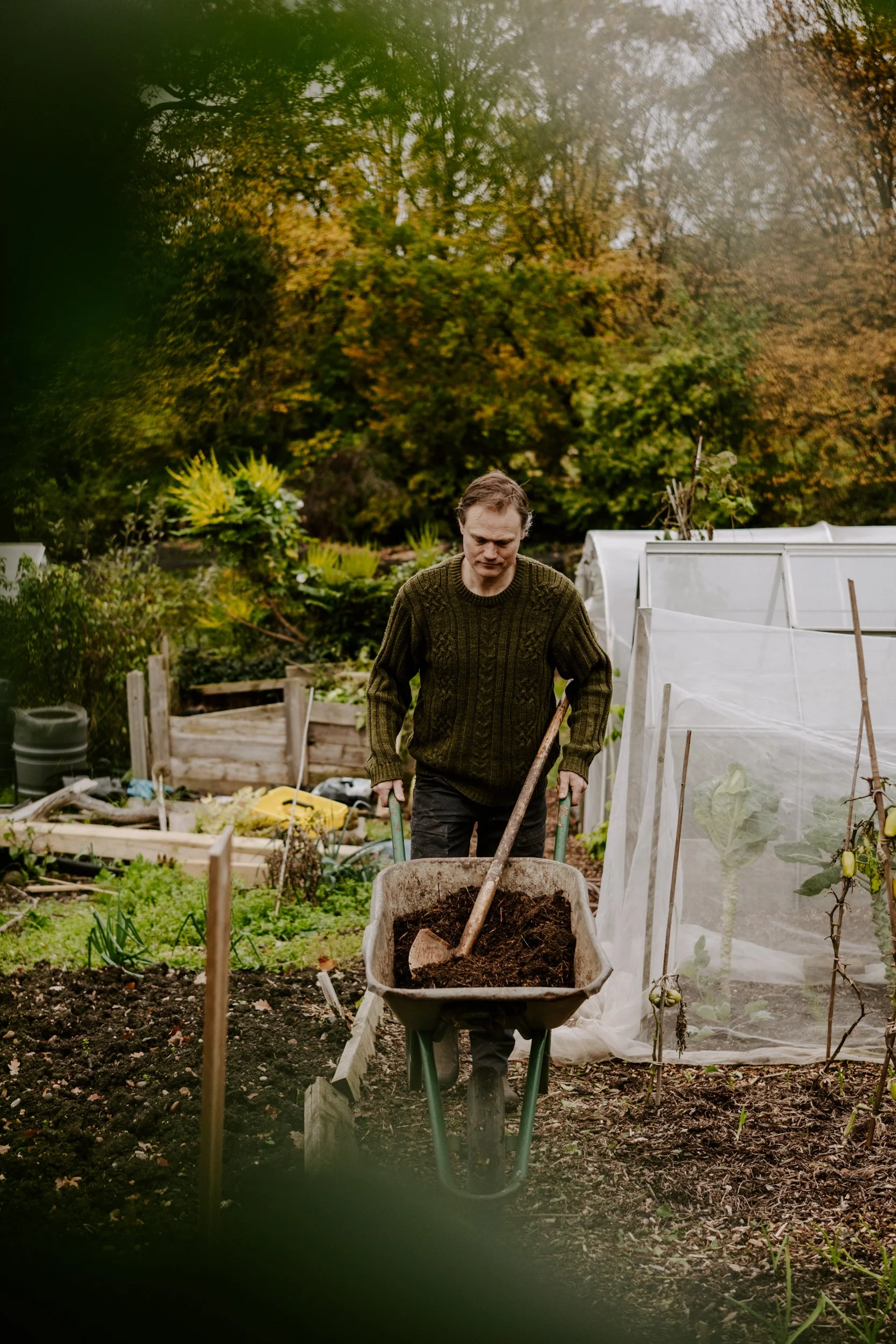
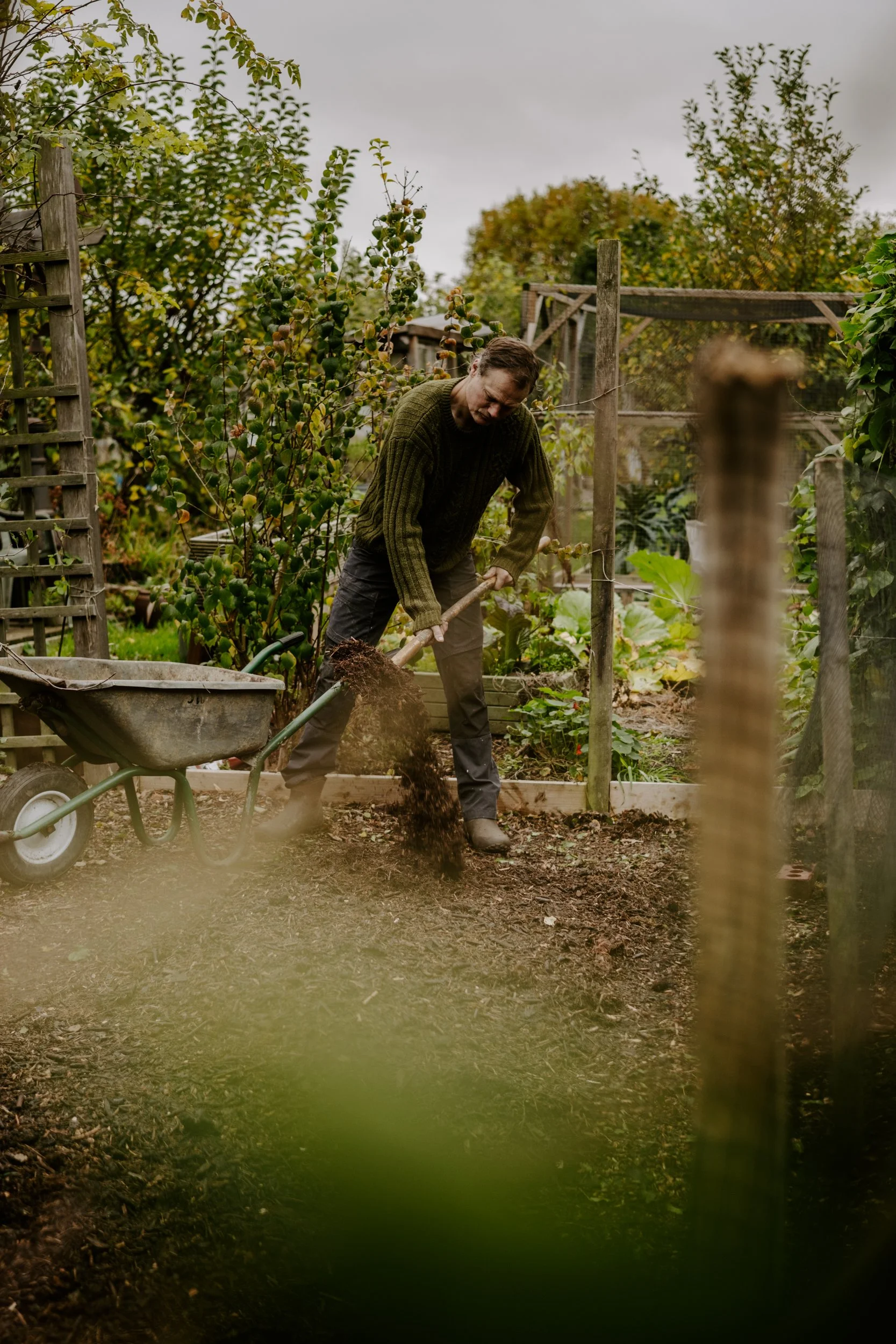
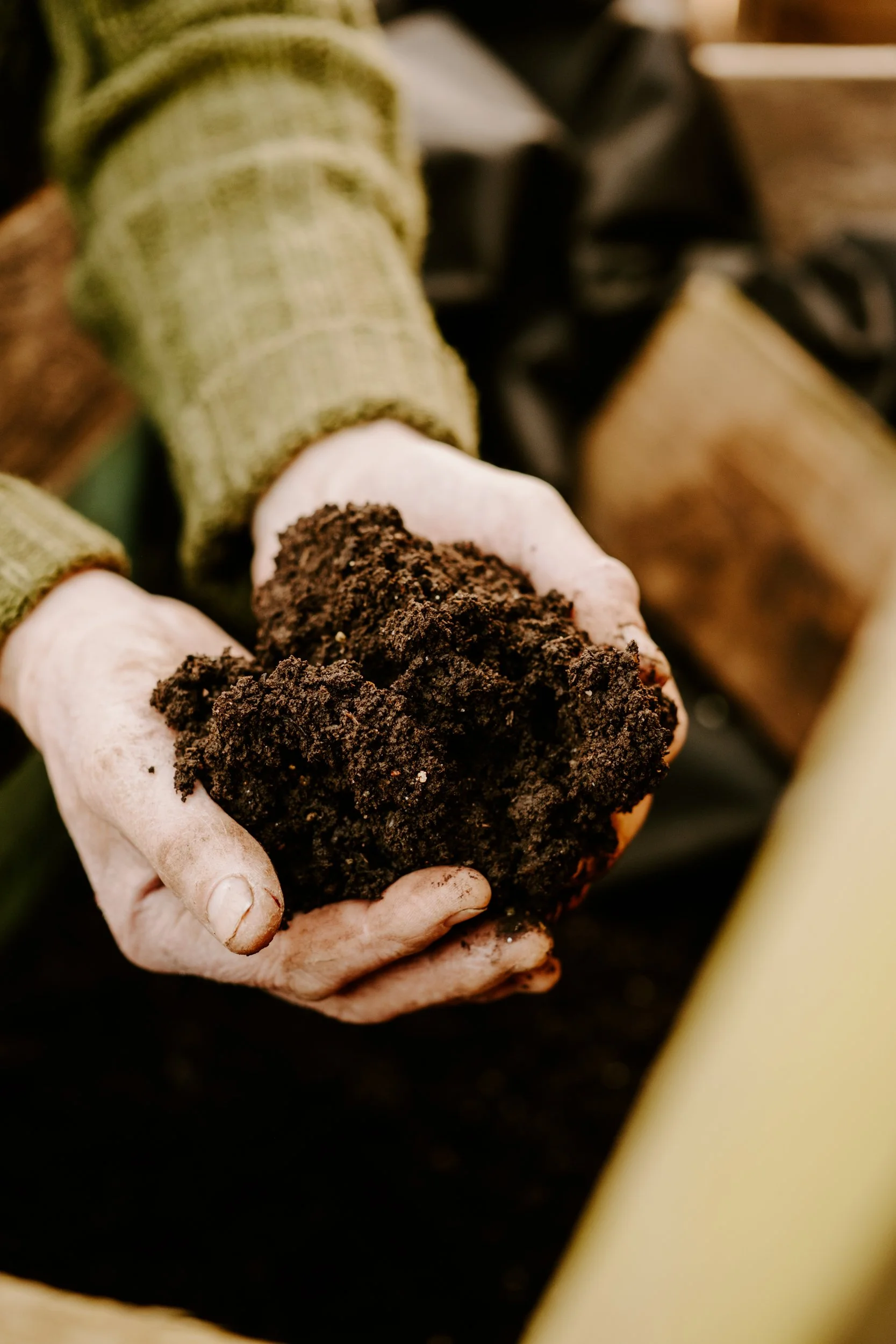
There’s compost everywhere - dark, rich, made from leaves and cardboard and grass clippings. He shows me a layer he’s just spread - three inches deep, soft and alive. “Just leave it on top. Let the worms do the work.”
It’s all about balance.
Green and brown.
Nitrogen and carbon.
“Brassicas especially, makes the most amazing compost. I strip the lower leaves. Stops the slugs hiding.” Double benefit.
Years of learning, of practice. It shows.
It’s all rhythm, really. Growth and rest.
Before I leave, he spreads another layer of compost - slow and deliberate. The final act before winter sets in.
“Feed the ground,” he says quietly. “And the ground feeds you.”




Winter
I met James at first light.
It was meant to be foggy. It was, at first. Then the light found a way through and the fog thinned, almost gone by the time we reached the allotment.
Back again. To catch up. To see what, if anything, was happening.
James broke the quiet.
“Not to disappoint, but there’s nothing happening on an allotment in winter.”
A fine way to start a shoot…. He was right. Mostly.
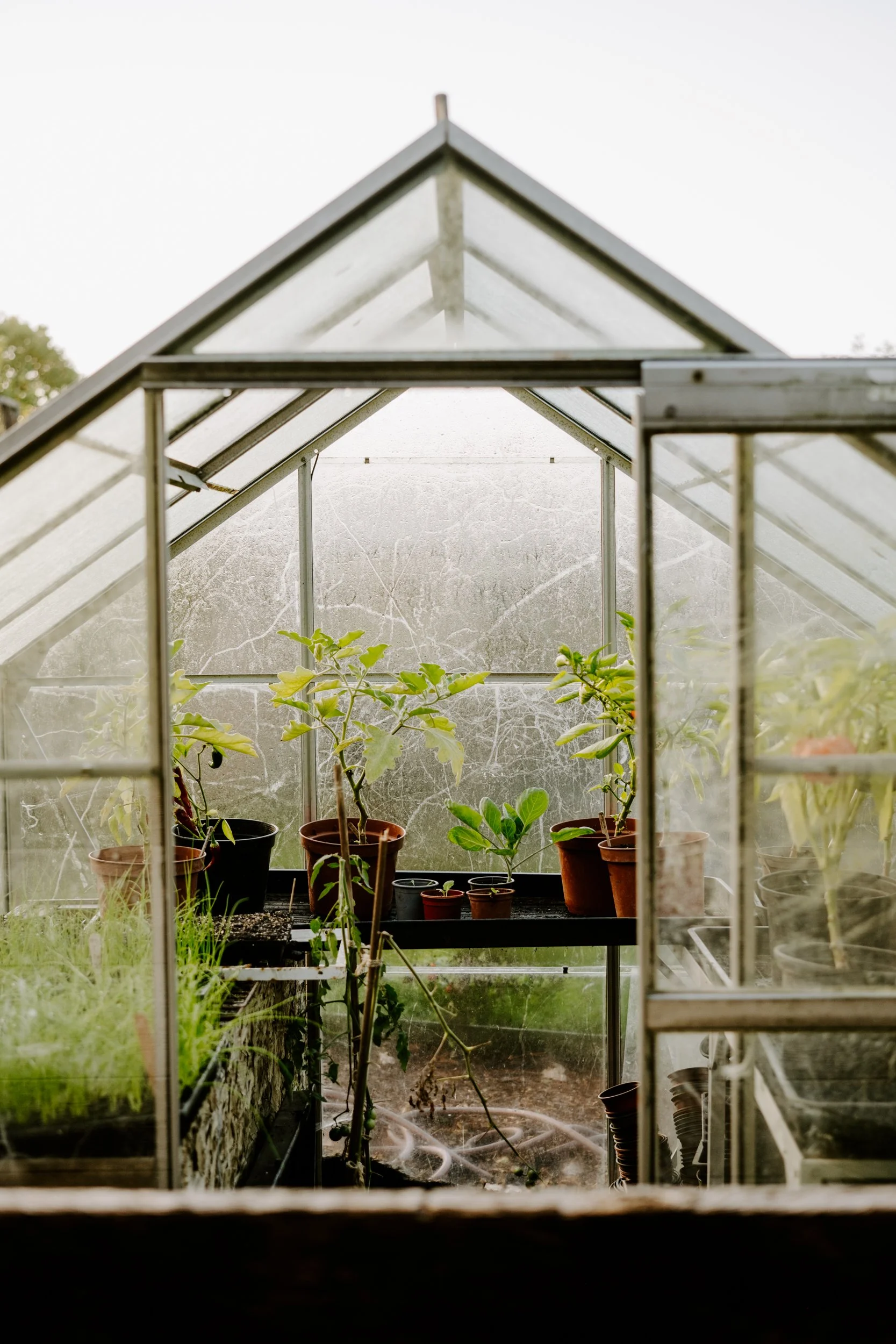
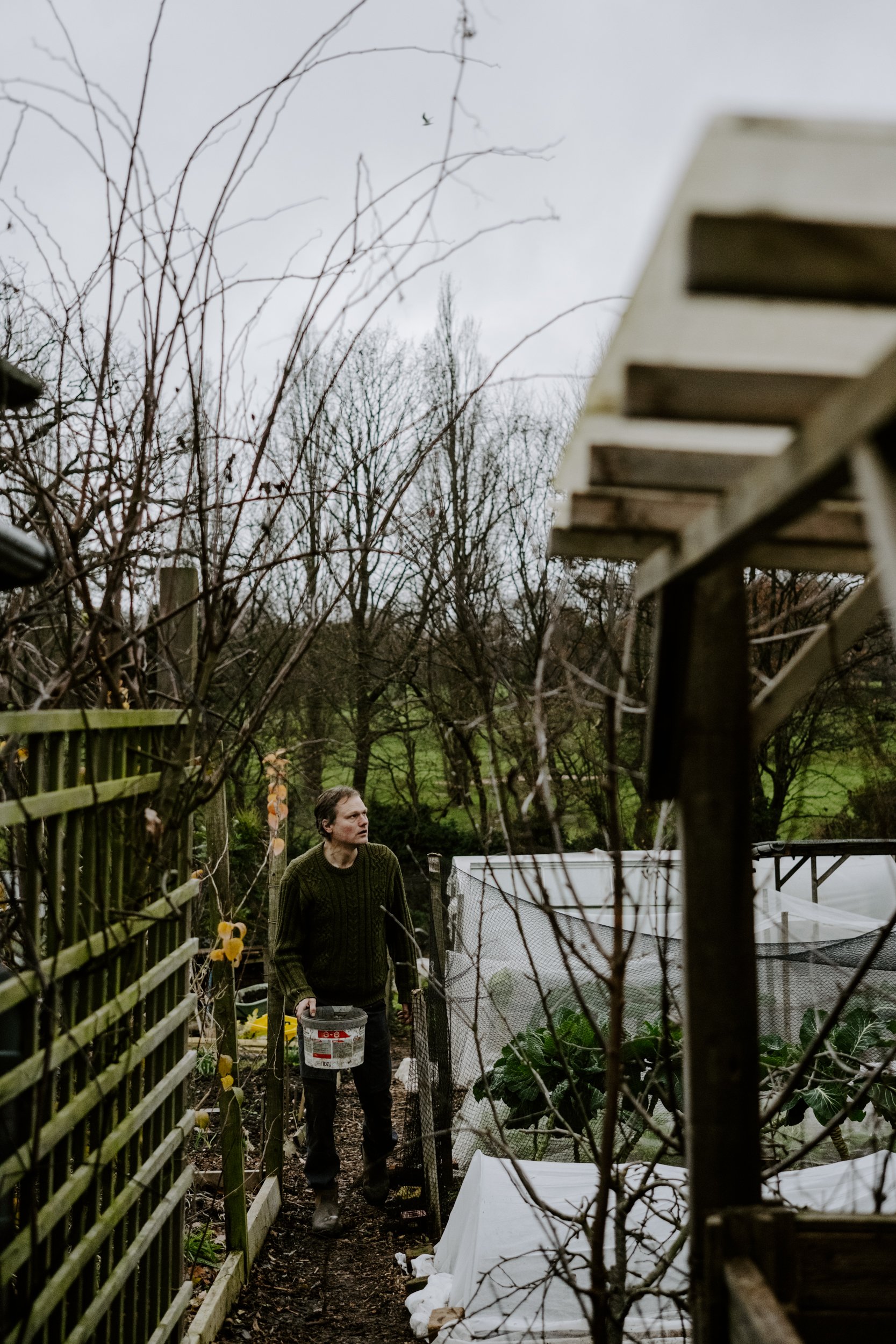
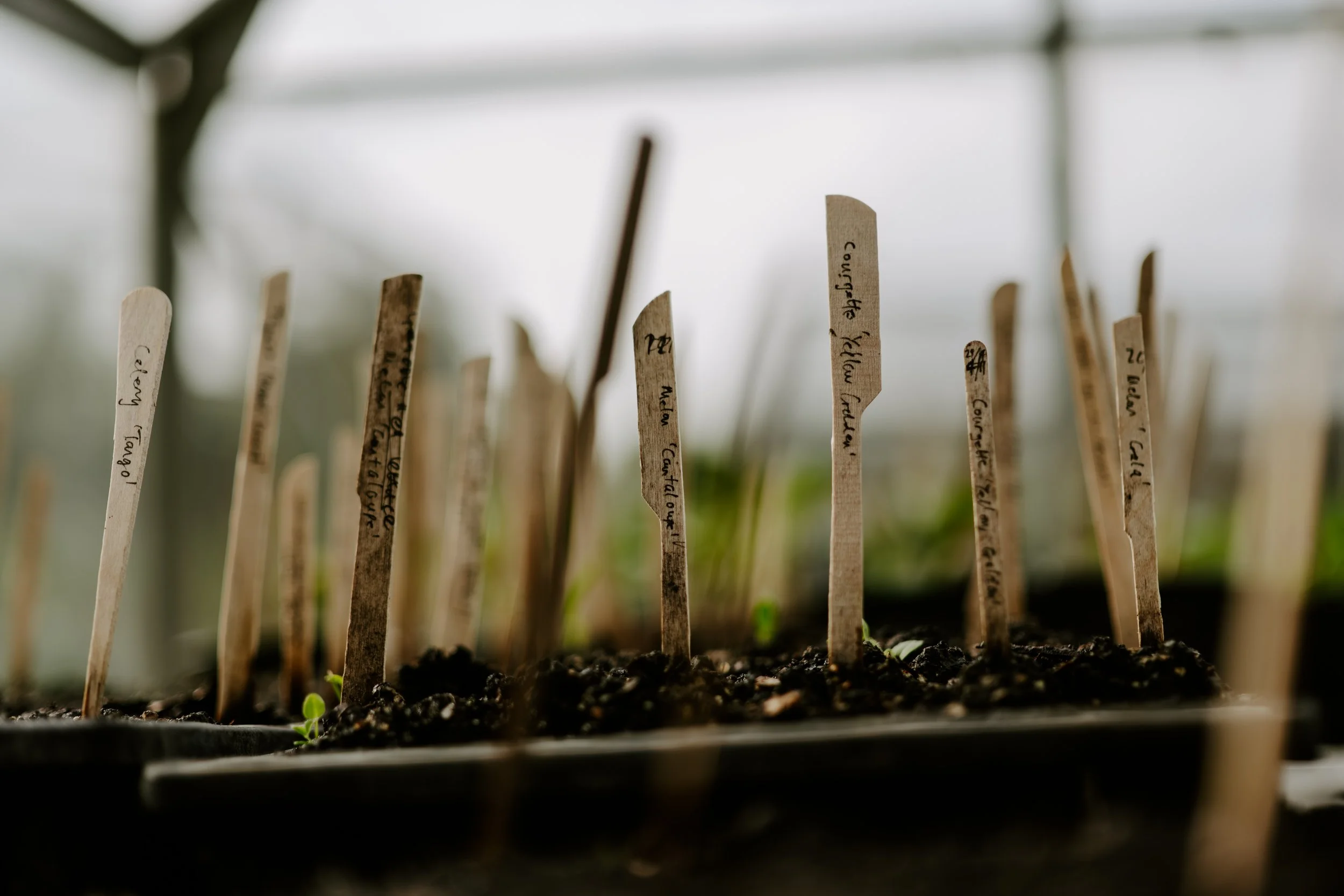
It was quiet. Still, he kept moving. Talked as he worked. Aubergines were already being sown in the greenhouse. Slow growers. No rush here.
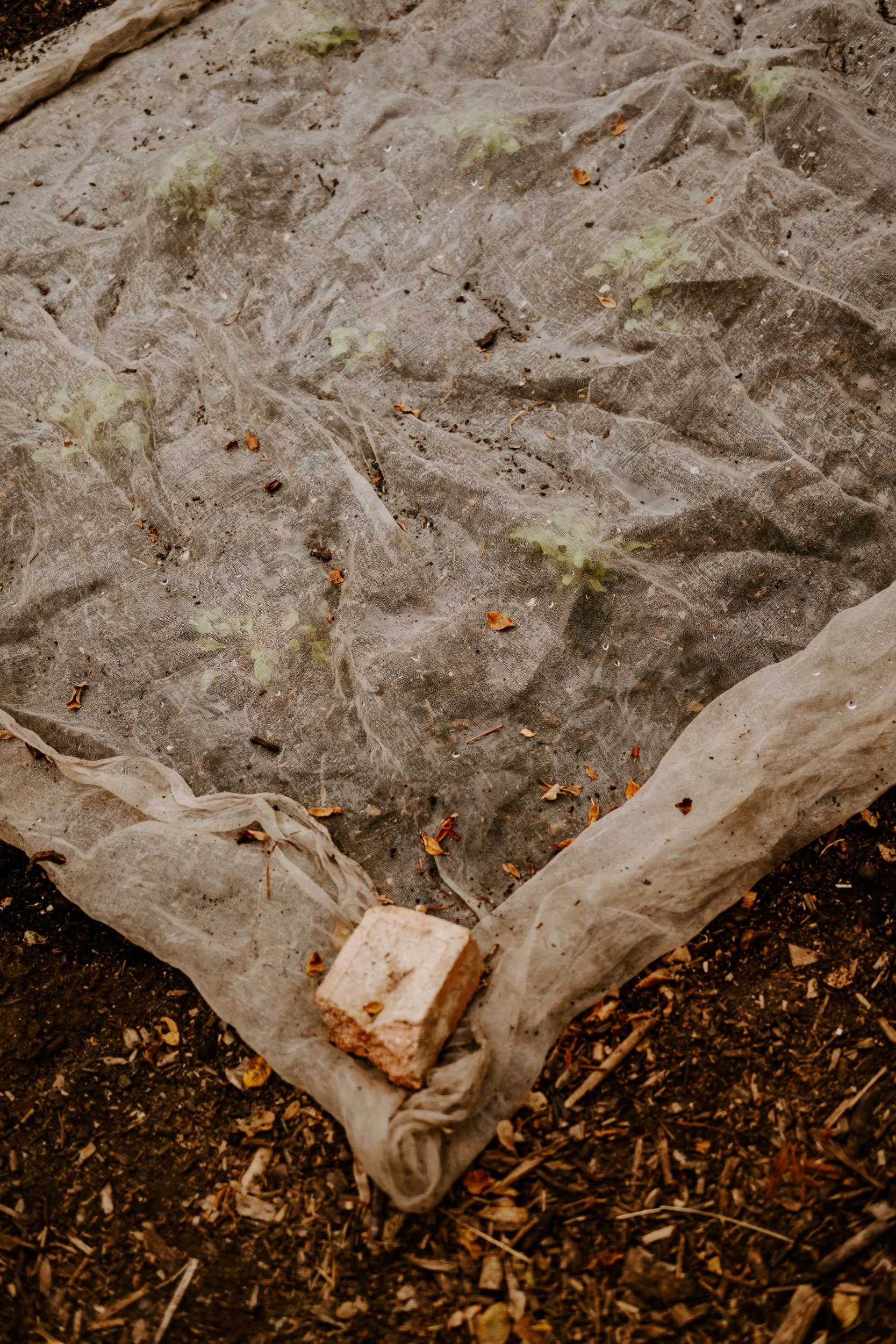
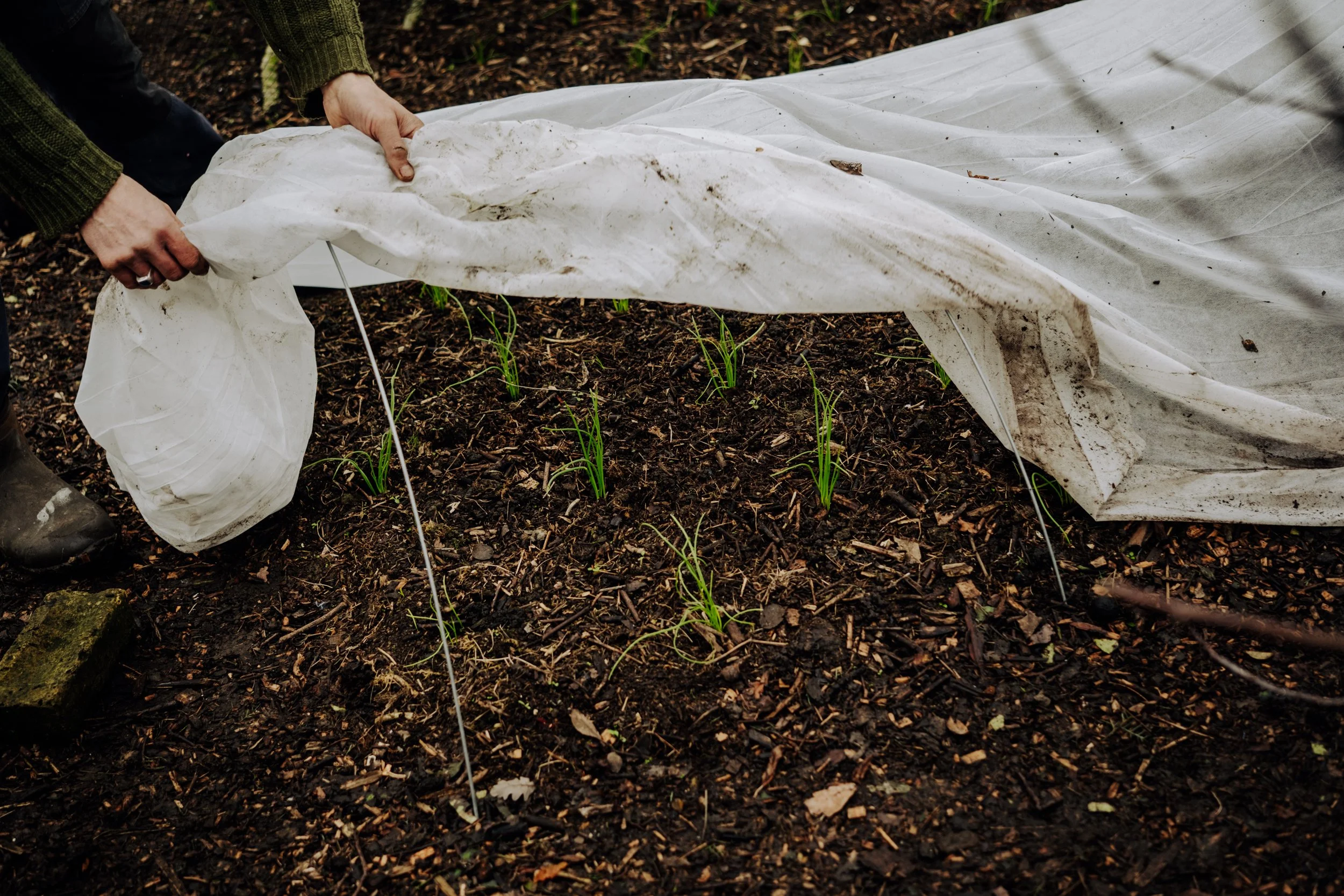
He cut a little green grass from the far end of the plot for the compost heap. Checked the first shoots of the rhubarb. Then lifted the fleece and took a few salad leaves home for lunch.
There really was not much happening.
And isn’t that the point?
The rain had given up a few hours before I arrived on another visit. No sunshine. Just a flat grey sky and grass heavy with moisture.
The last few weeks had been mild, but wet. Proper wet.
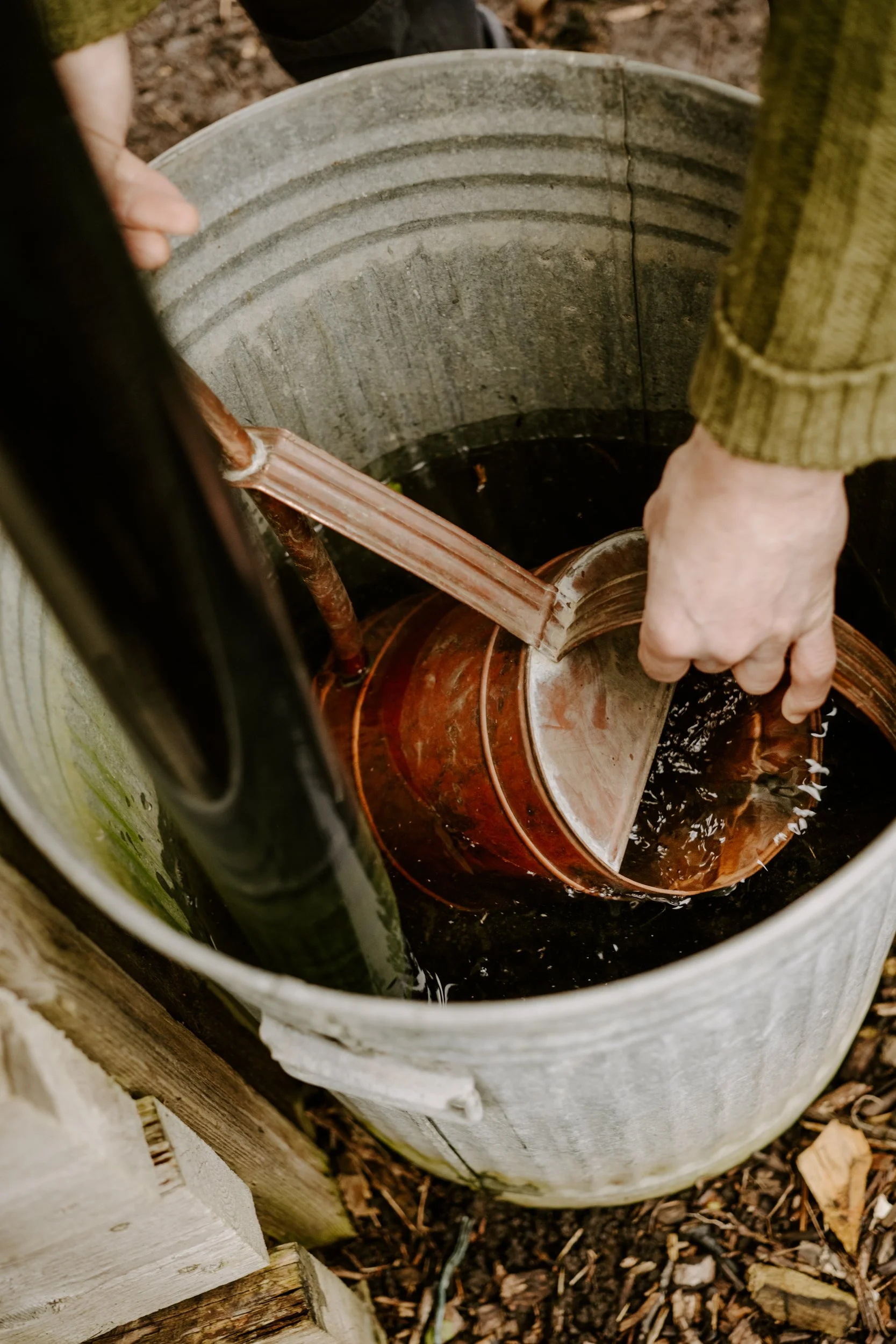
The roof over the compost heap had earned its keep, catching what fell and feeding the barrels.
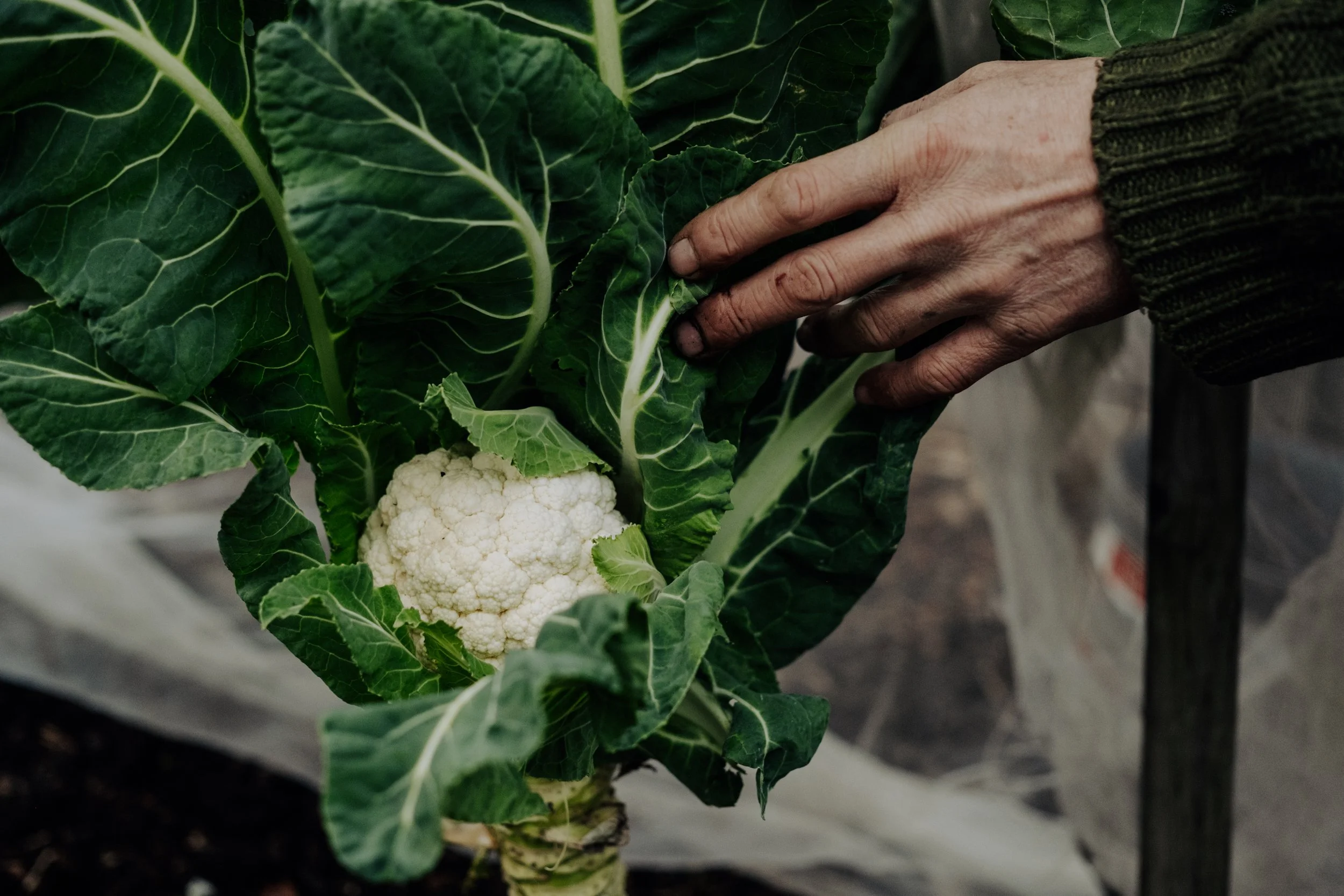
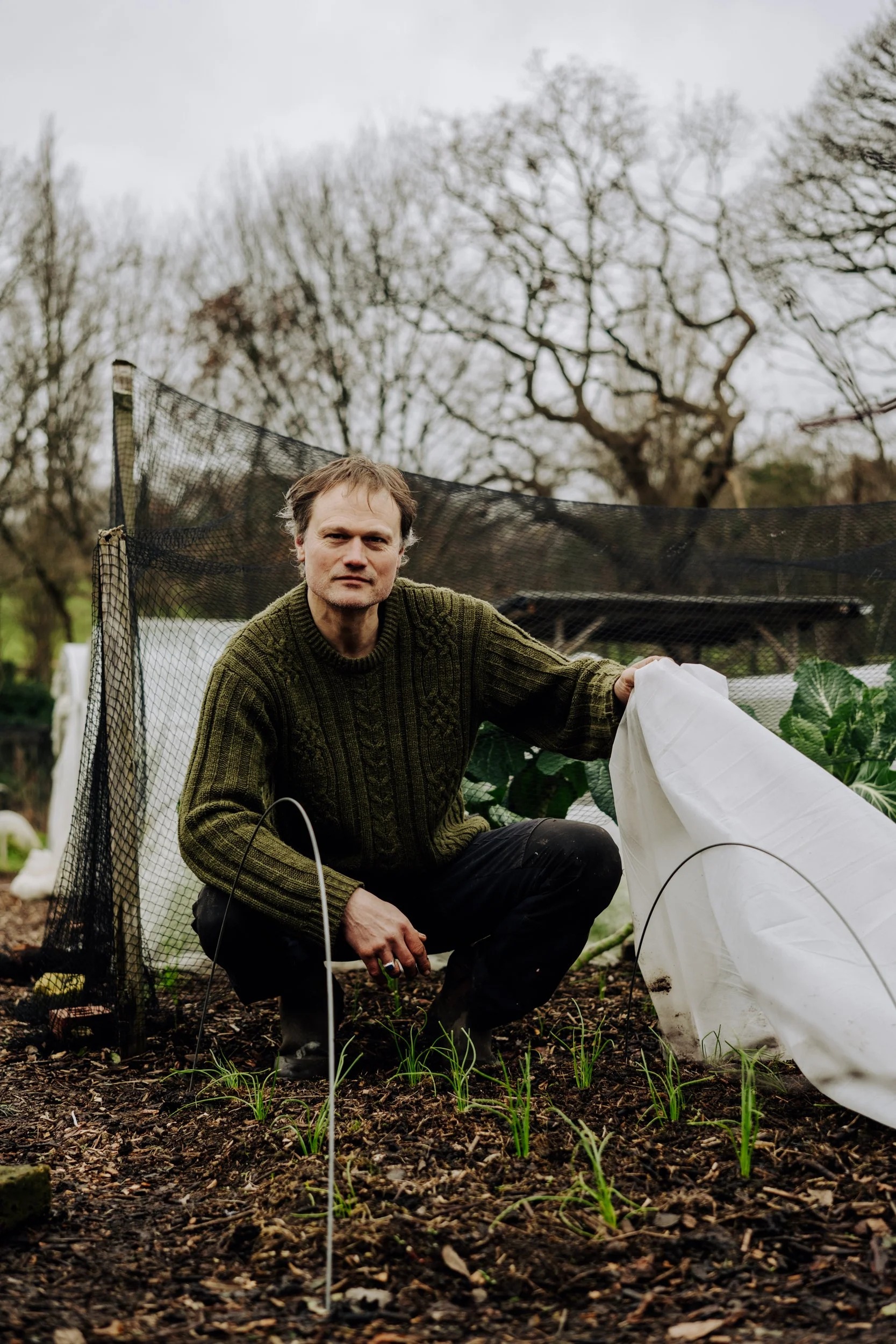
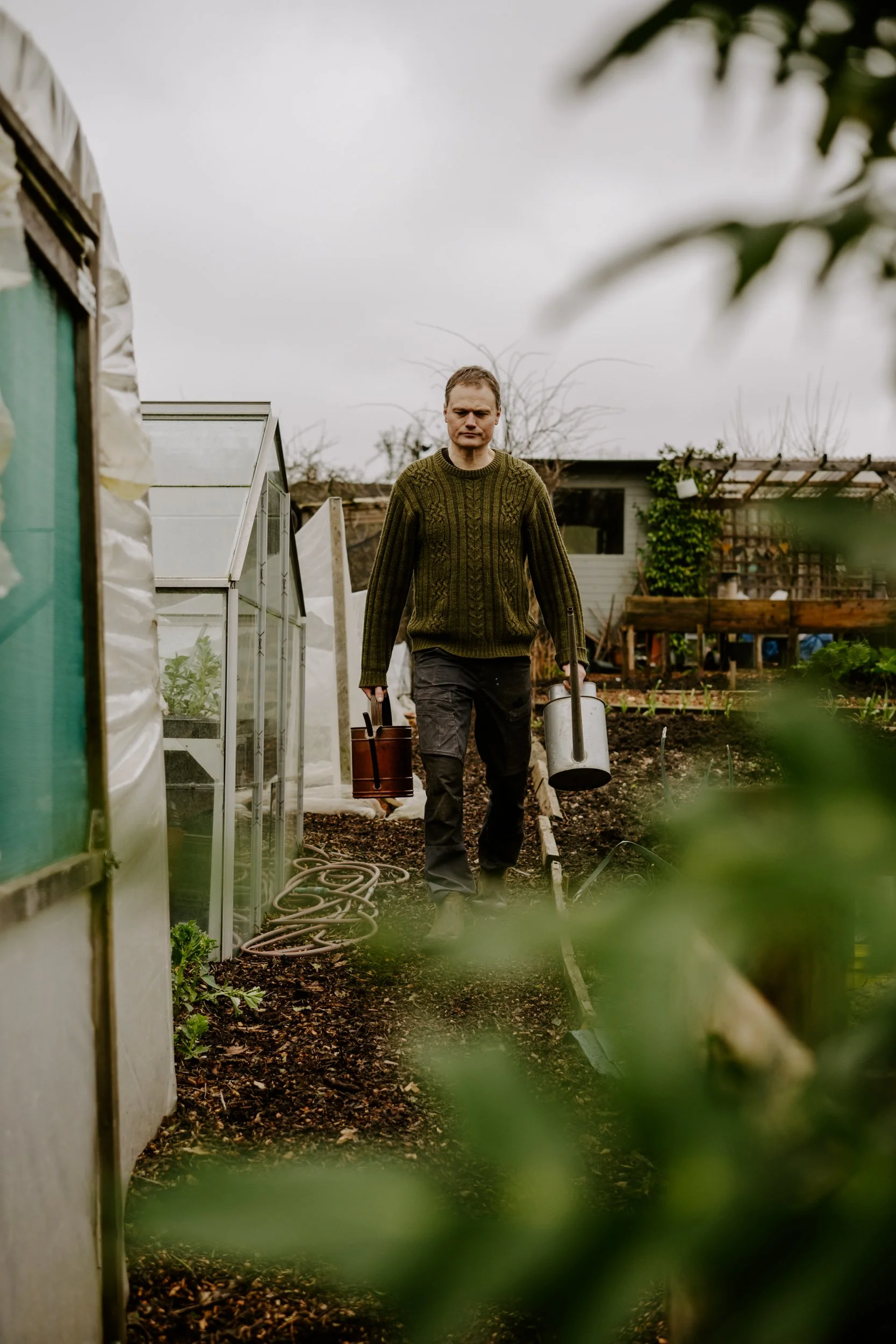
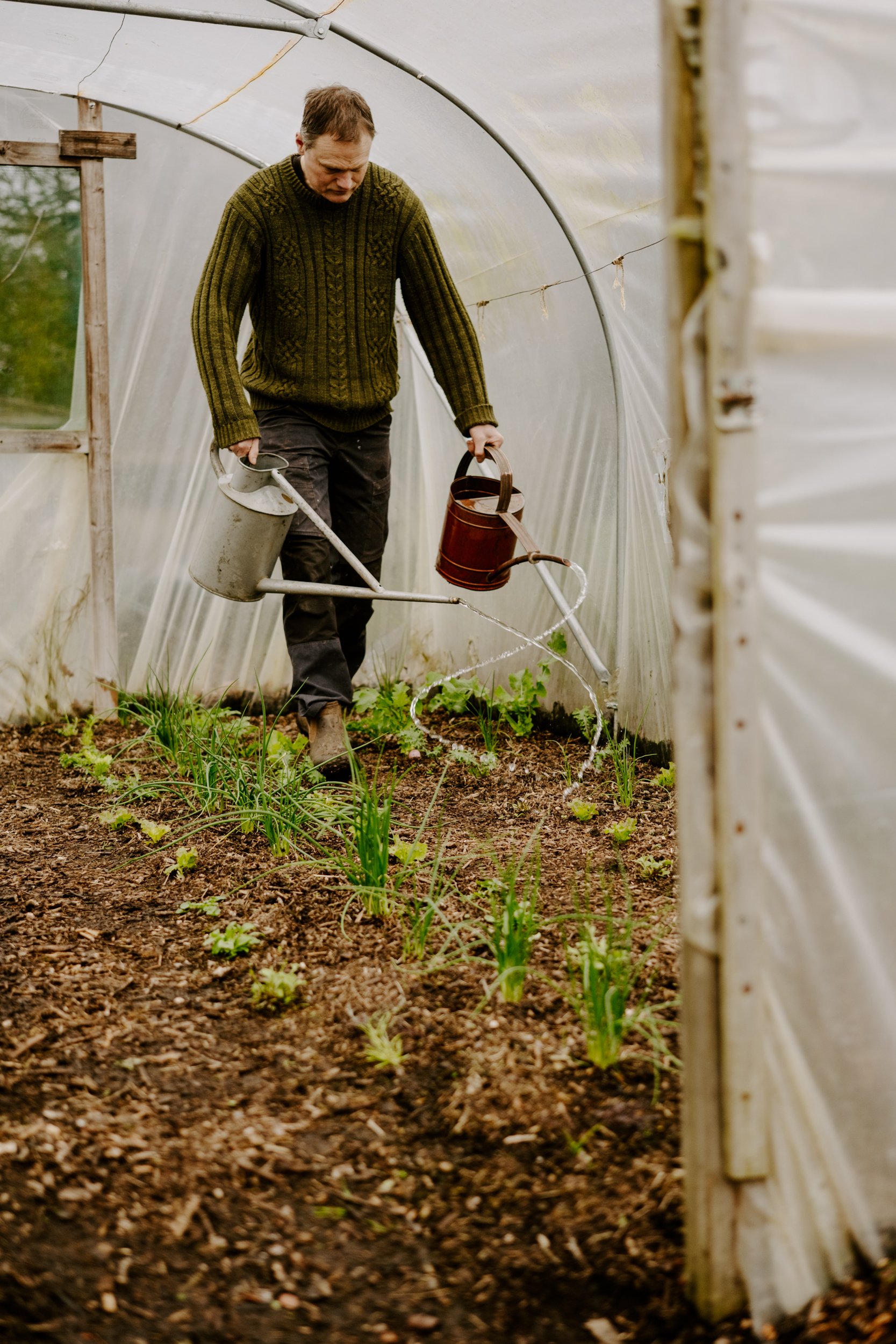
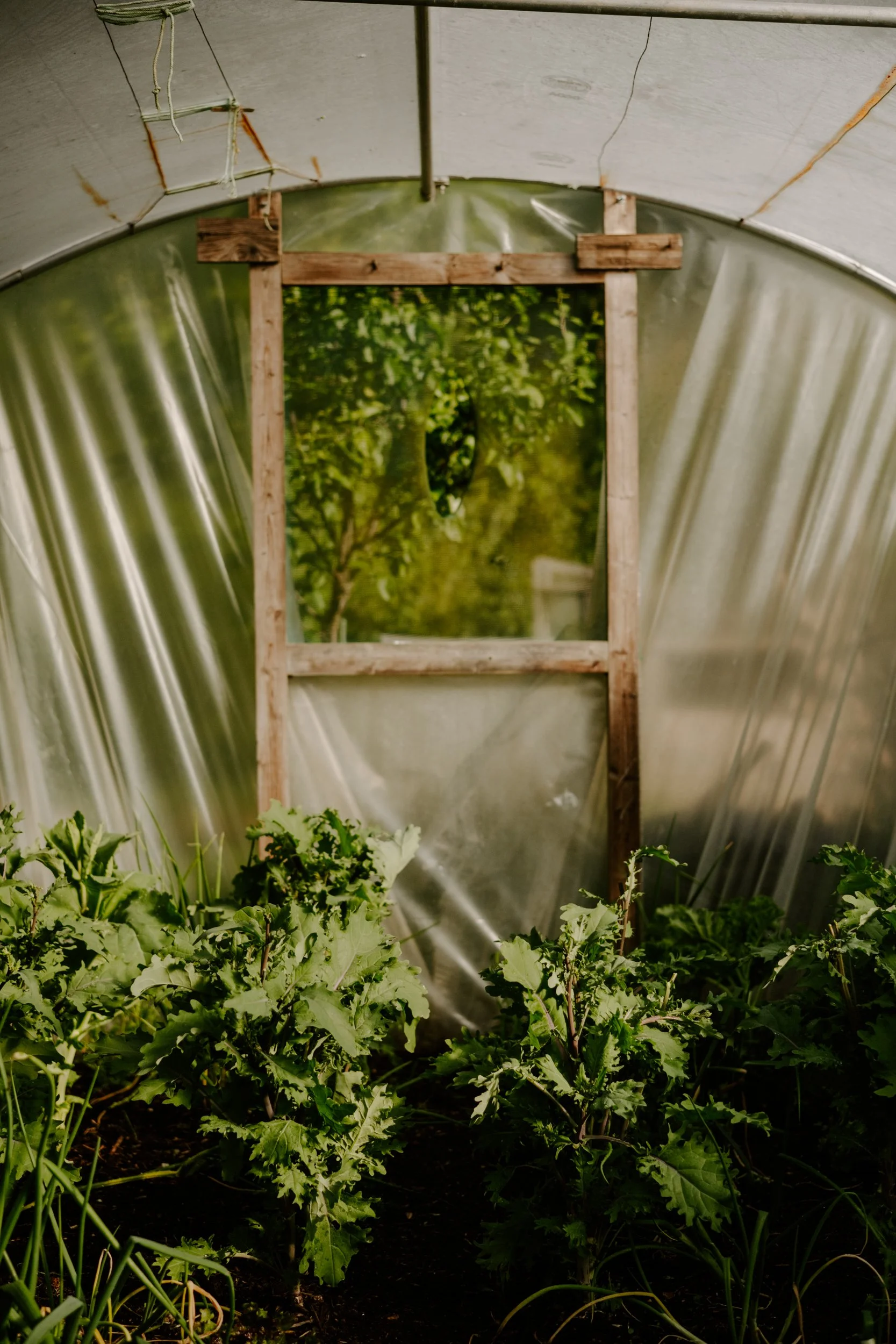
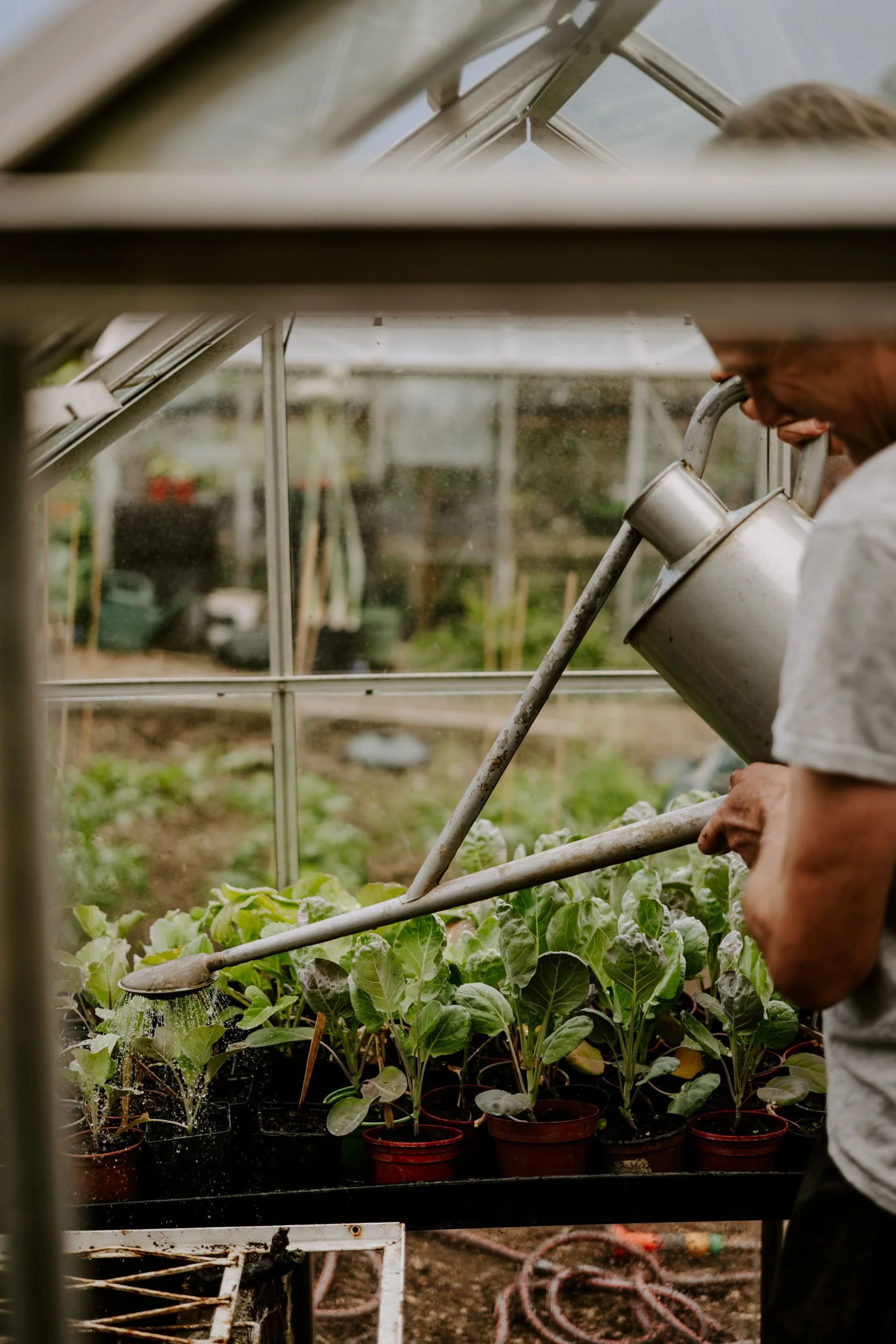
Inside the polytunnel, the salad leaves needed water. Cavolo Nero stood dark and sure of itself. Kale too.
Hardy things.
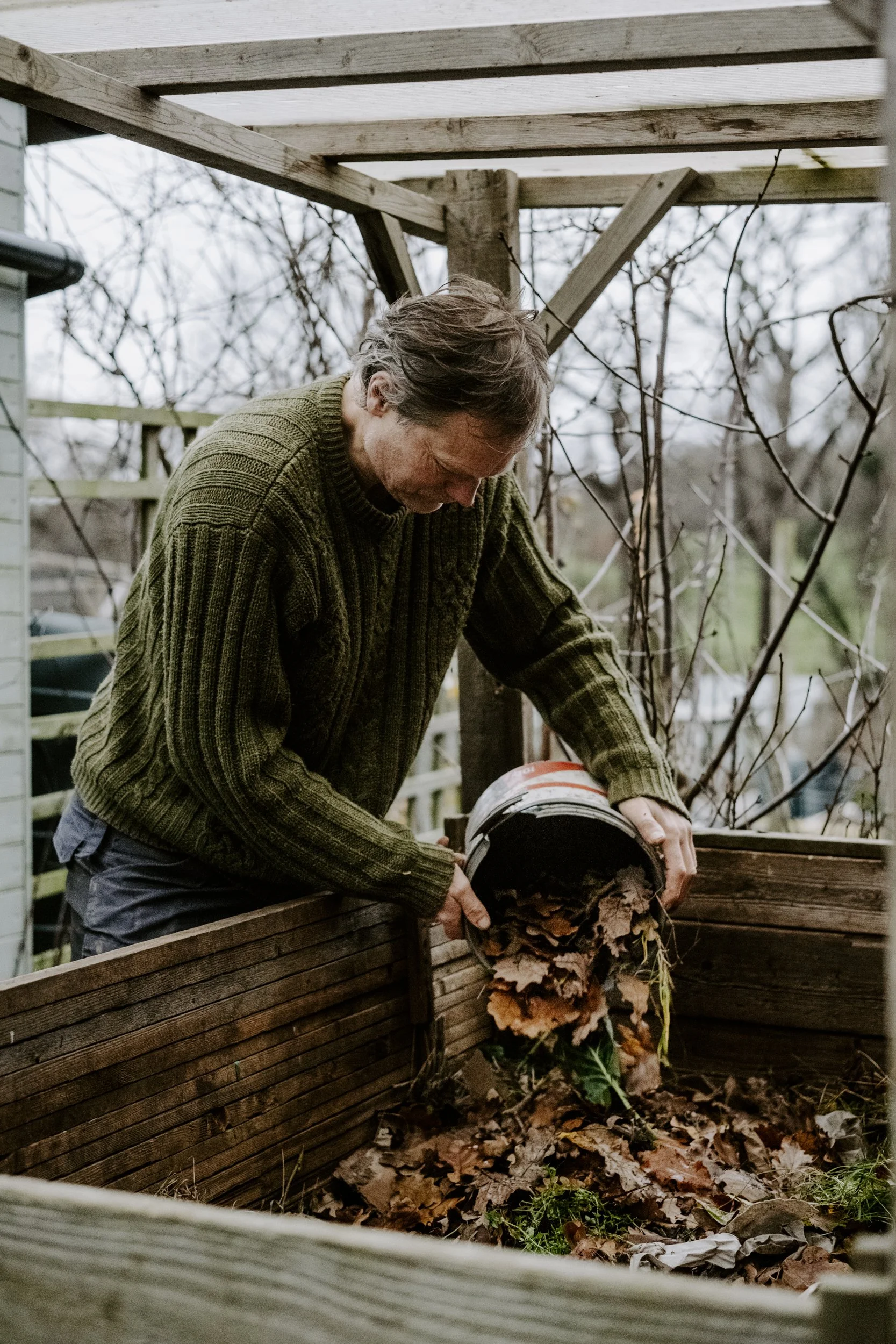
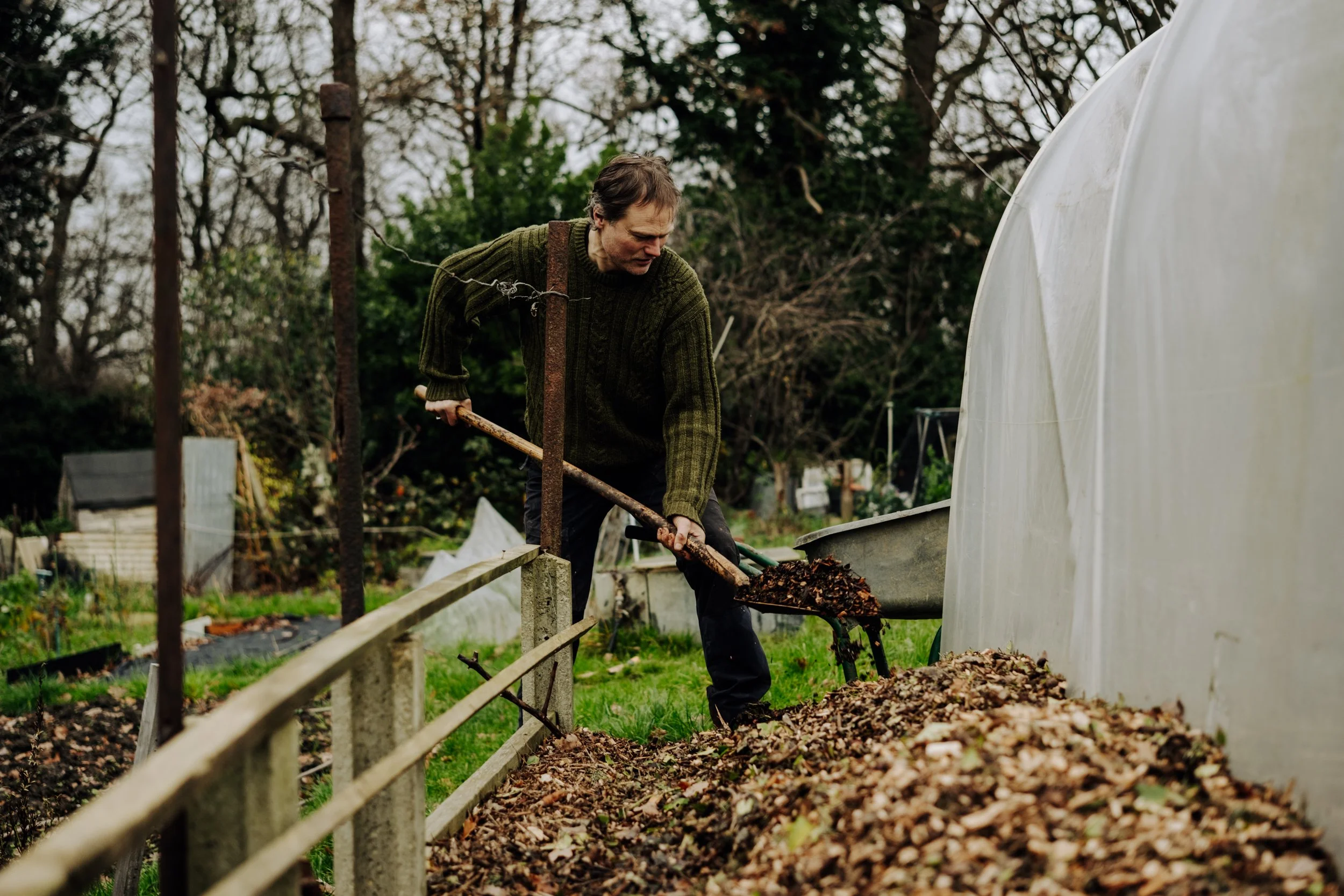
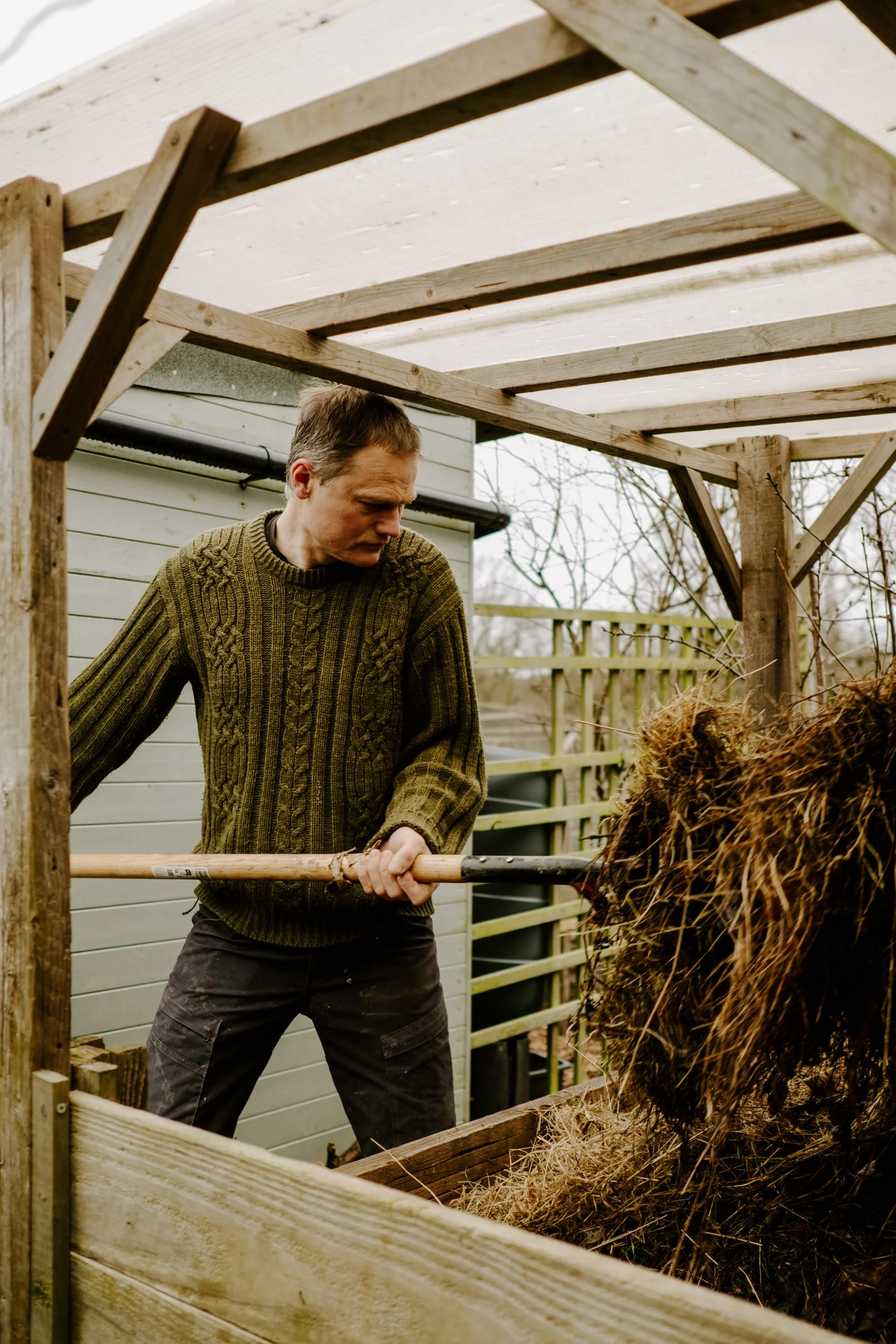
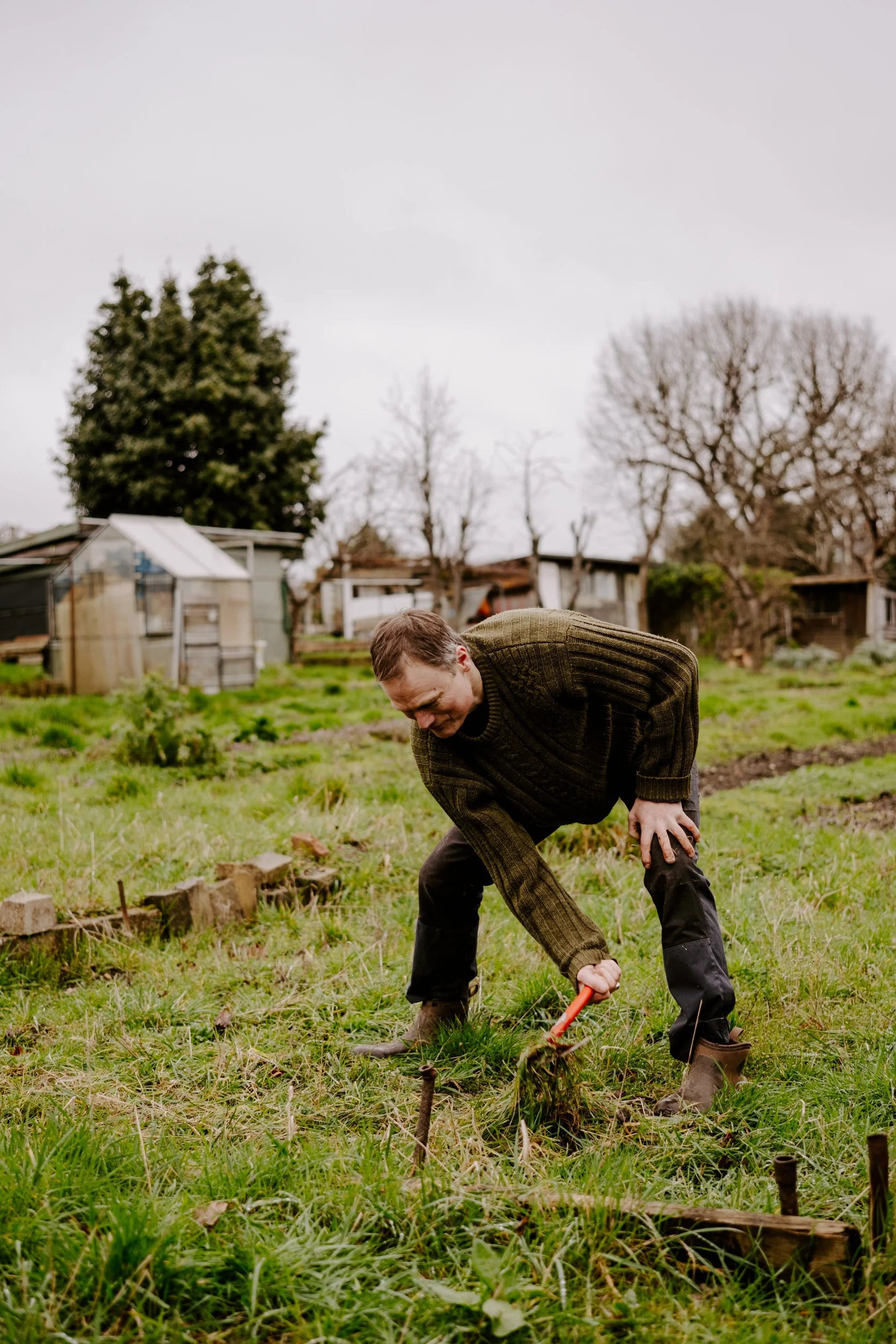
The compost heap was turned. A heady smell rose when James forked it open. It looked and smelled delicious. The perfect feed for another season.
More grass was cut and laid on top. Another layer in the slow alchemy.
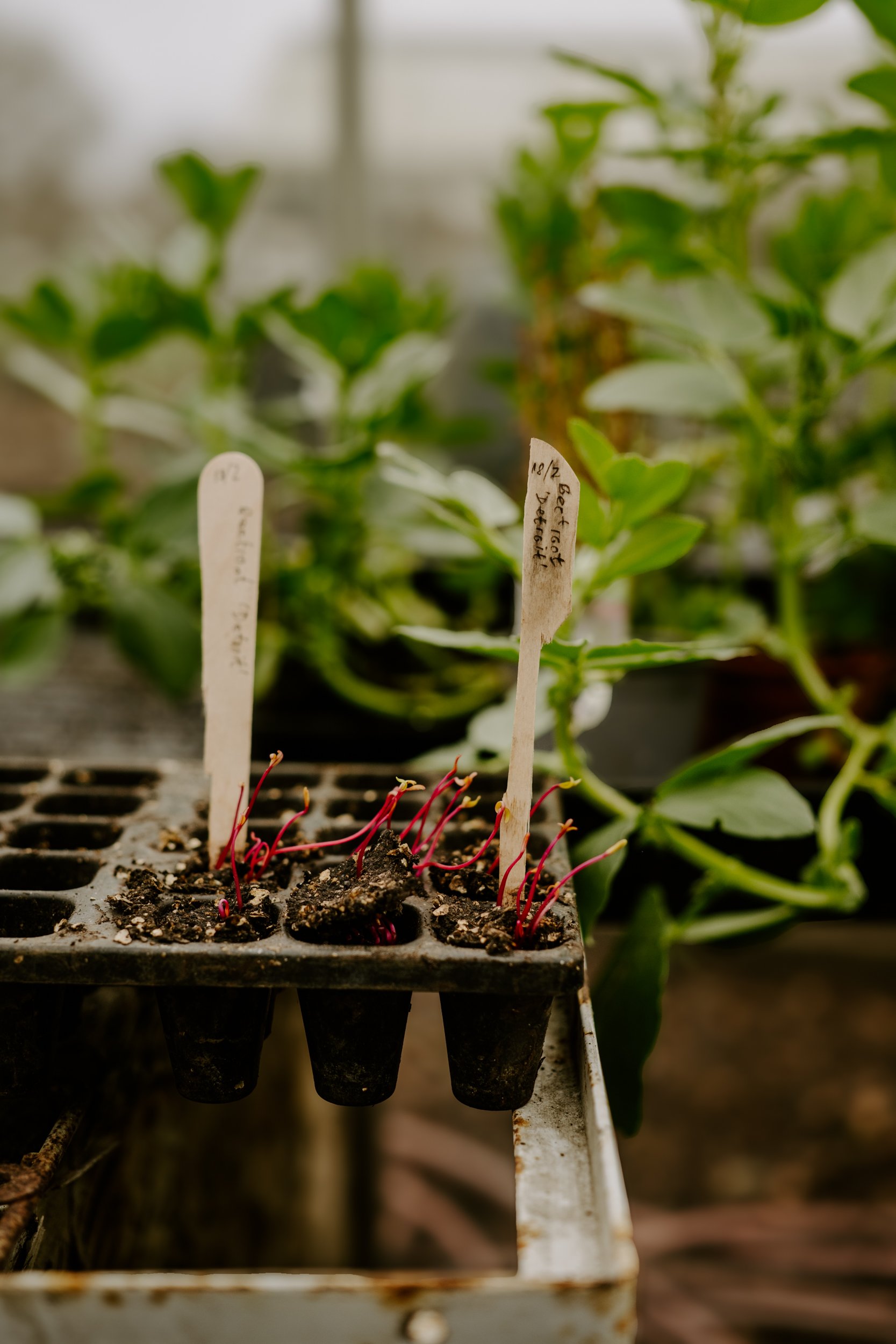
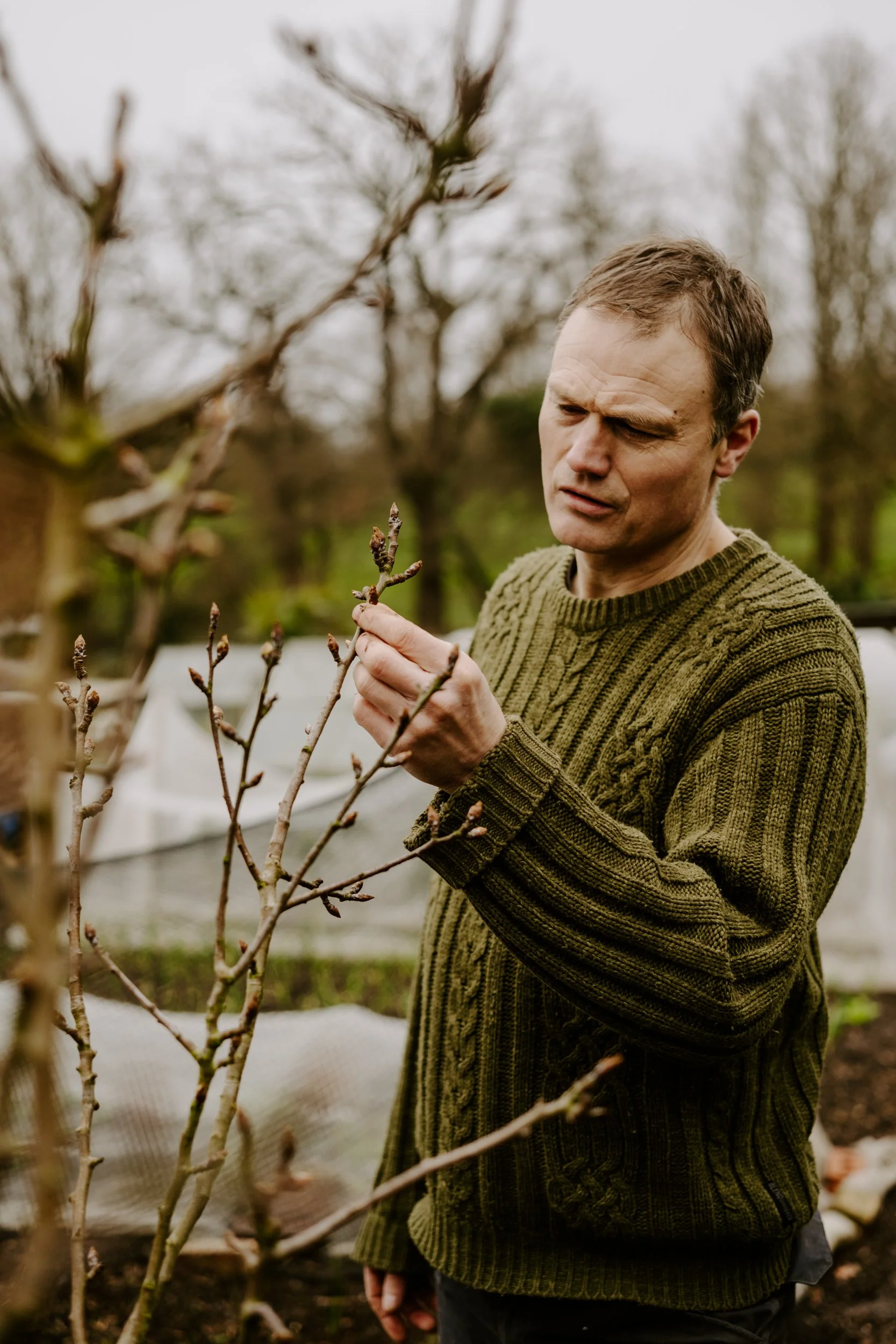
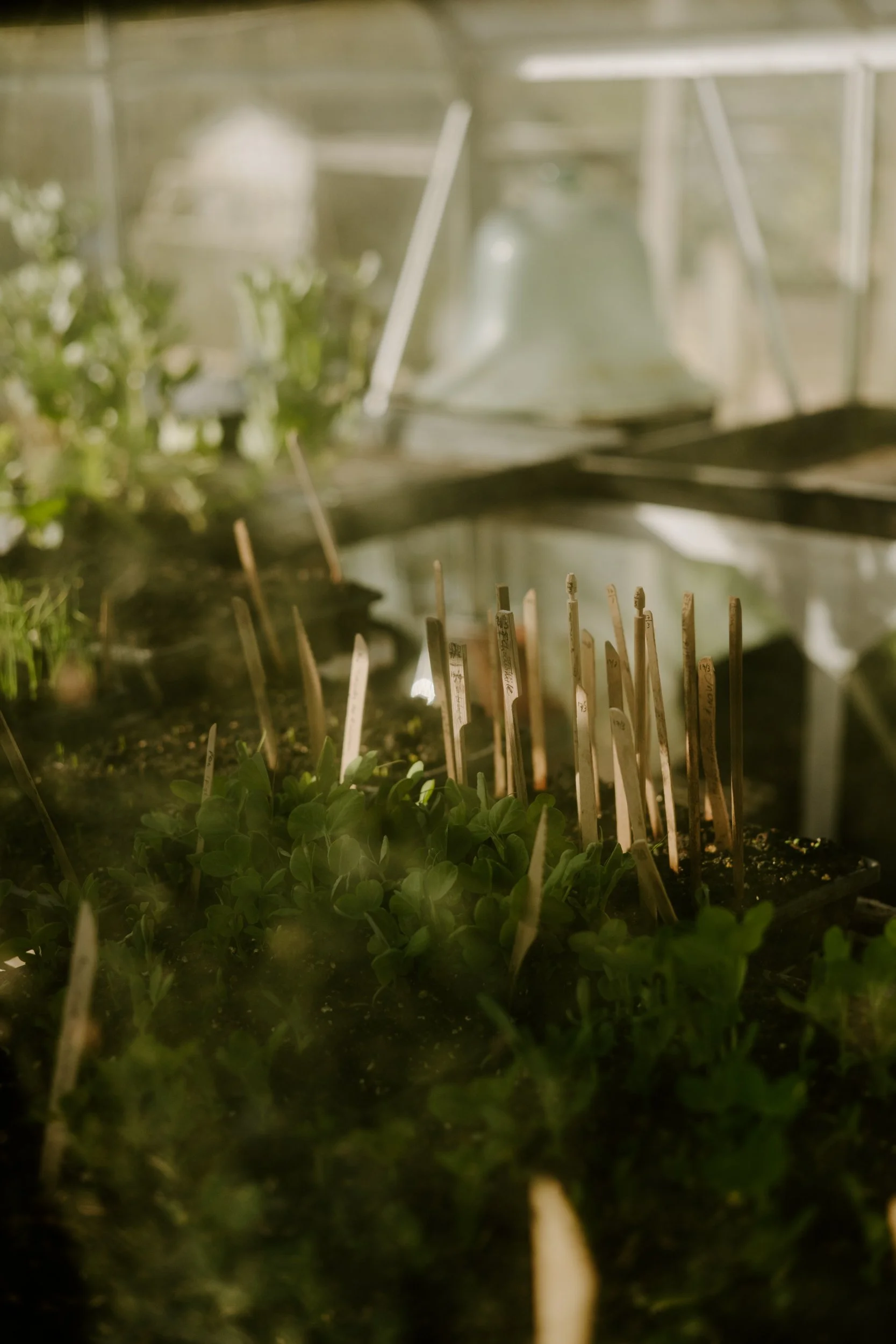
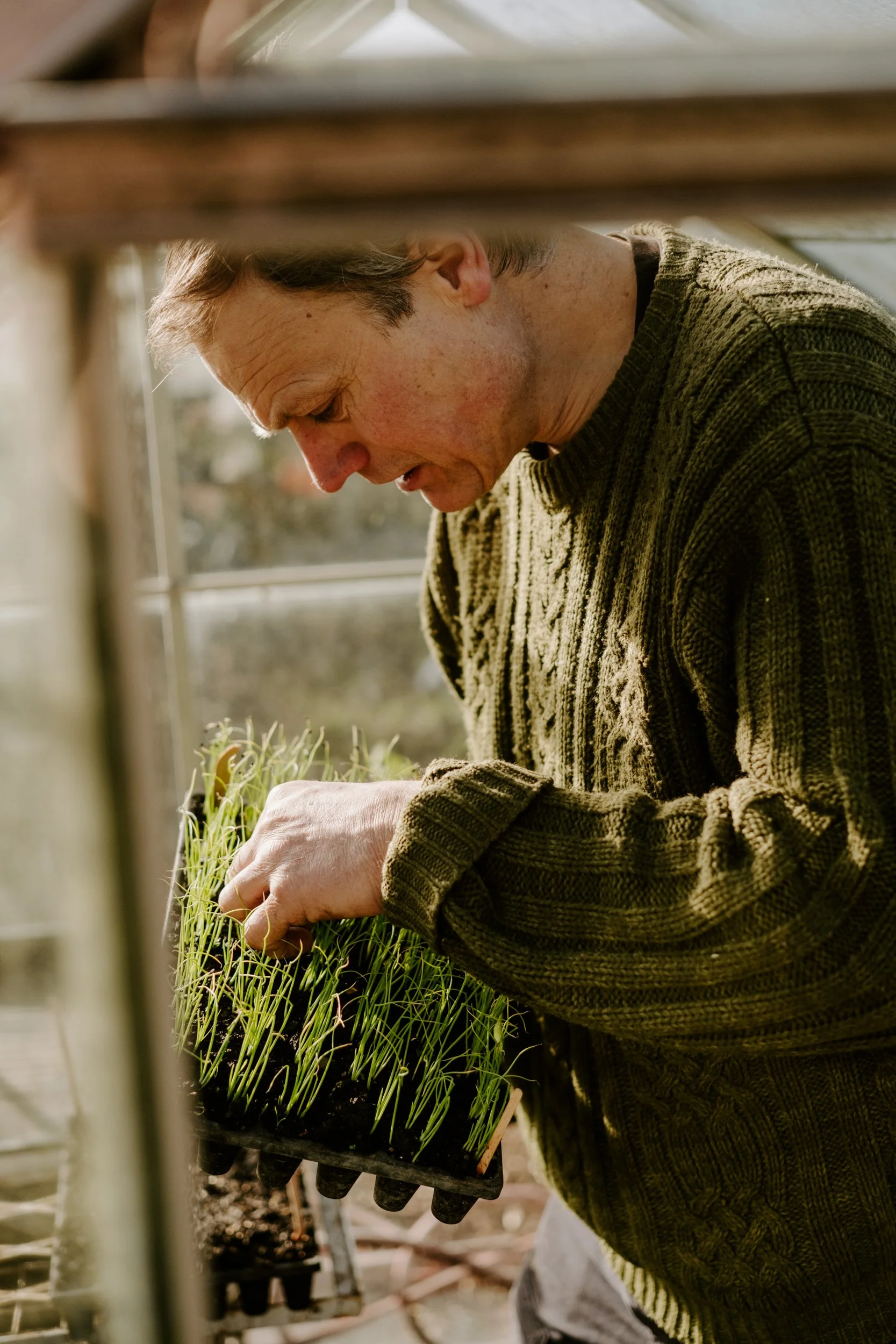
In the greenhouse, tiny purple beetroot seedlings pushed up. On the fruit trees, the first tight buds were forming.
Not yet open. But thinking about it.
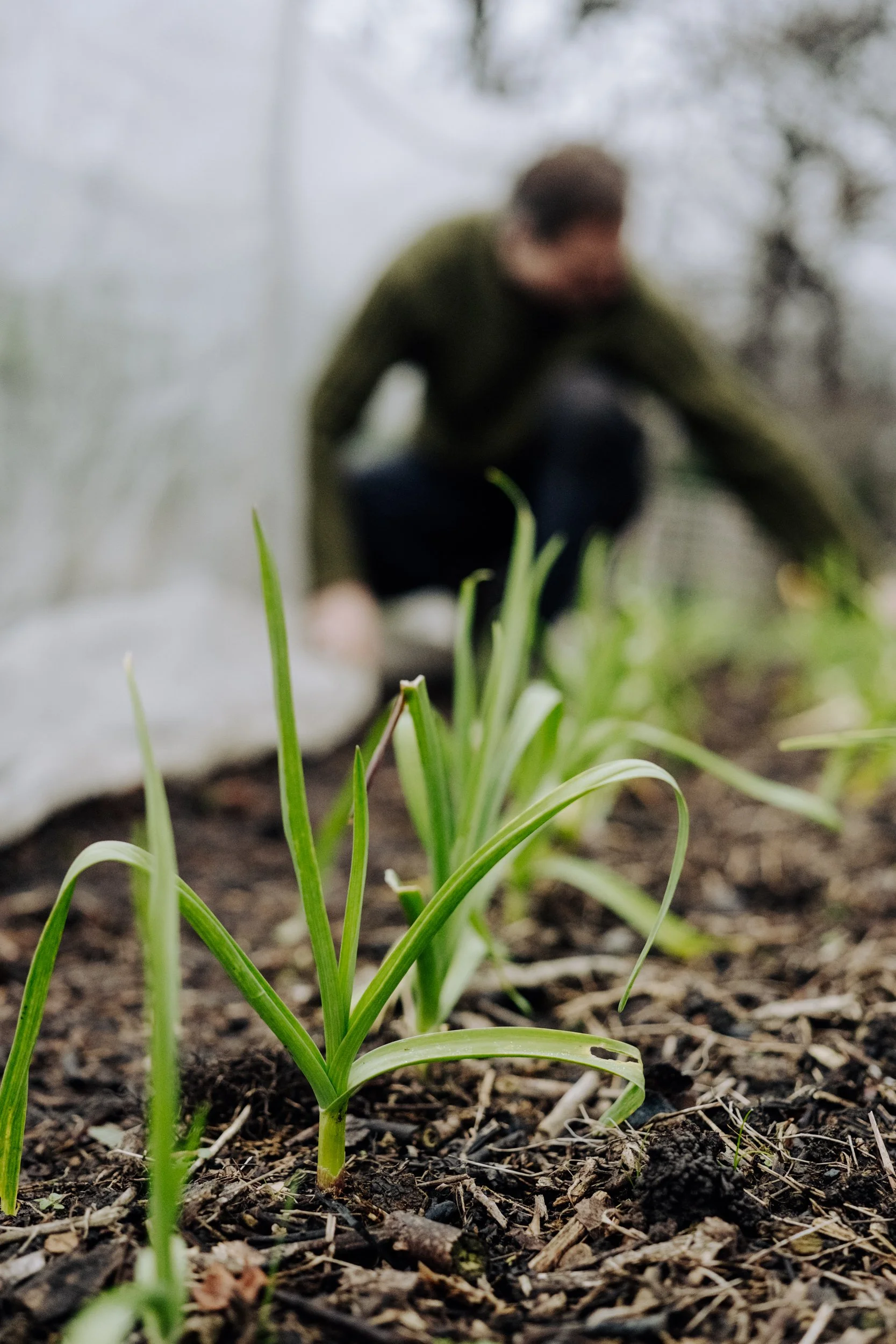
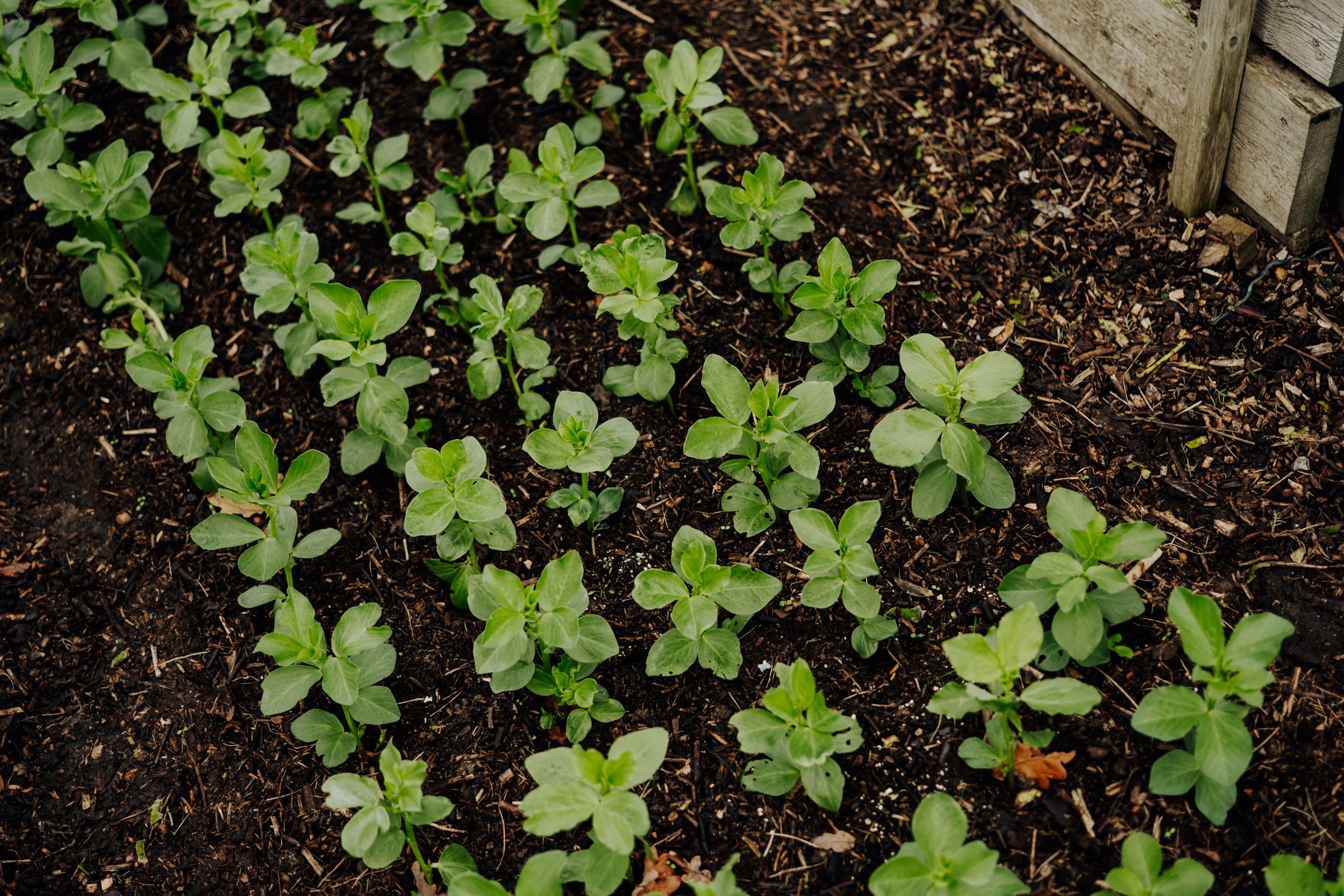
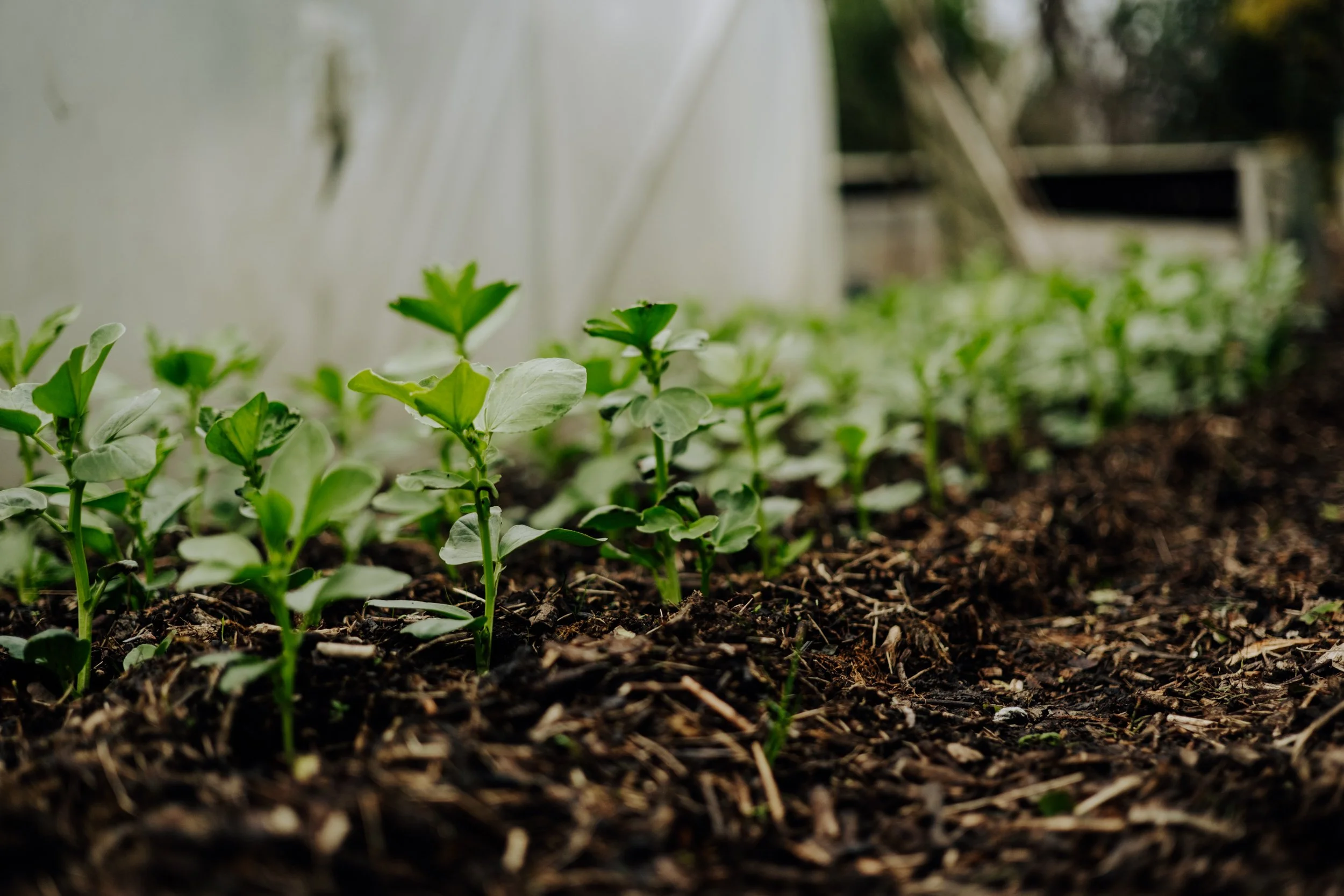
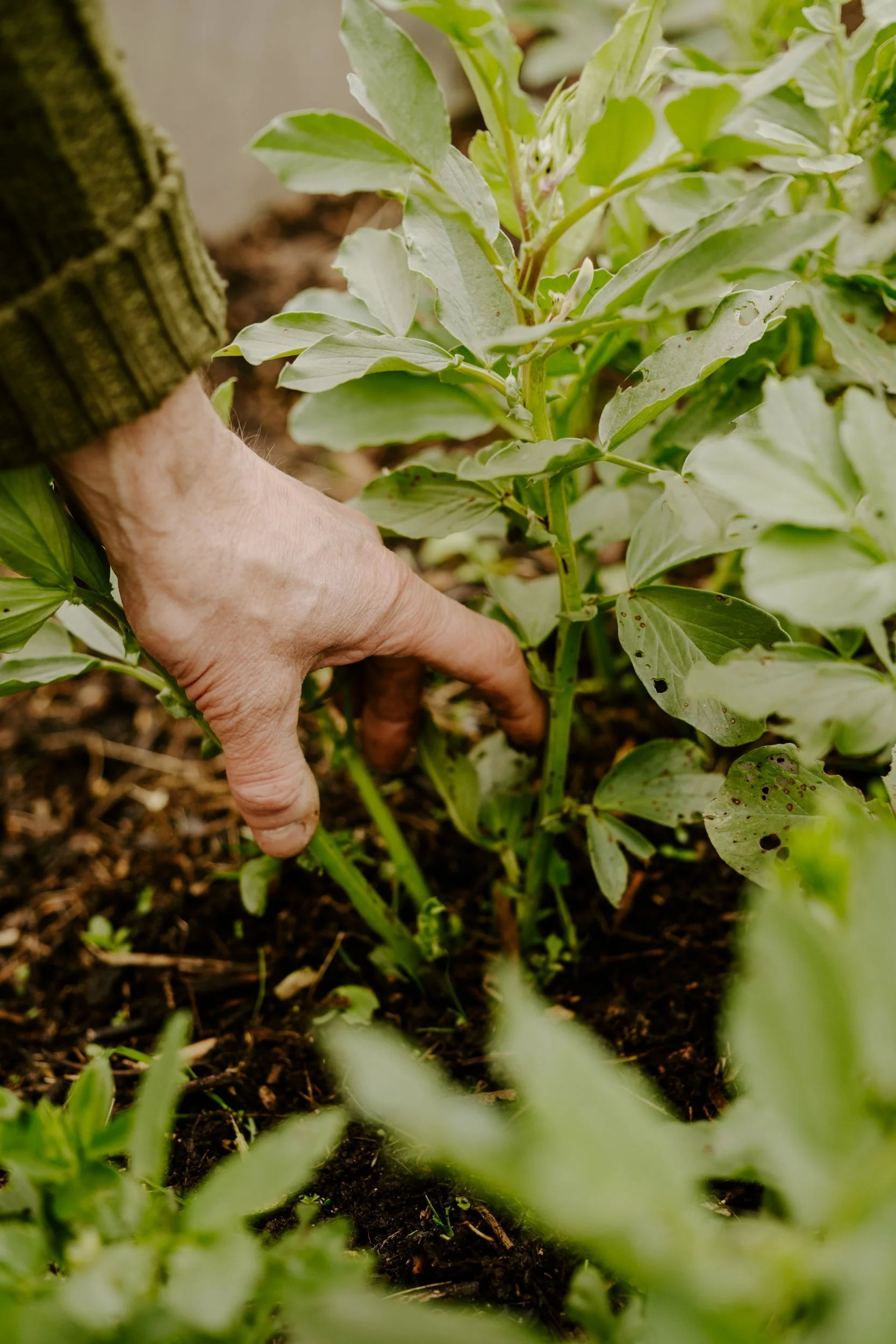
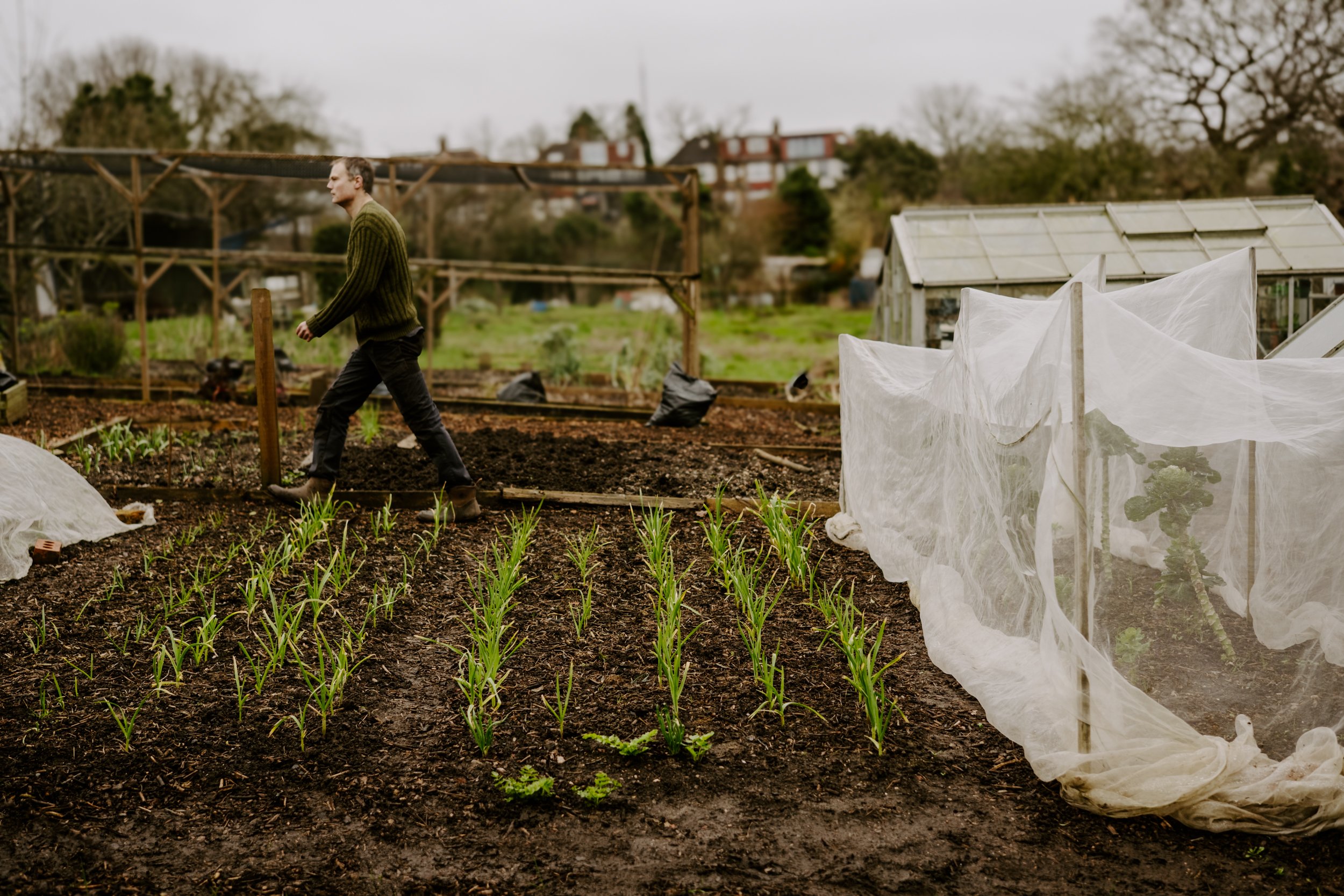
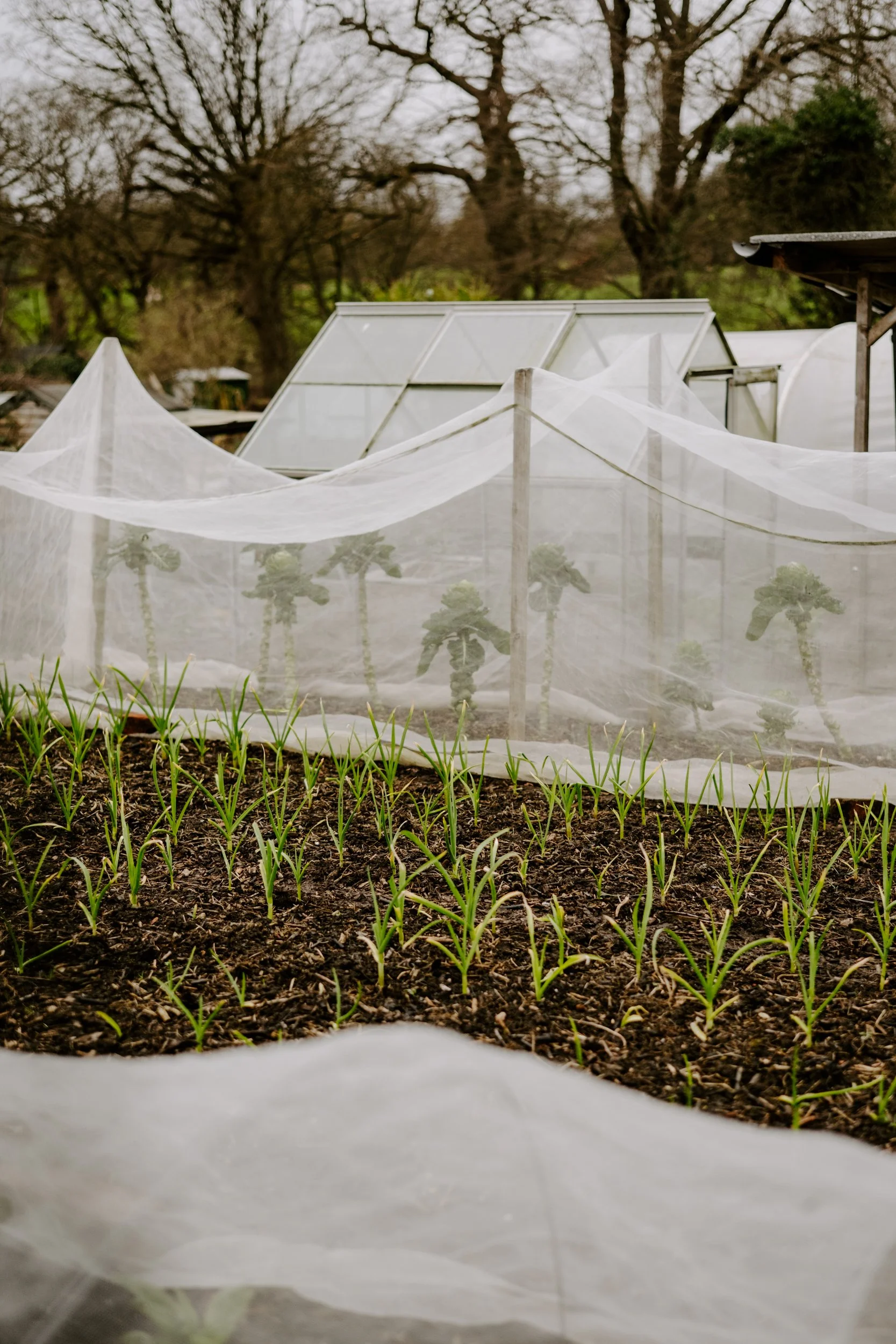
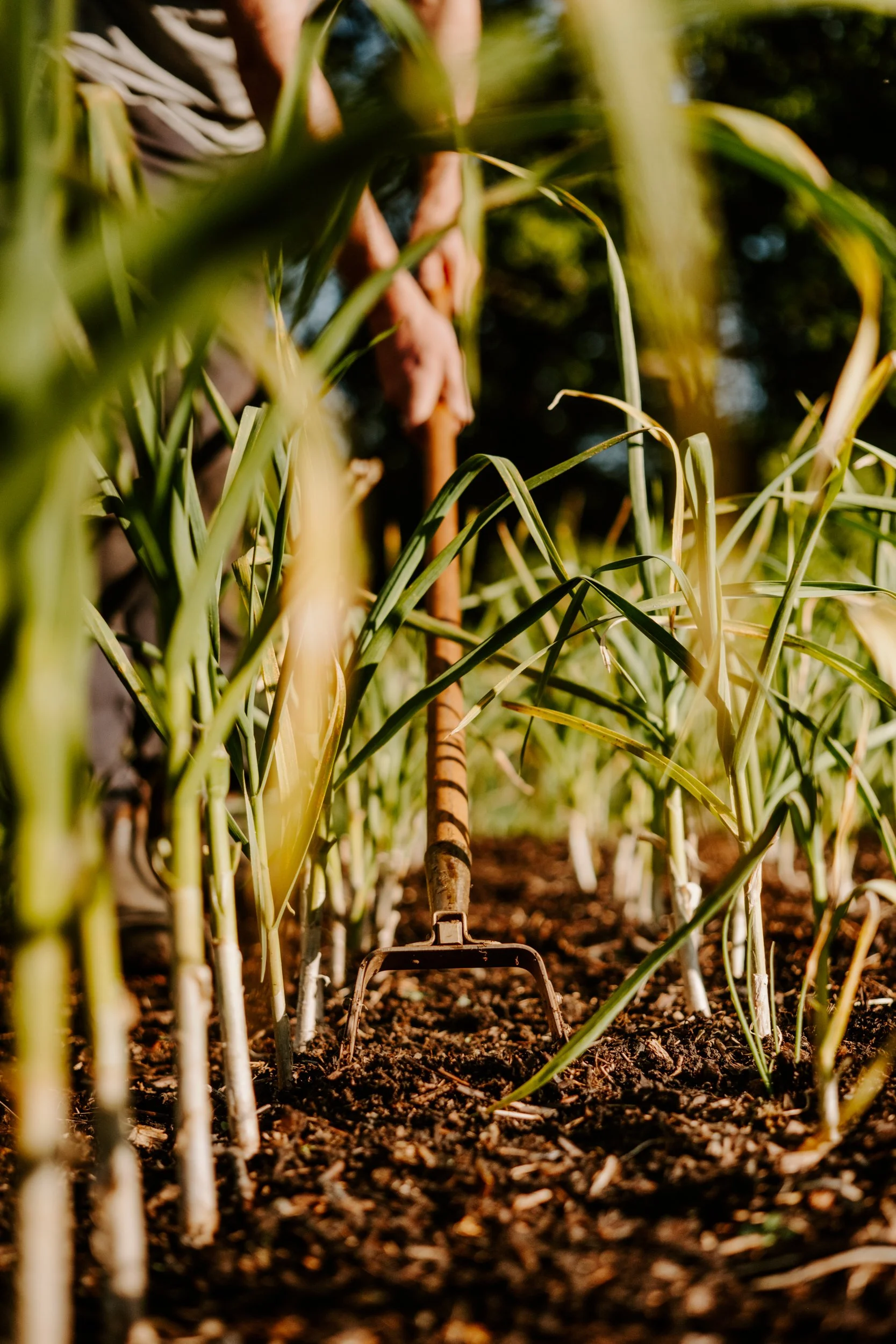
Broad beans stood steady, unbothered by the cold. Garlic speared through the soil in clean, straight lines.
It didn’t look like much. But everything was moving, quietly.
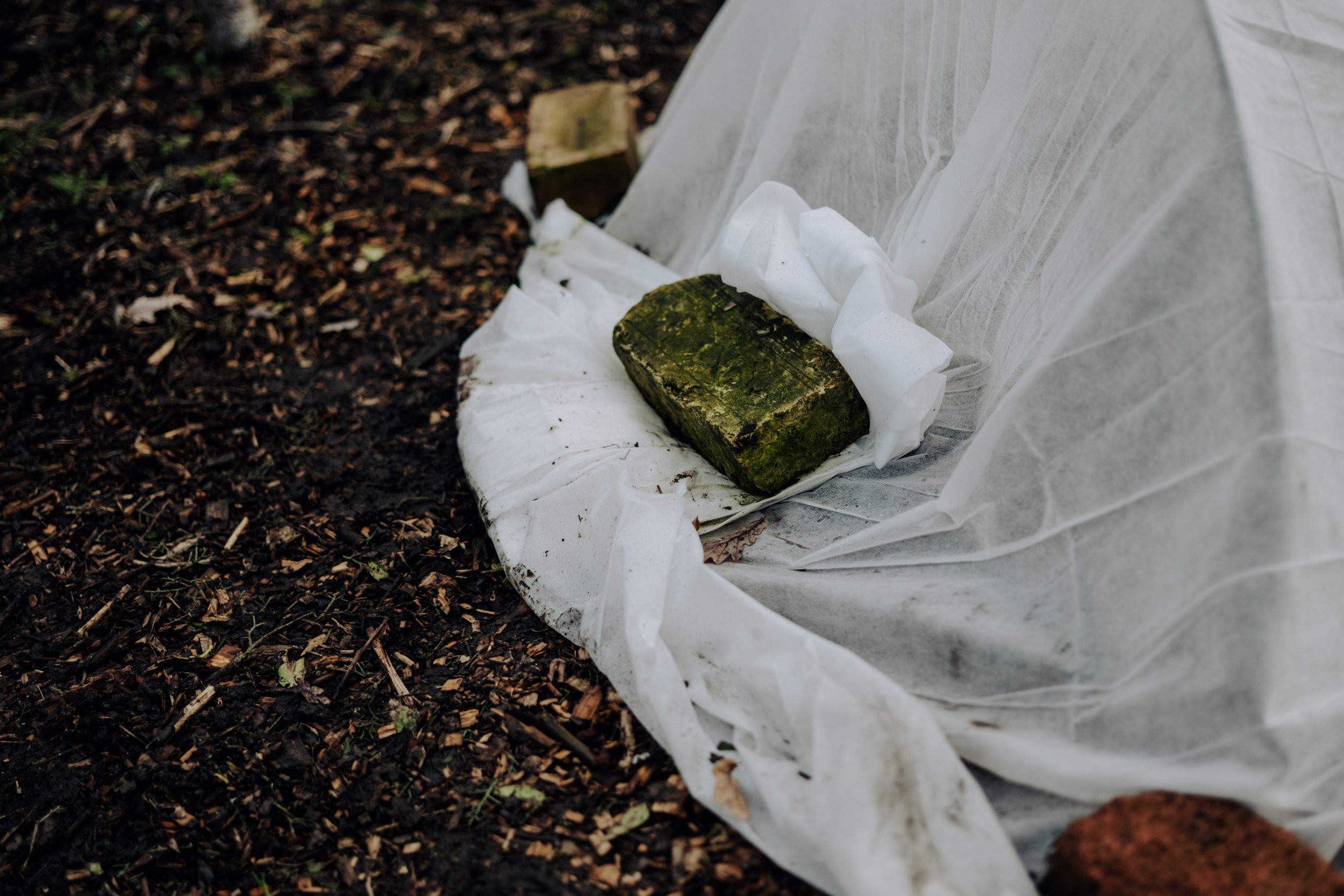
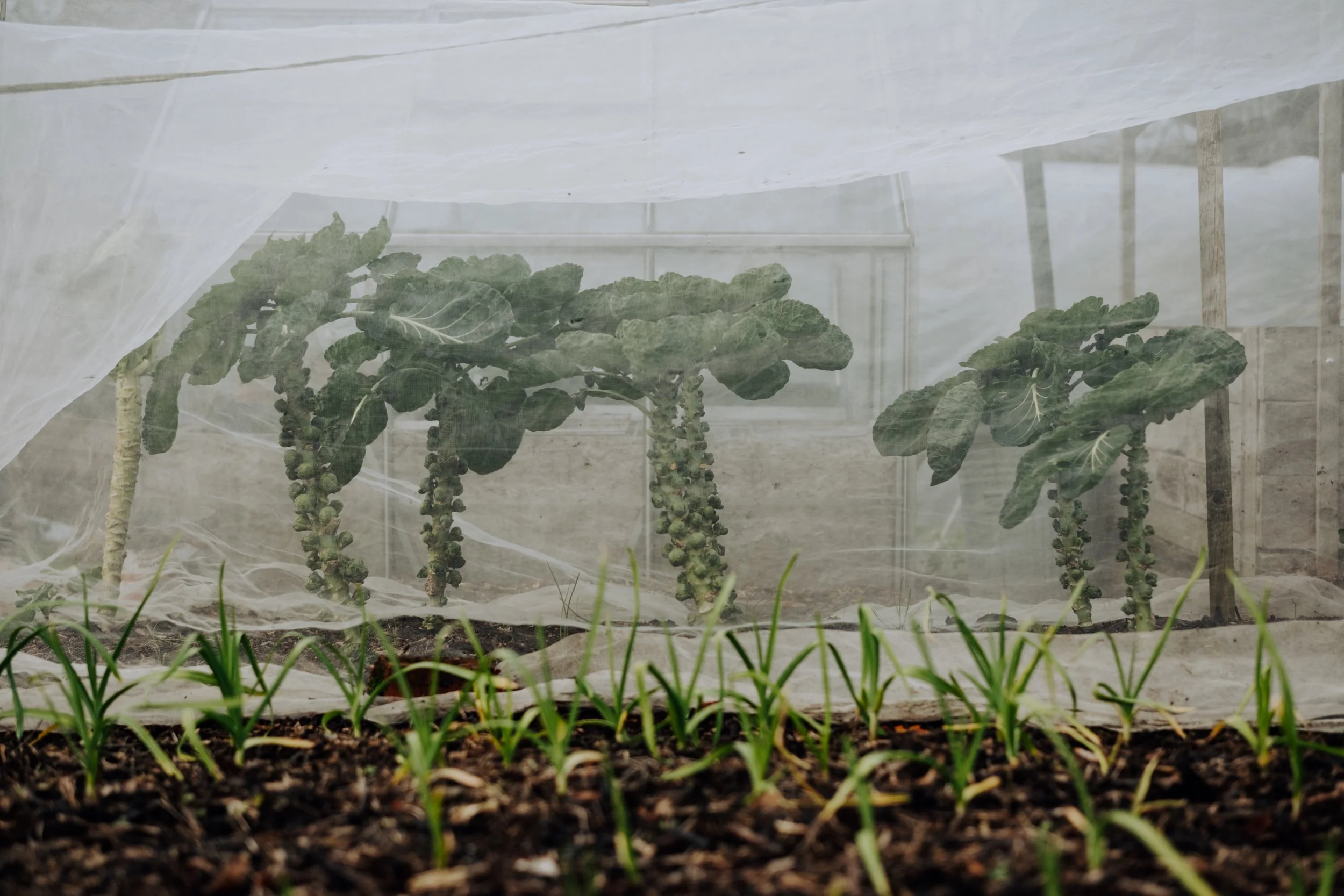
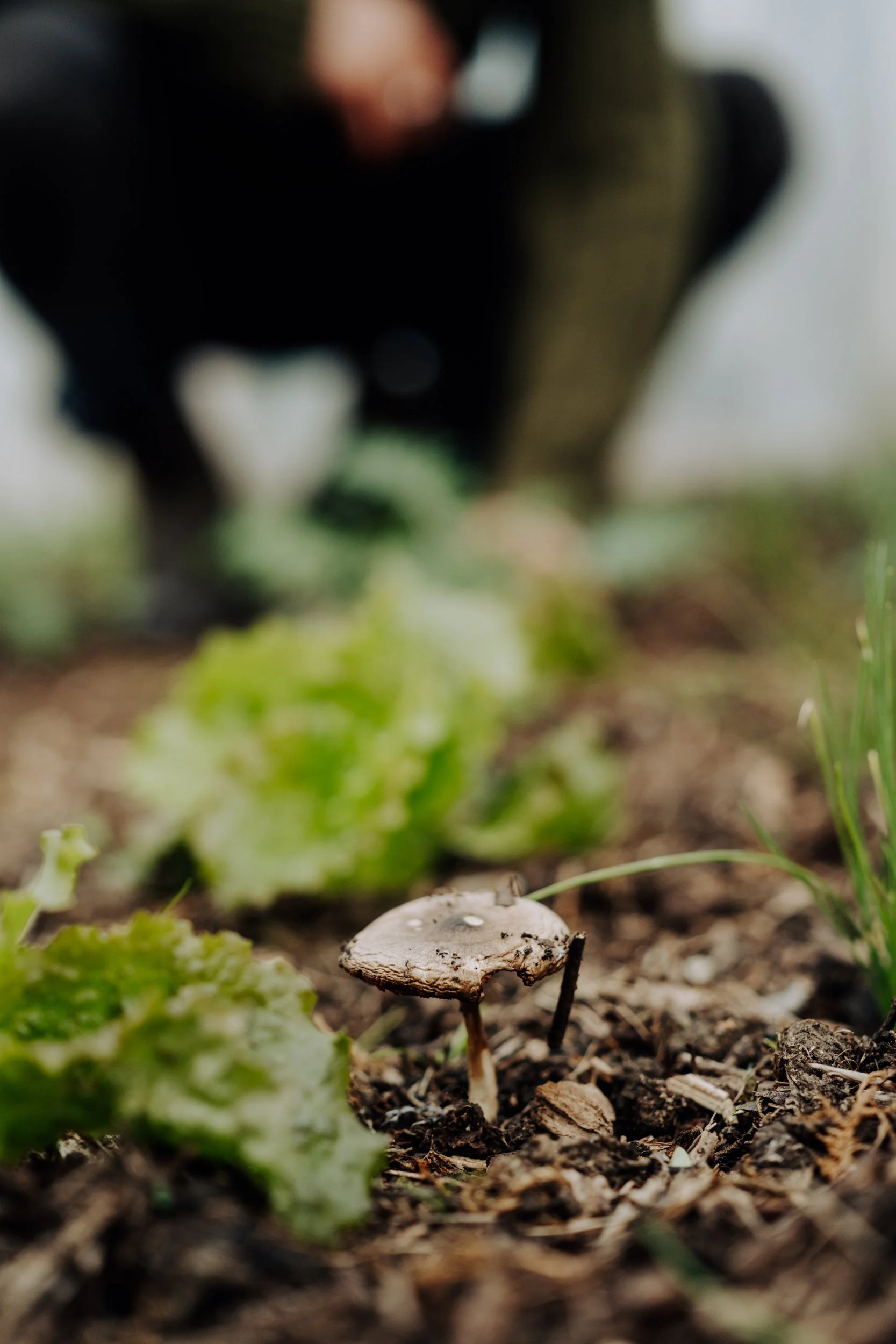
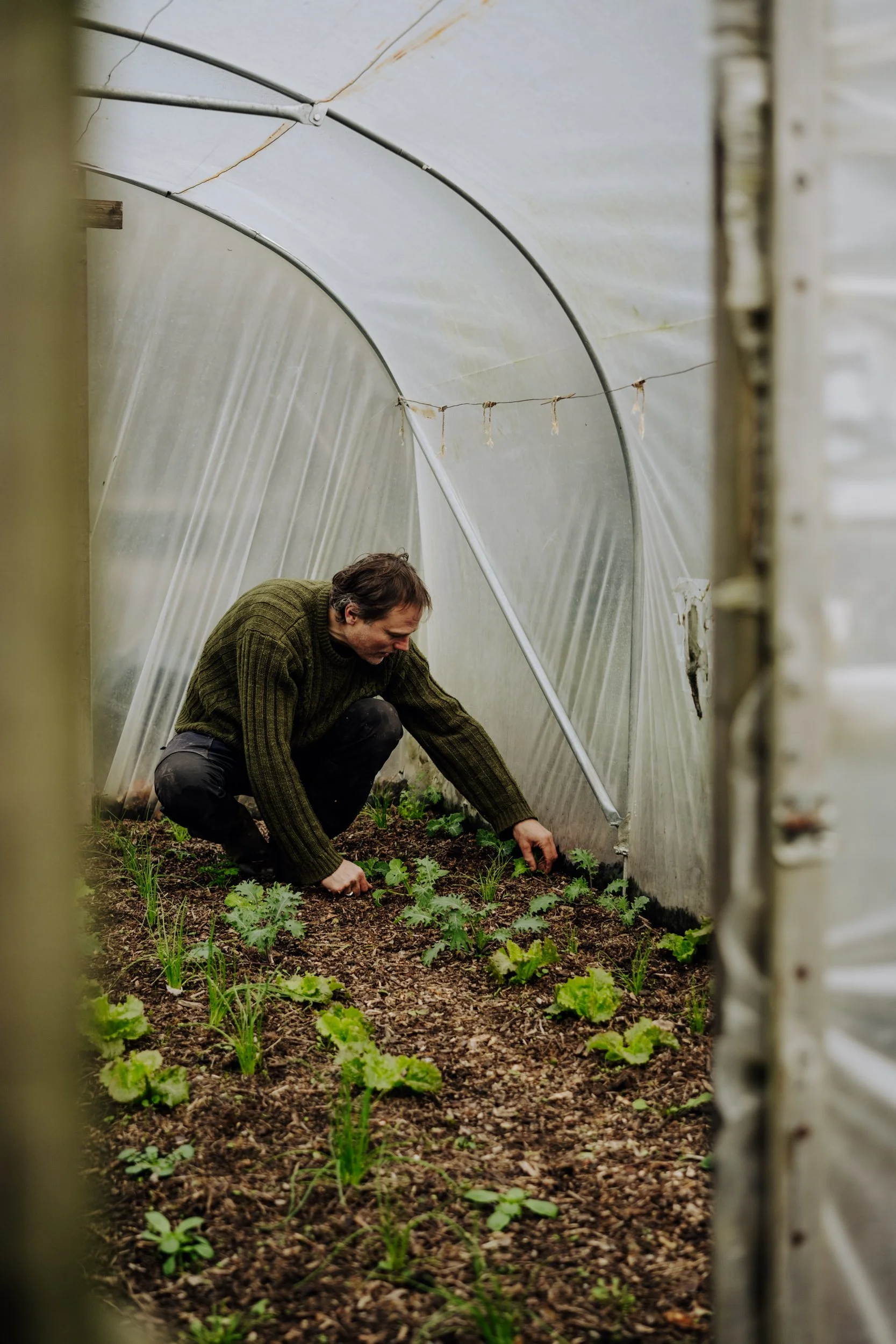
Spring
The air feels different now.
Crisp but warm. The sun stronger. The soil dark, soft and very much alive.
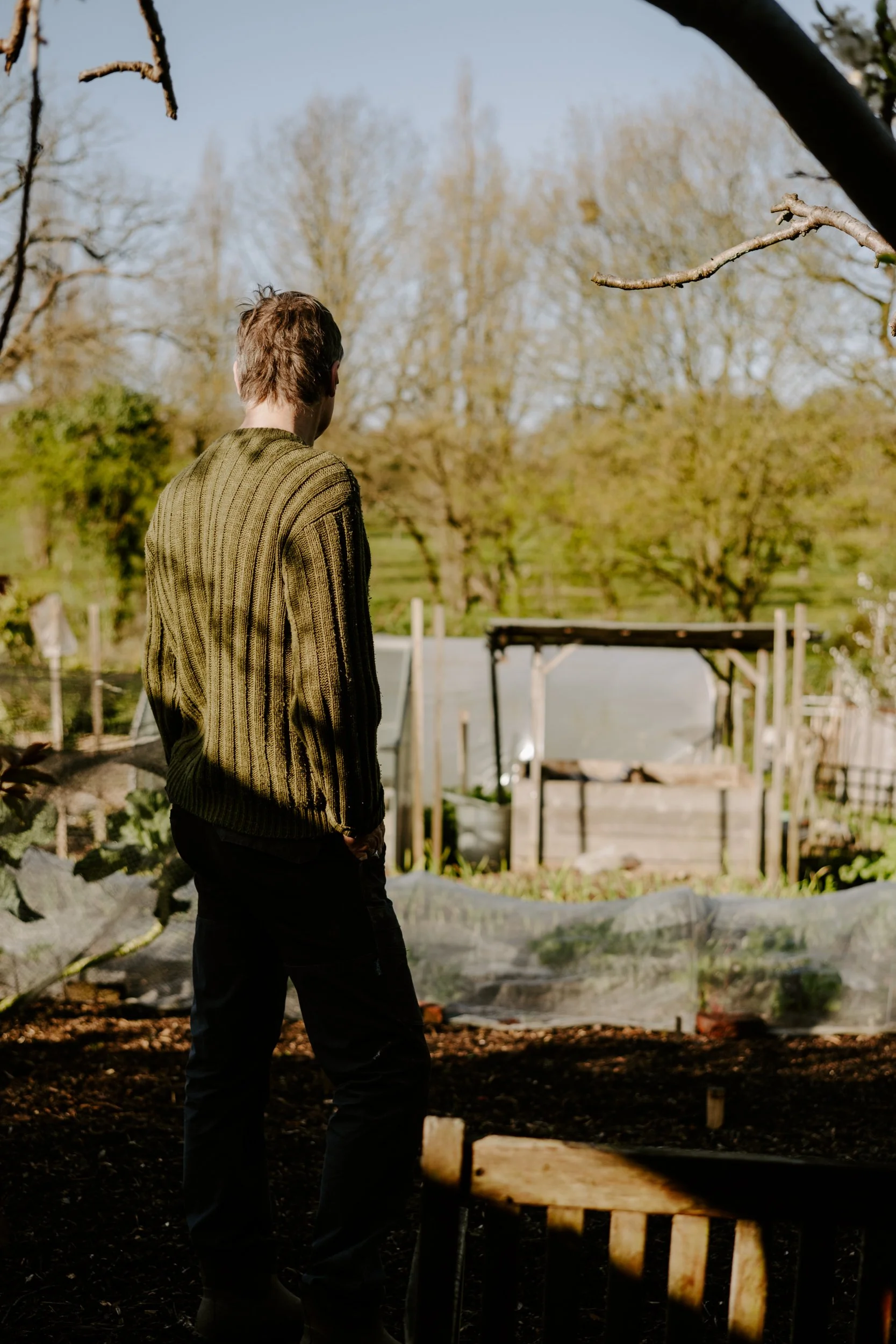
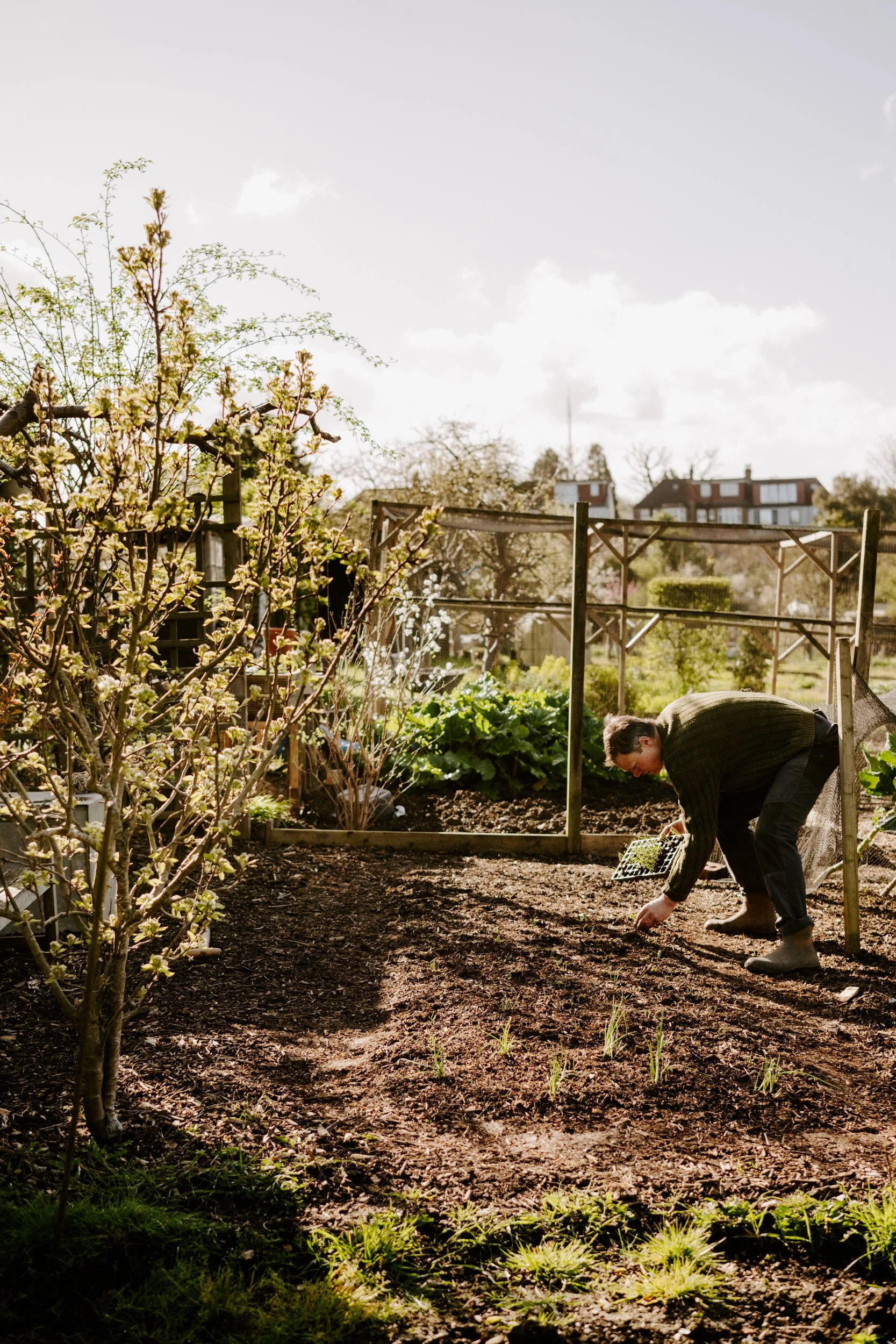
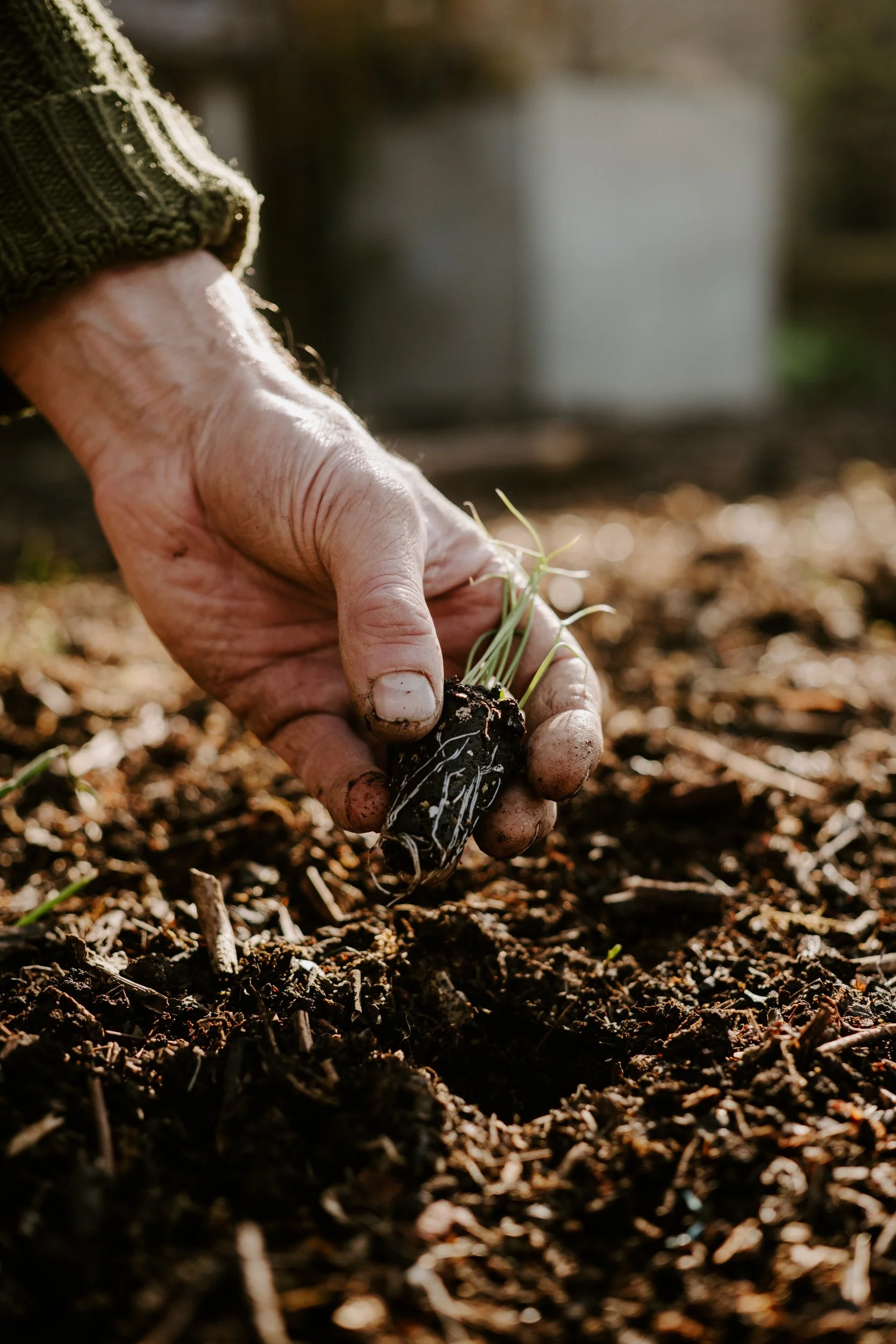
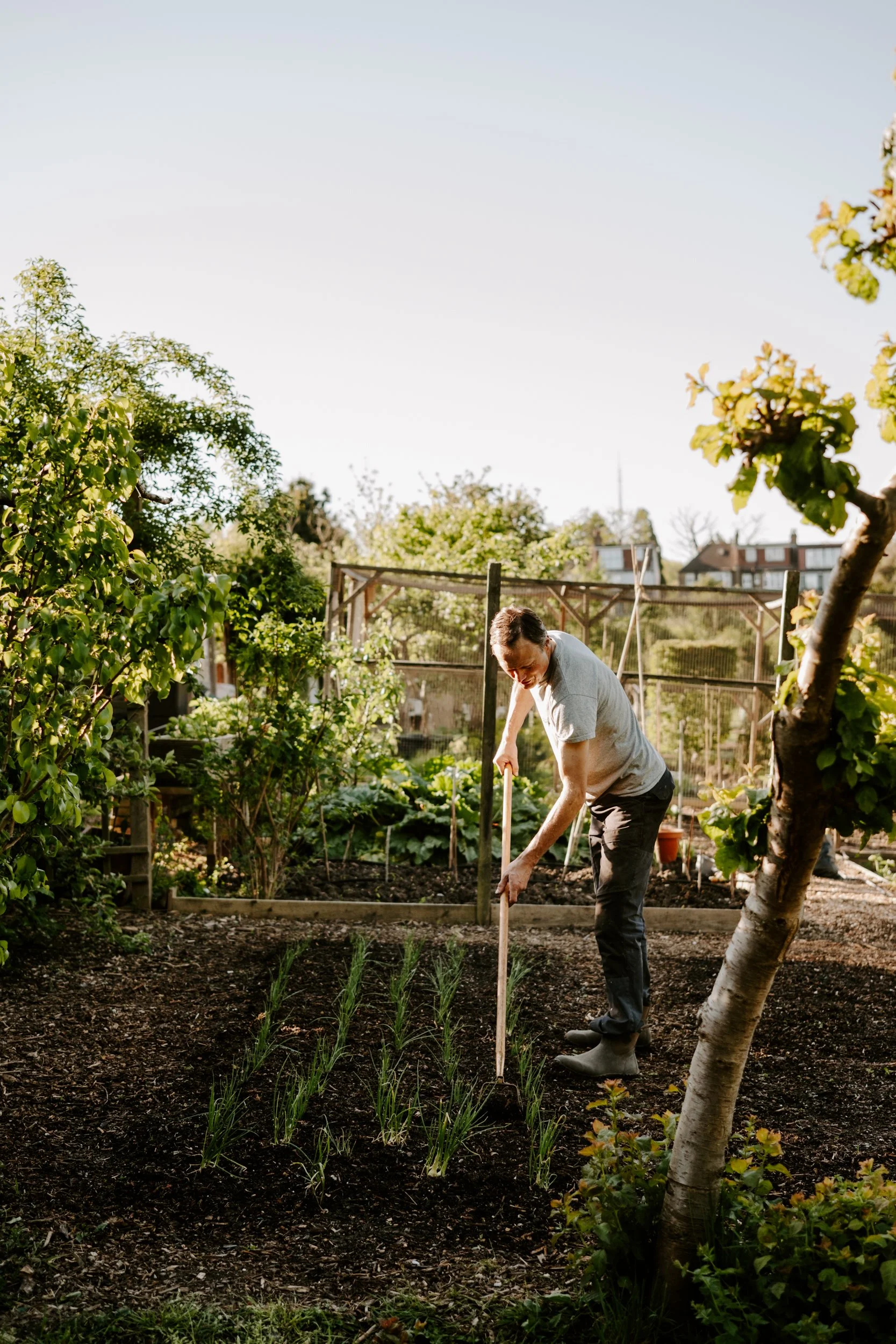
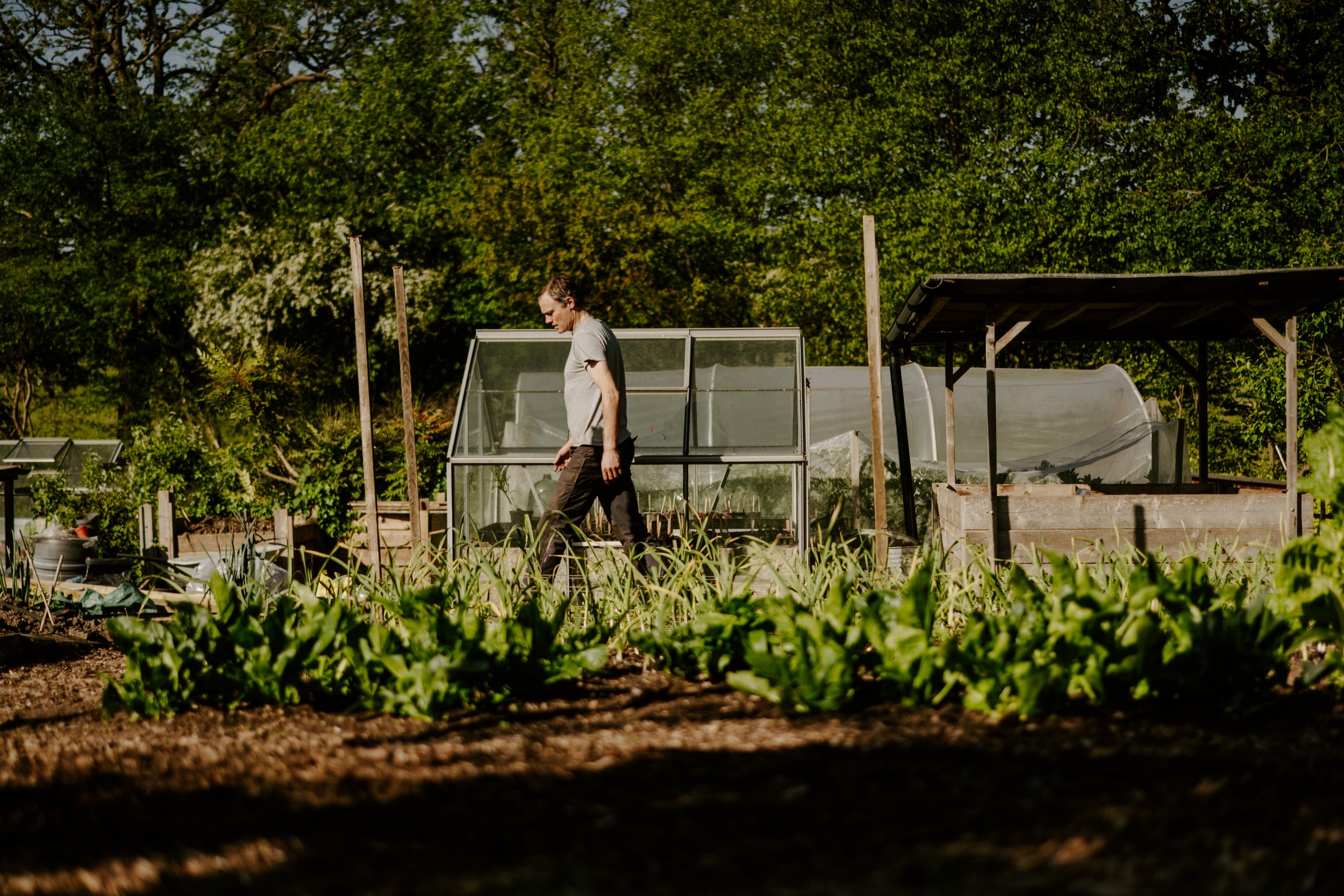
James is planting onions into a bed laid with fresh compost.
No digging here.
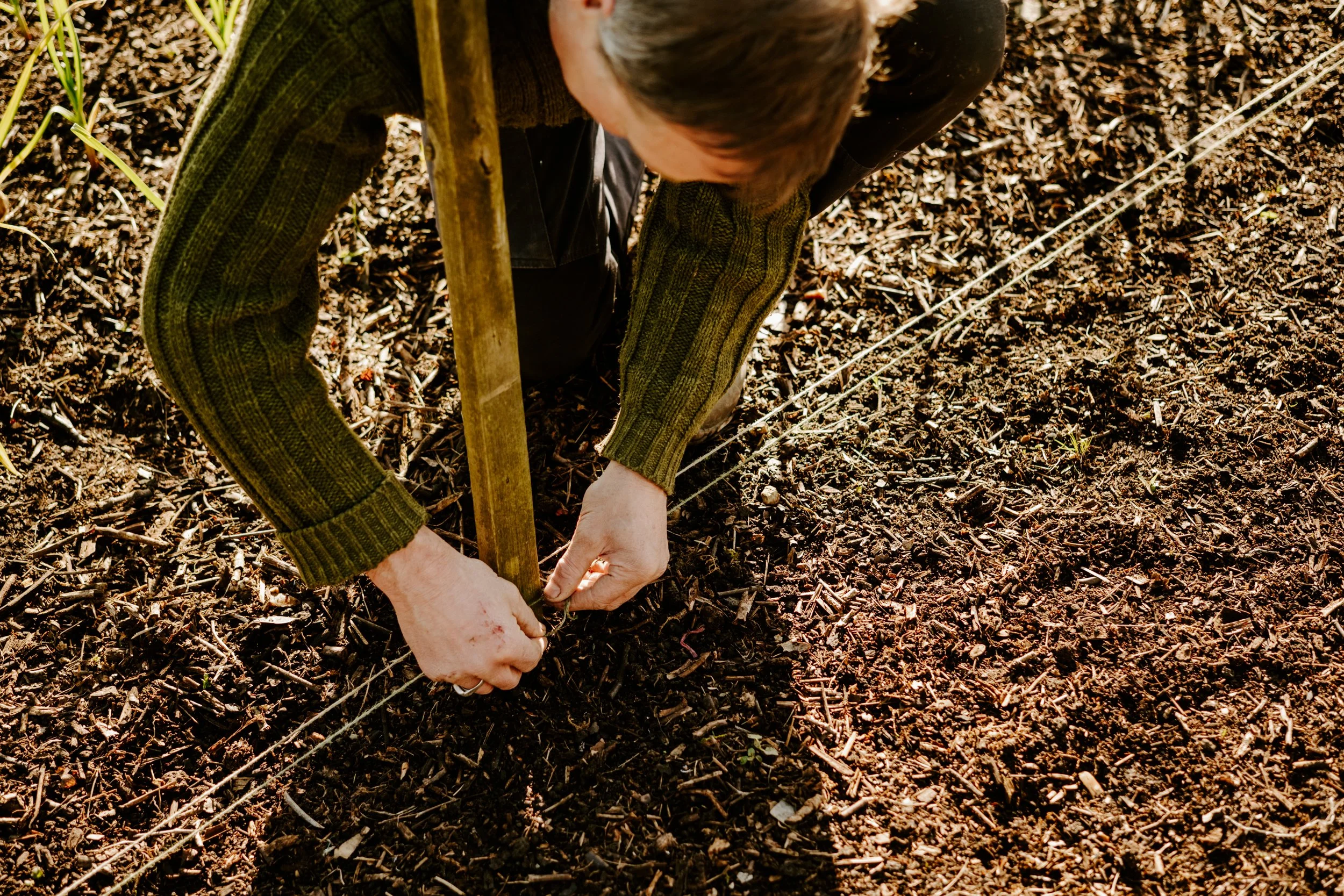
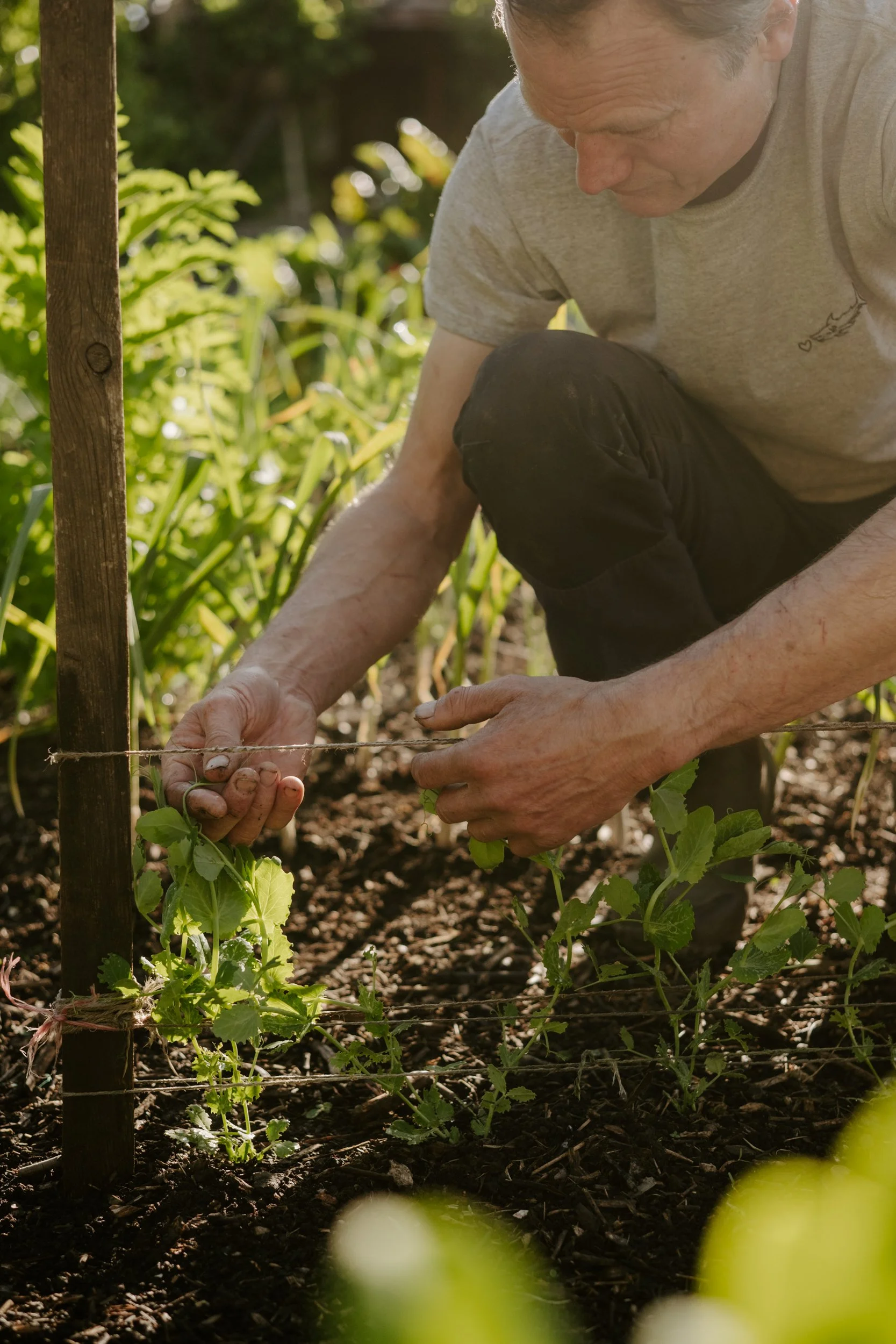
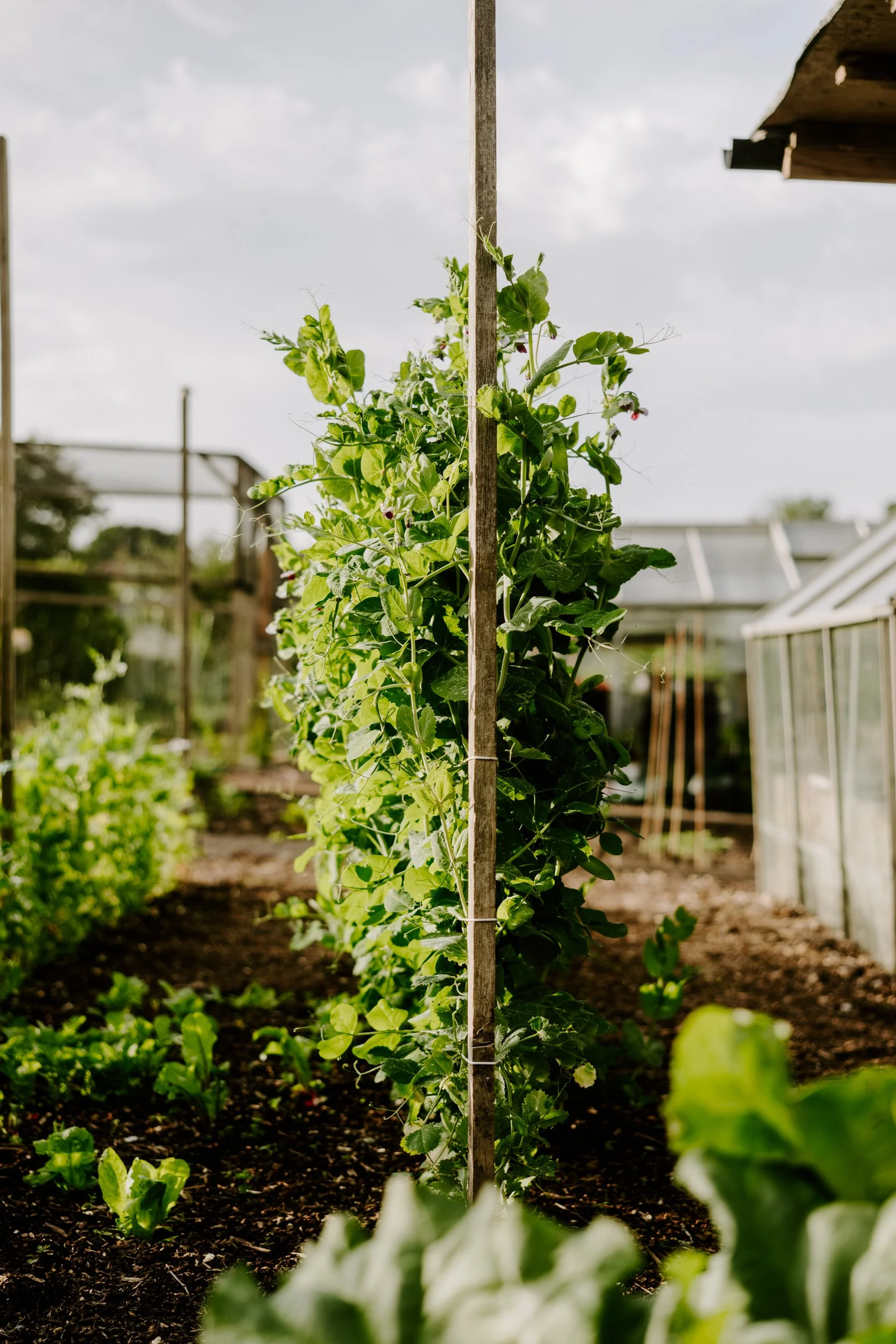
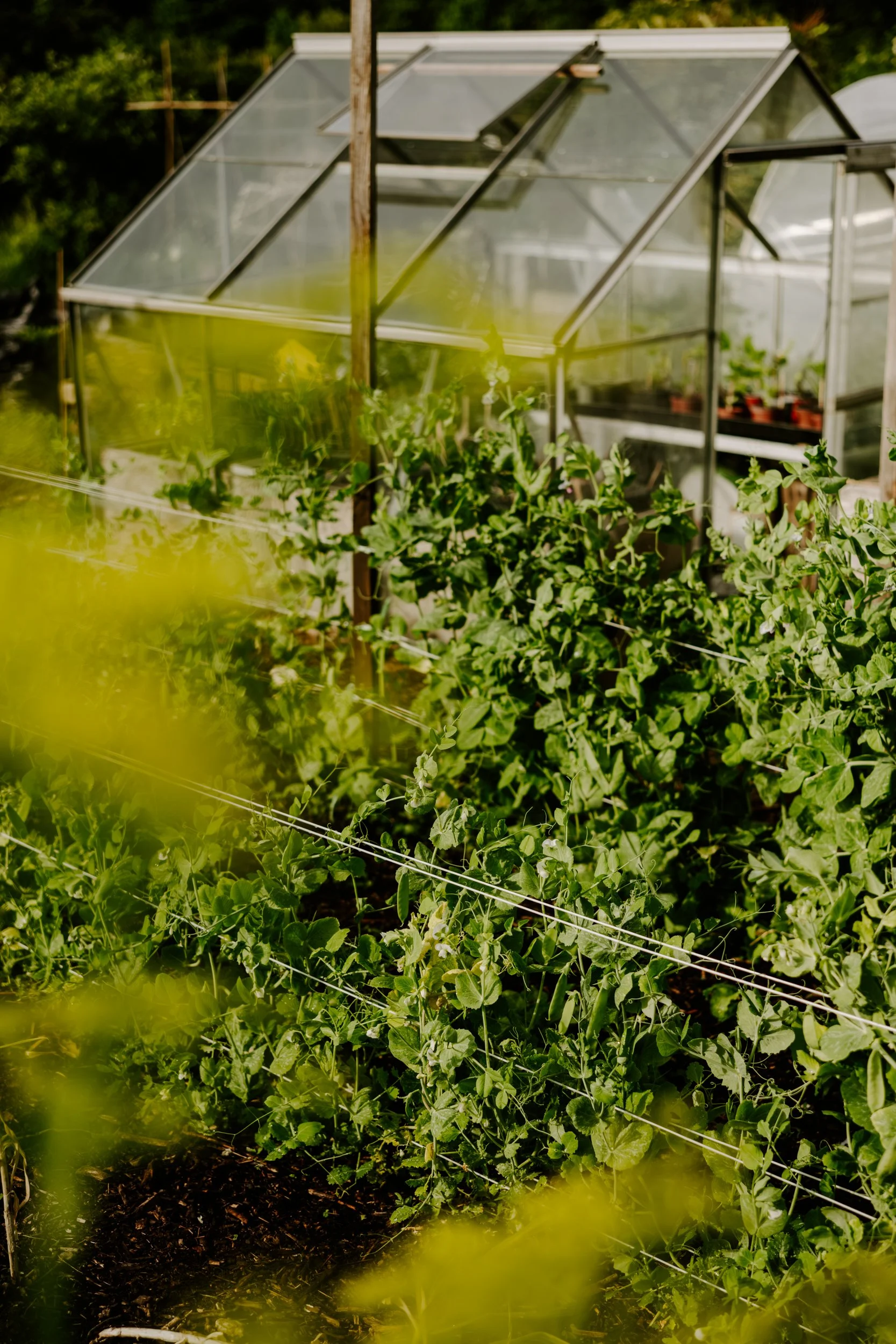
Straight lines of string are run from posts across the bed for the peas, spaced wide to give them room for climbing.
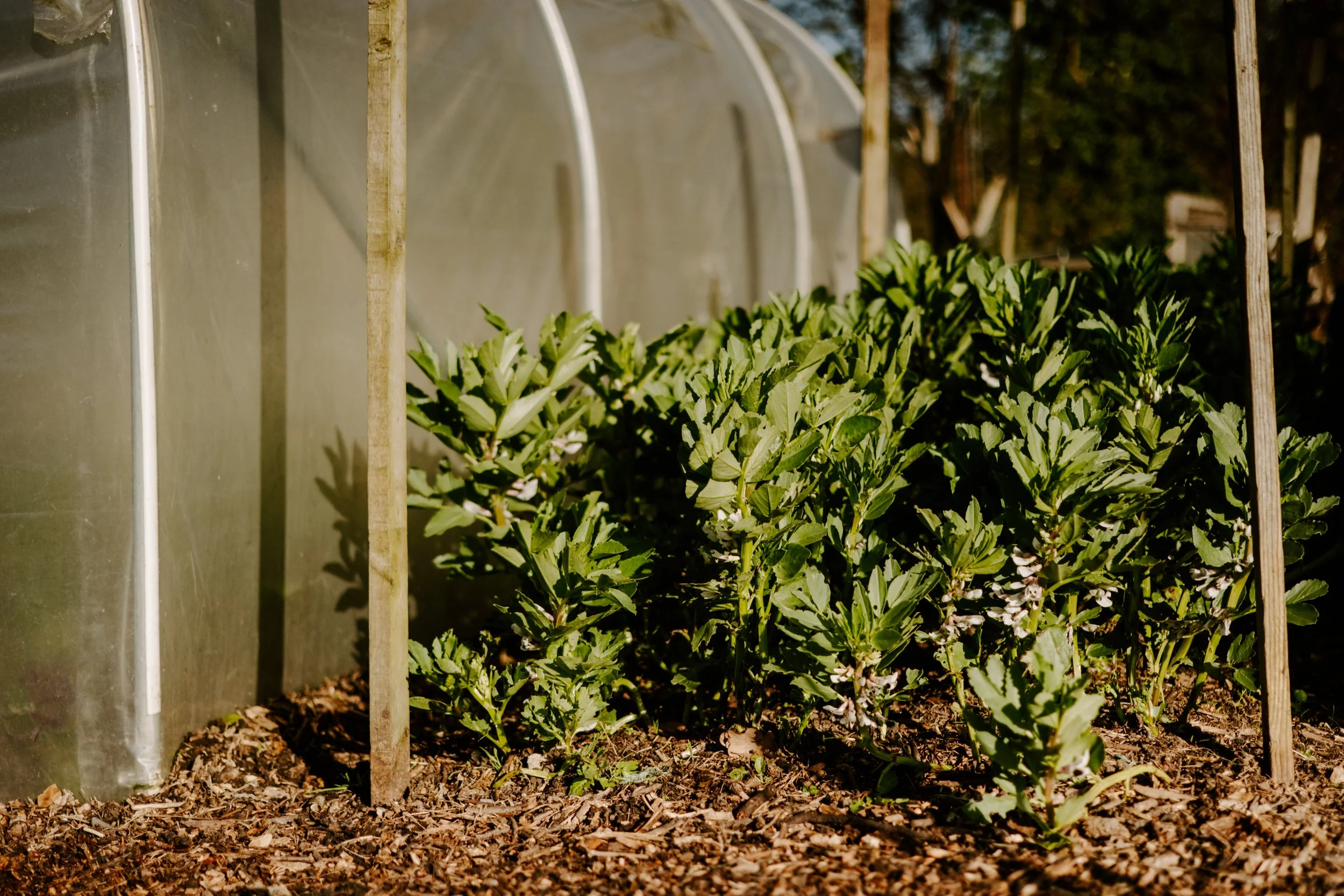
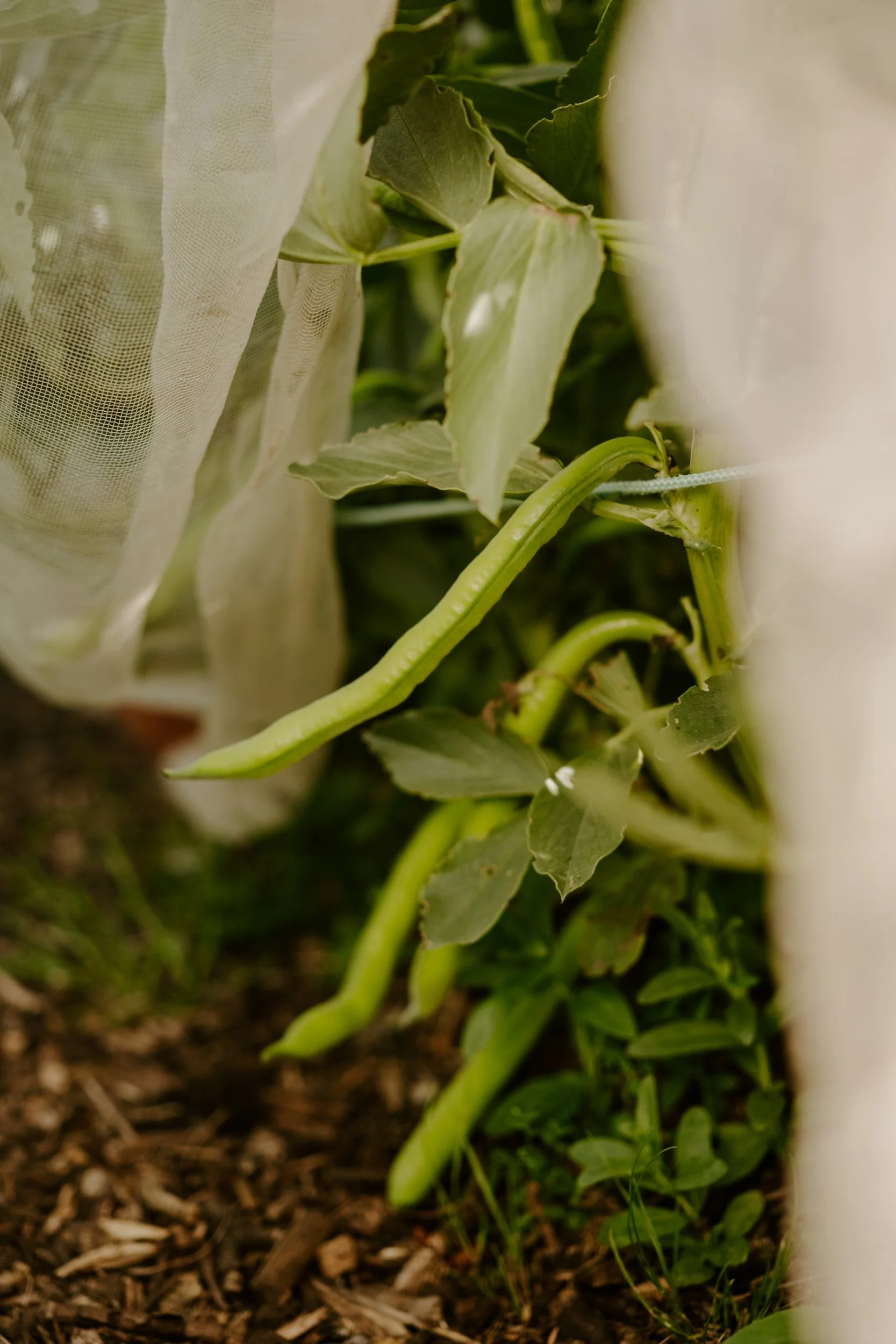
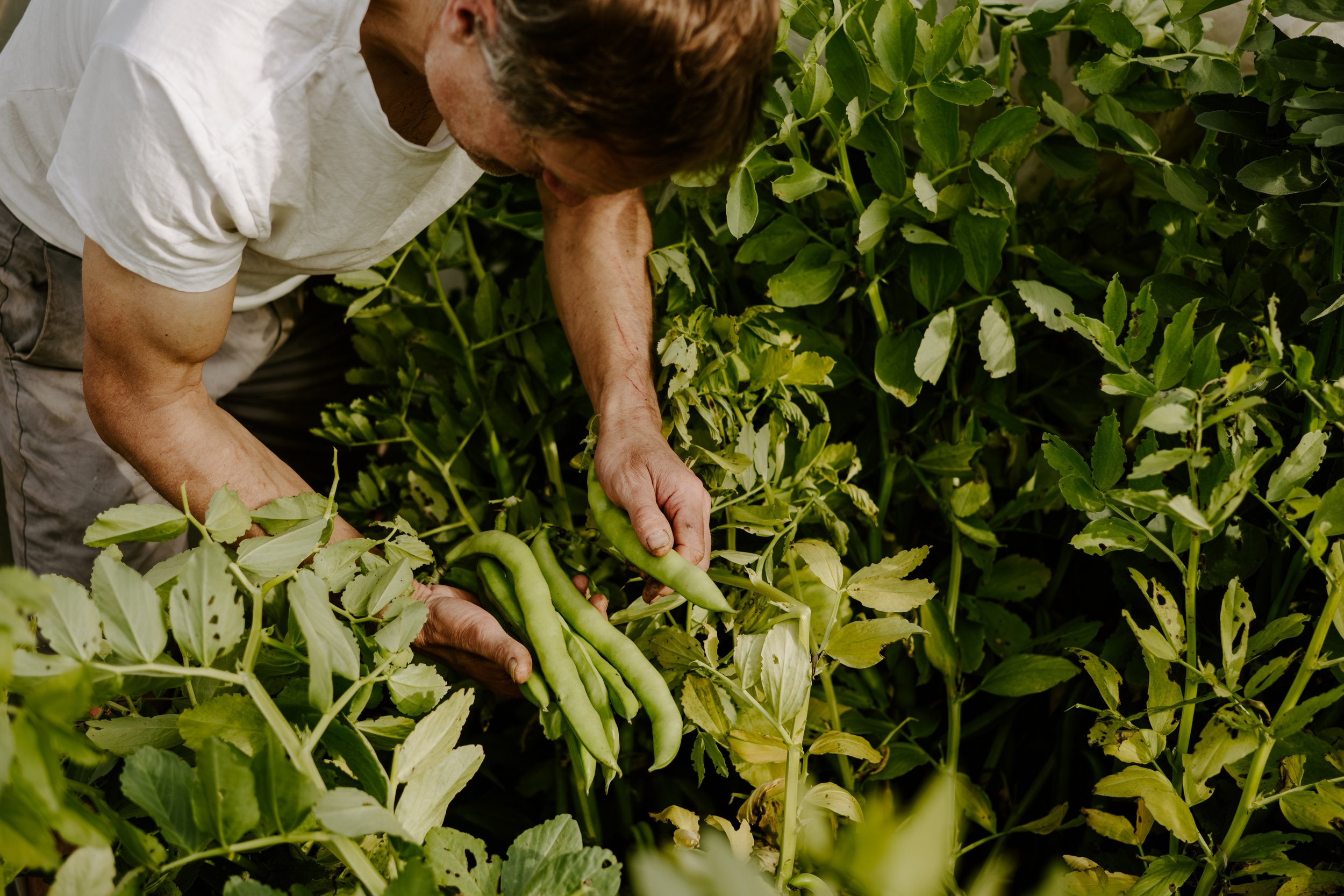
The broad beans are ahead of everything. Strong stems, thick leaves all around. Very healthy-looking plants.
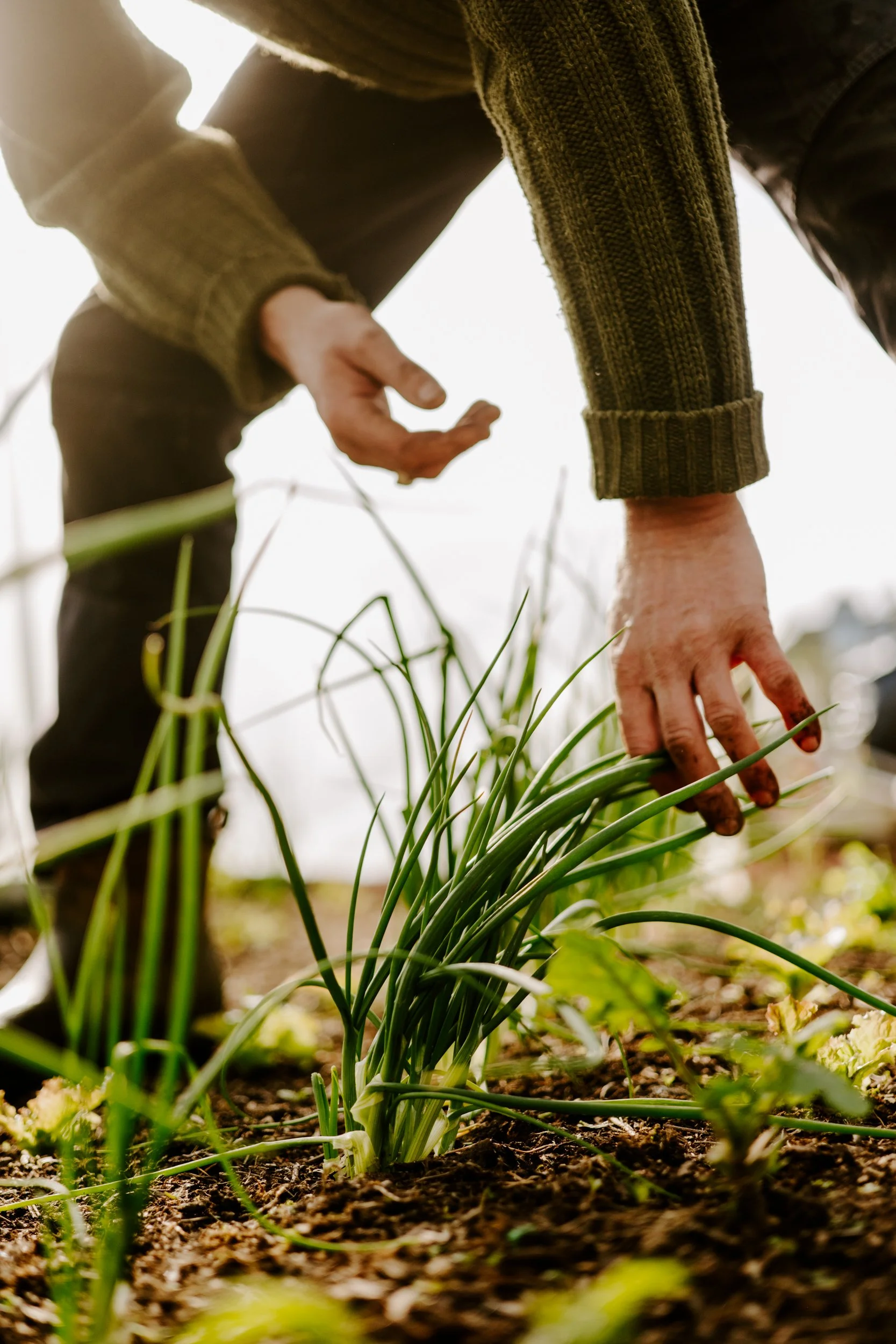
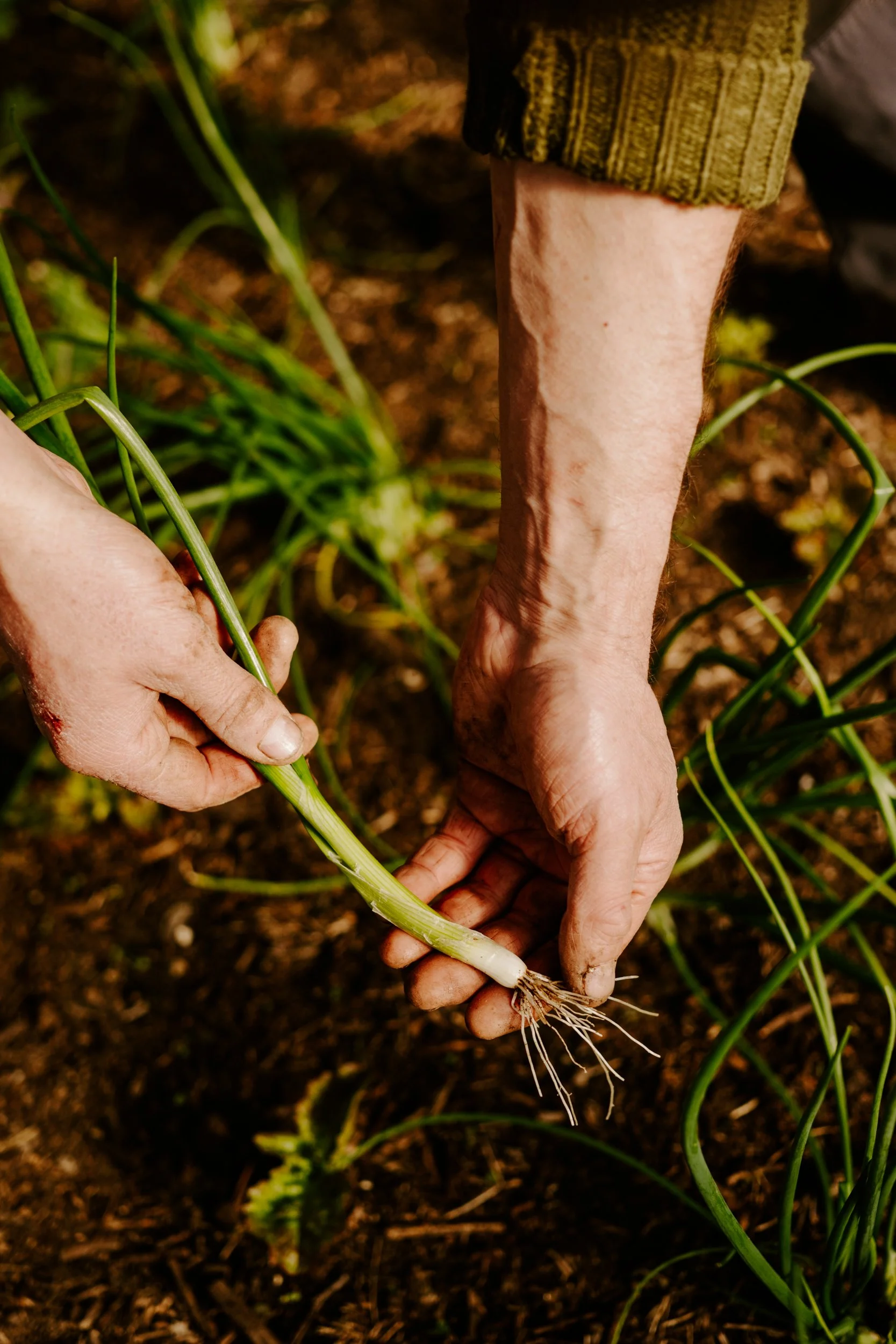
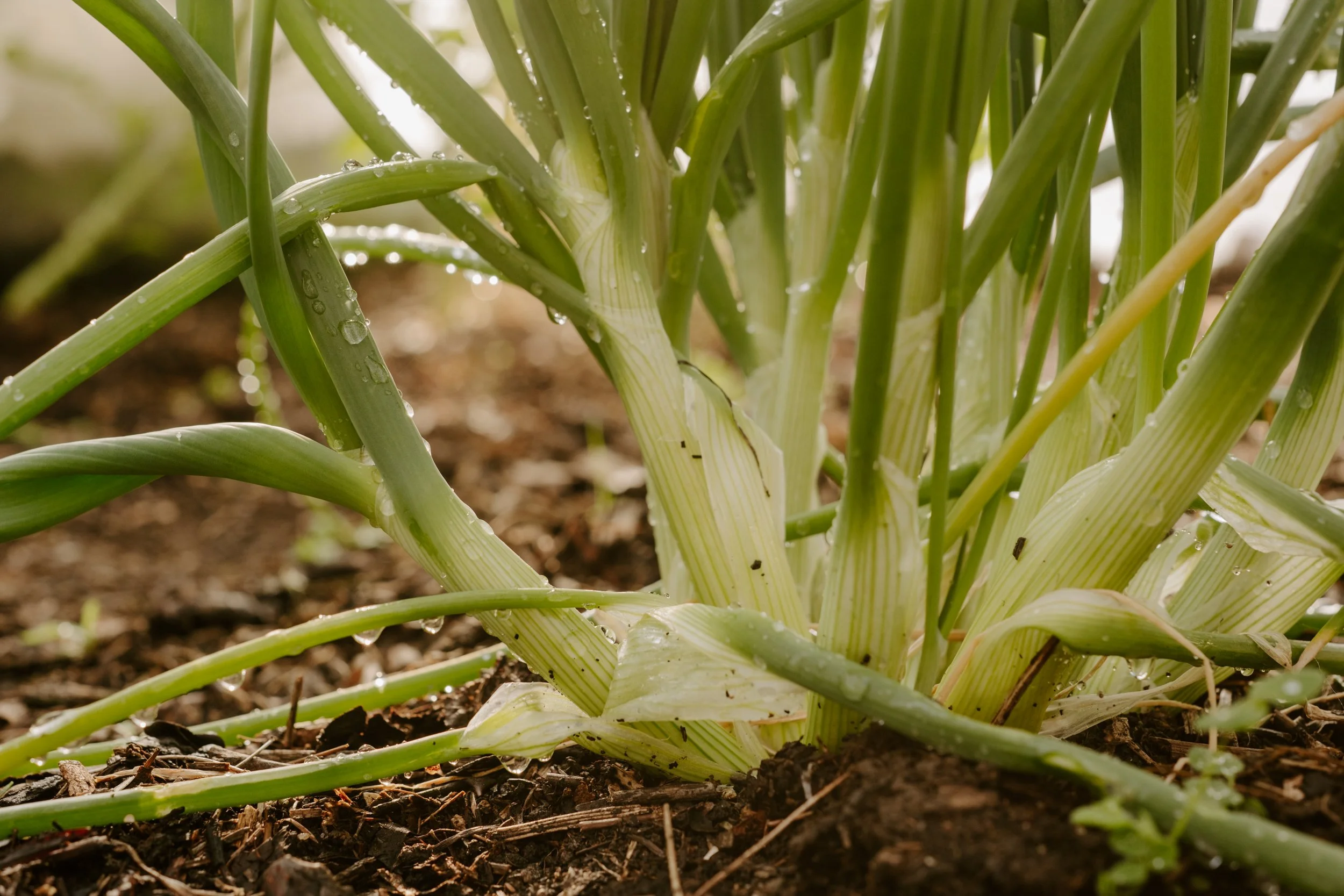
James steps into the polytunnel to check on the spring onions. Ready to harvest. He brushes one clean with his hands.
The cherry and fruit trees are close now. Buds breaking. A few blossoms showing.
Another week of sun, maybe less, and they’ll open fully.
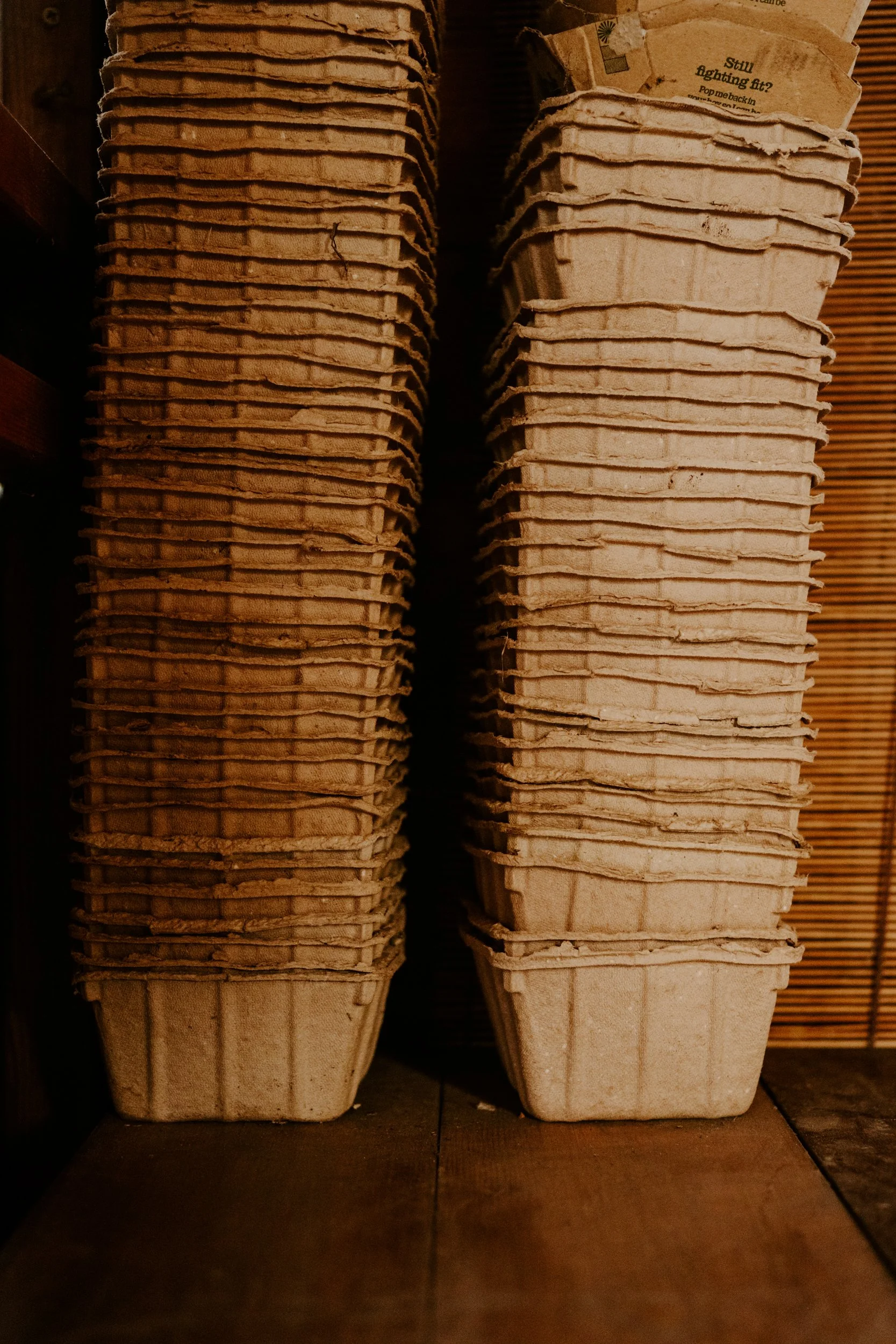
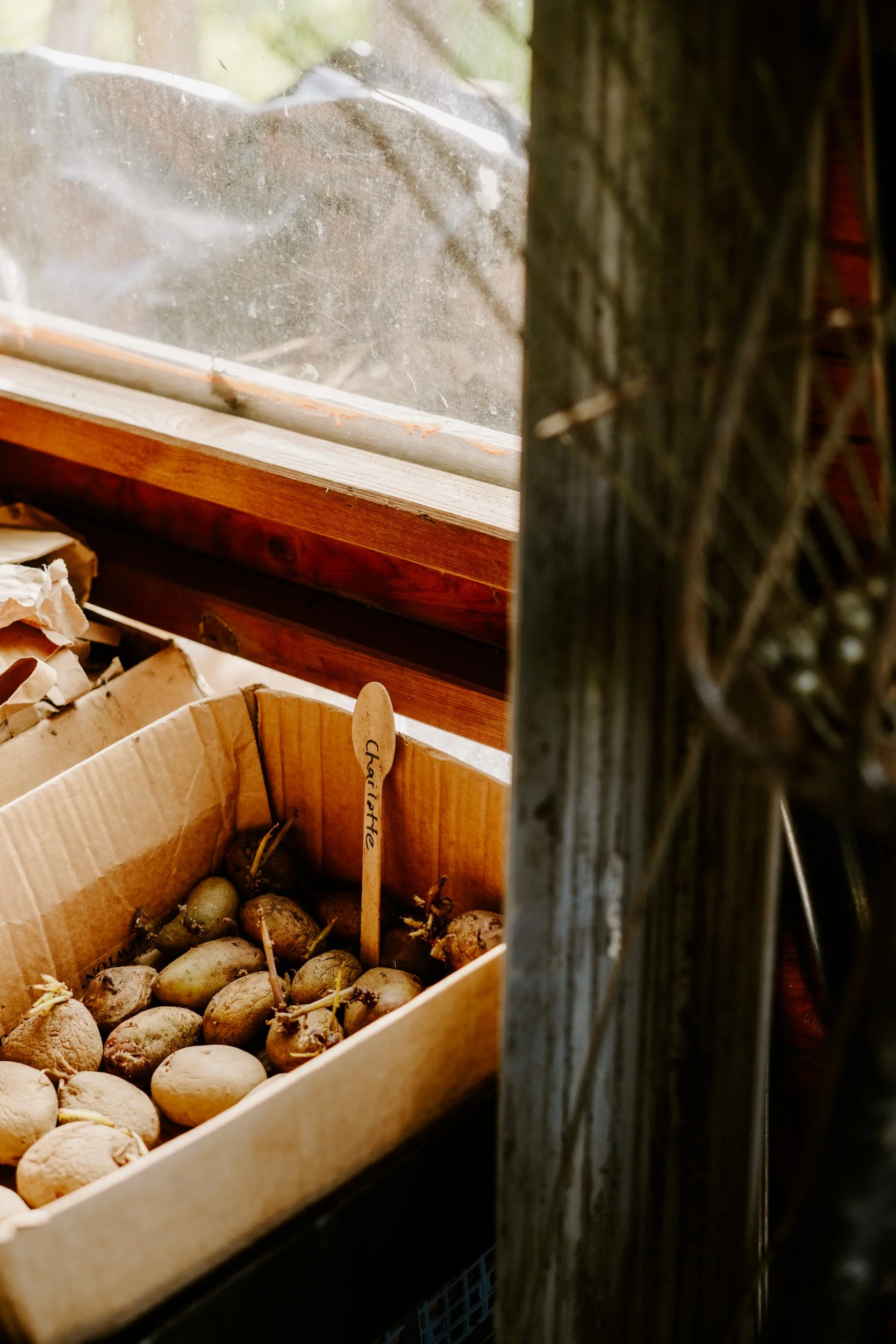
Inside the shed, by the window, trays of potatoes sit in the light. Charlotte. King Edward. Small chits just pushing through.
James keeps them there so they don’t rush. Too long and they snap.
Here at the allotment nothing is in a hurry. It’ll happen in time.
Nature’s pace is worth watching.
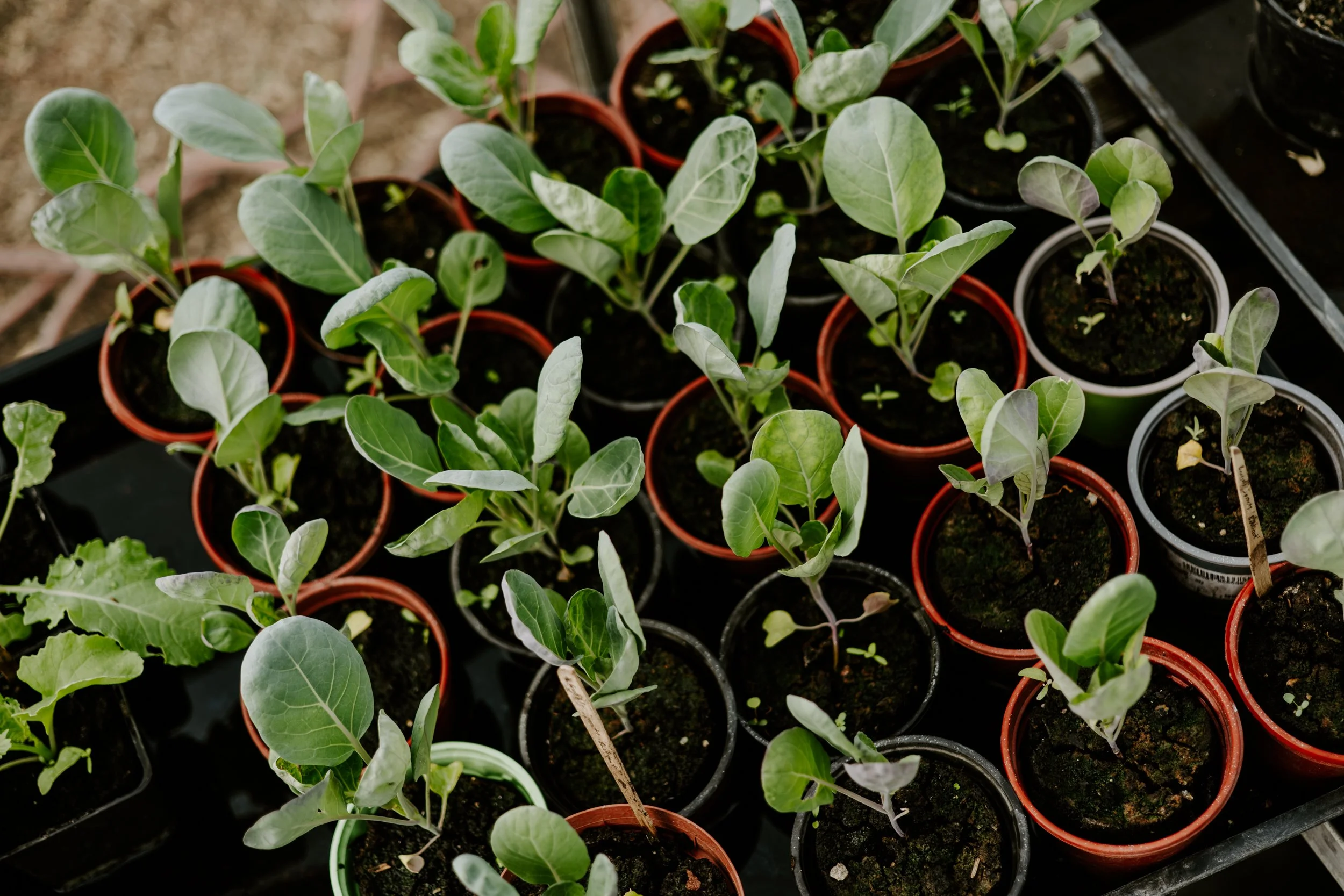
The mass of sowing is now underway, while the overwintered plants have yet to bear fruit.
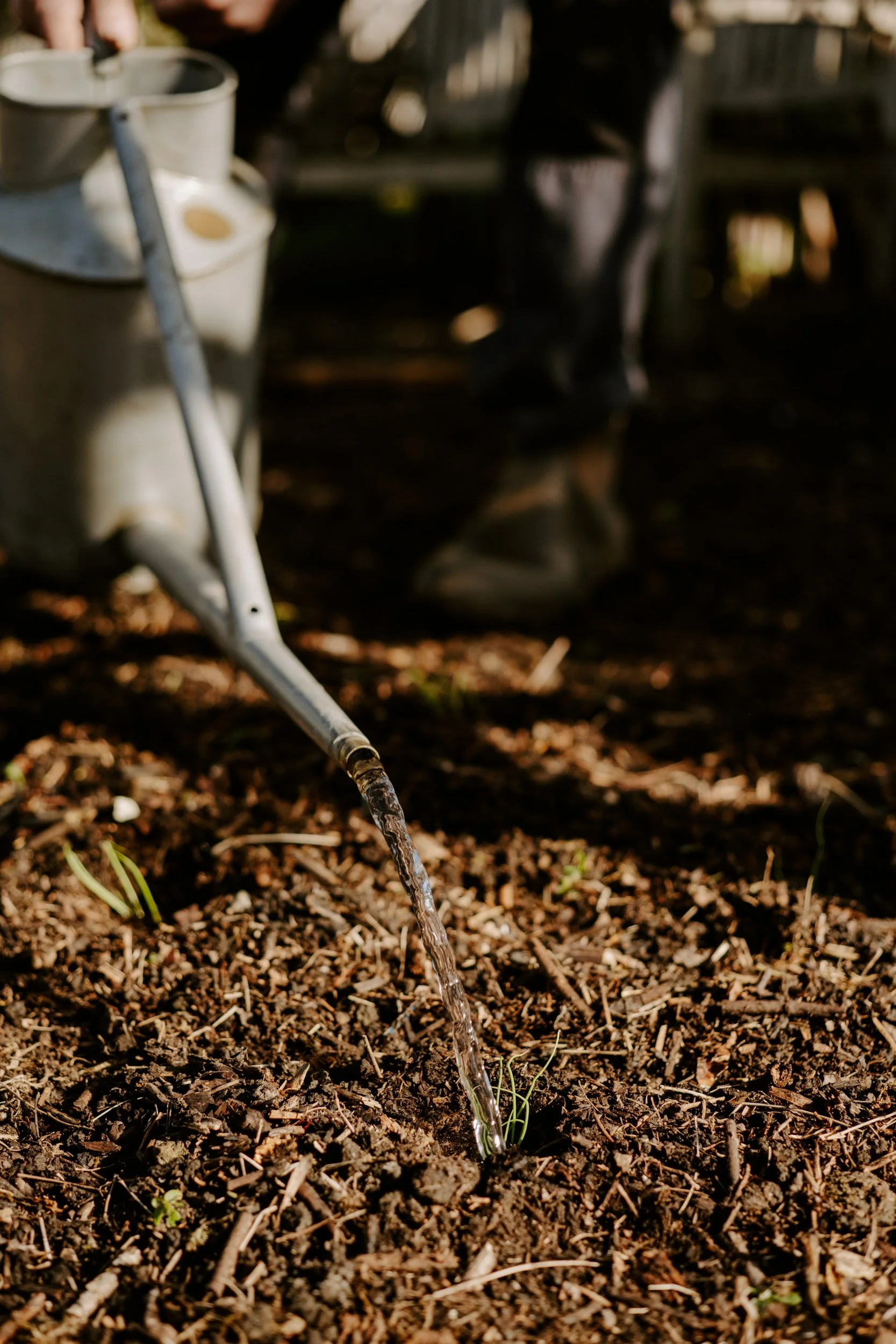
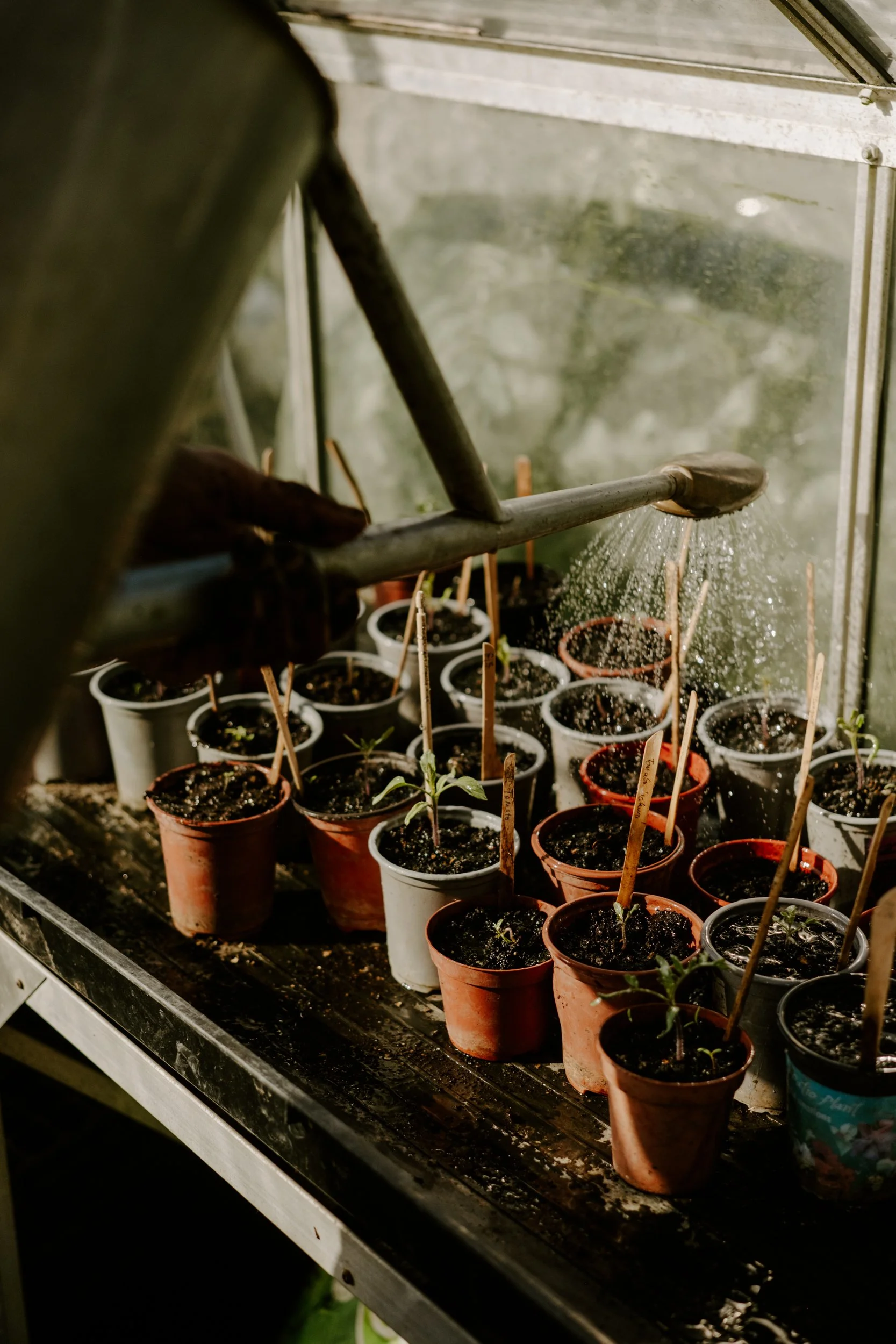
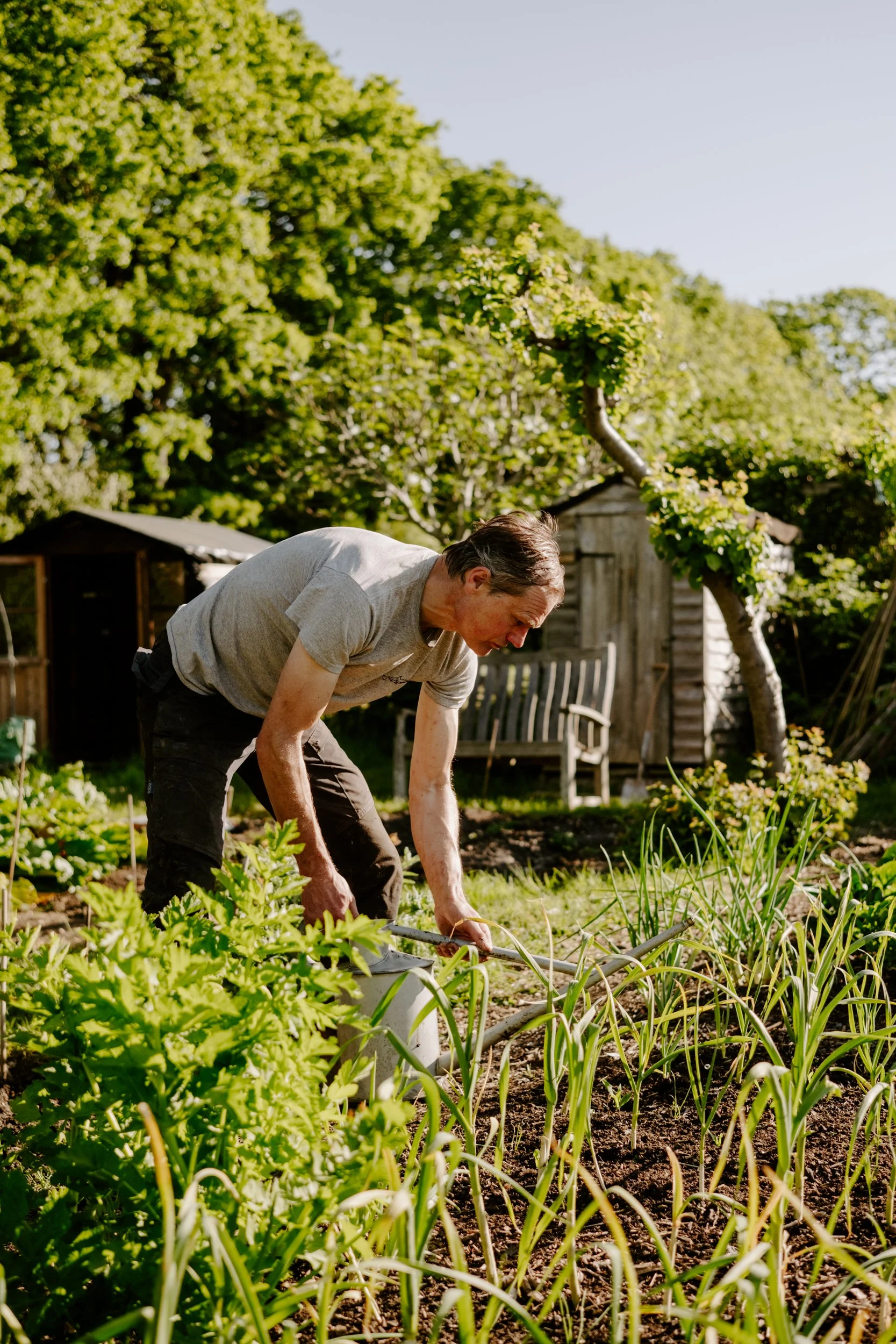
There is time for the other jobs. Weeding. Watering.
Tying in the peas.
Who would have thought there would be drought conditions after all the winter rain?
The peas wind their curly tendrils up and around the vertical supports.
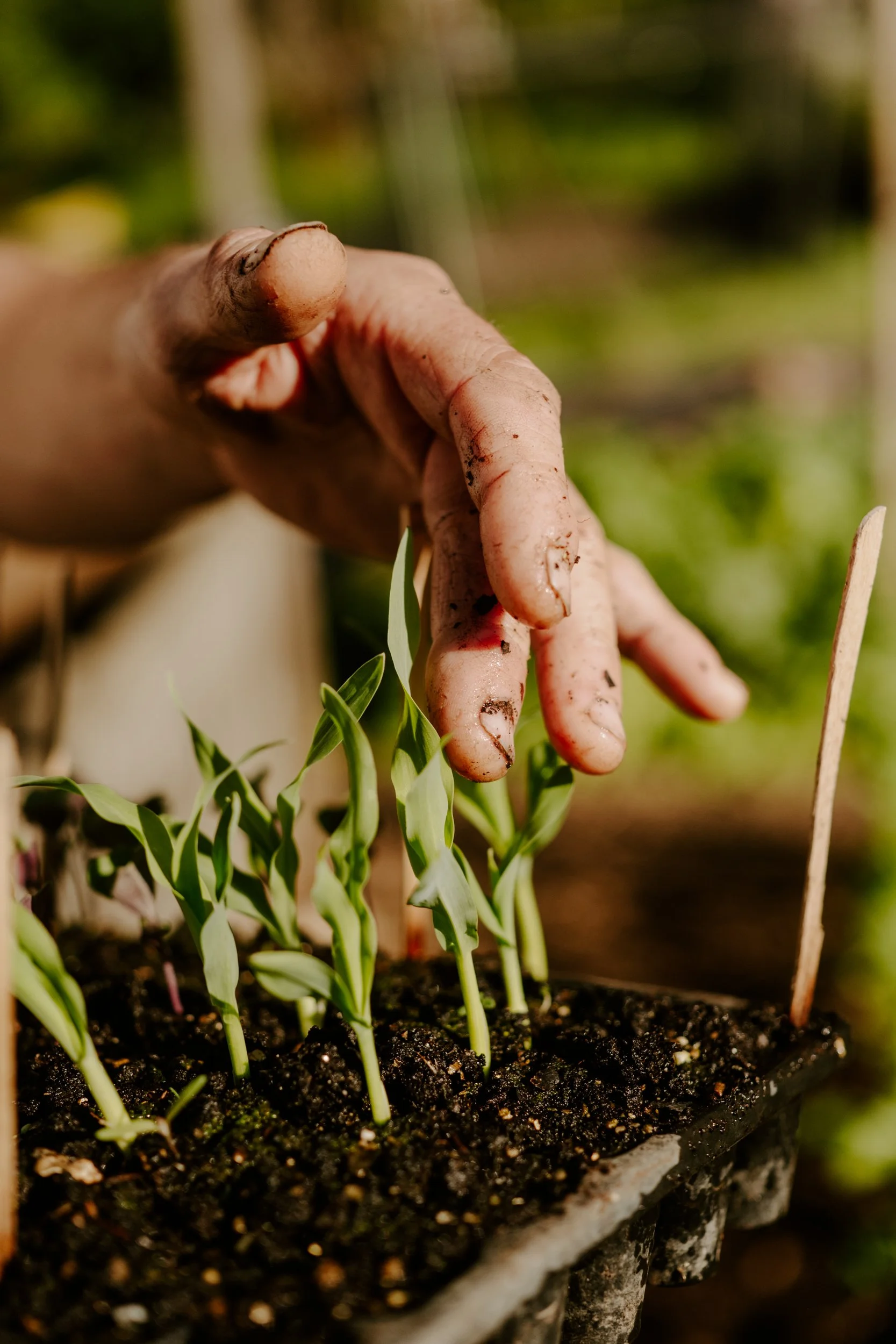
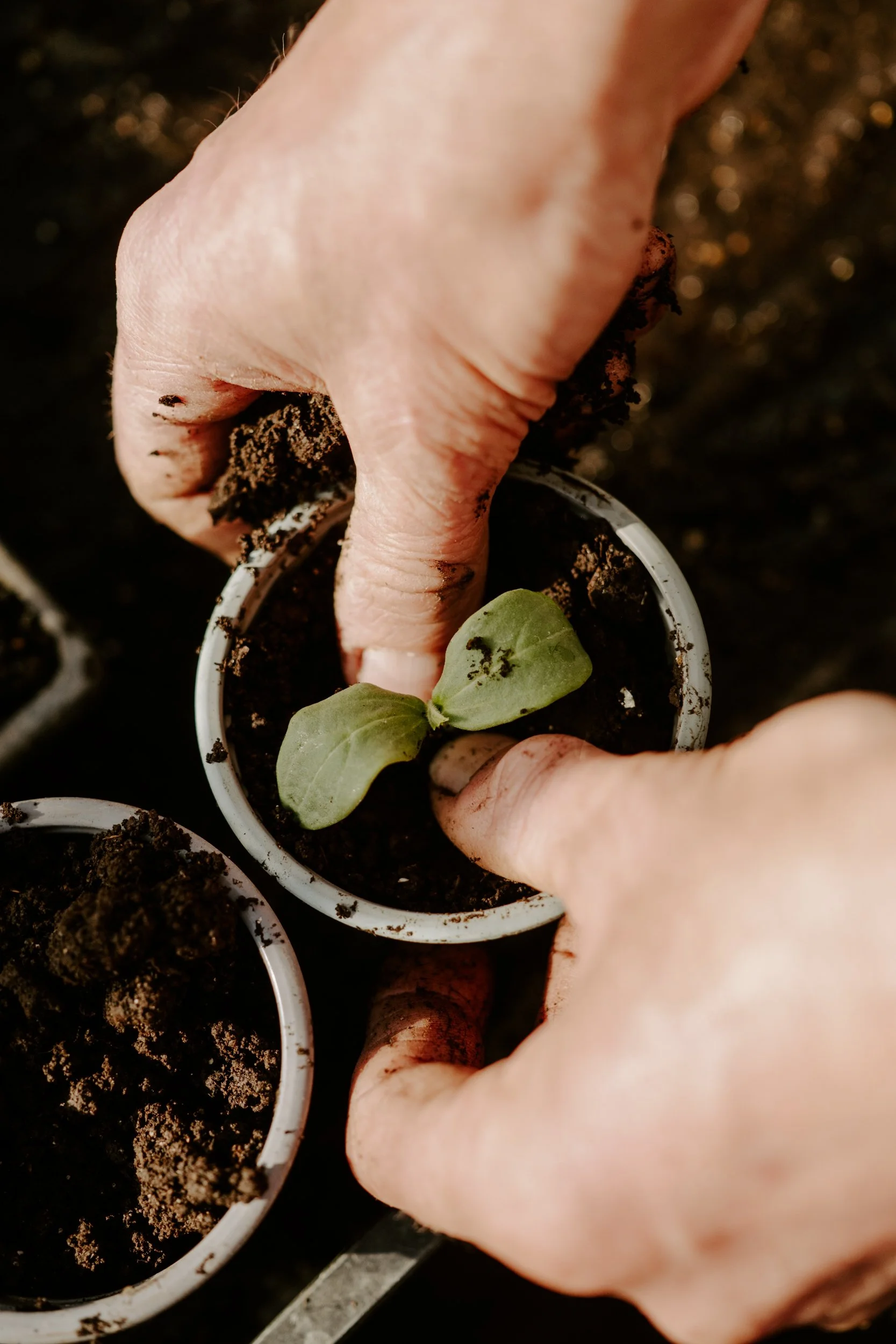
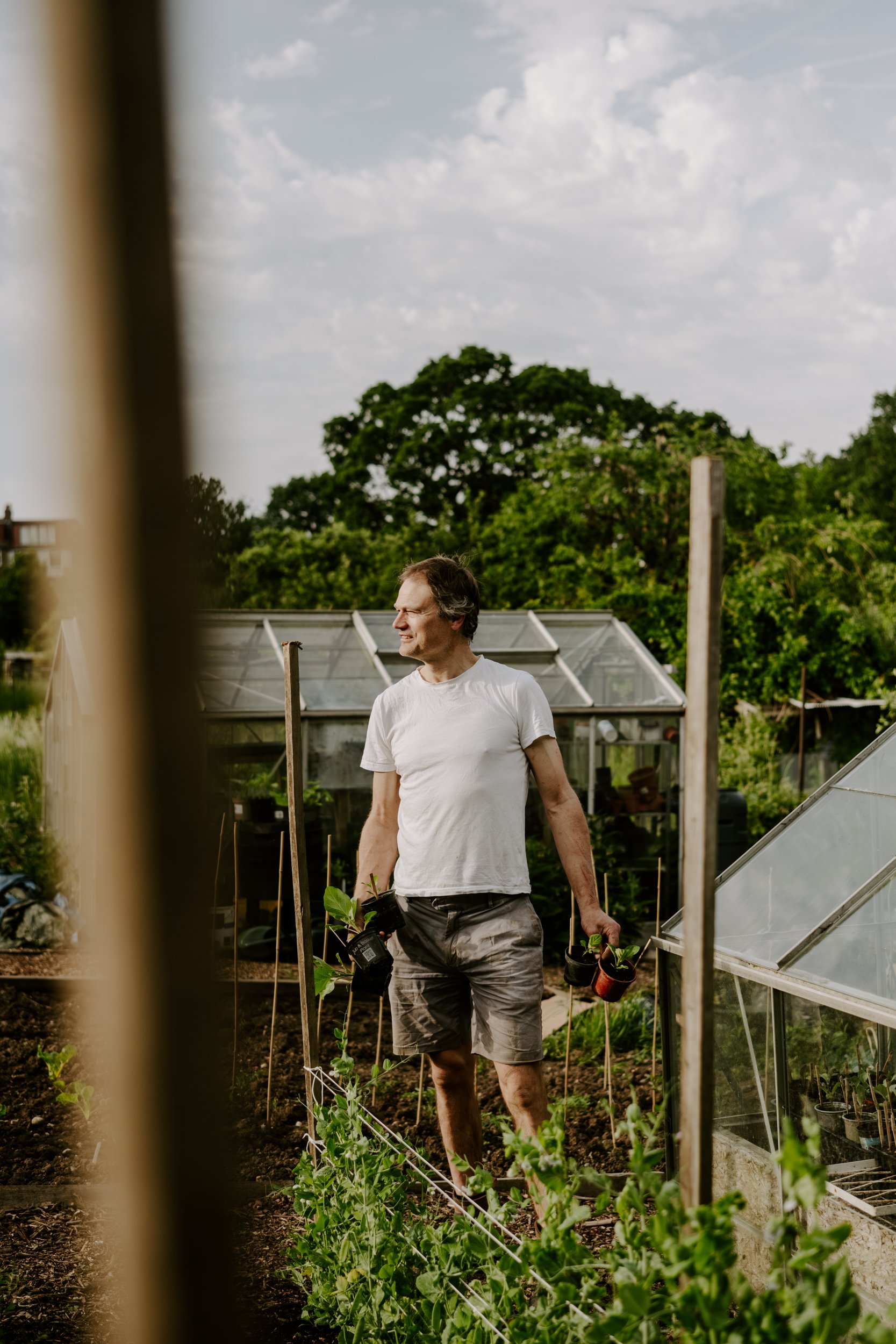
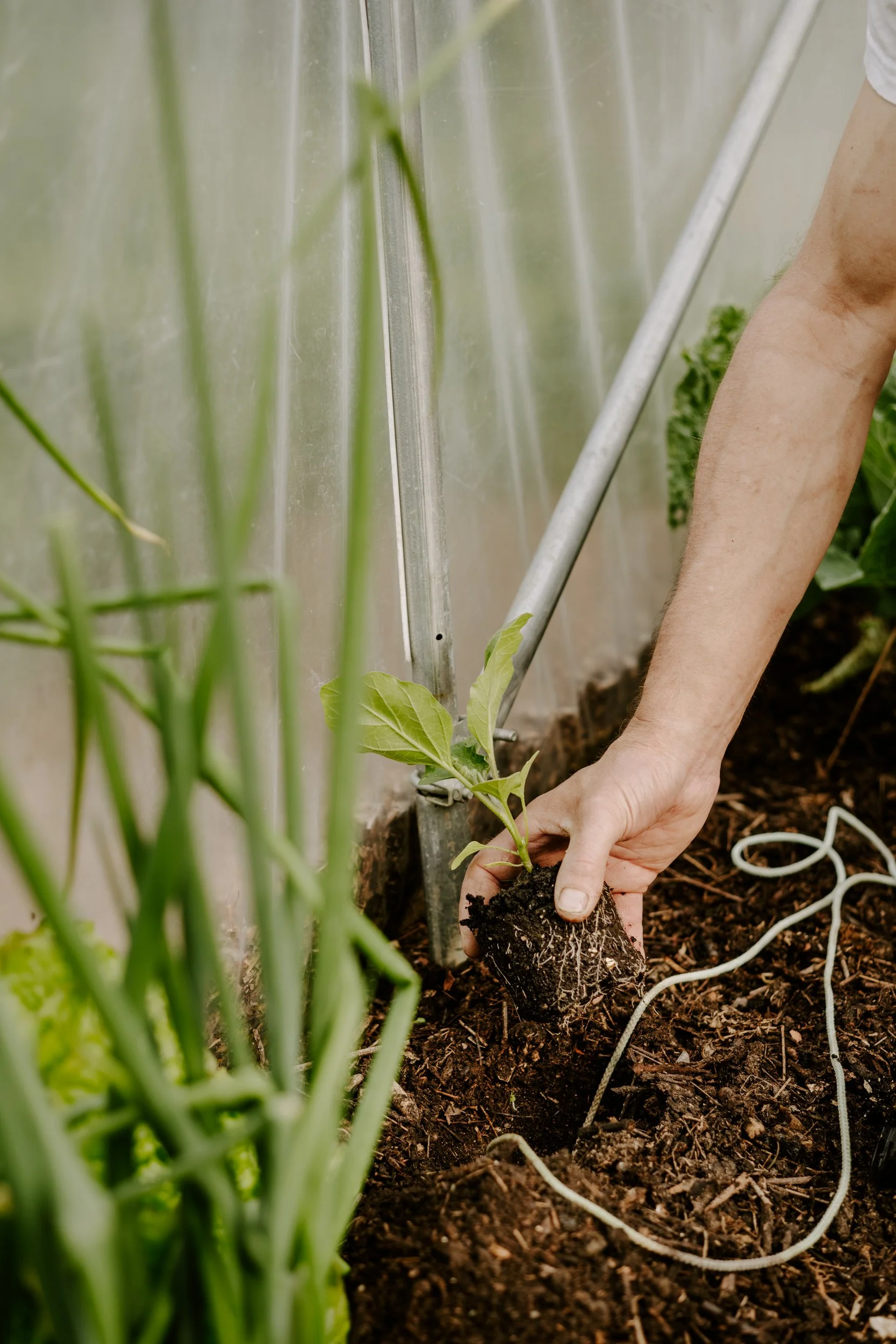
The cucumbers have grown too large for their module trays and need potting on. But there is no rush to plant them out. The last frosts still have to be avoided.
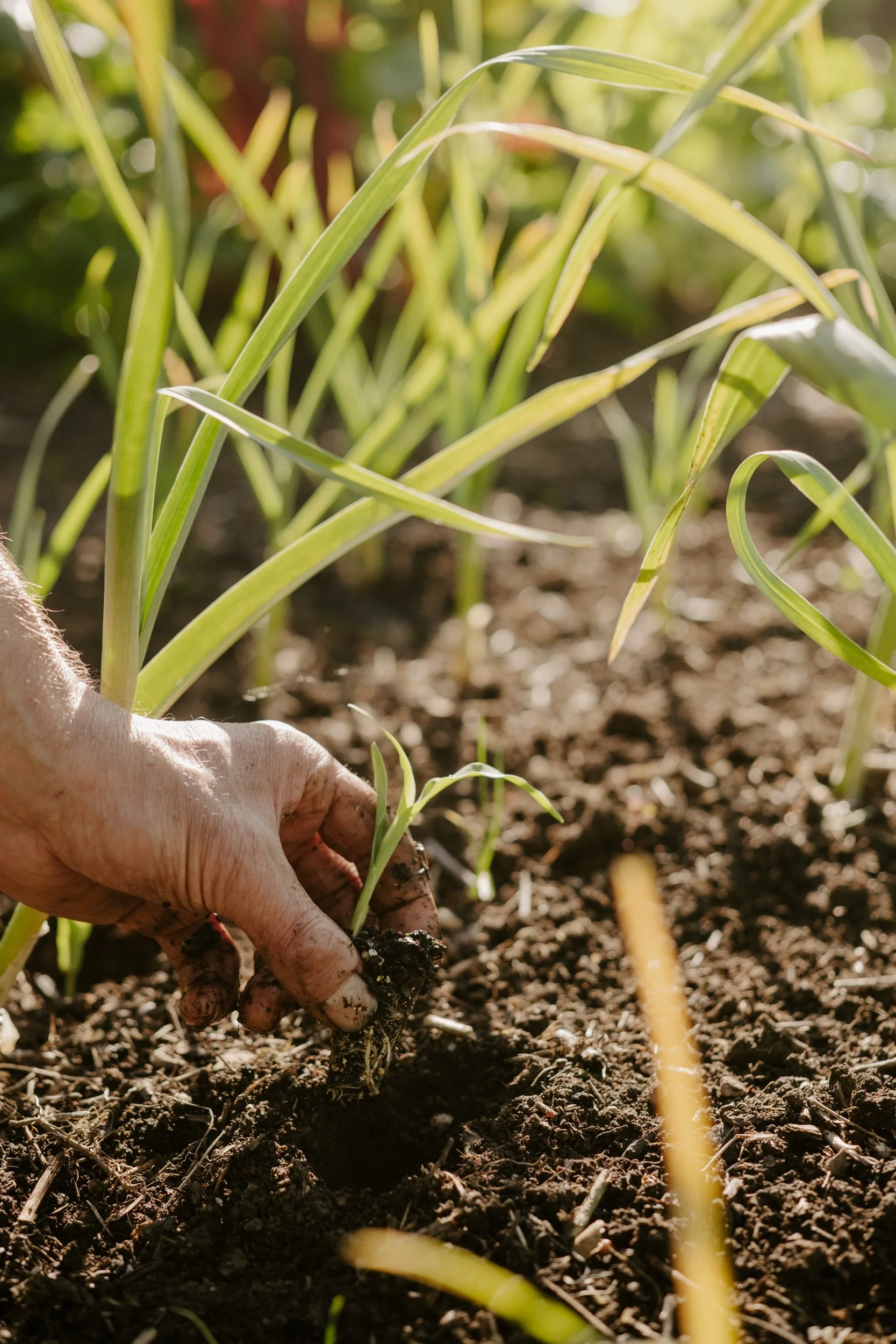
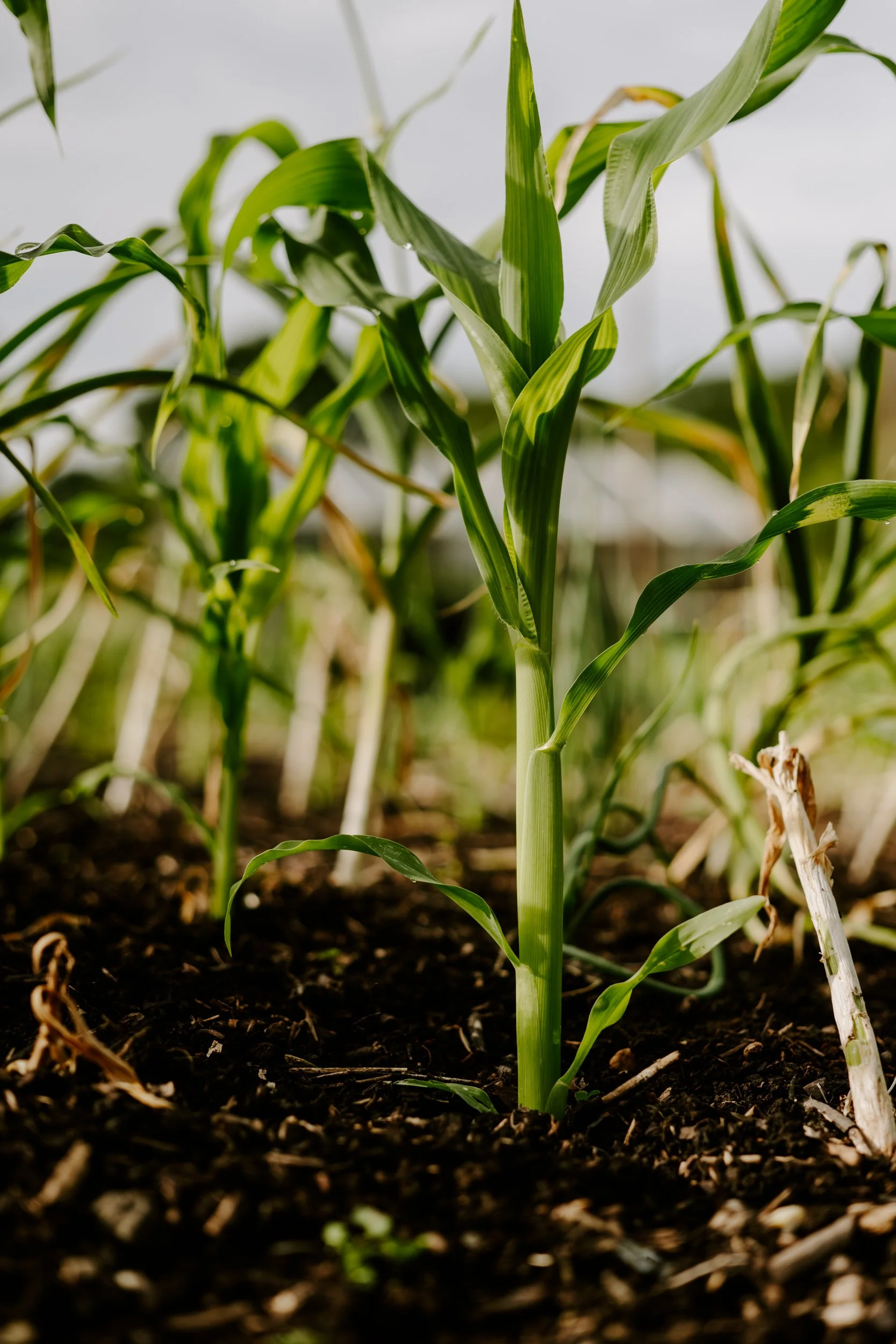
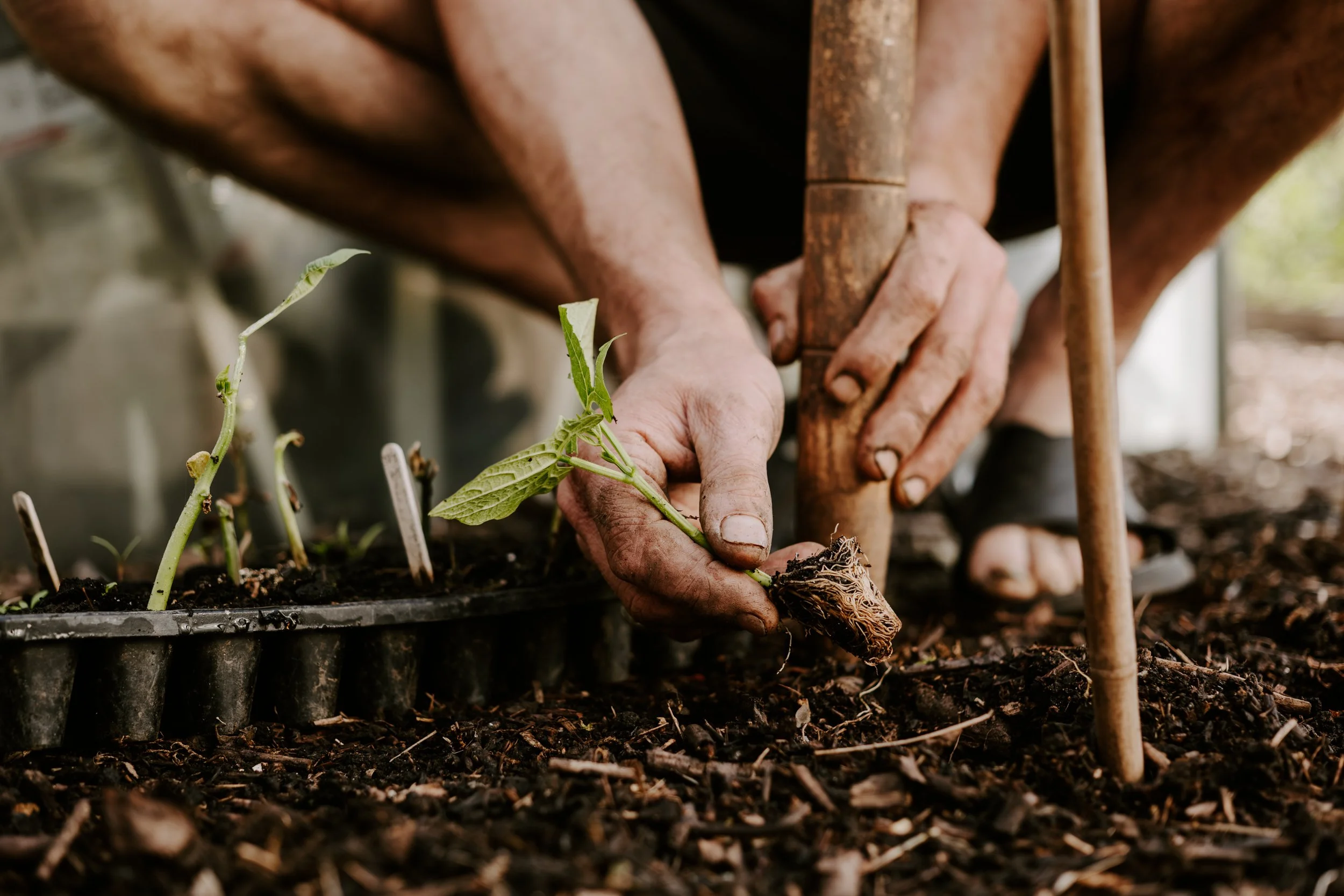
Sweetcorn is tougher. The small seedlings are ready to go into the ground.
Then, suddenly, James comes to life.
He heads towards the polytunnel.
“Let’s harvest the spring onions.”
They are growing happily in clumps, ready to give a burst of life when scattered over soups or stews.
And finally there is the most important job of all.
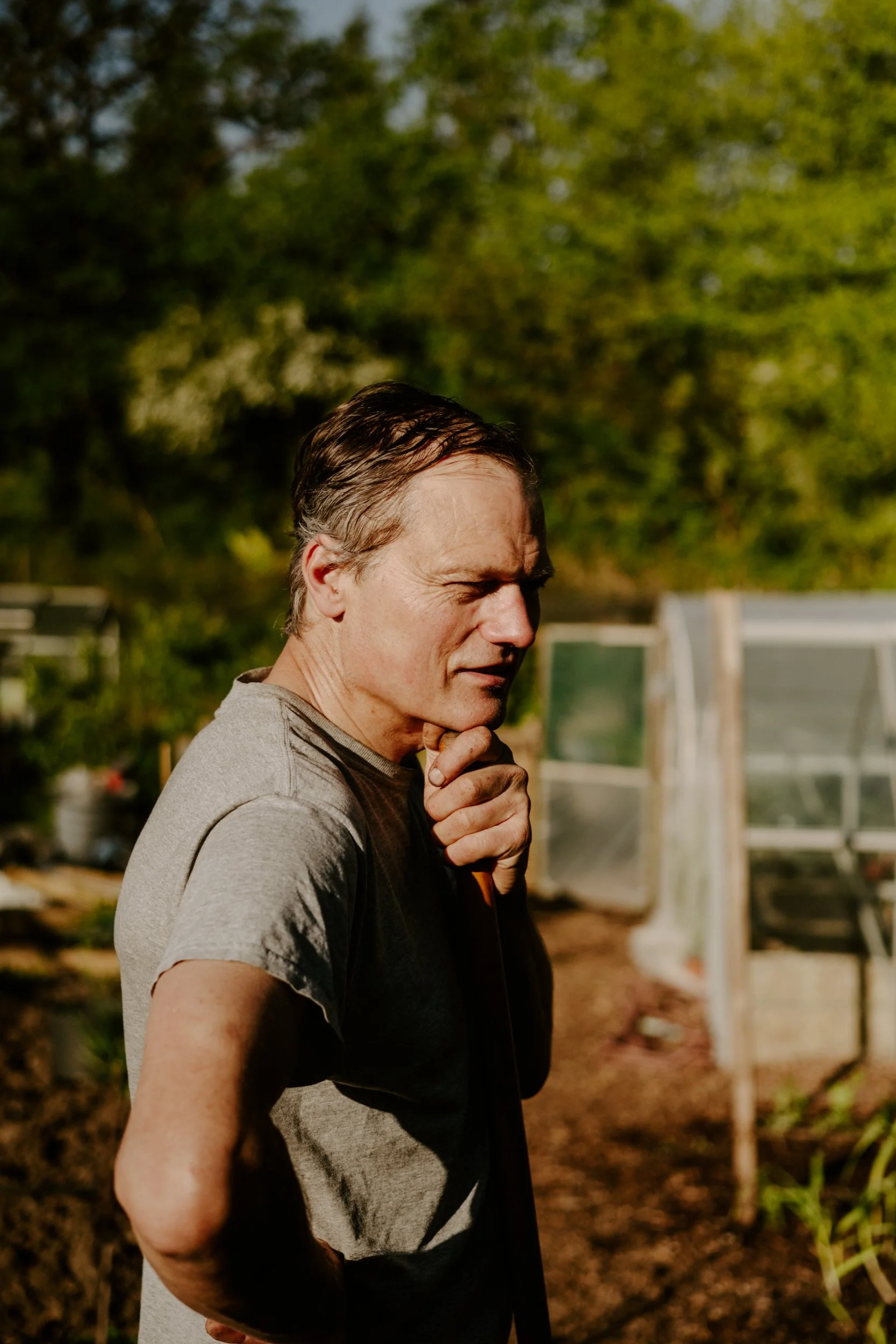
Contemplation.
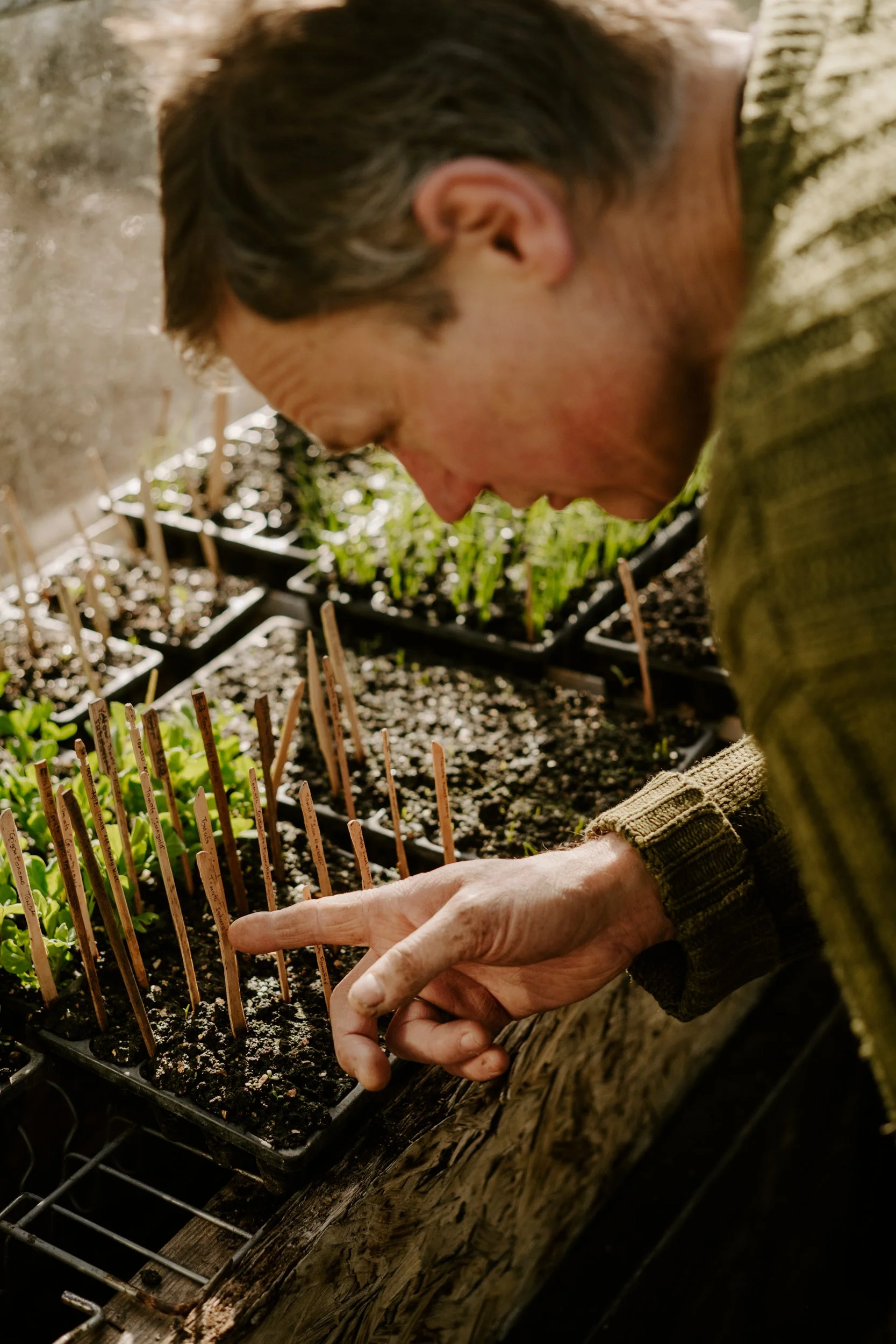
With so much about to burst forth from the greenhouse, James takes a moment to work out what will be planted where. And when.
Summer
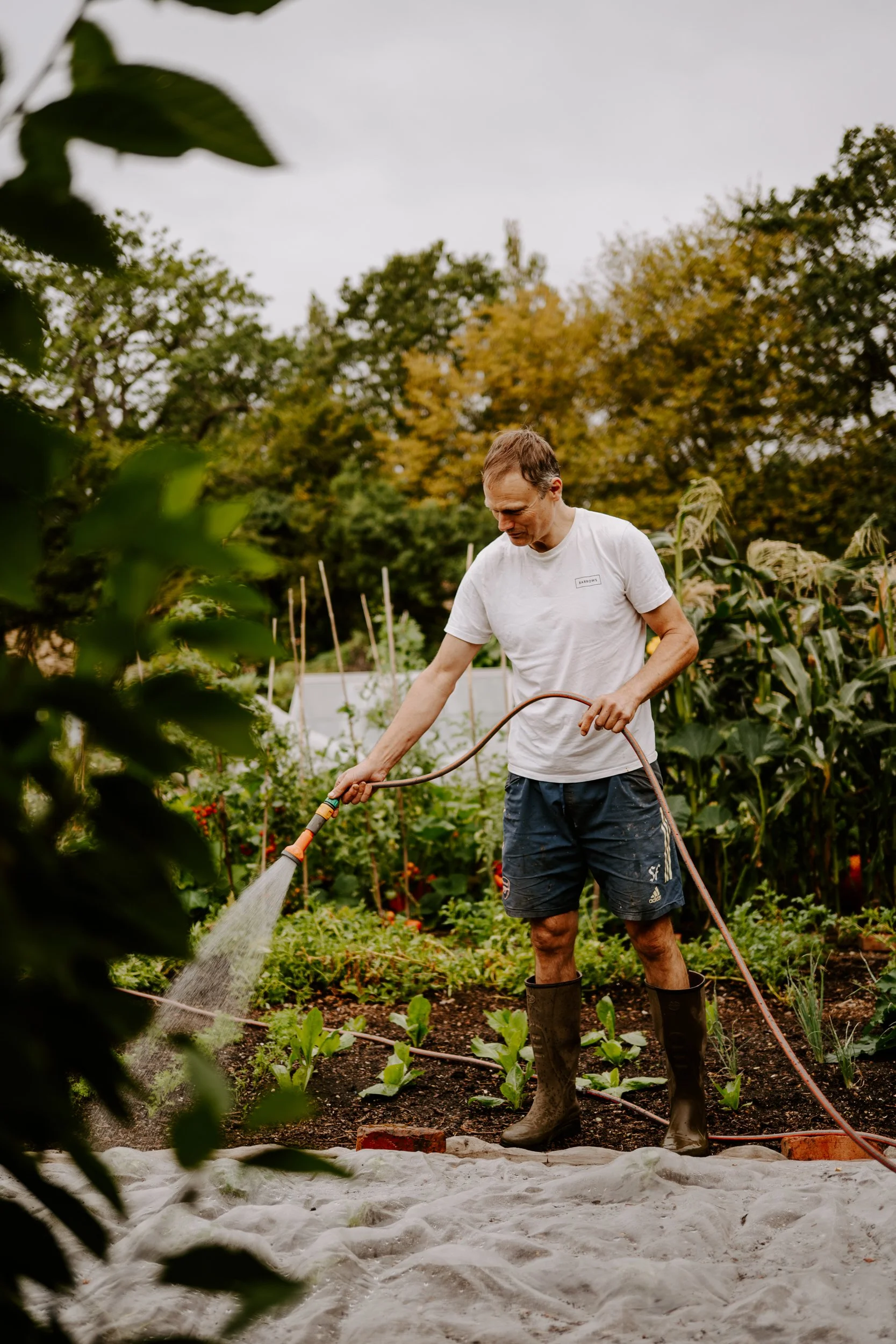
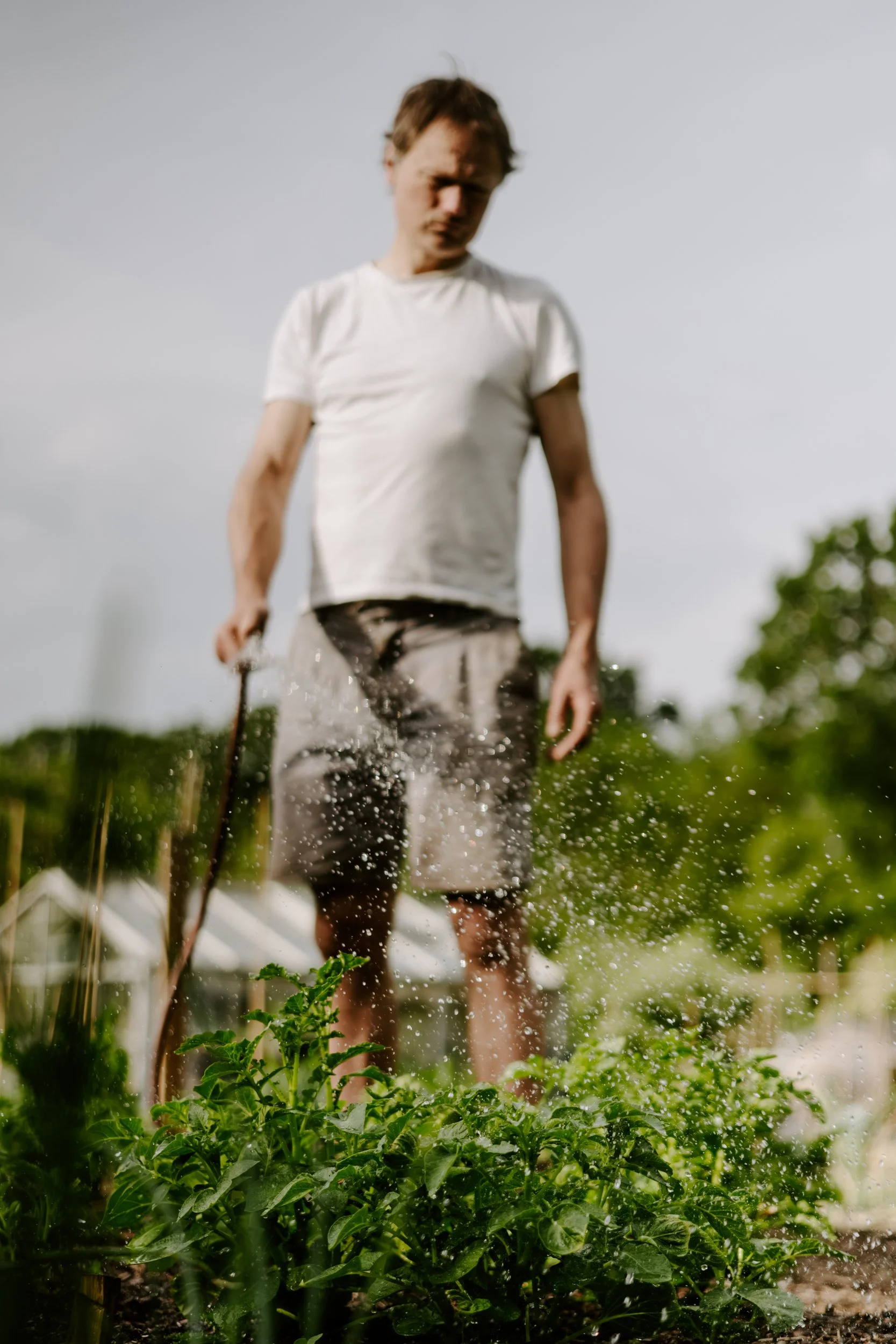
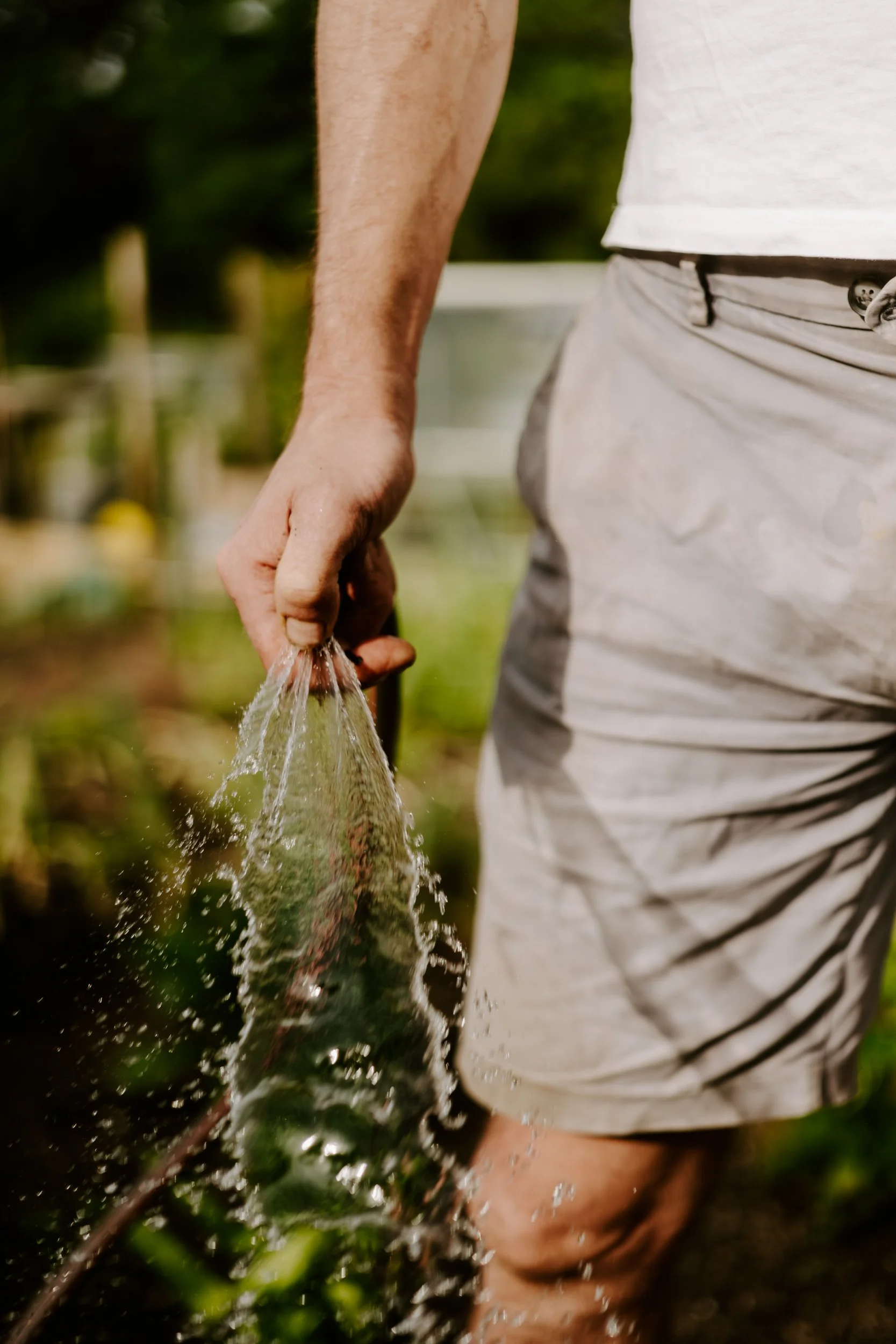
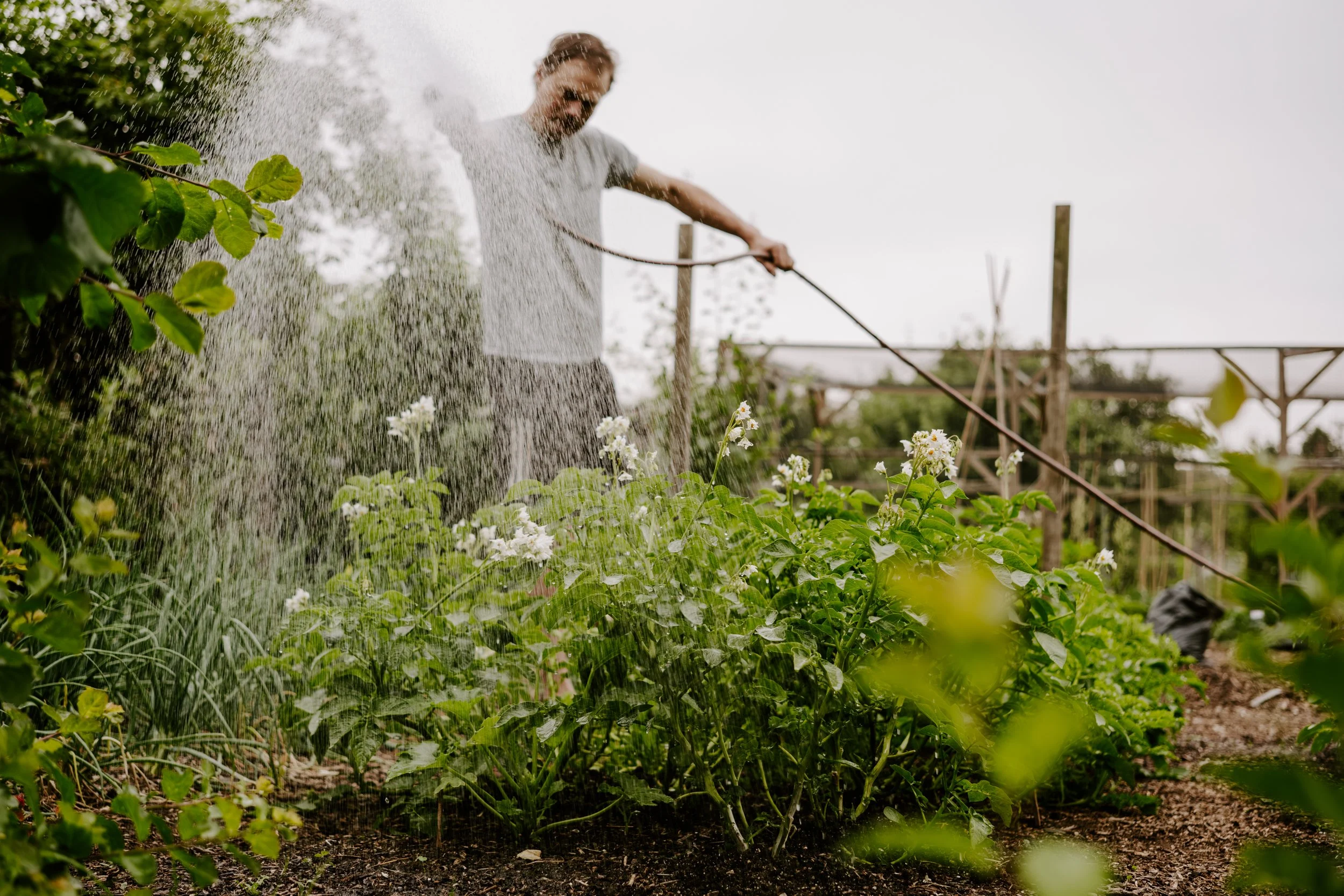
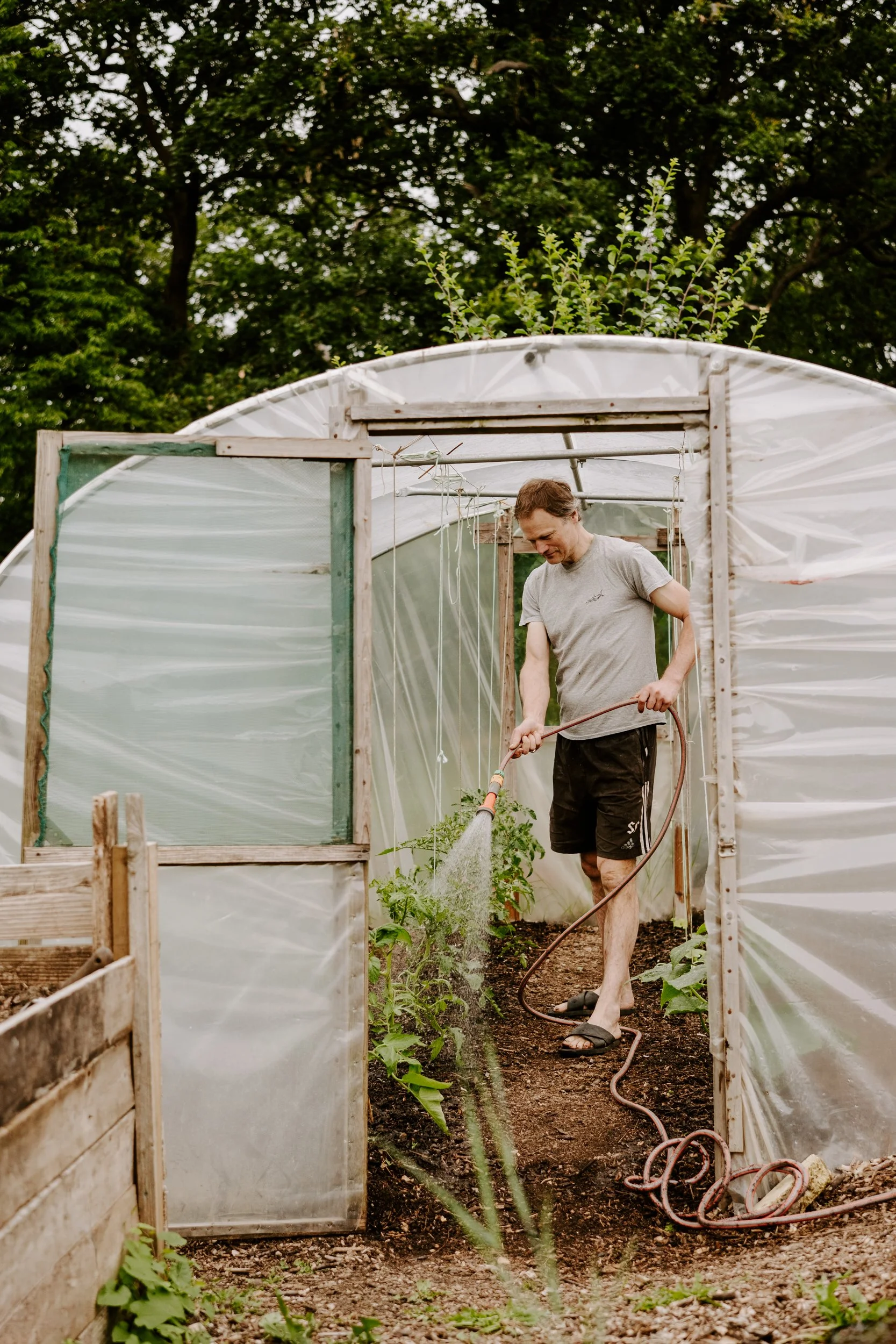
The hose is back out.
The ground is dry and the plants are thirsty.
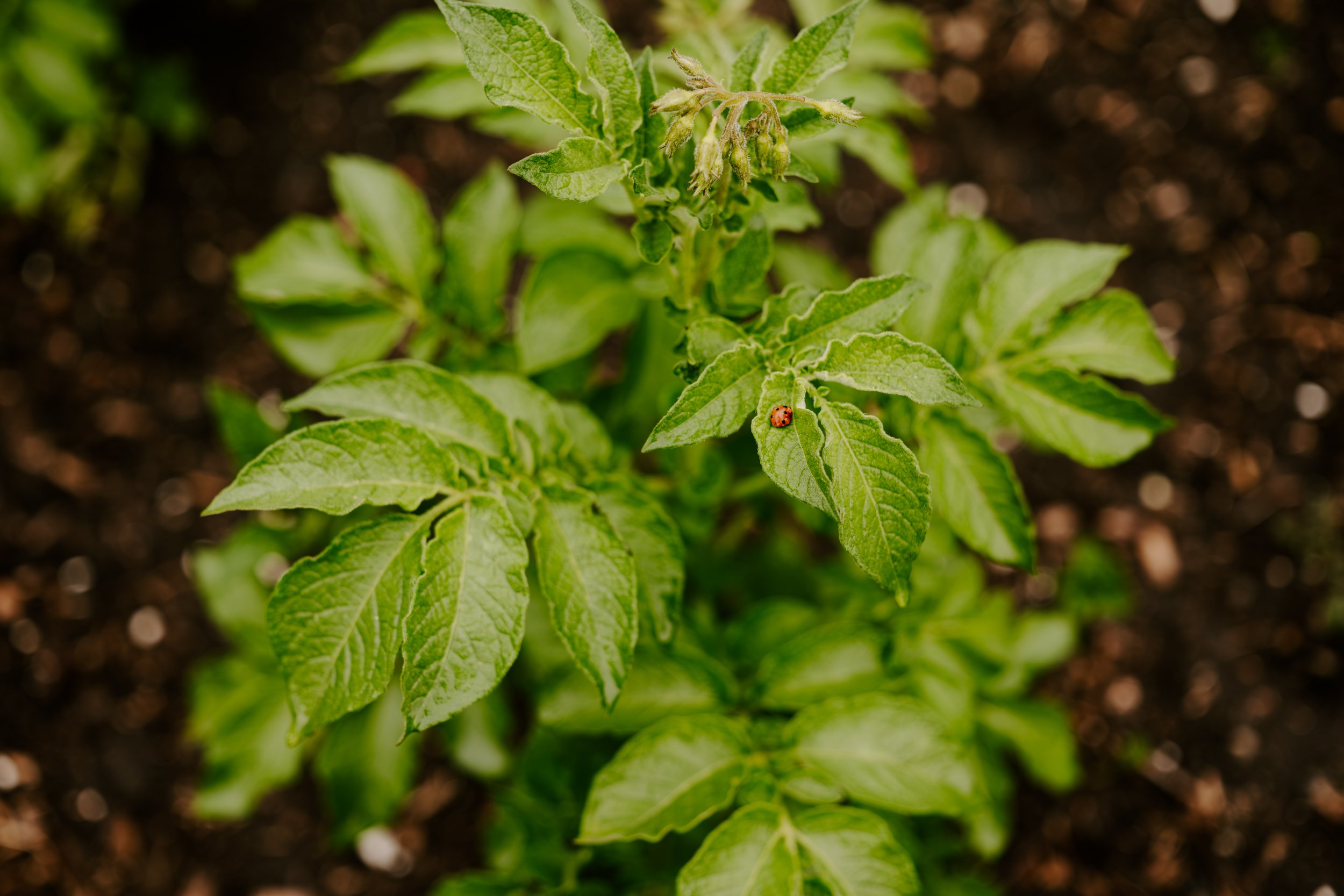
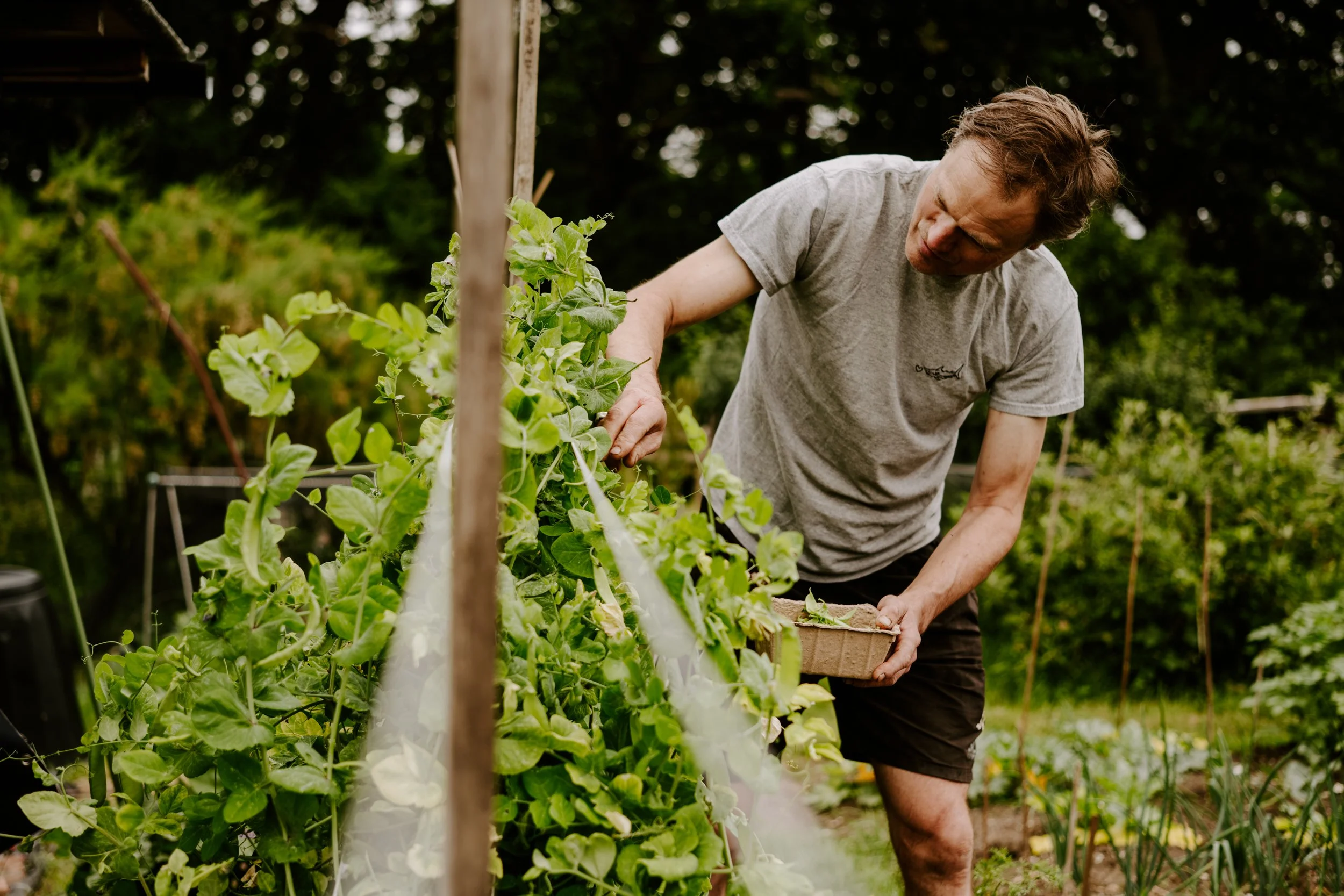
The peas and mangetout are close to harvest. The early potatoes are swelling beneath the soil.
Everything is moving faster now.
Long days of sun have left the plot thirsty. Watering has become part of the daily routine.
James waters in the early morning light.
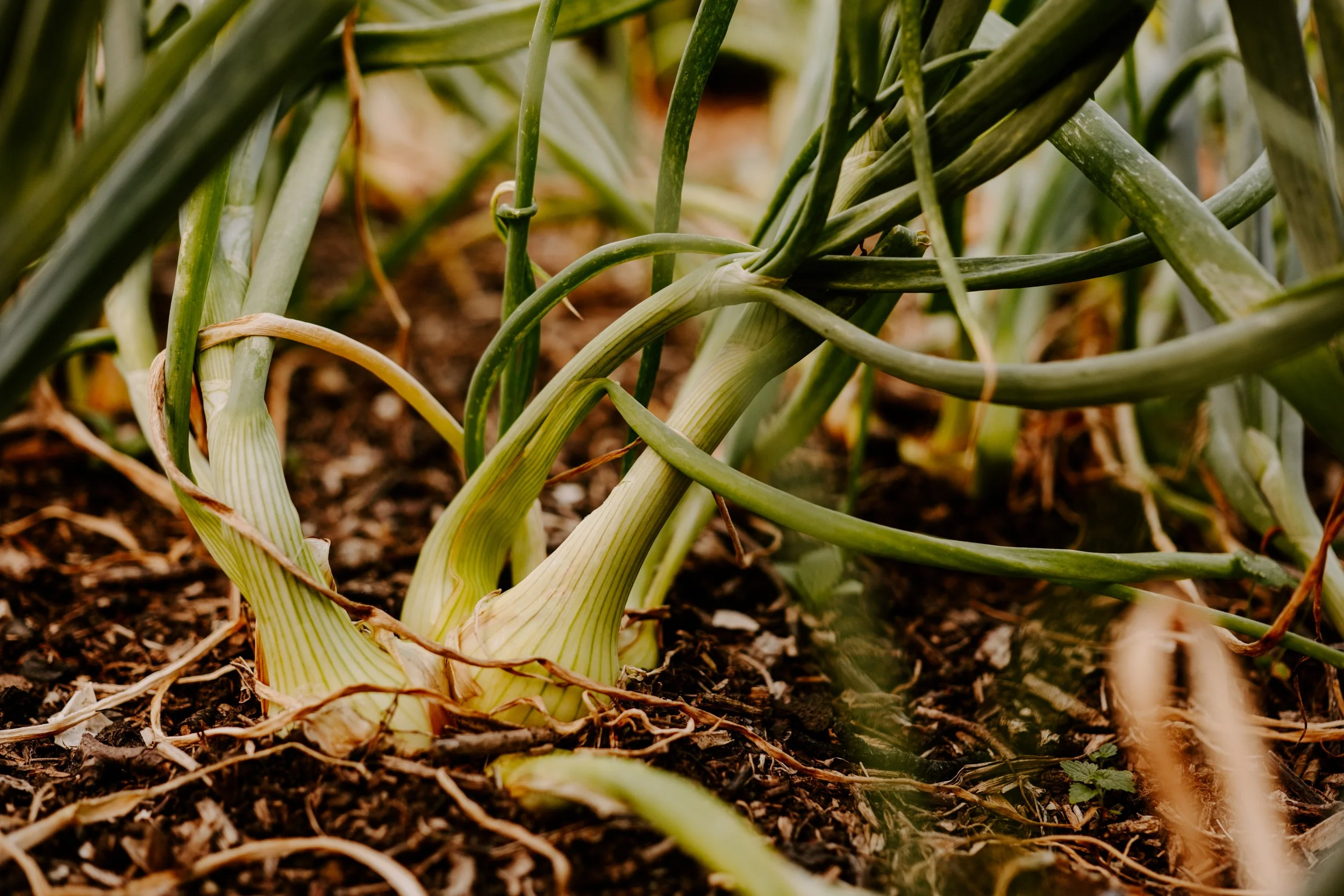
The Sturon onions were planted as multi-sown clusters. Now they stand in neat groups, thirty centimetres apart.
By mid-summer they will swell into modest-sized bulbs.
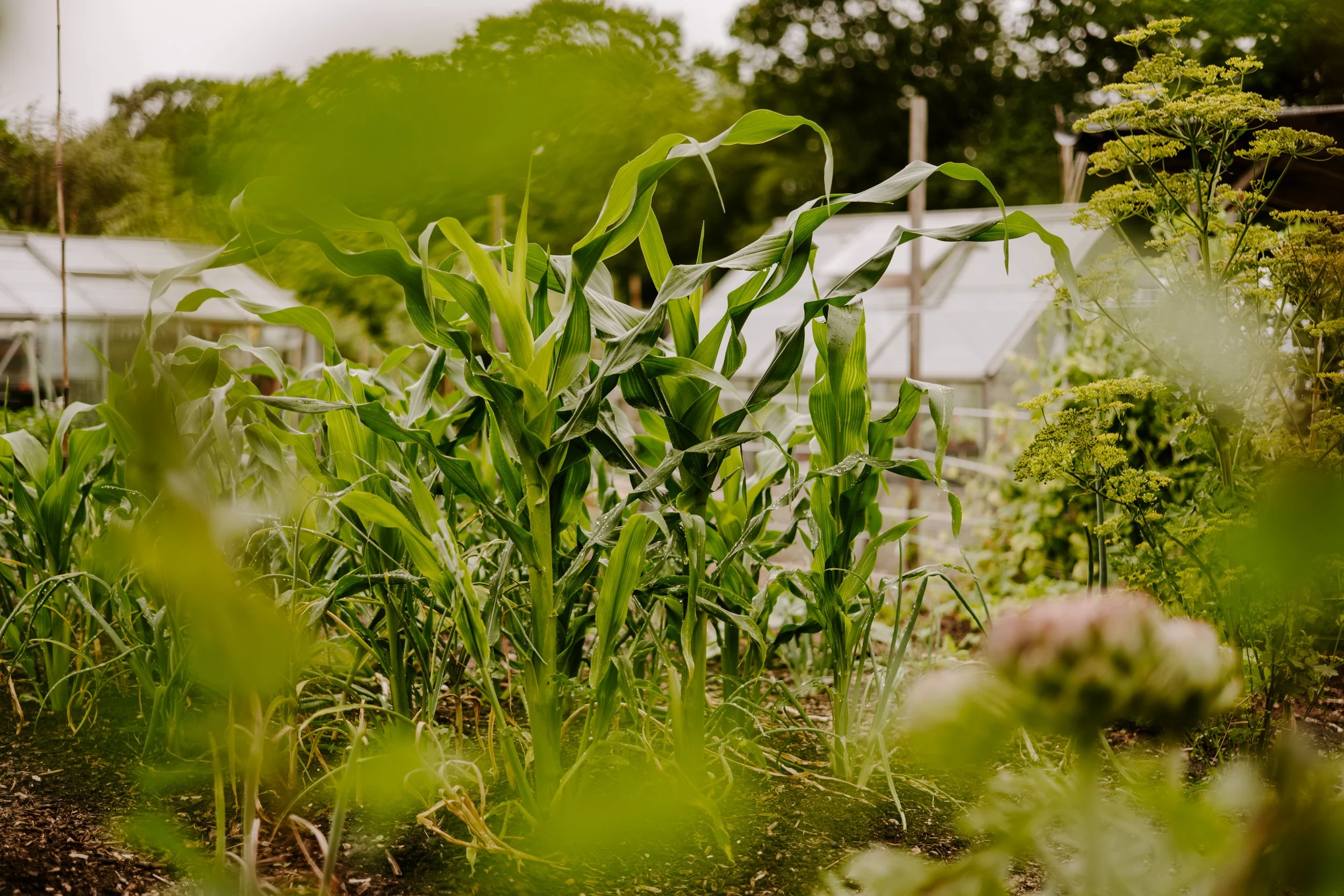
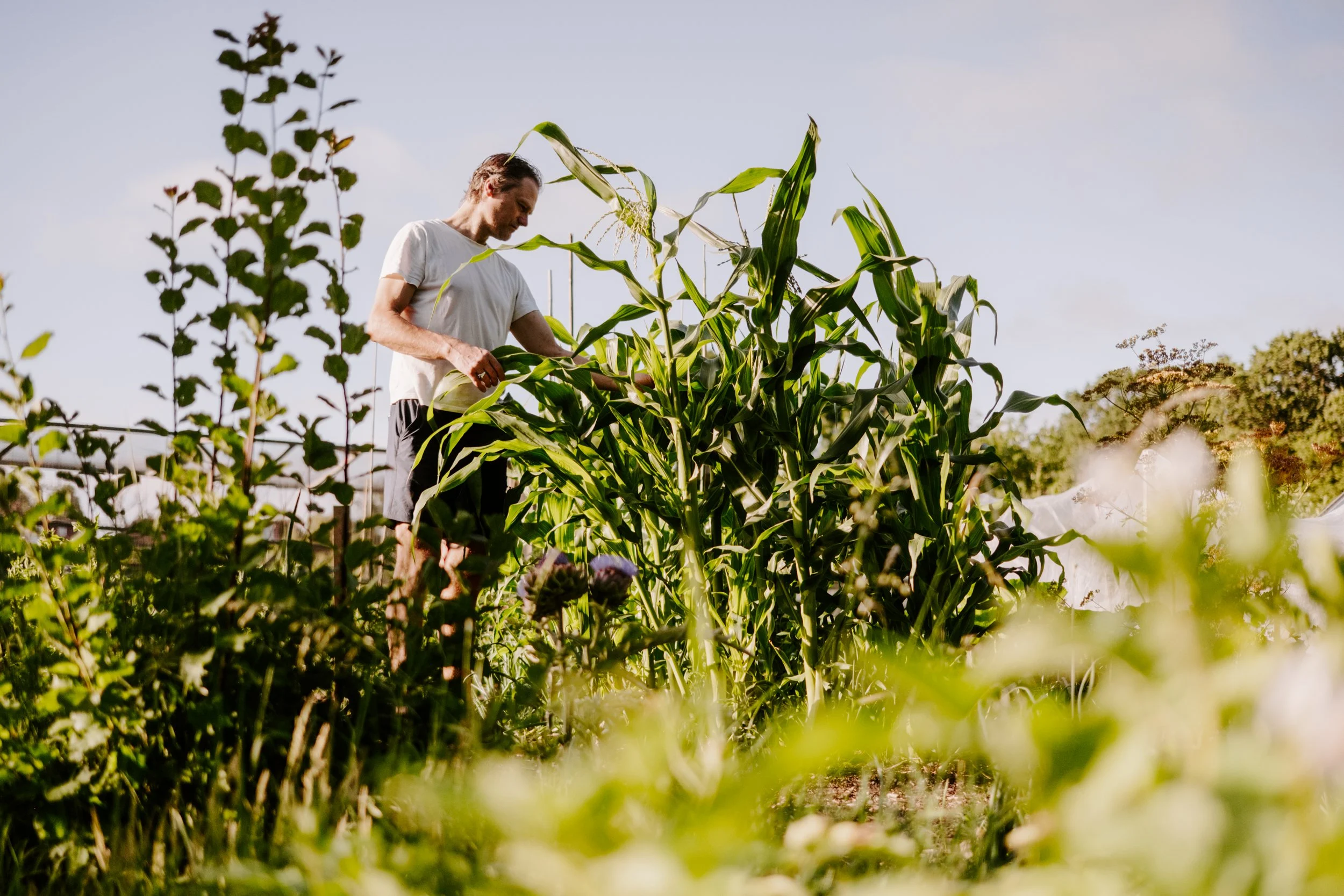
Across the plot, the sweetcorn is gathering momentum.
Soon it will surge skyward, racing towards an August harvest.
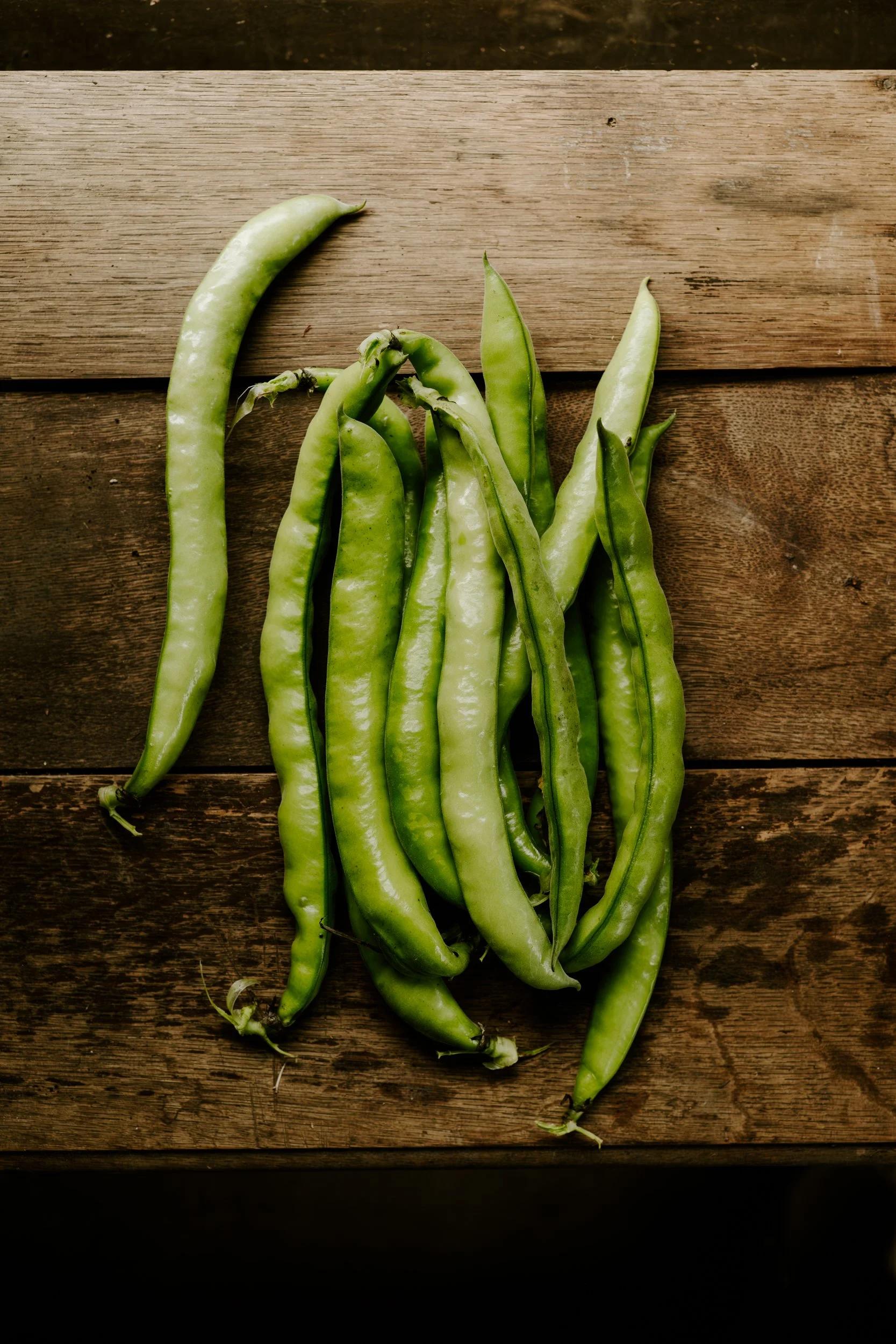
Just outside the polytunnel, the broad beans are reaching the end.
Pods hang heavy from tall stems that are beginning to yellow and collapse.
Their work is done.
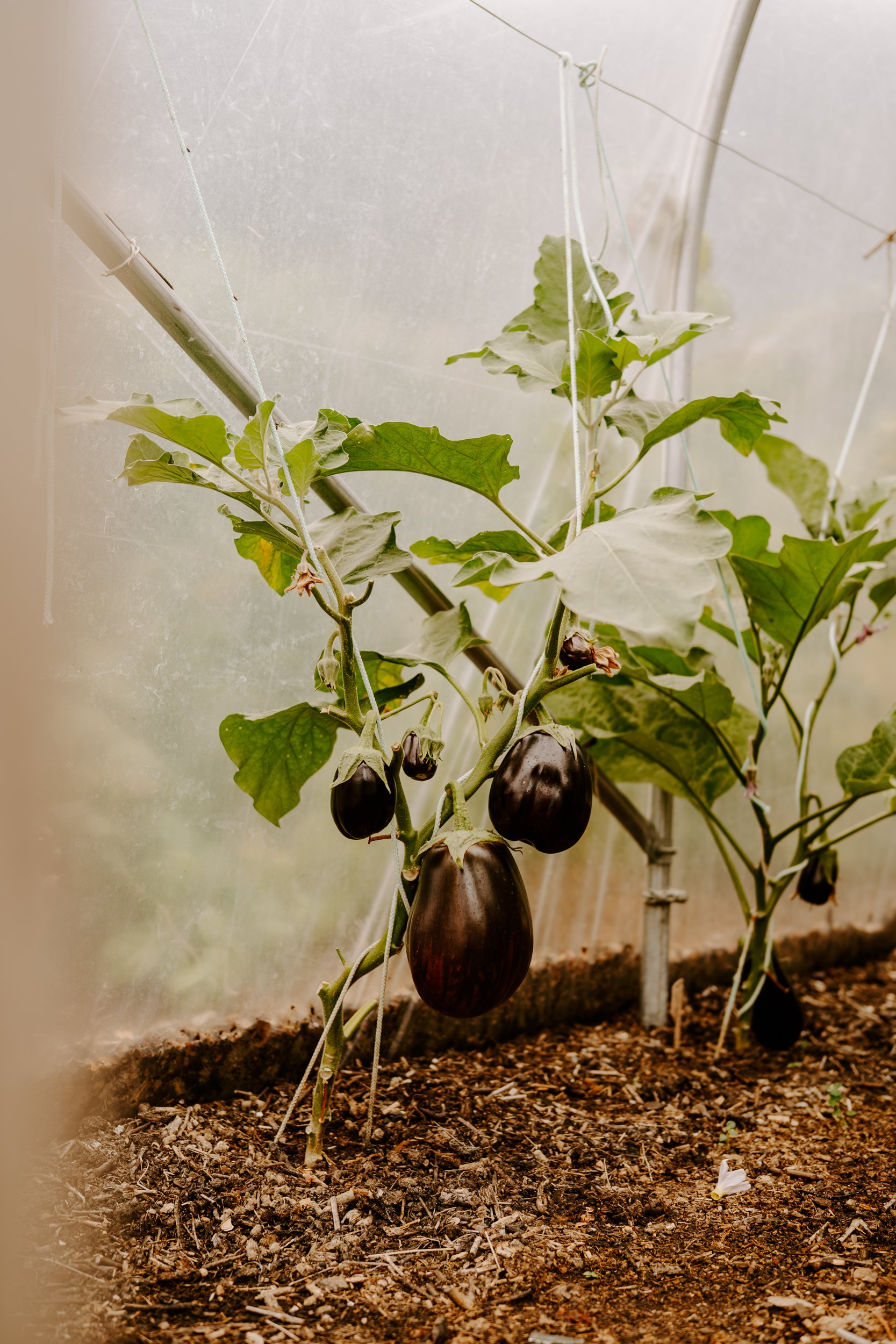
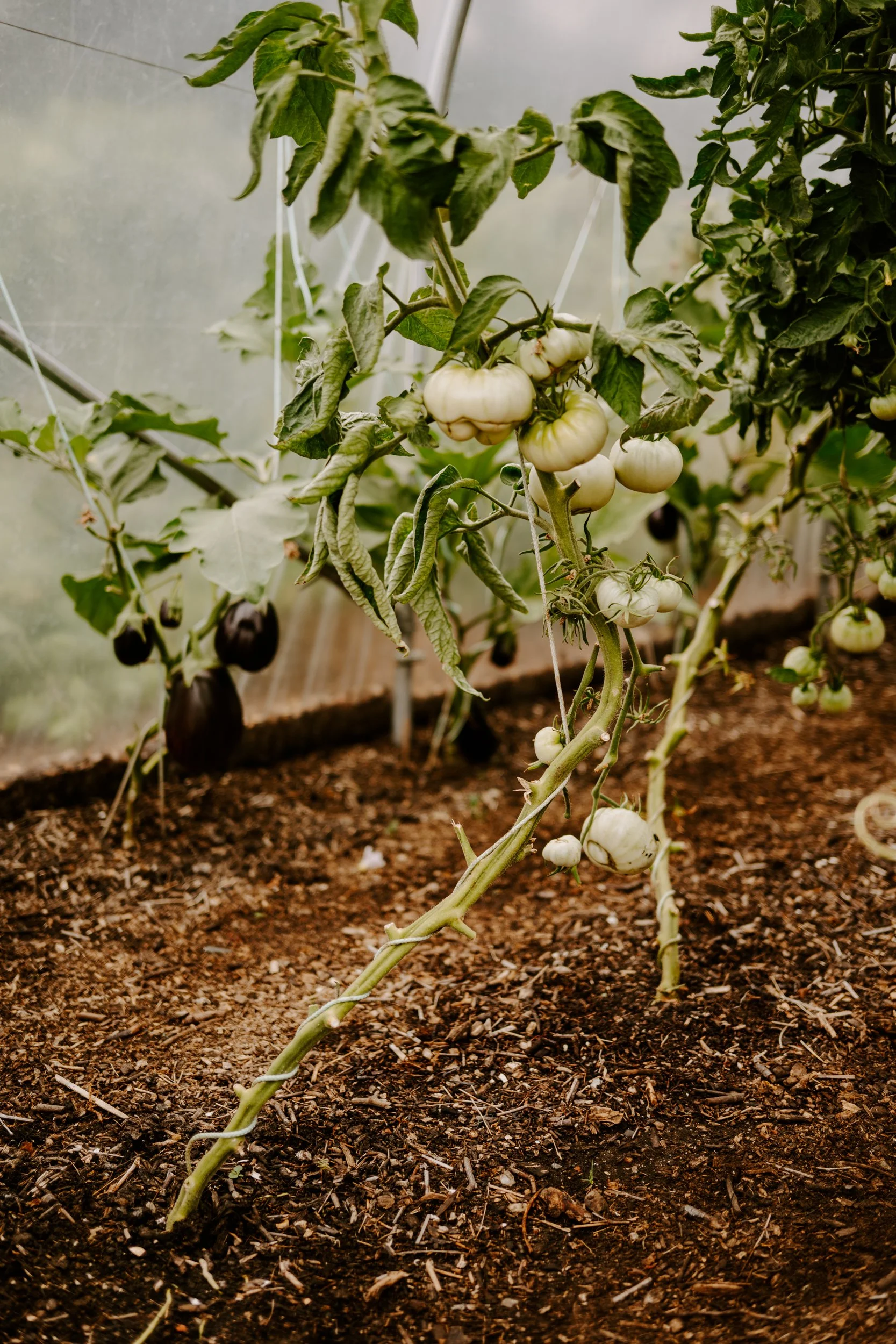
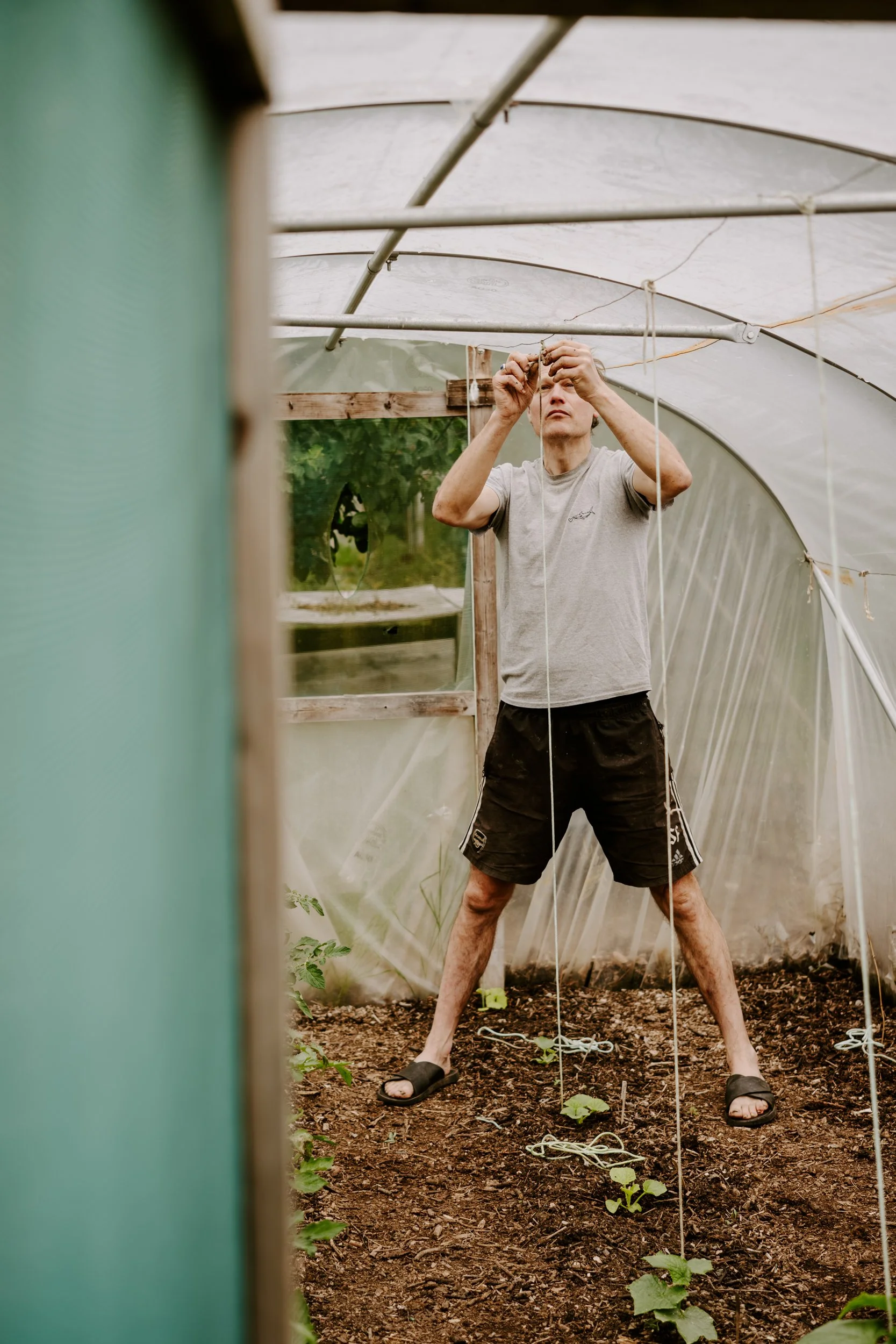
Inside the polytunnel, the aubergines are planted beneath a framework of strings. Later they will be trained upwards as split stems, climbing towards the roof.
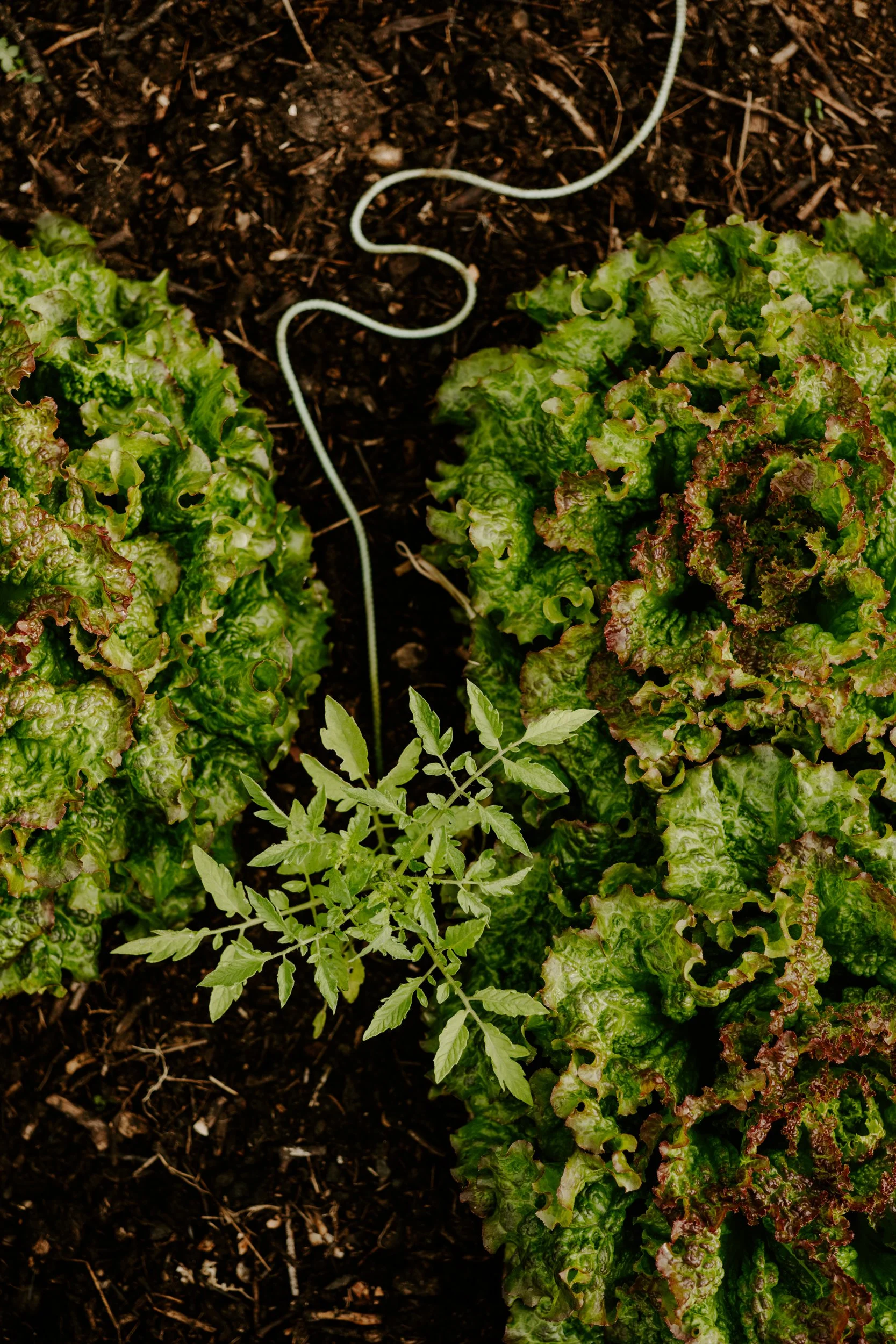
The spring onions are almost finished, but the Grenoble Red lettuce holds its ground. Full heads. Dense and beautiful.
It is impossible not to notice how quickly everything changes. A bed that was full yesterday is empty today. A seedling waiting in a tray becomes tomorrow’s crop.
The allotment is always teaching the same lesson. Every ending is making room for something new.
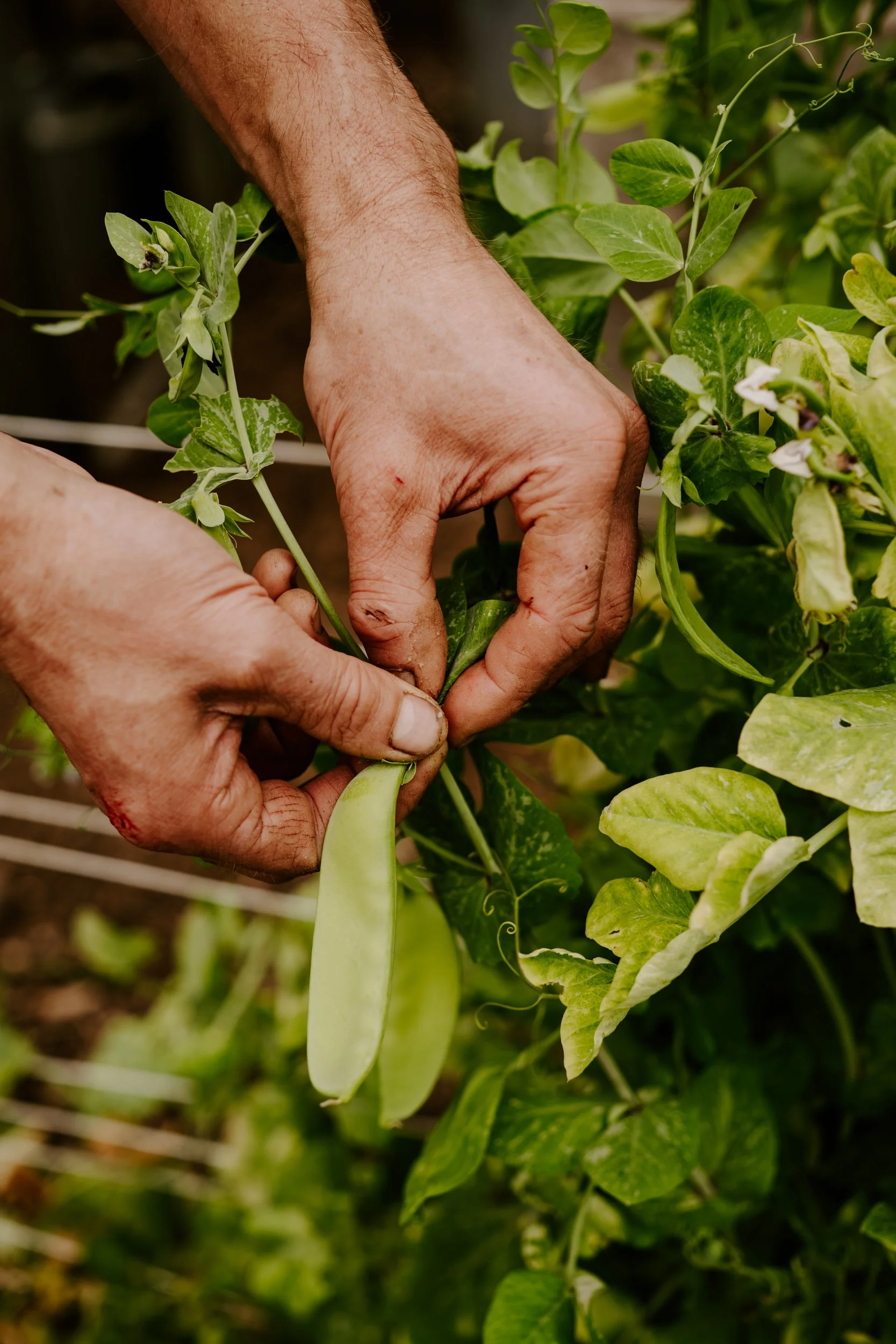
And then the peas reach the end. Only recently they were climbing furiously, wrapping tendrils around every available piece of string, racing upwards towards the early summer sun. Now their season is drawing to a close. The leaves are yellowing. The plants beginning to wilt.
There is always something faintly sad about these transitions.
One crop producing heavily, then suddenly giving everything it has and disappearing almost overnight.
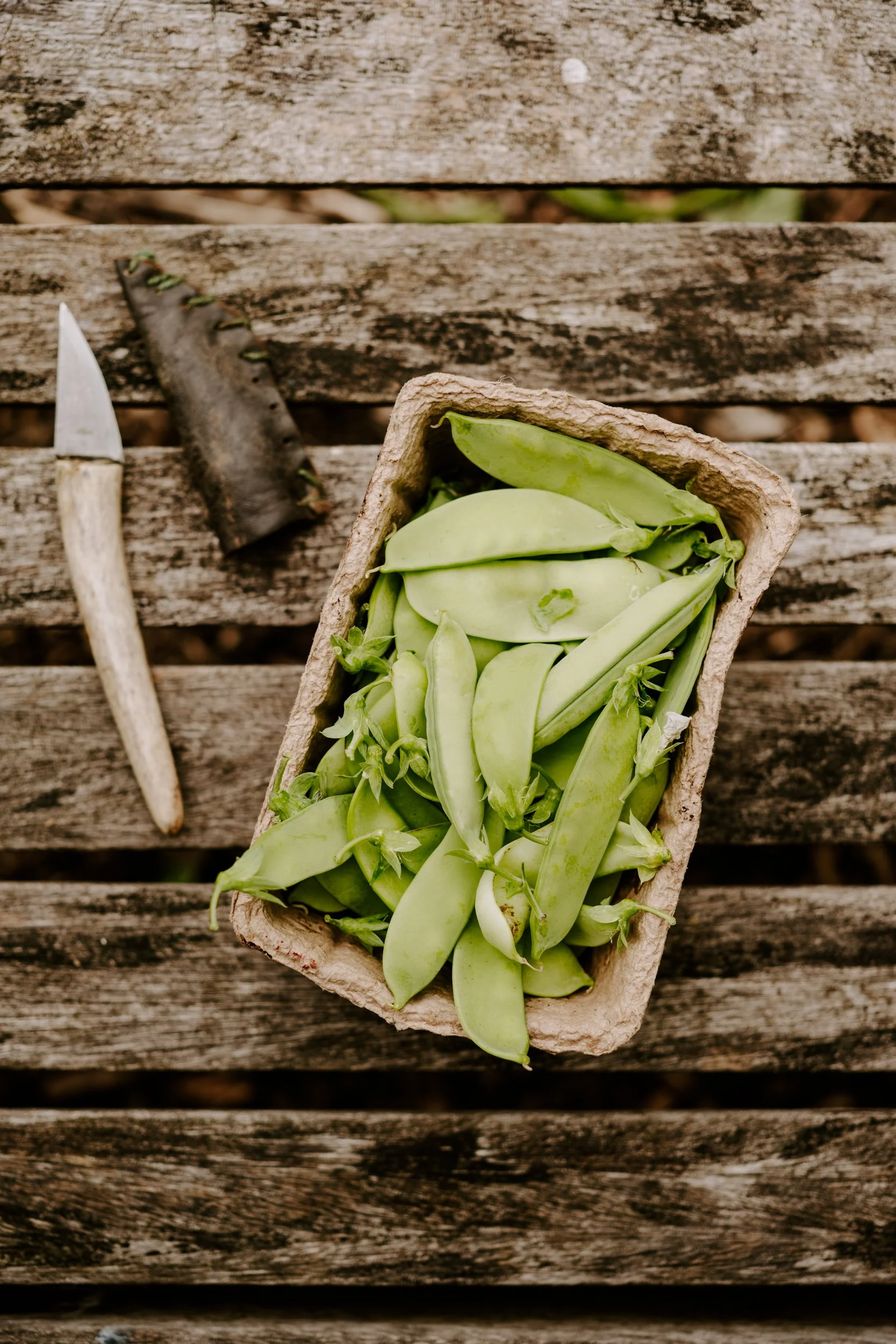
Their final harvest is laid out on a tray and instinctively I find myself building a small still life before taking the photograph.
Old habits.
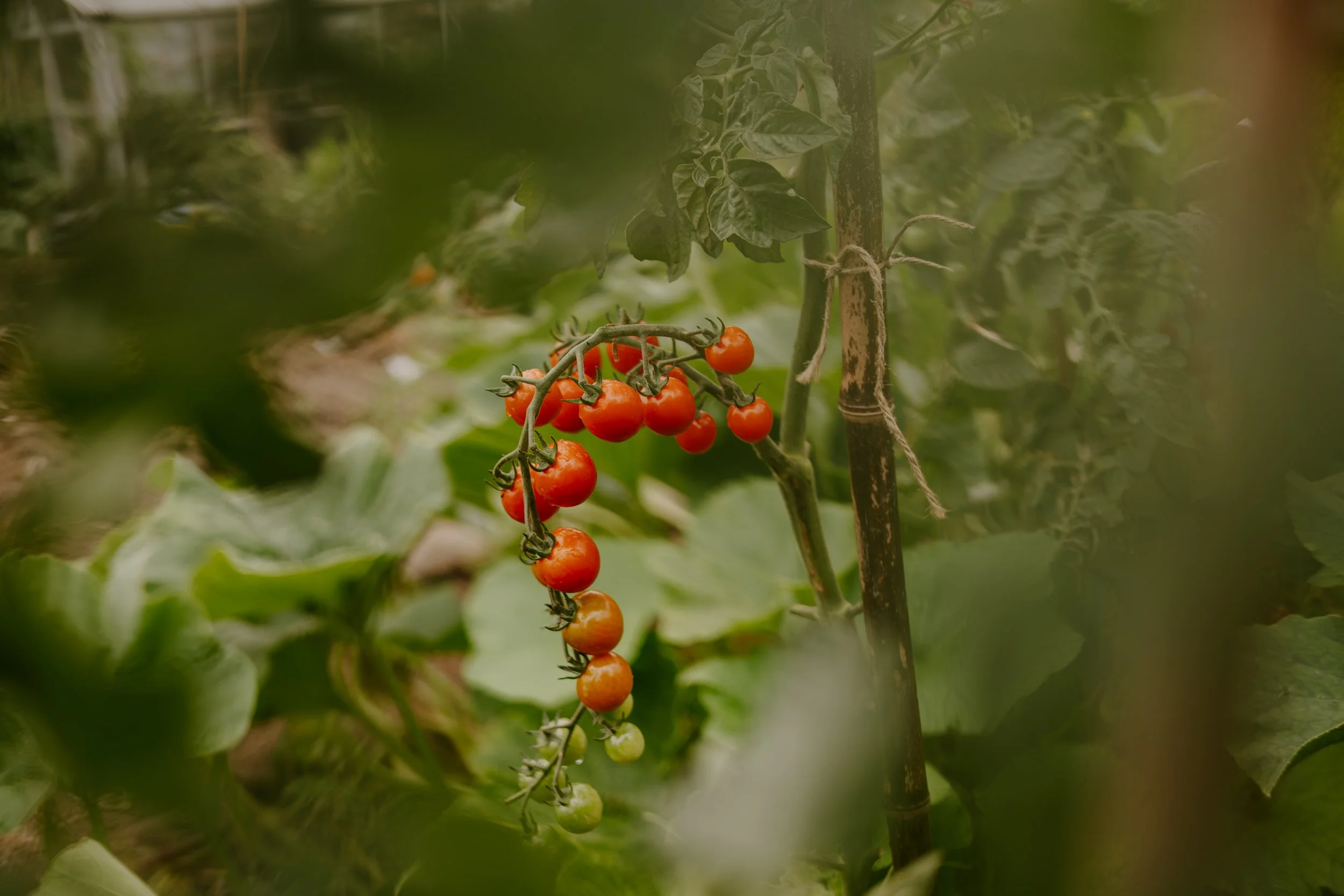
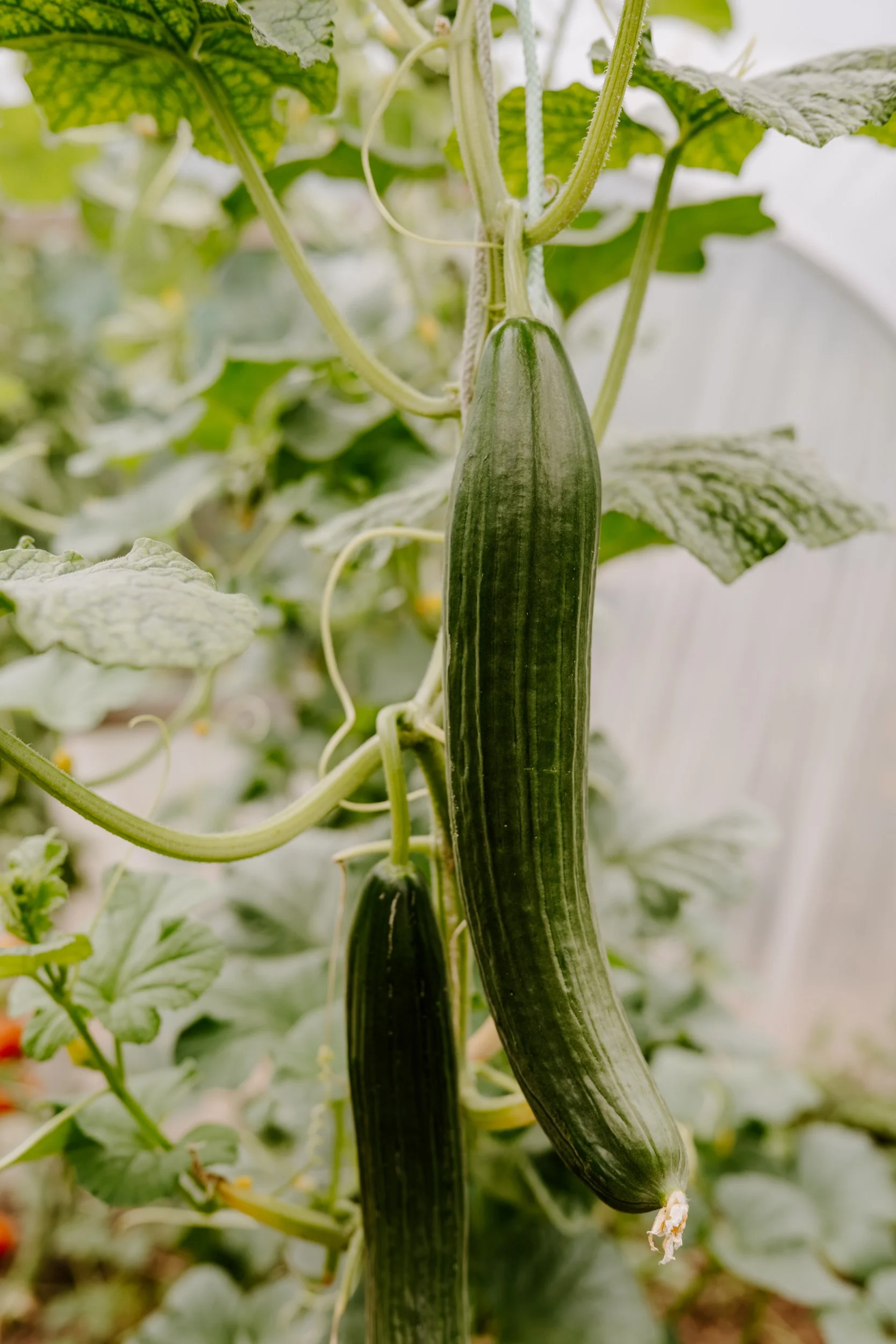
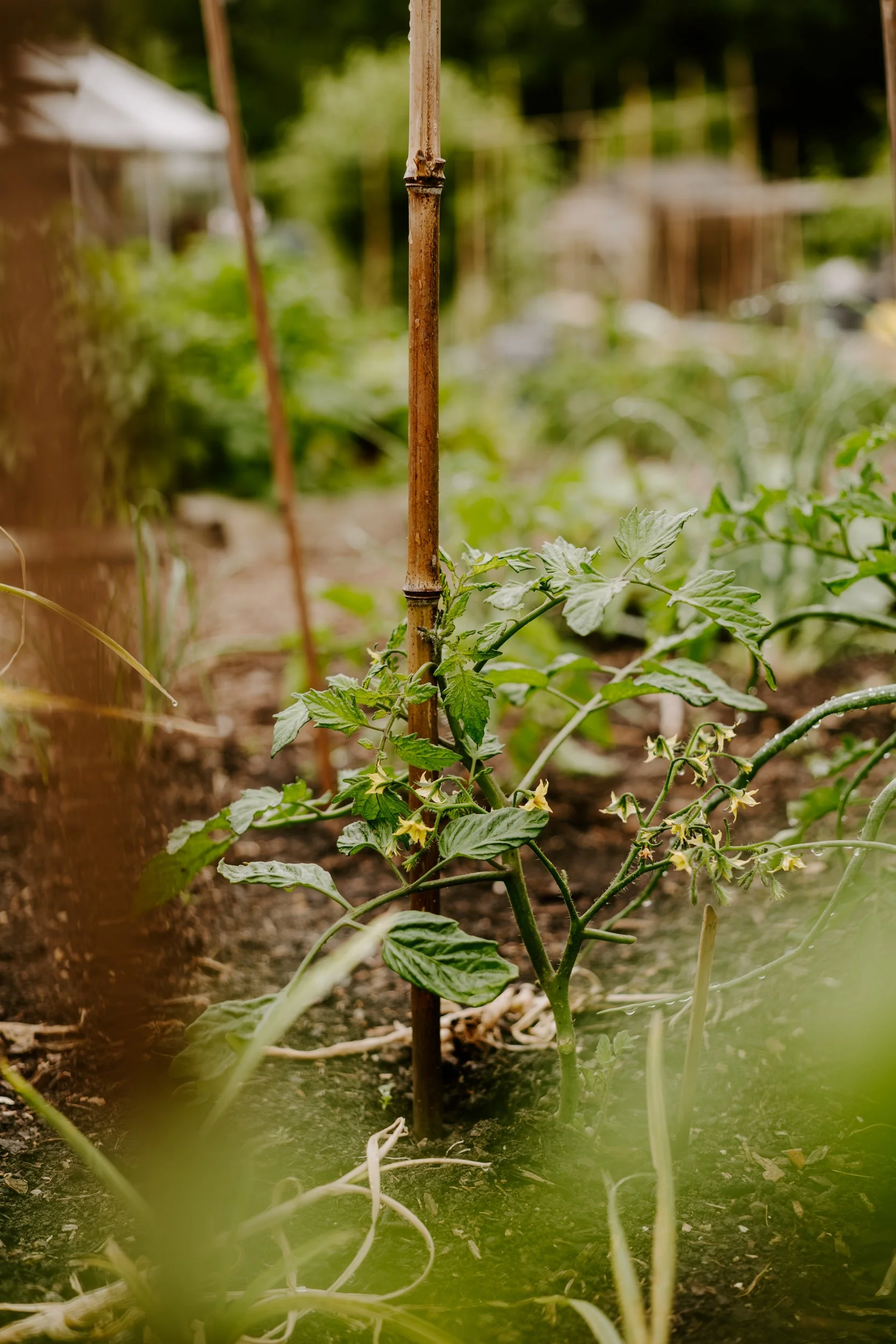
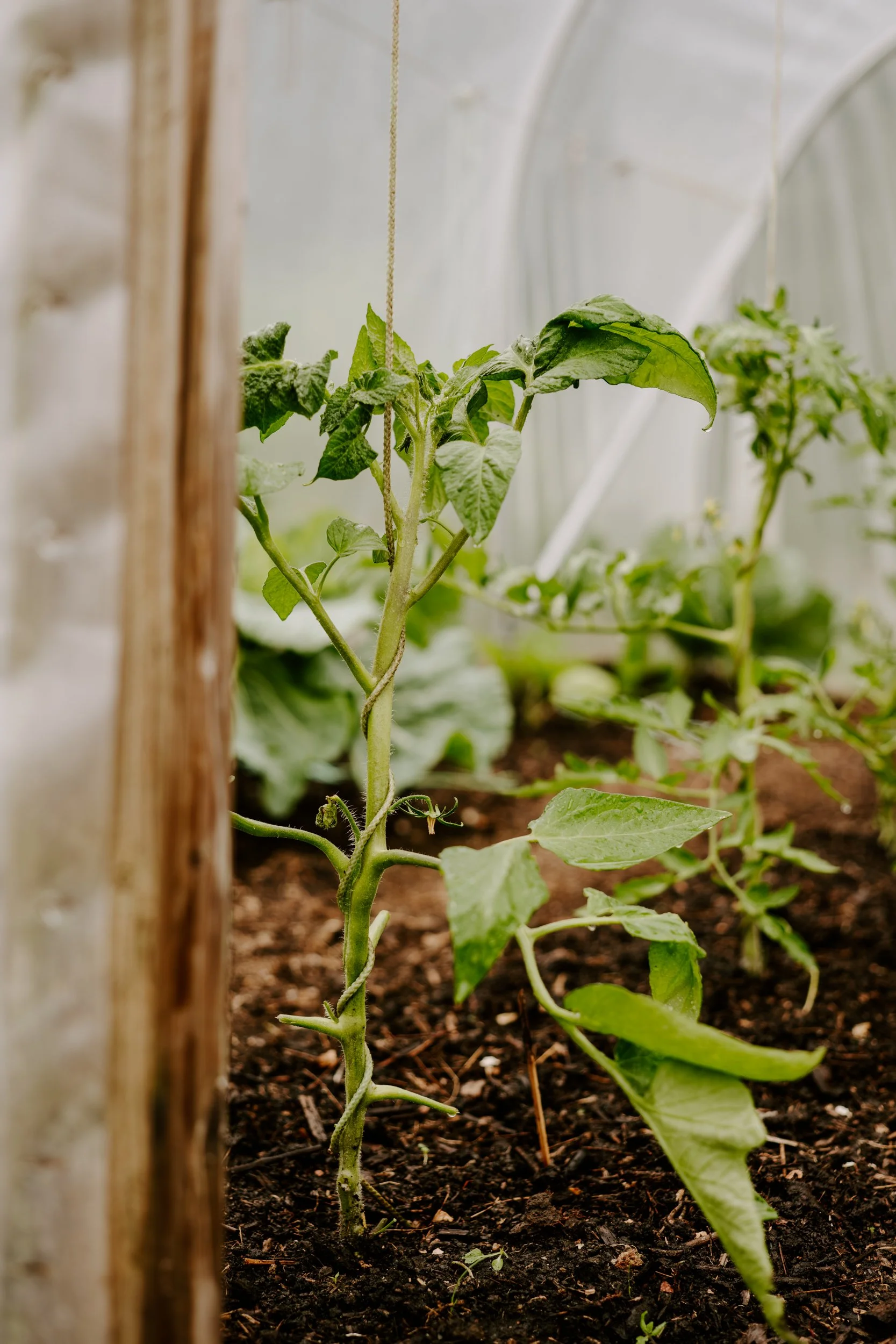
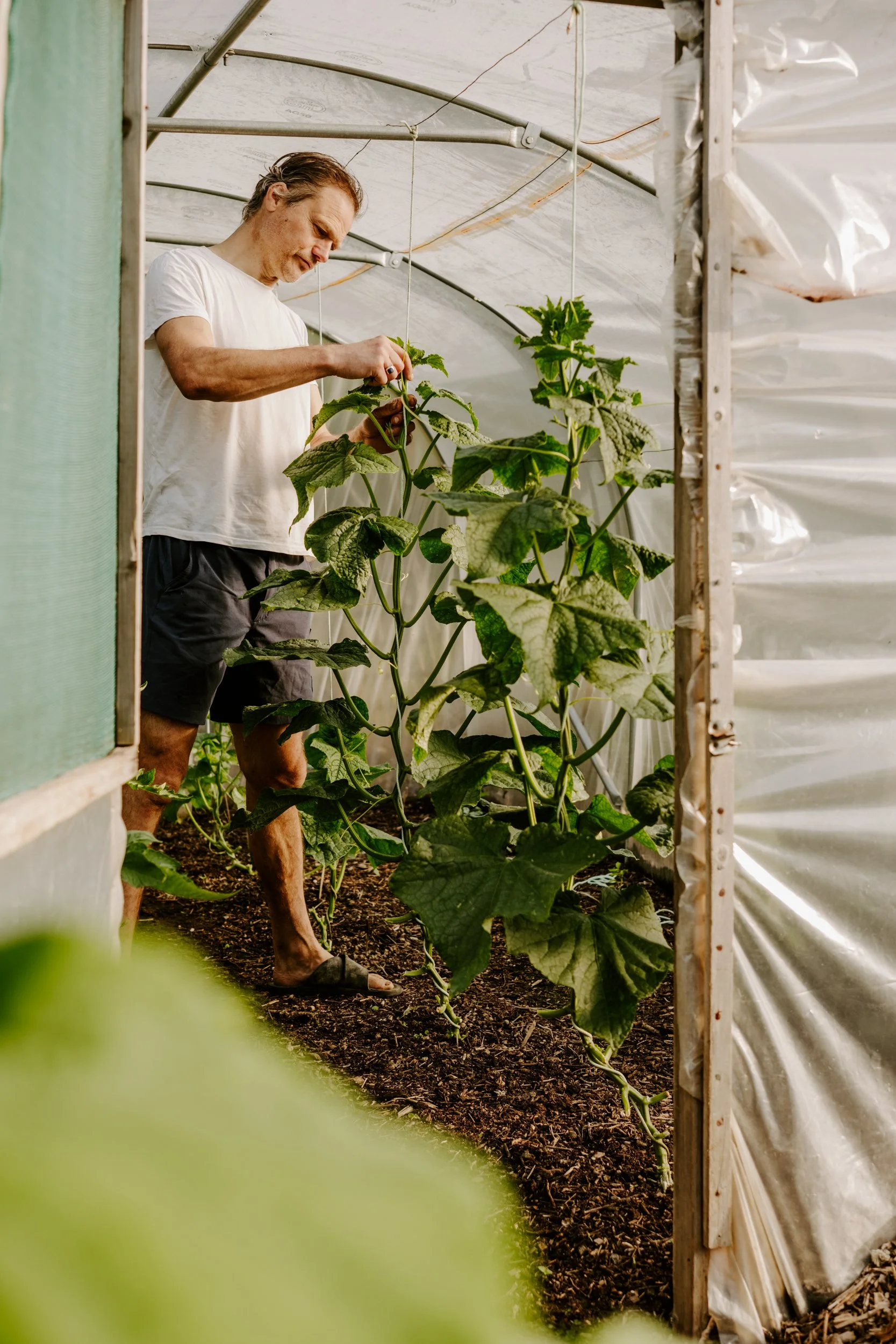
The tomatoes and cucumbers spiral upwards now, carefully guided around their supports as the warmth builds inside the polytunnel.
The difference between inside and outside growing conditions is impossible to miss. Tomatoes growing outdoors look healthy enough. Inside the tunnel they are already nearly twice the size.
What strikes me most is the colour. Everywhere.
The entire allotment site is suddenly alive. Other plots waking up too after months of silence. The quiet is gone. Now, every visit feels exciting.
Something is taller. Something is fuller. Something has appeared where there was nothing before.
Everything is green.
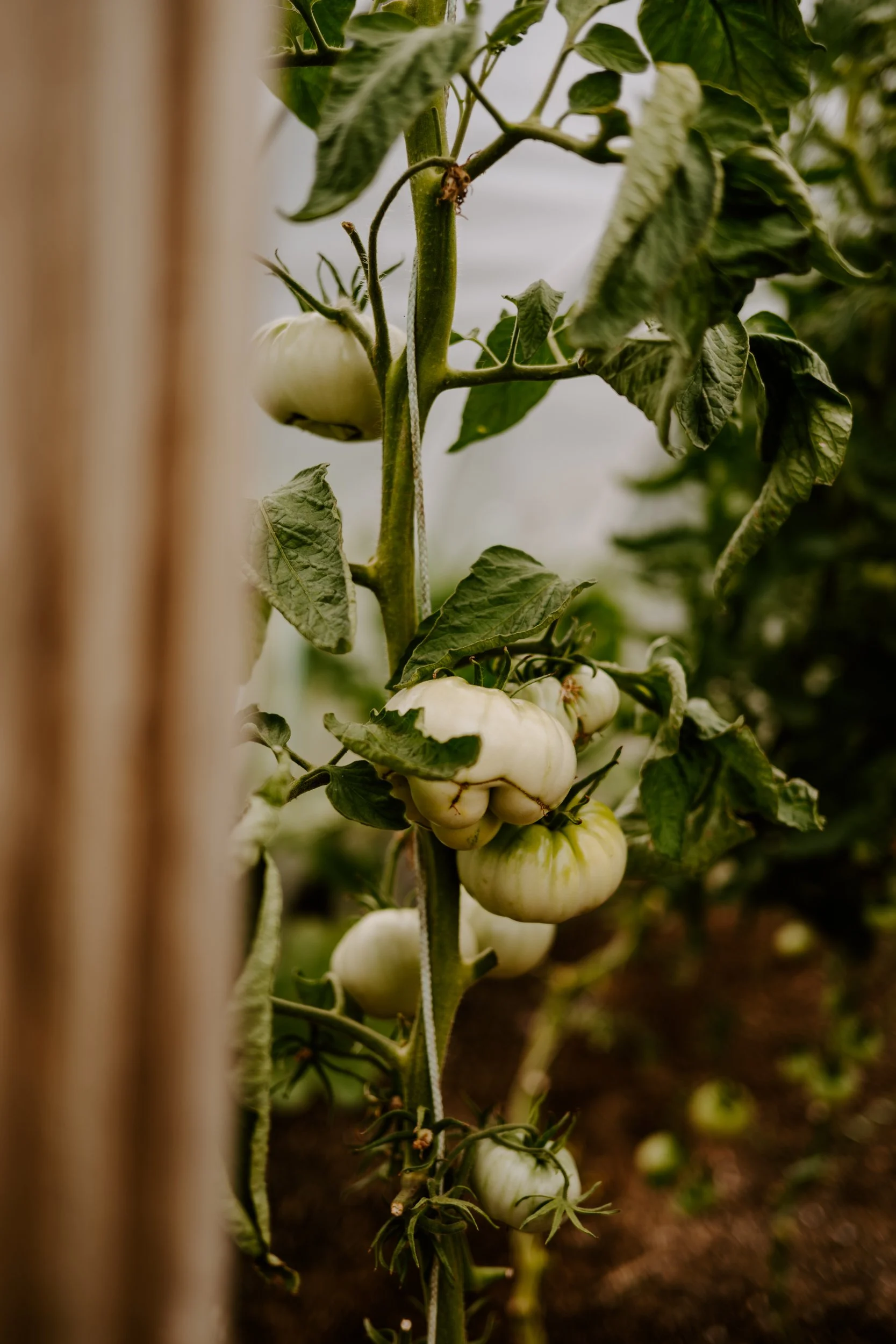
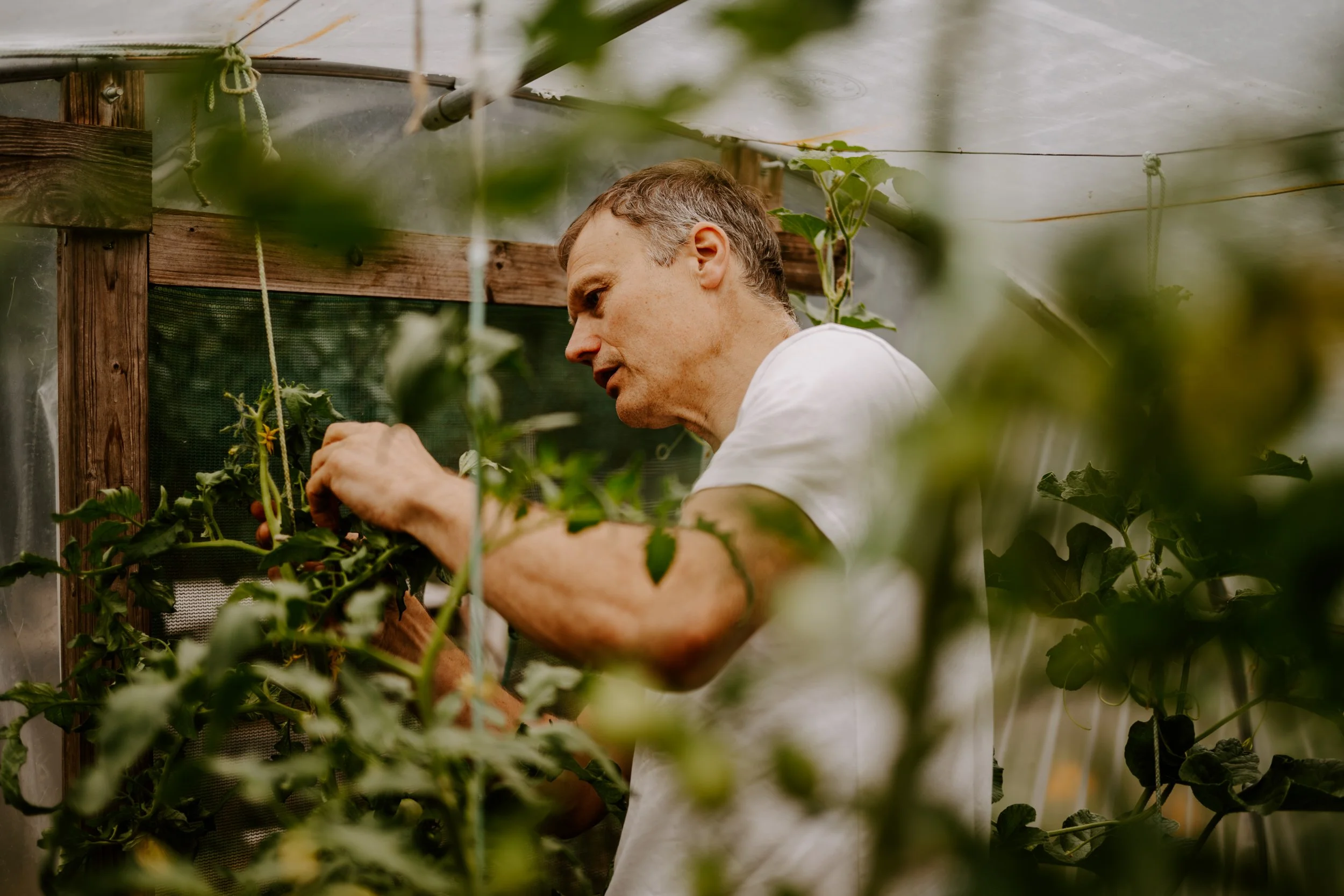
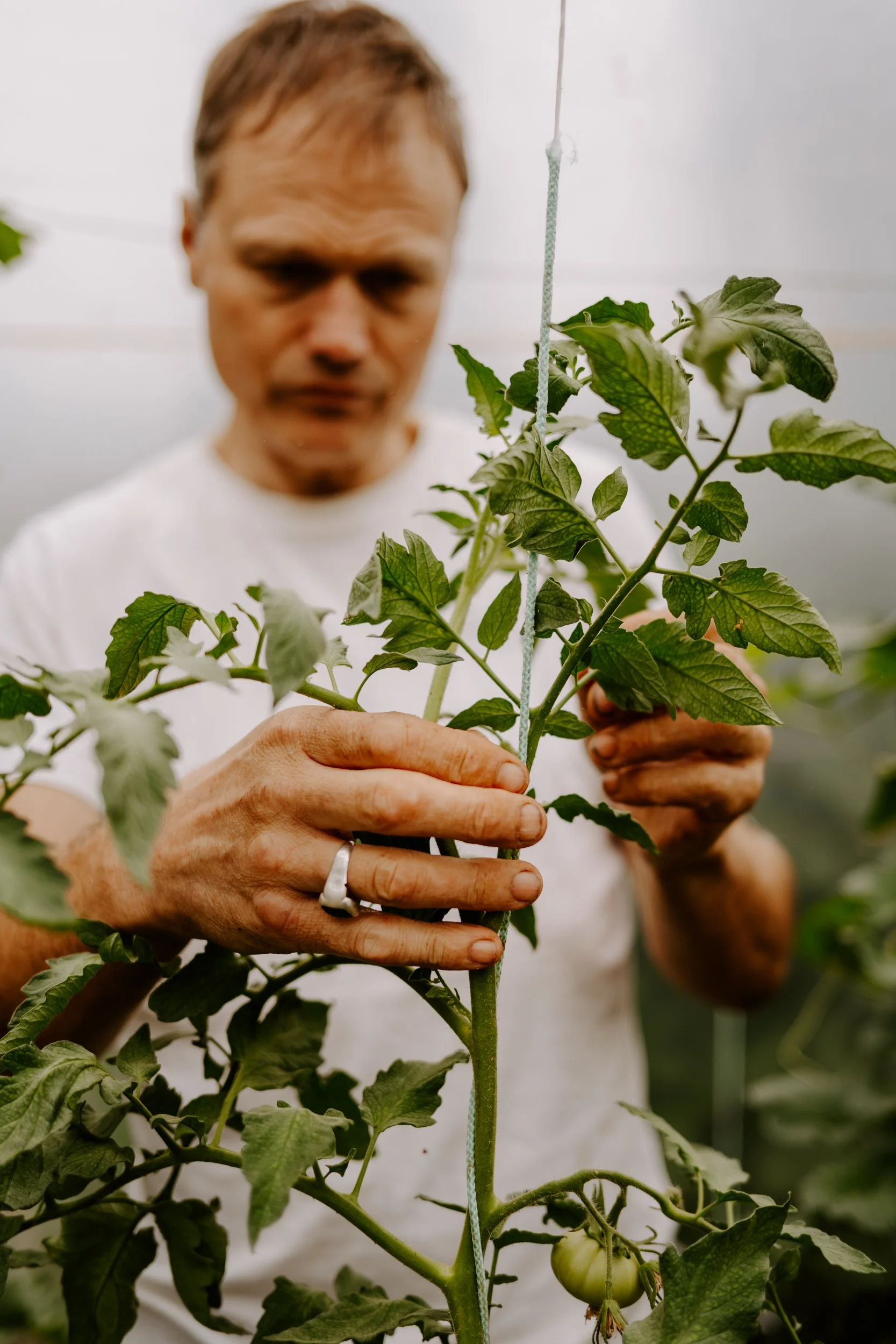
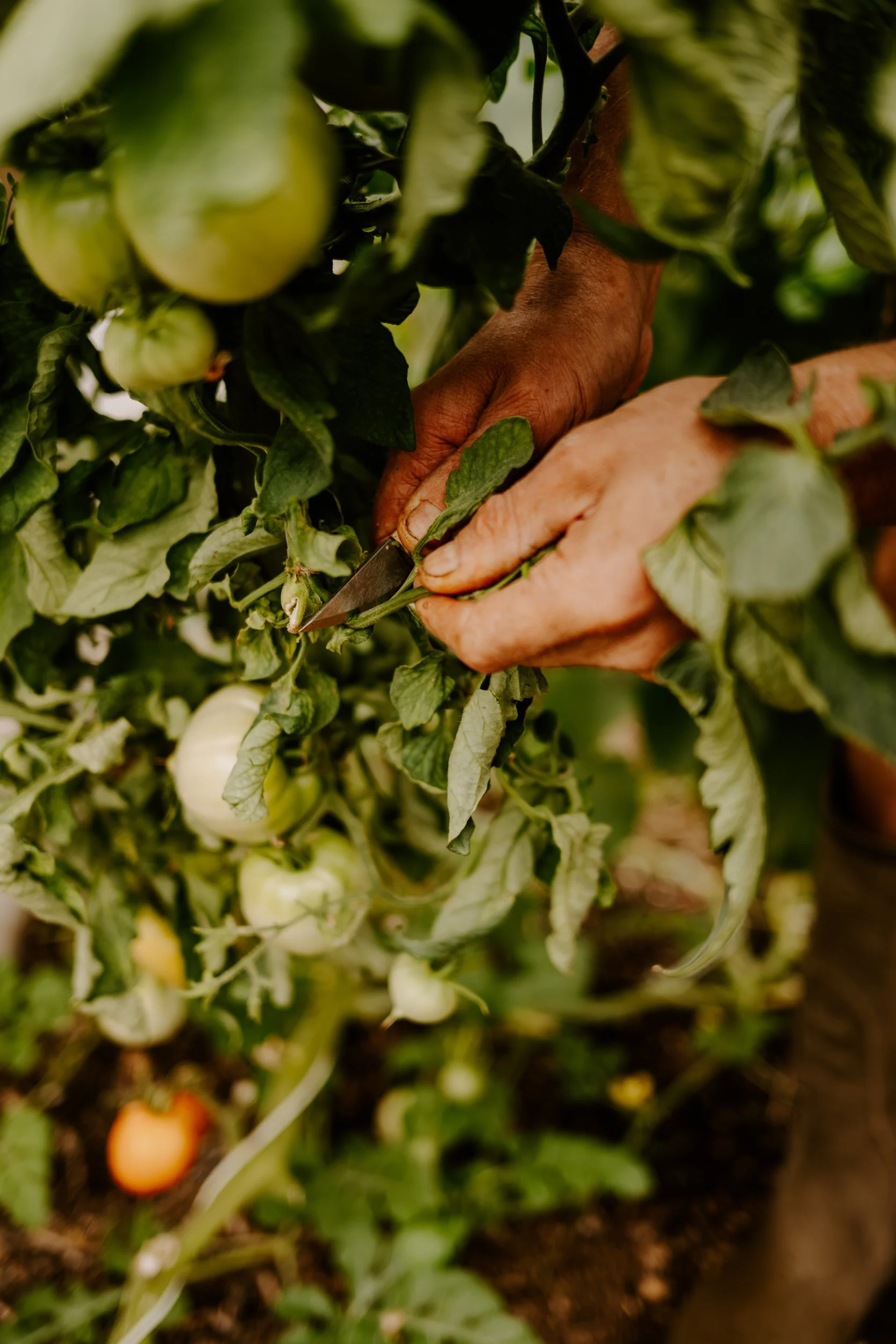
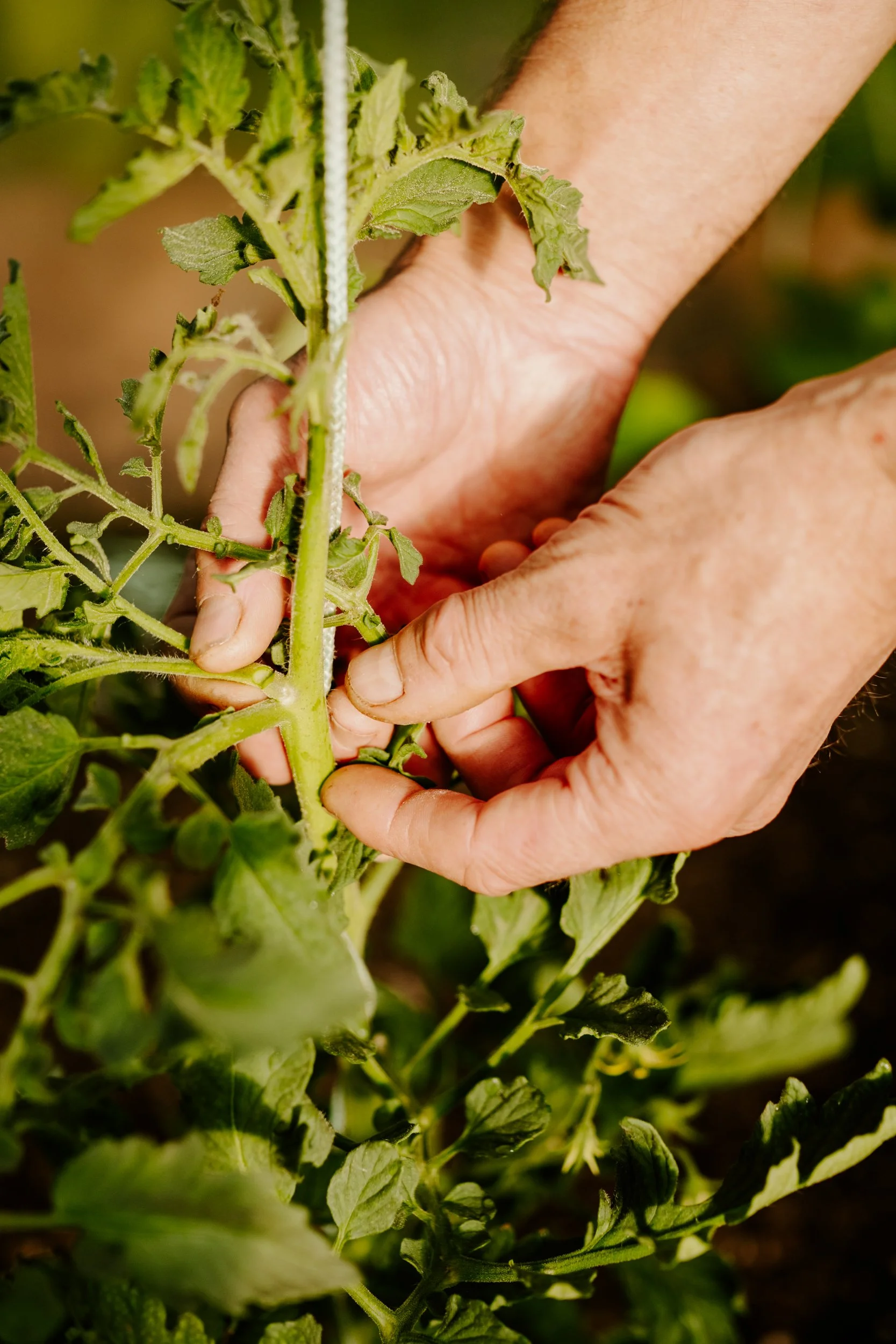
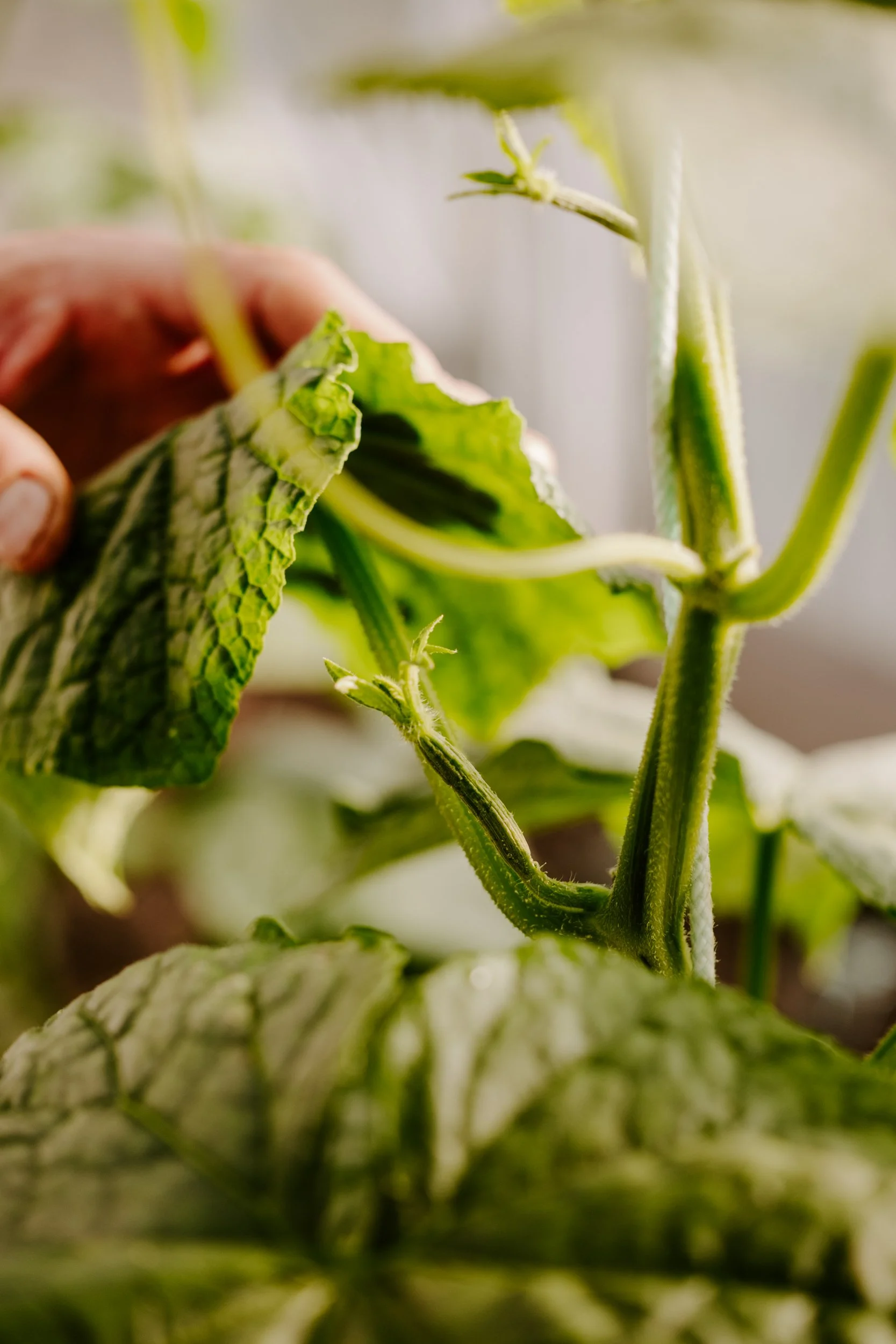
The cucumbers have exploded upwards. Tomatoes follow, carefully trained towards the roof while James pinches out the side shoots.
Less sideways. More upwards. More fruit.
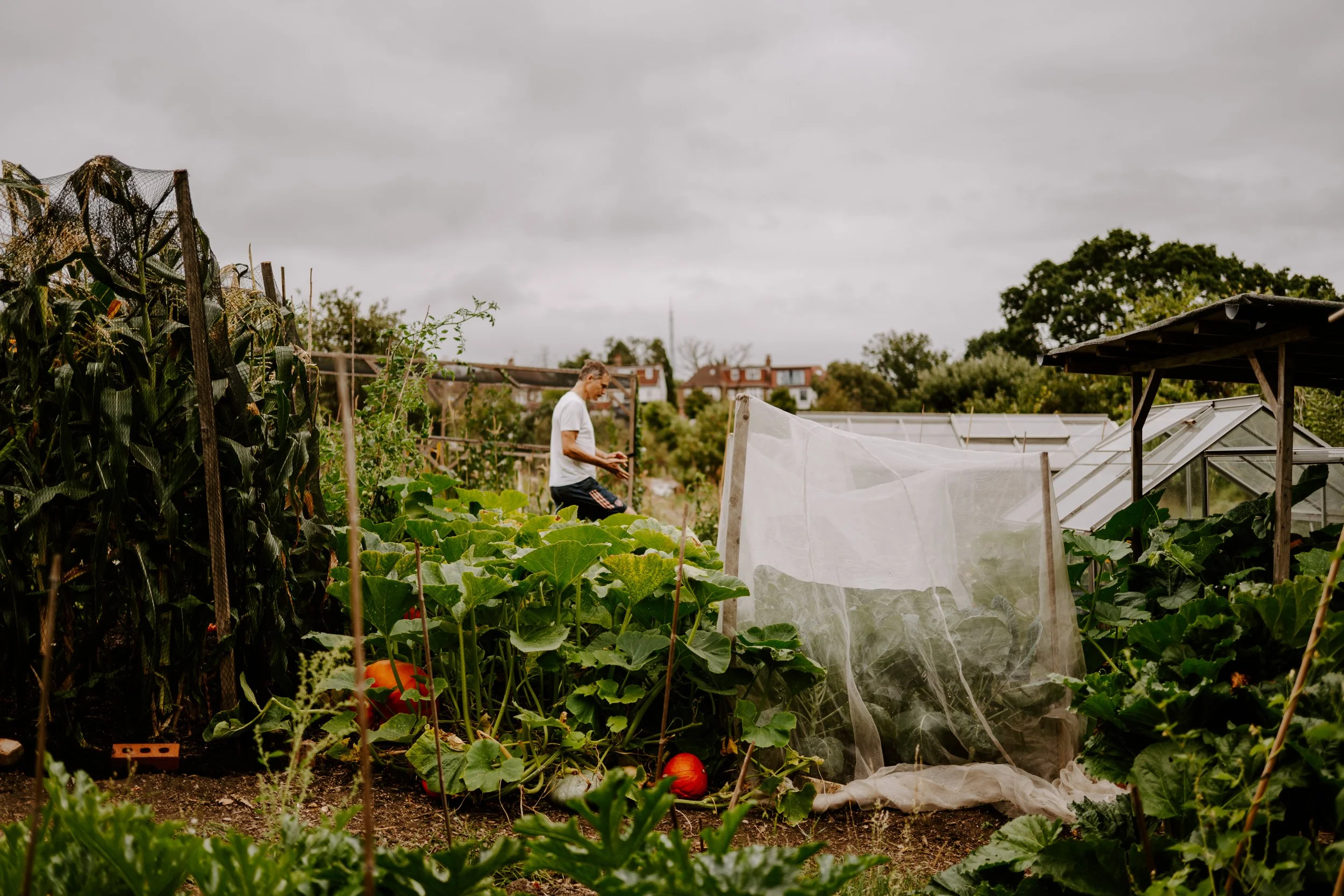
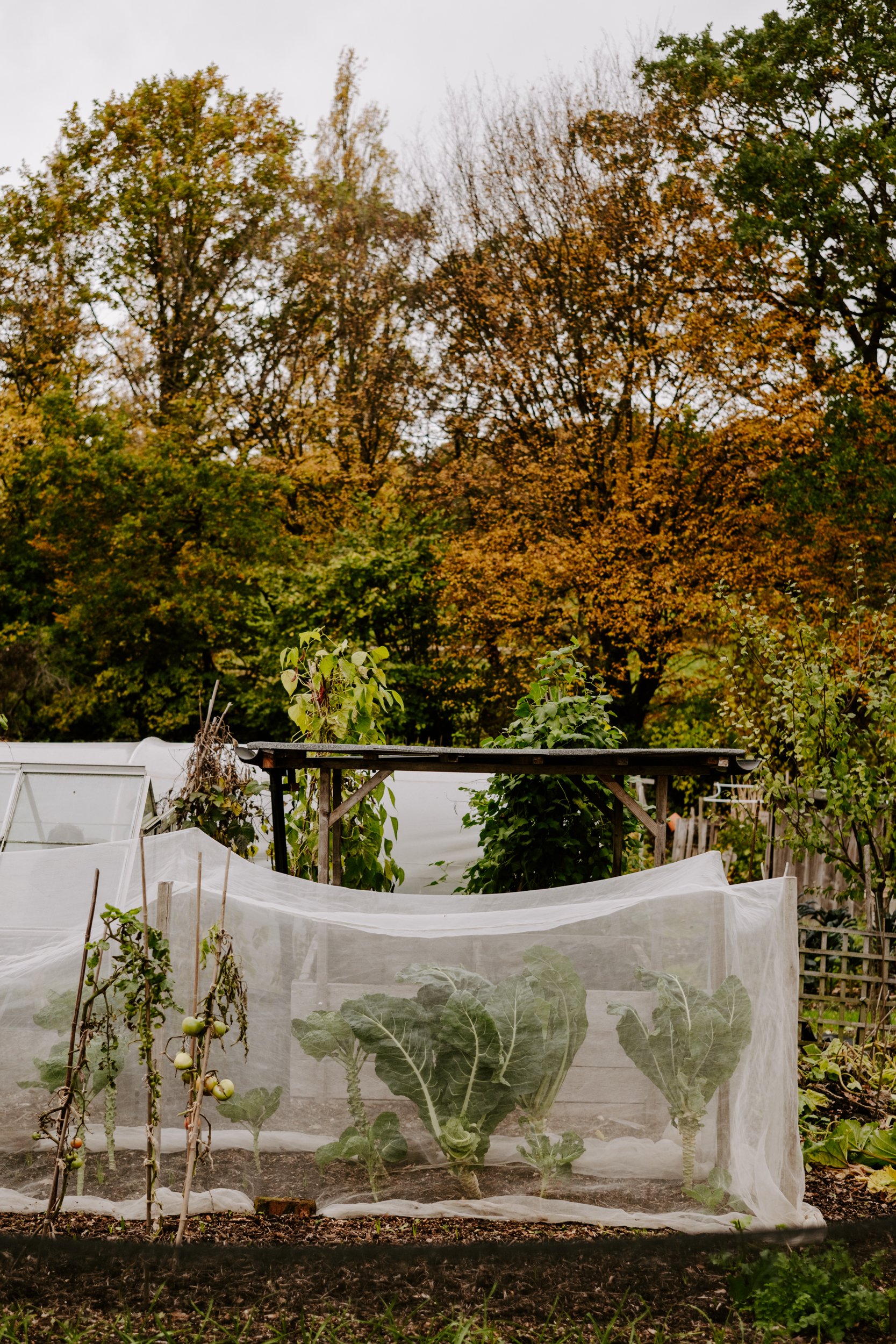
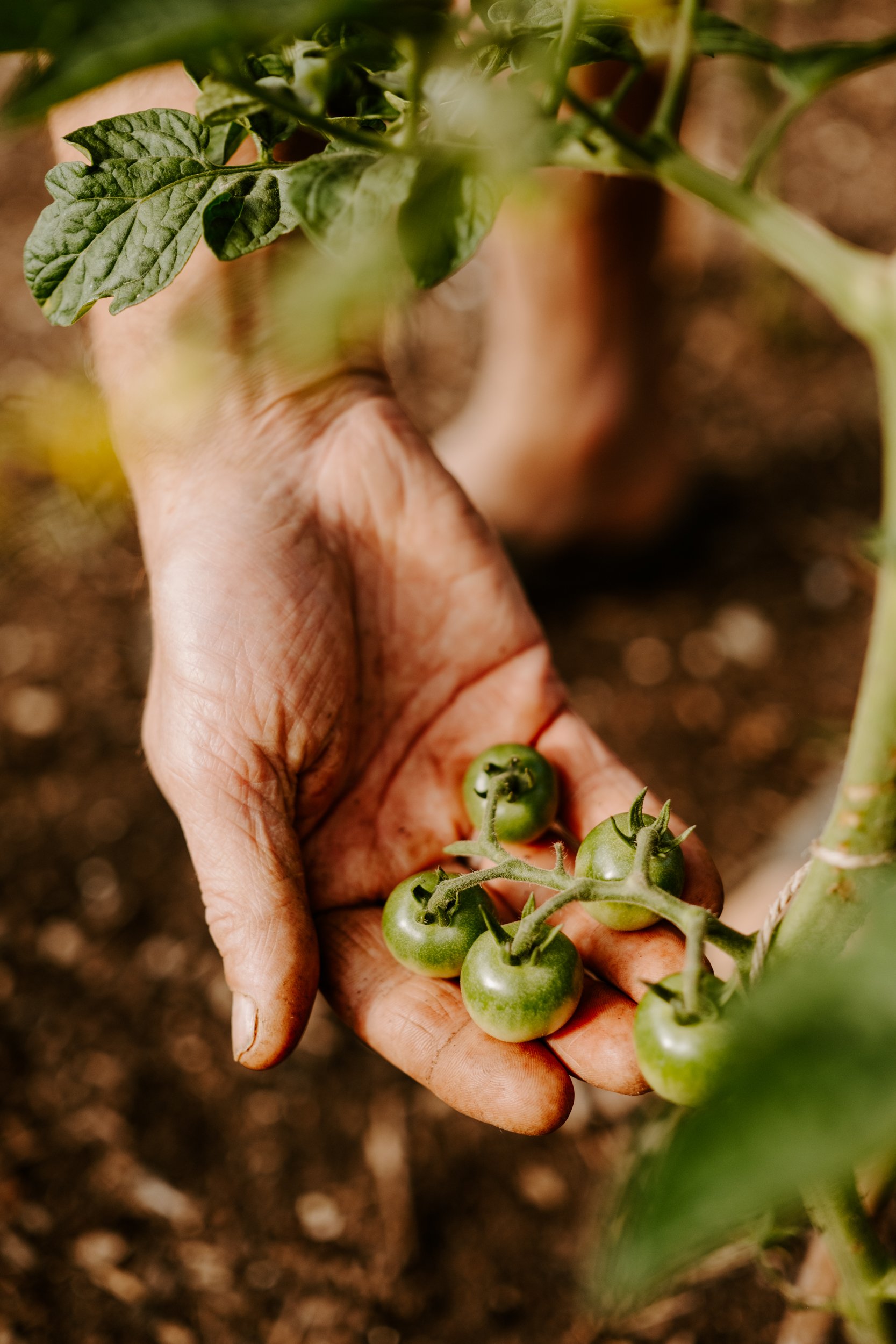
Outside, the Brussels sprouts have taken over from the peas. Sweetcorn is stretching skyward. Squash leaves spill across the beds. The first green tomatoes are appearing on the outdoor plants.
Then comes my favourite part.
Harvest.
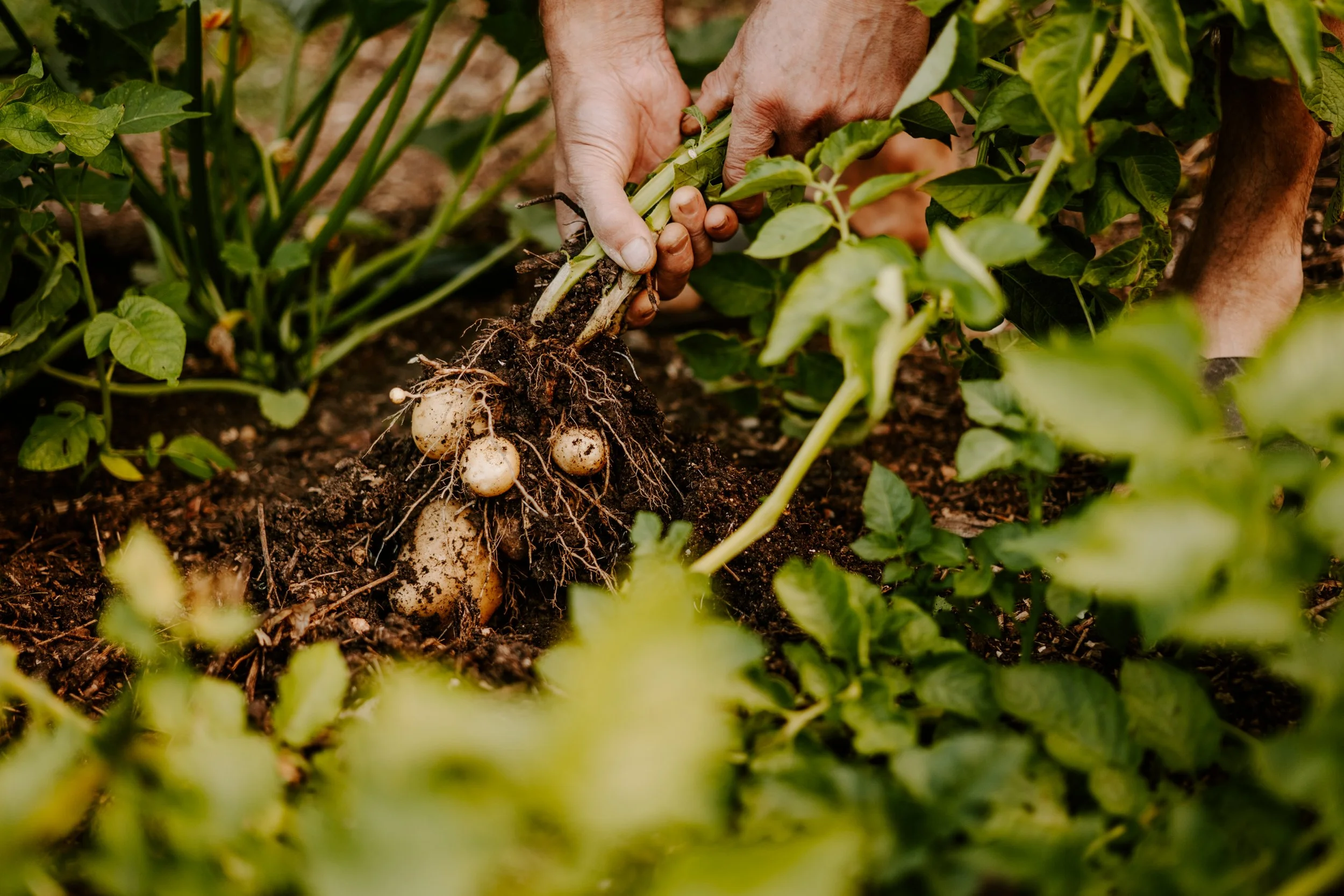
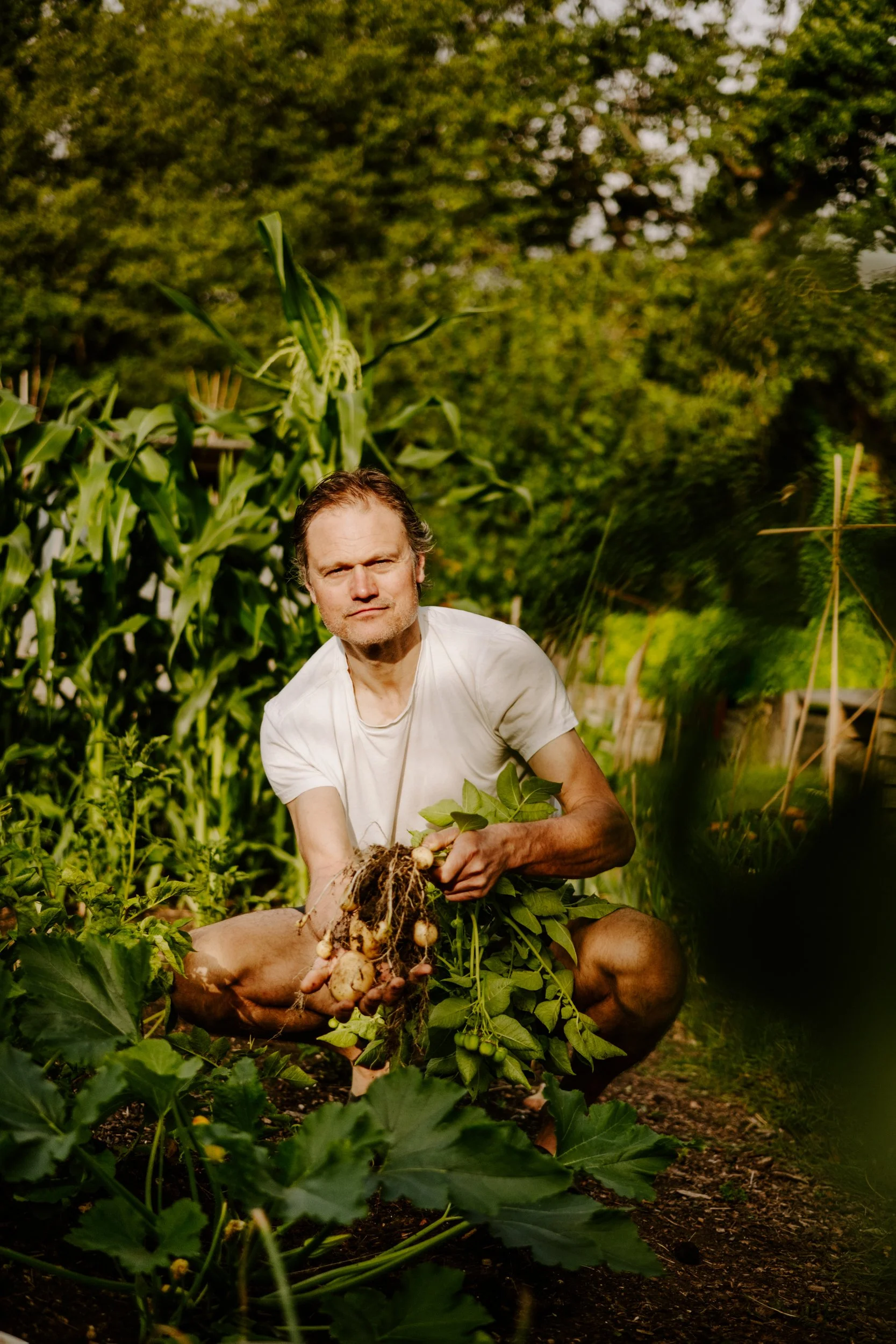
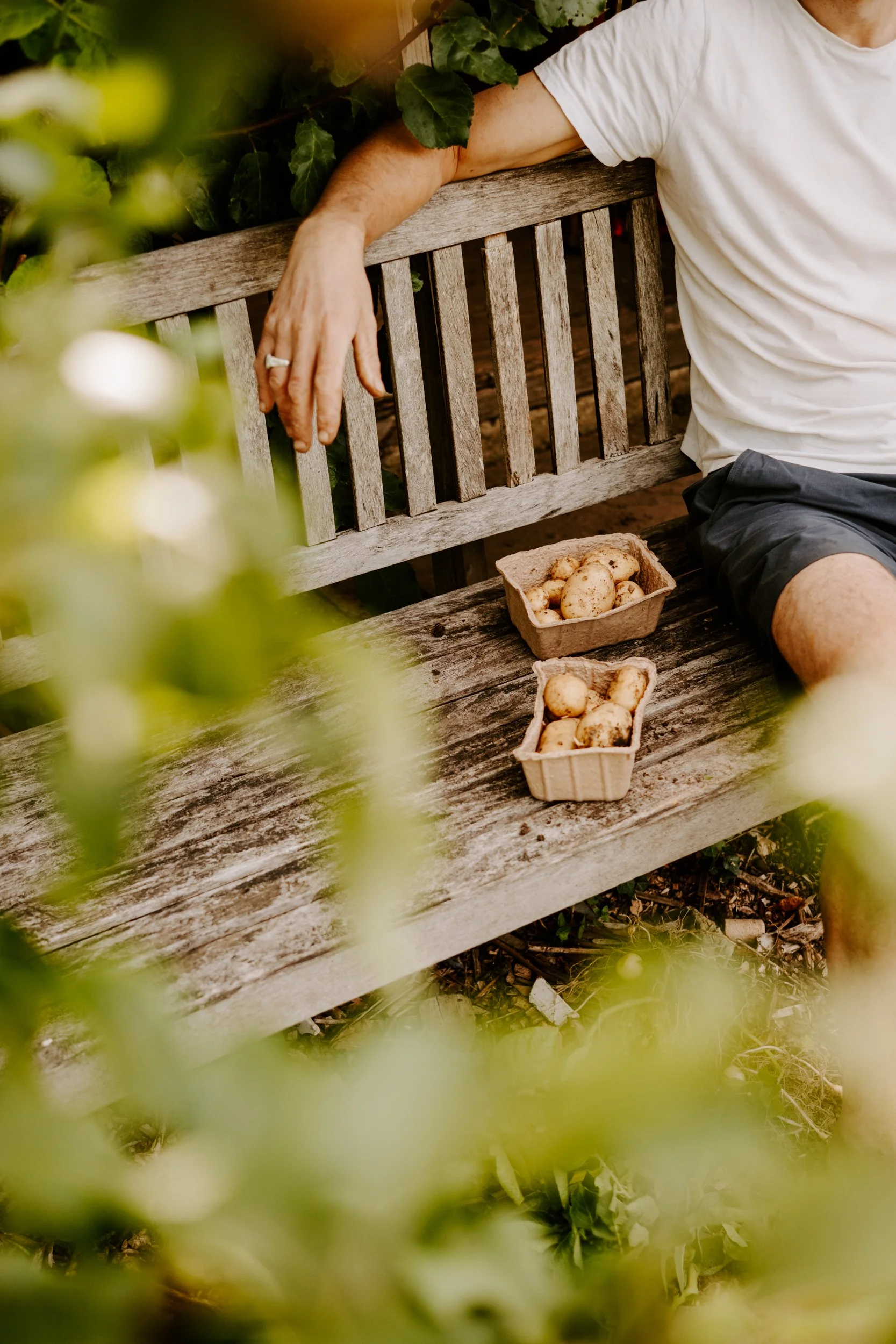
James gently parts the compost-rich soil and the first early potatoes appear. No digging. Just hands and patience.
I crouch lower with the camera, trying to catch that moment when the earth gives up its treasure.
The Sturon onions are swelling in their clusters. Three, four, sometimes five together.
Even the raspberries are hanging on through another dry spell, with James back to watering them.
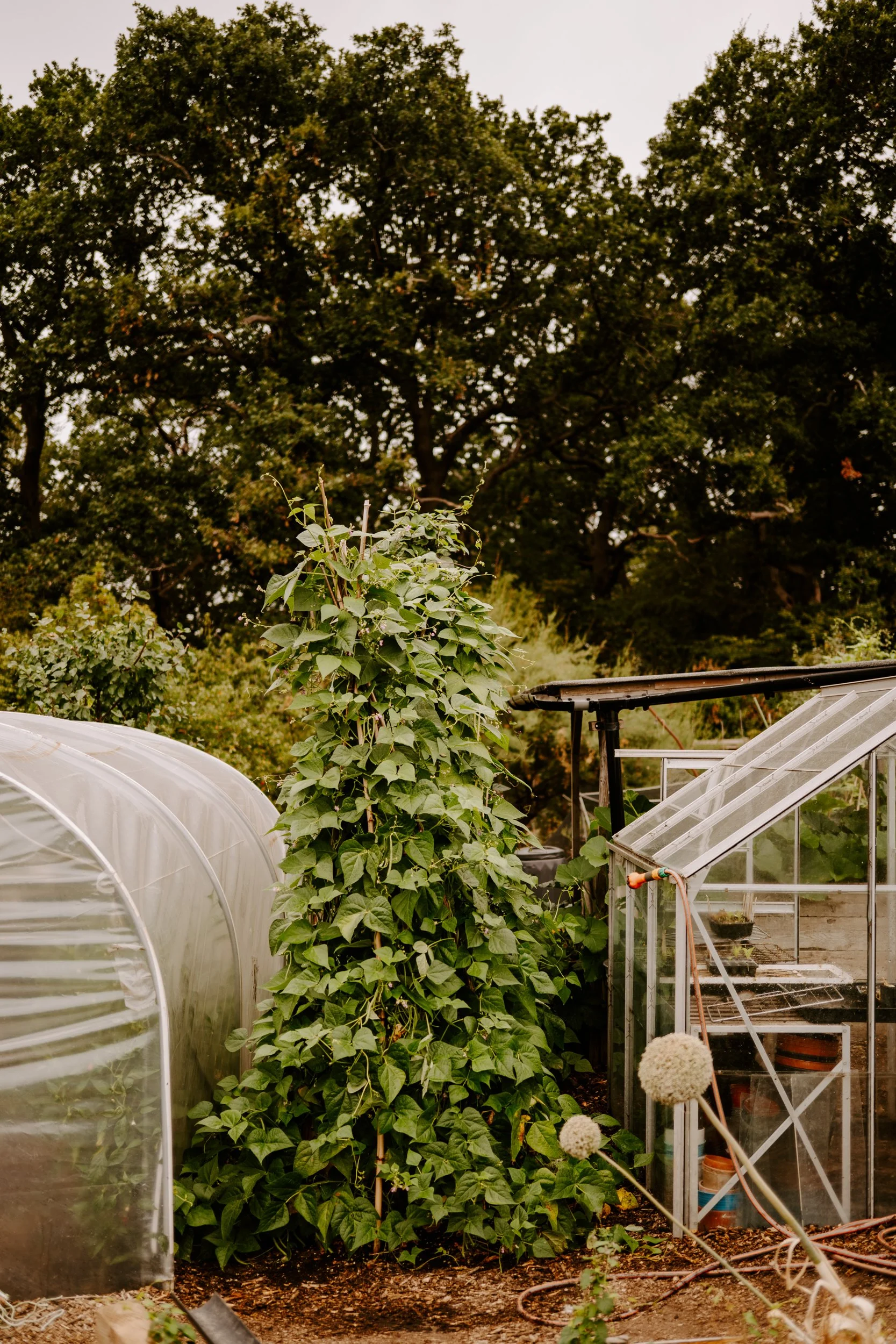
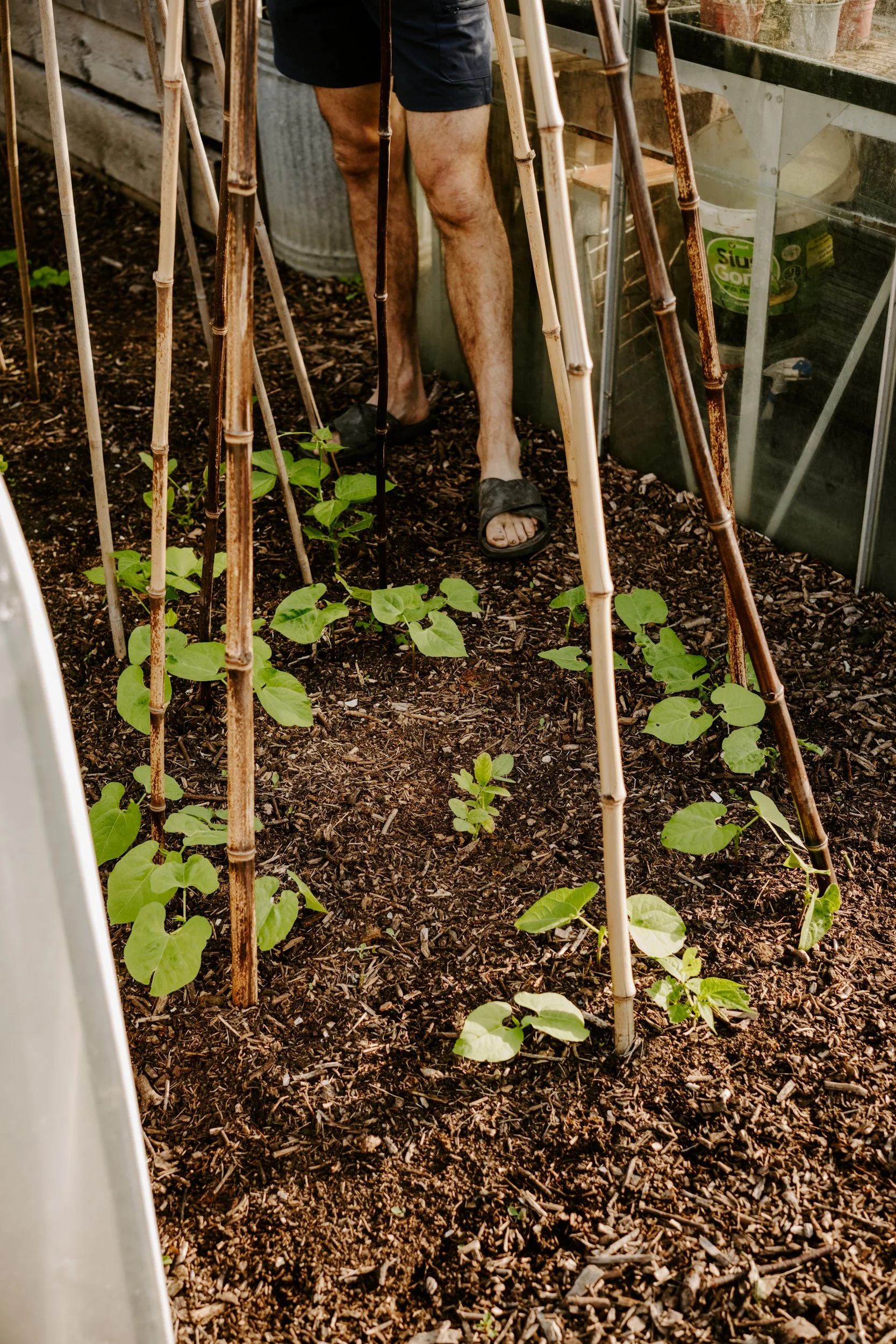
Around the bamboo teepees, French beans are coming through. Runner beans are returning too.
Not everything has worked first time. Some will be sown again. James shrugs. That is gardening.
Standing back before I leave, the plot feels transformed.
So much fuller. Summer has taken hold.
It’s mid August by the time I make it back to the allotment. This is the first morning in what feels like forever when the air doesn't feel hot.
There is a heavy grey cloud cover too. Another welcome change. For the first time in weeks, the sky looks as though it might actually give something back. Rain is finally showing in the forecast.
The UK is in drought. Lawns are straw-coloured. The ground is hard and cracked.
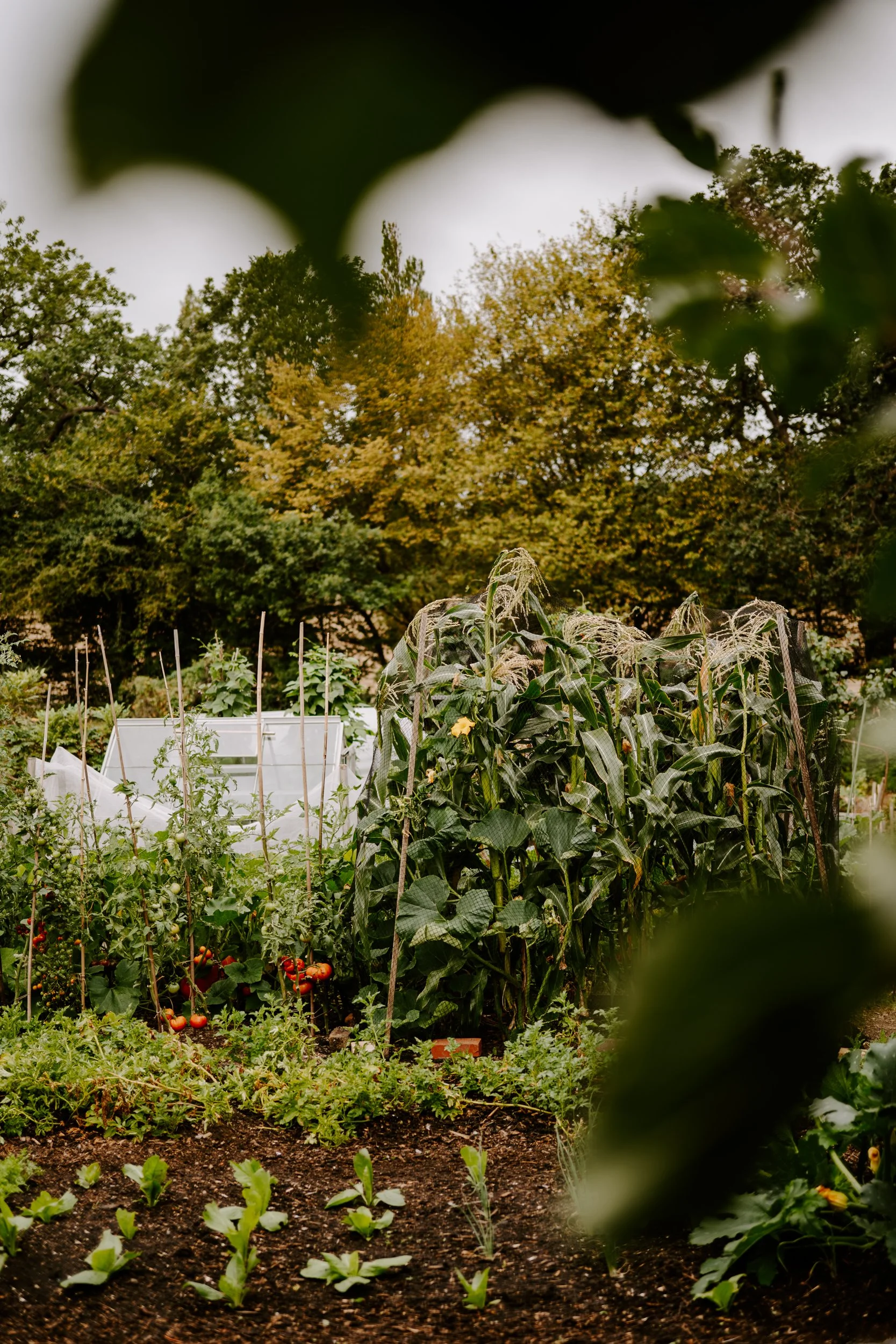
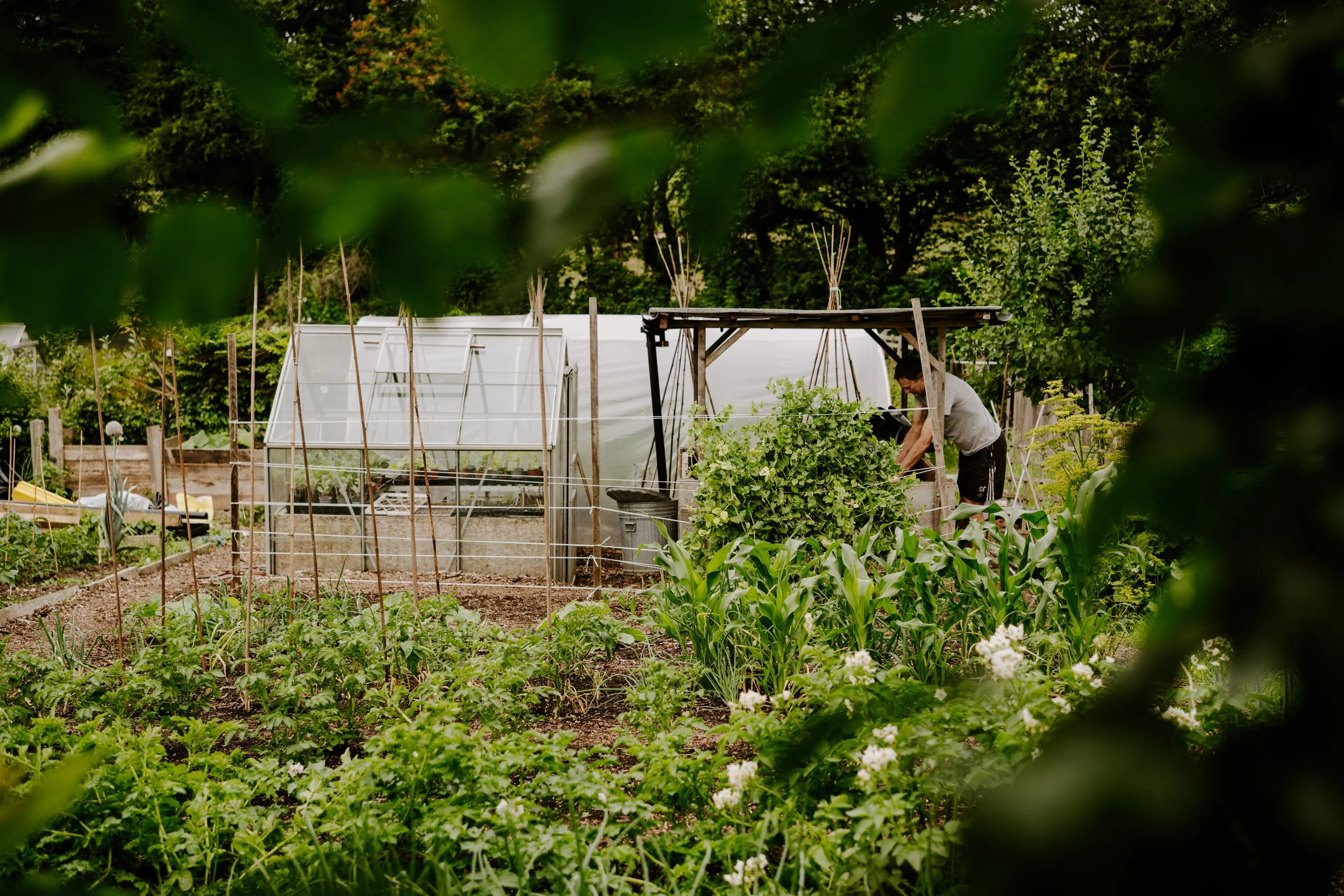
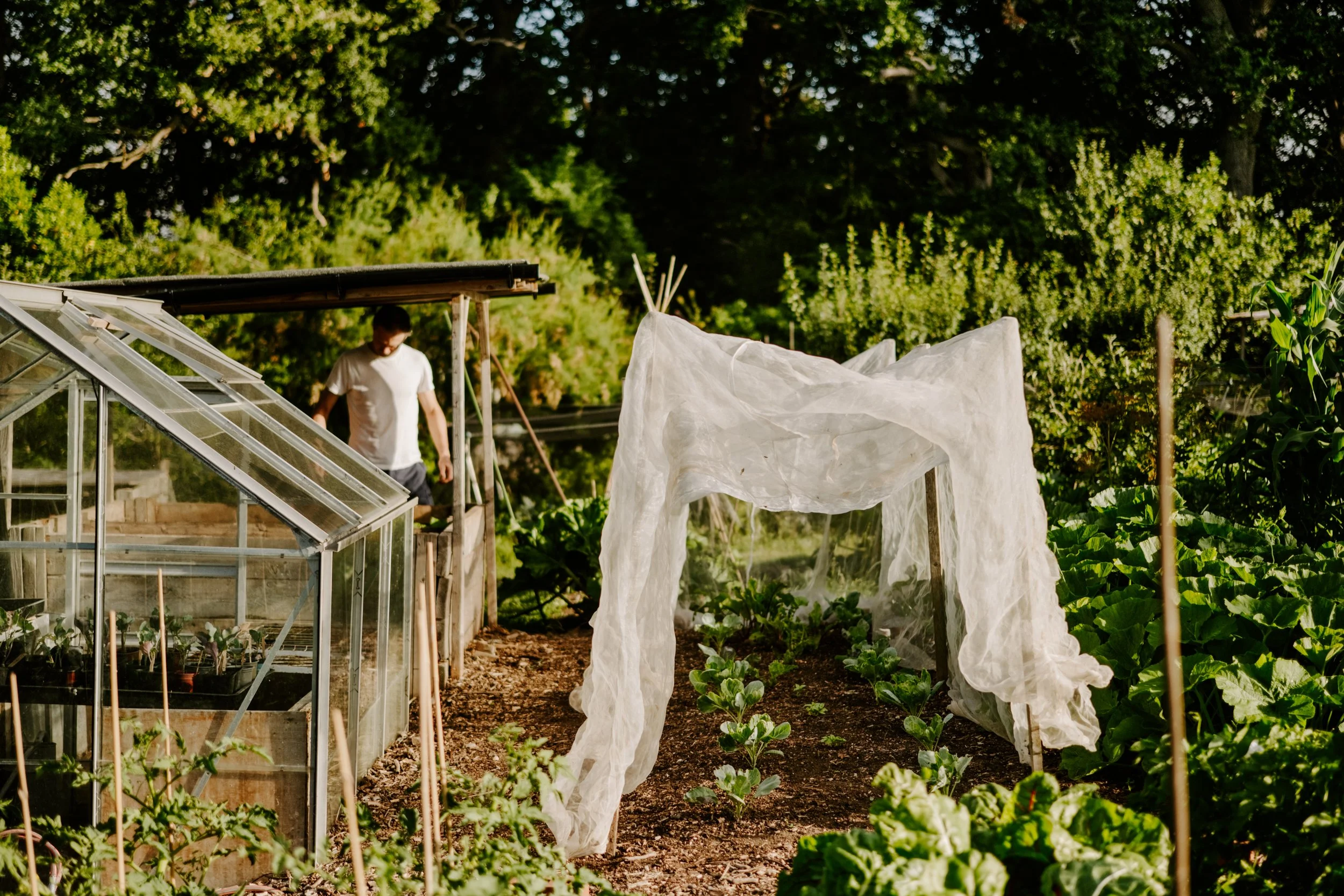
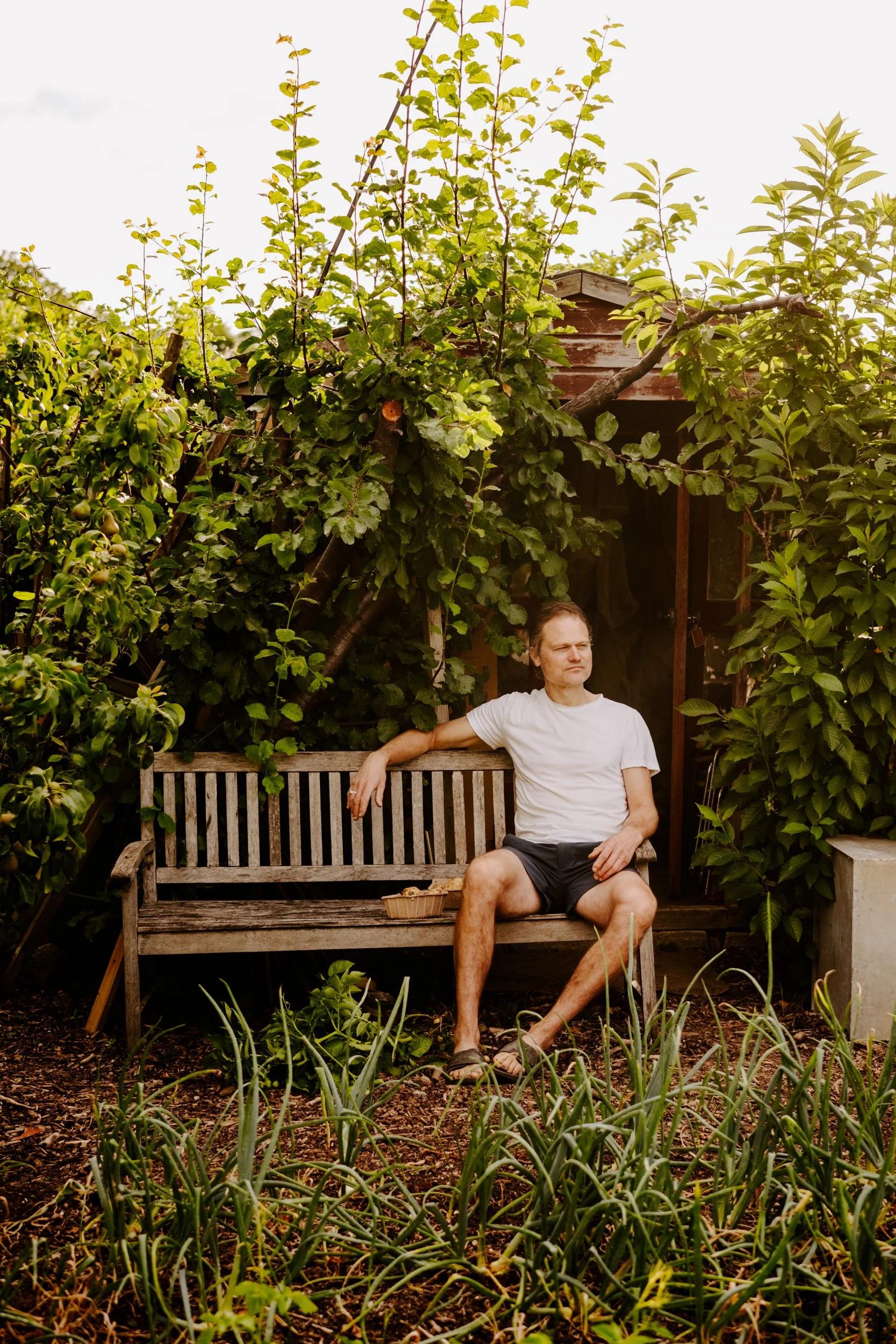
But inside the gates, James’s allotment is another world entirely. Green. Lush. Almost overflowing.
It is no accident. He has been out here every morning, watering through the heat, keeping everything alive. The no-dig beds hold moisture well, and that steady routine has made all the difference.
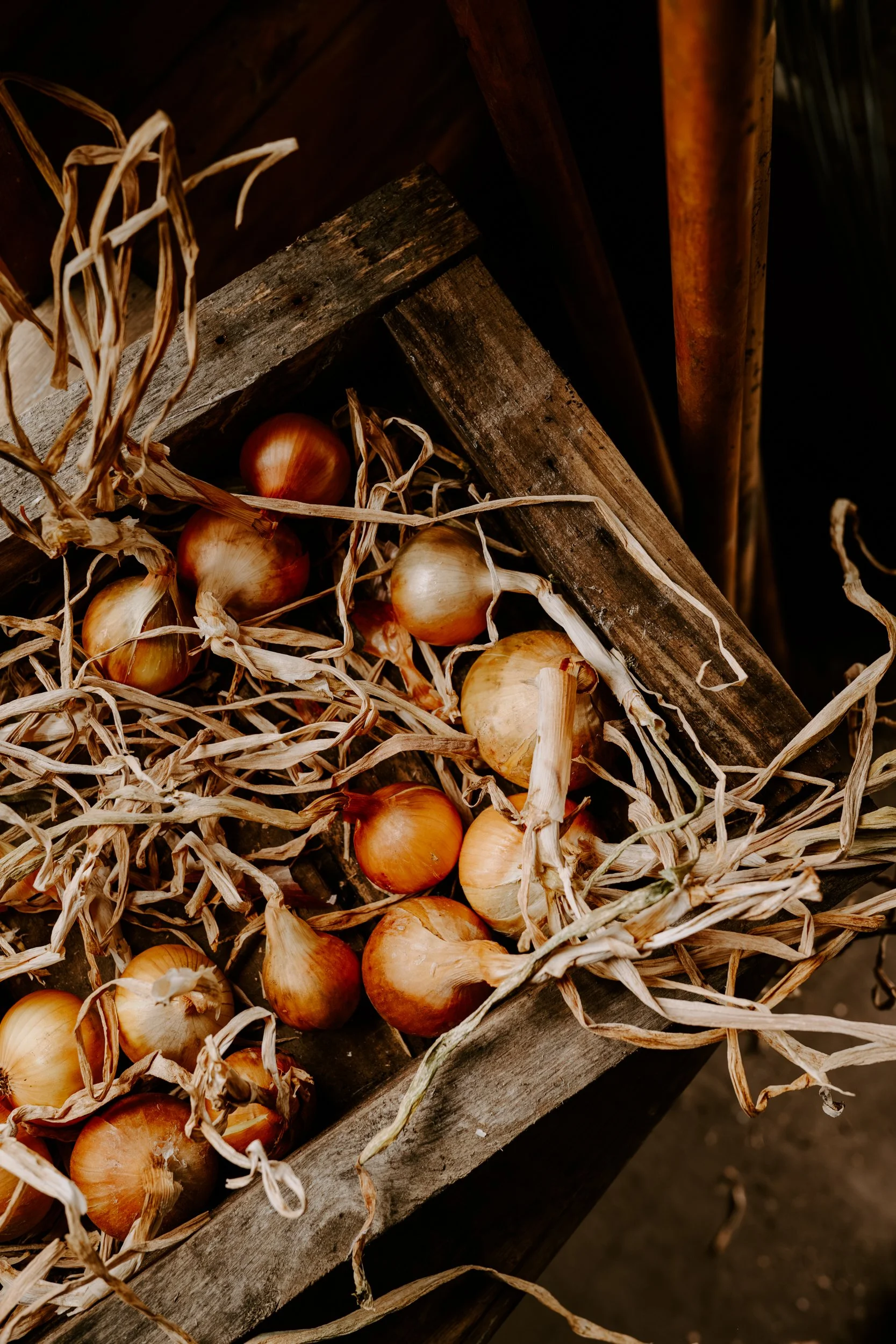
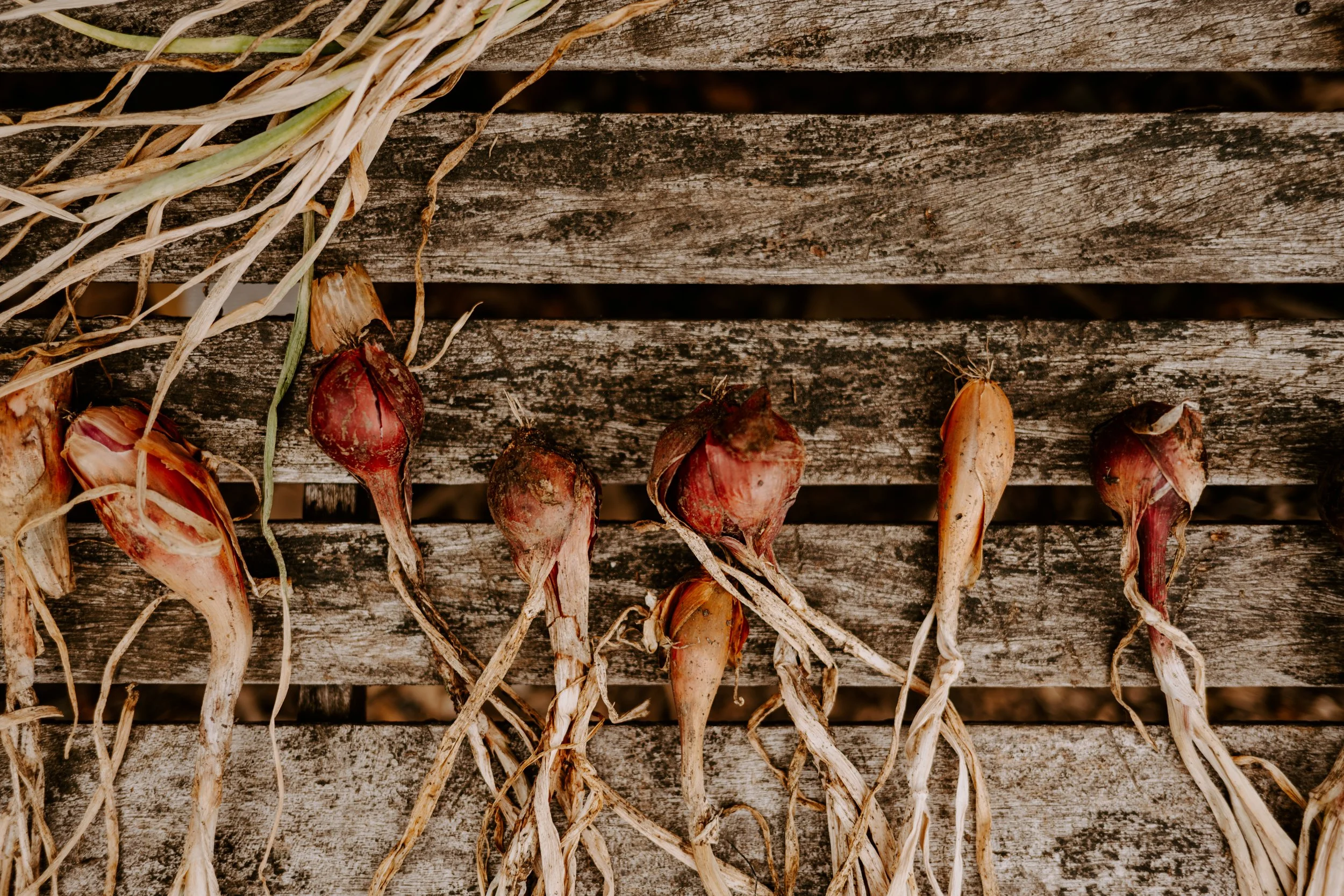
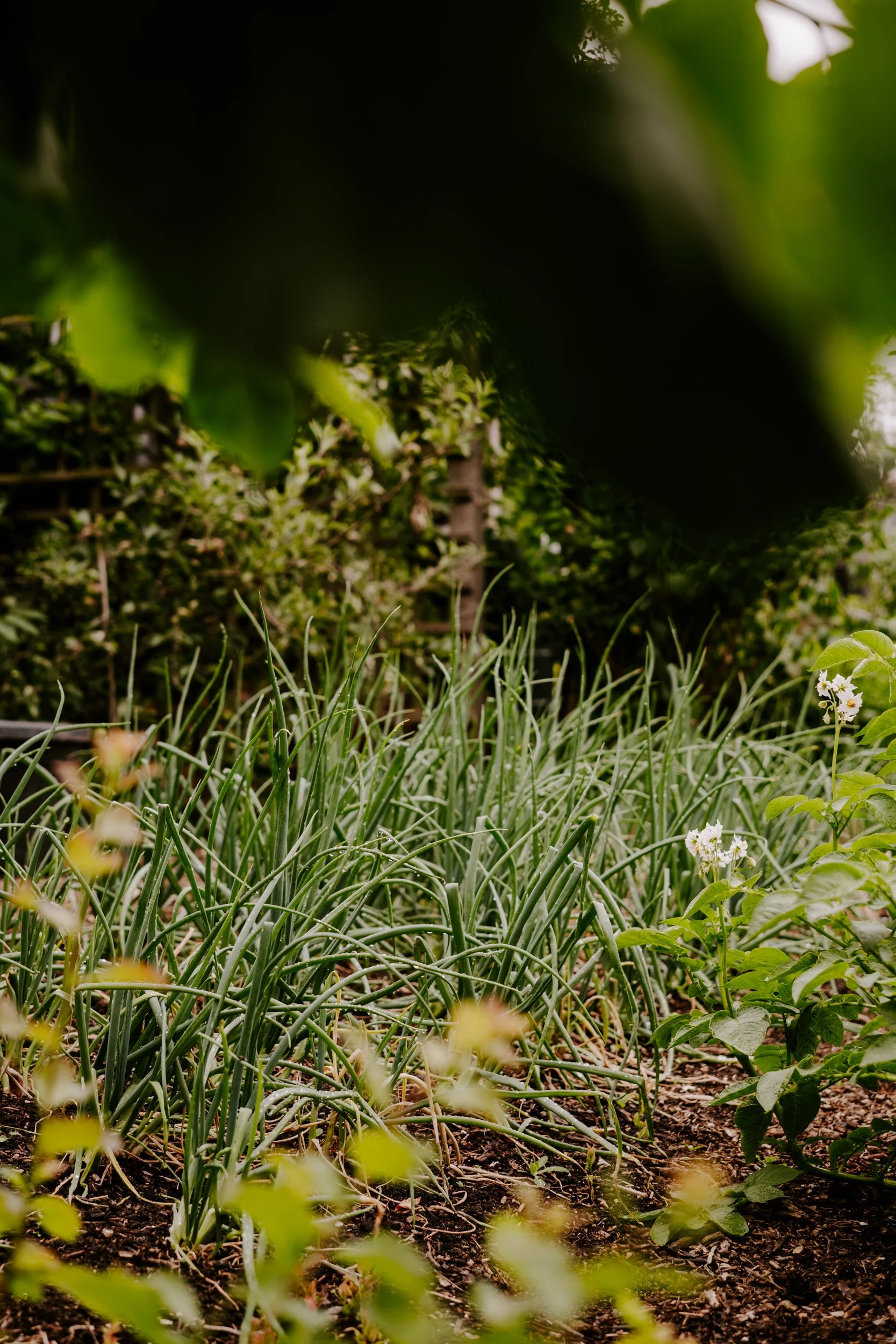
The Sturon onions have already been harvested. James bent the necks over while they were still in the ground, allowing the bulbs to swell, then lifted them and left them in the sun for about a week to dry. Now they are ready to store. Months of growing reduced to a row of golden bulbs.
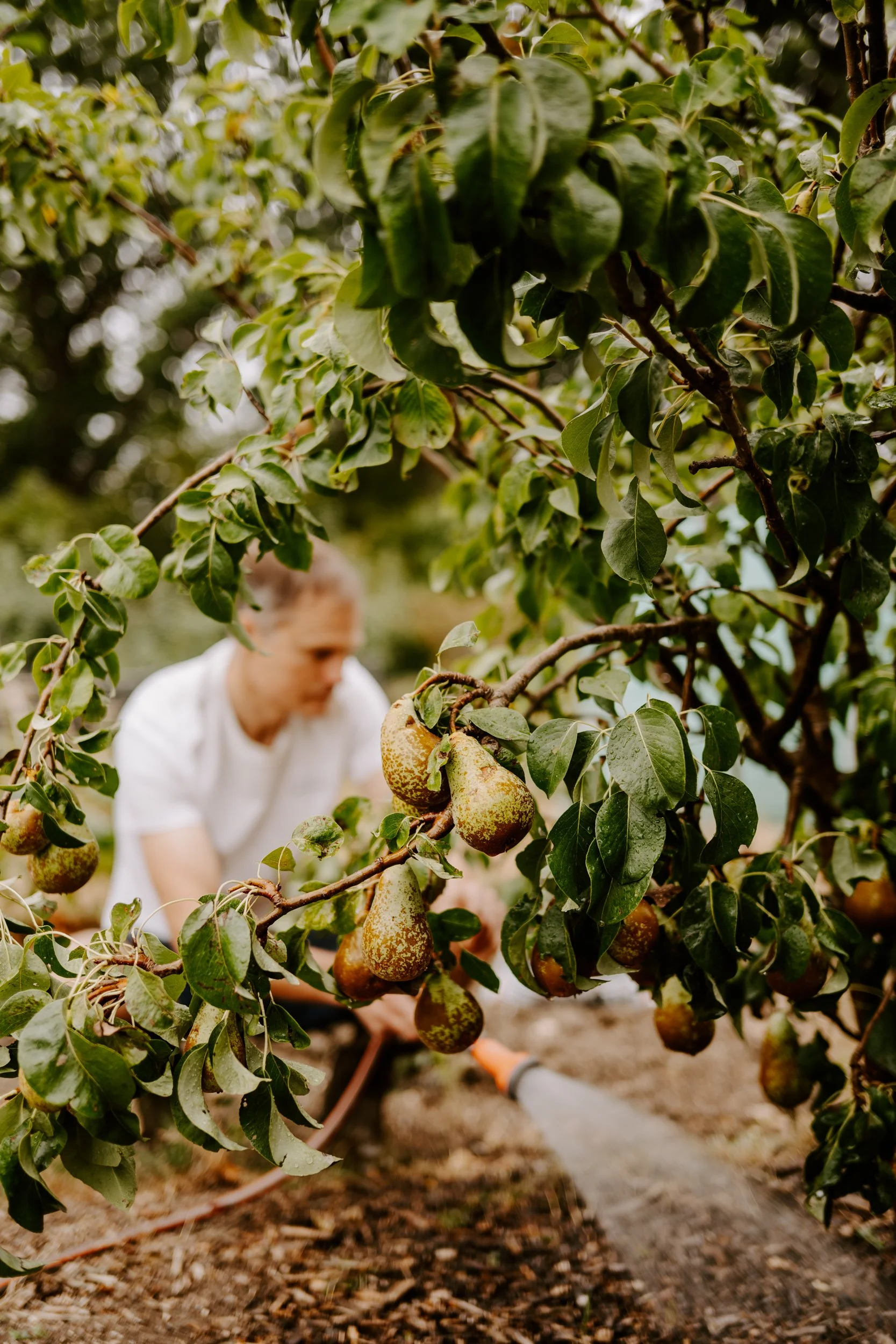
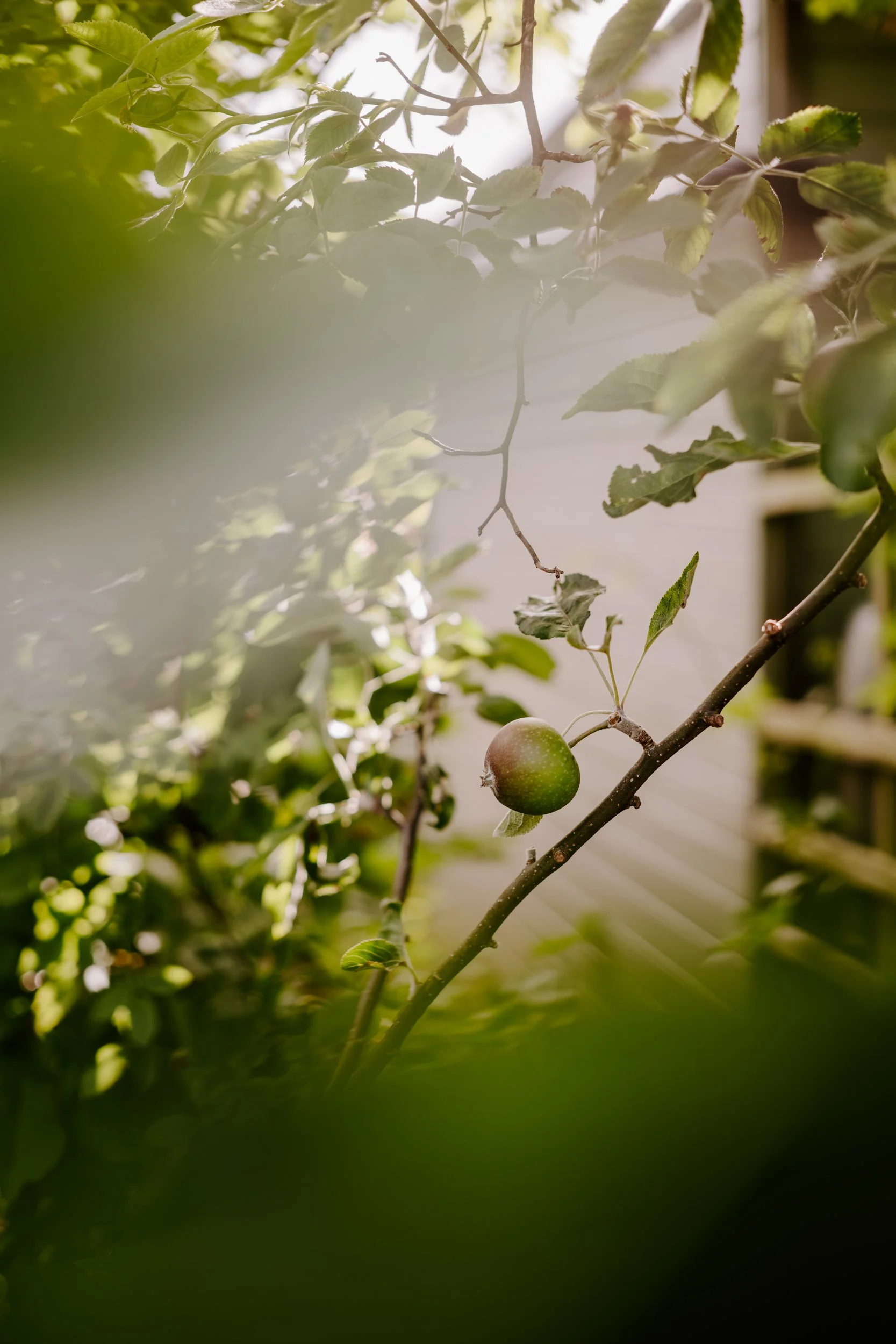
Even the fruit trees are thirsty. The pear tree gets a drenching, something he would rarely need to do in a normal summer. This year the water is not just keeping it alive. It is helping the pears gain size and weight.
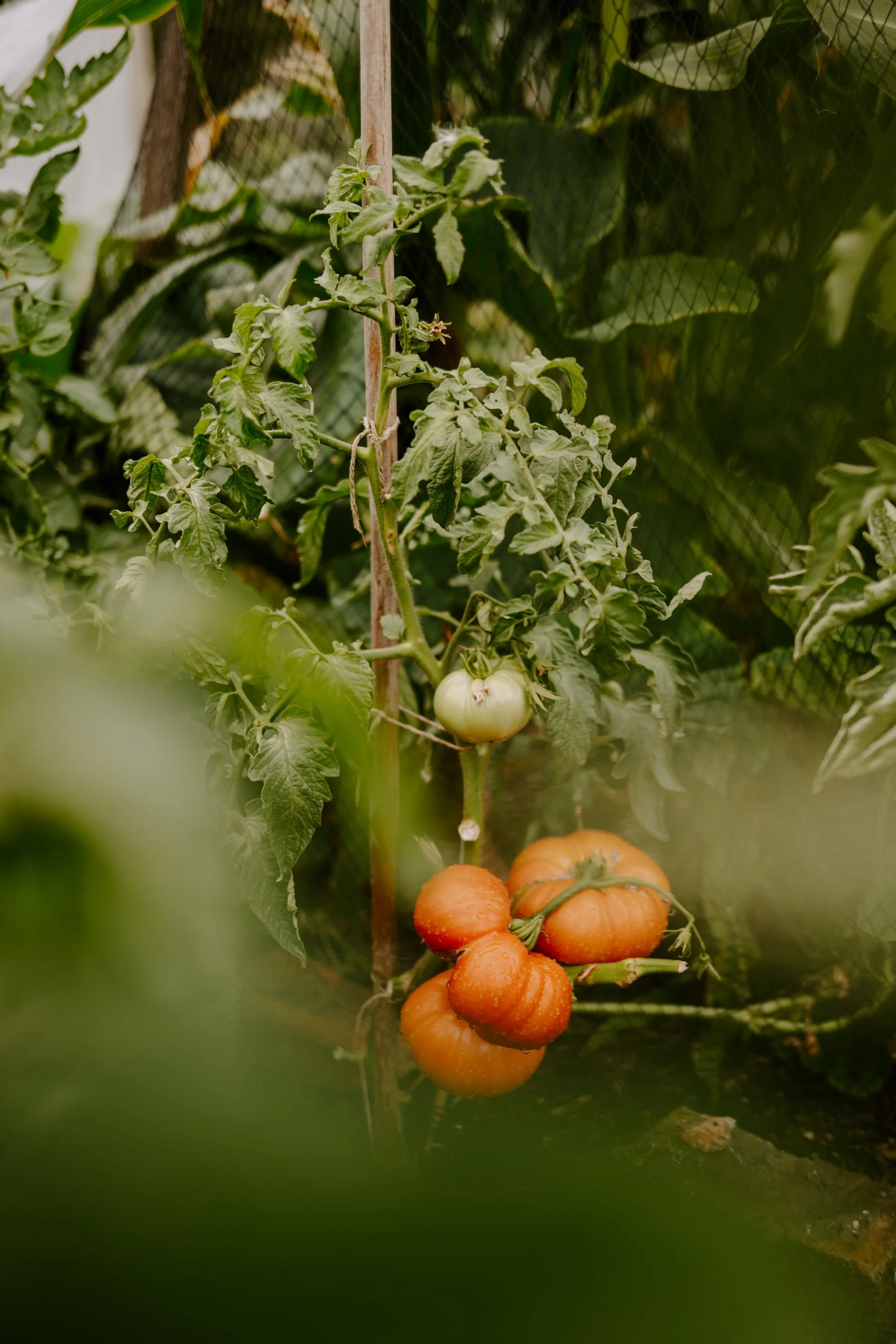
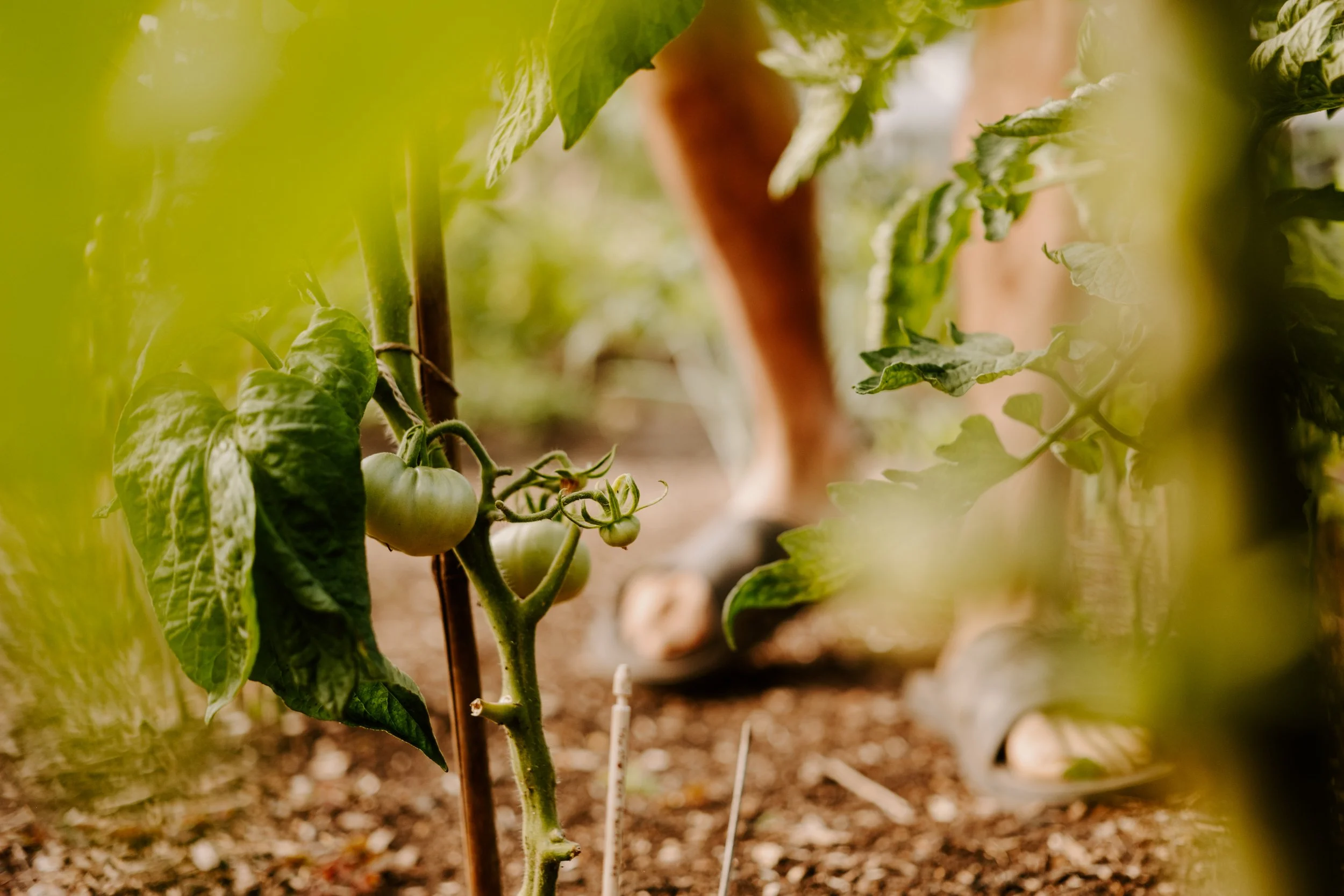
The tomatoes are having an interesting year too. The Gigantomo lives up to its name. Huge fruit hanging from the outdoor plants. And, unusually, the outdoor tomatoes are performing as well as those inside the polytunnel, perhaps even better. Another lesson from a strange summer.
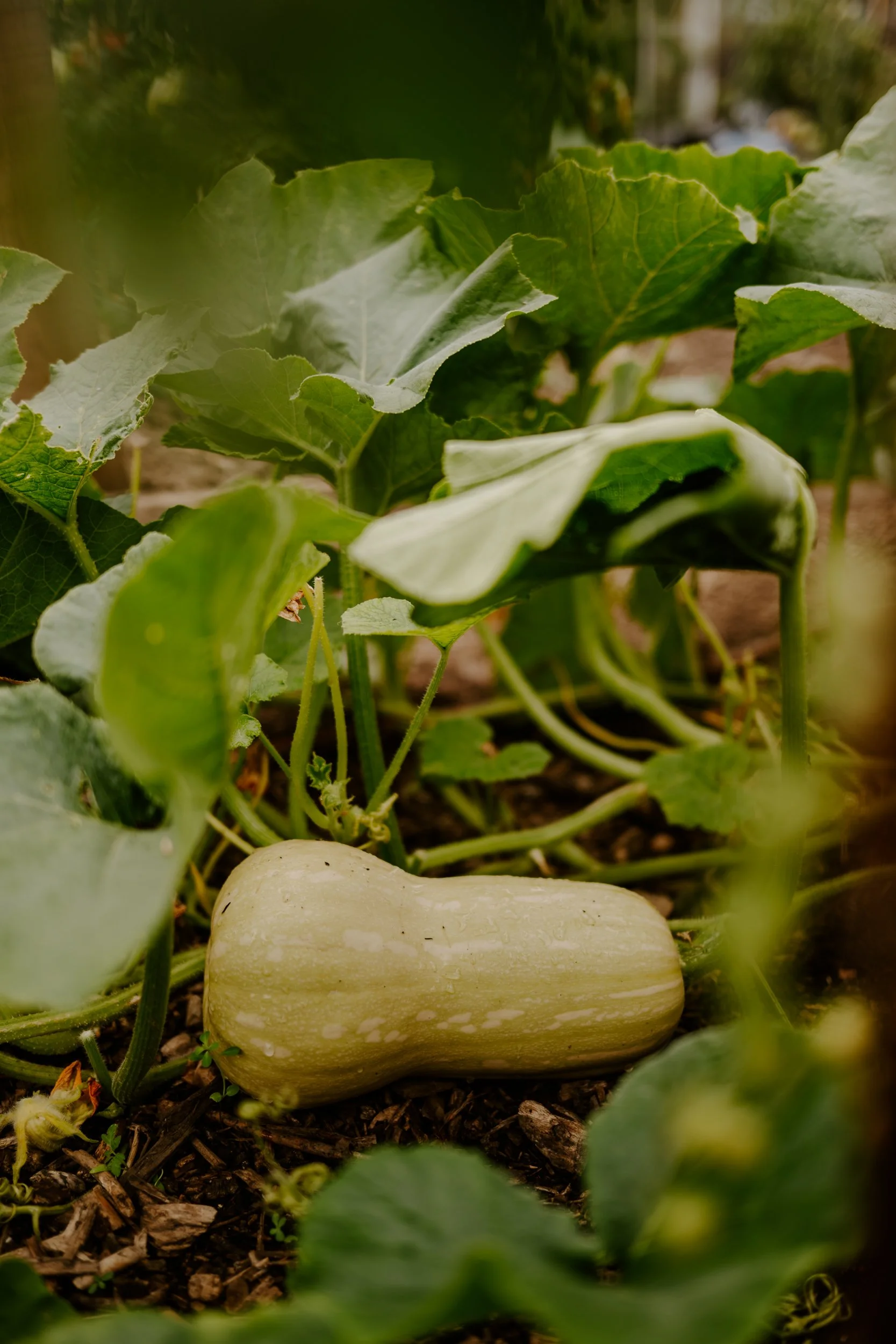
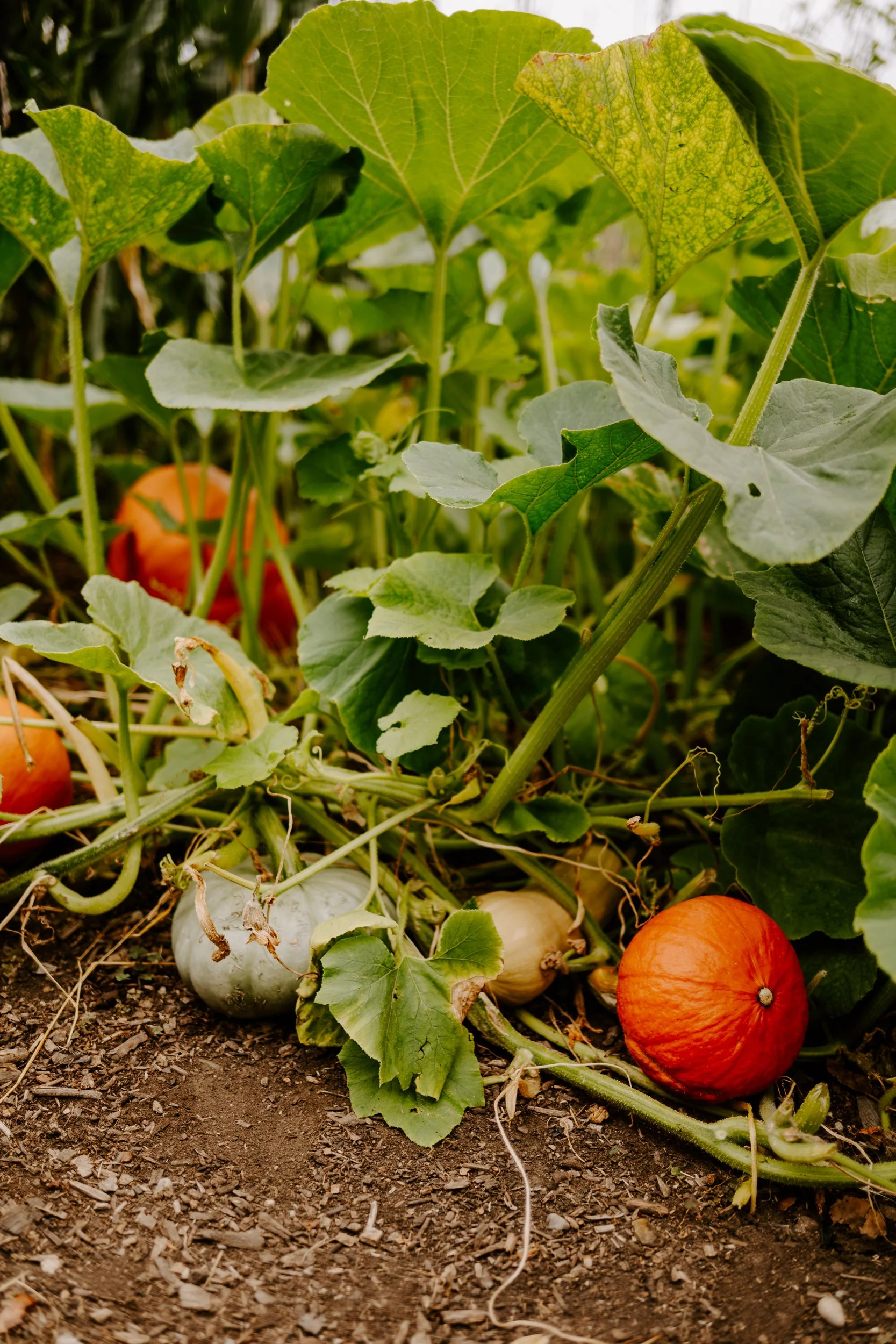
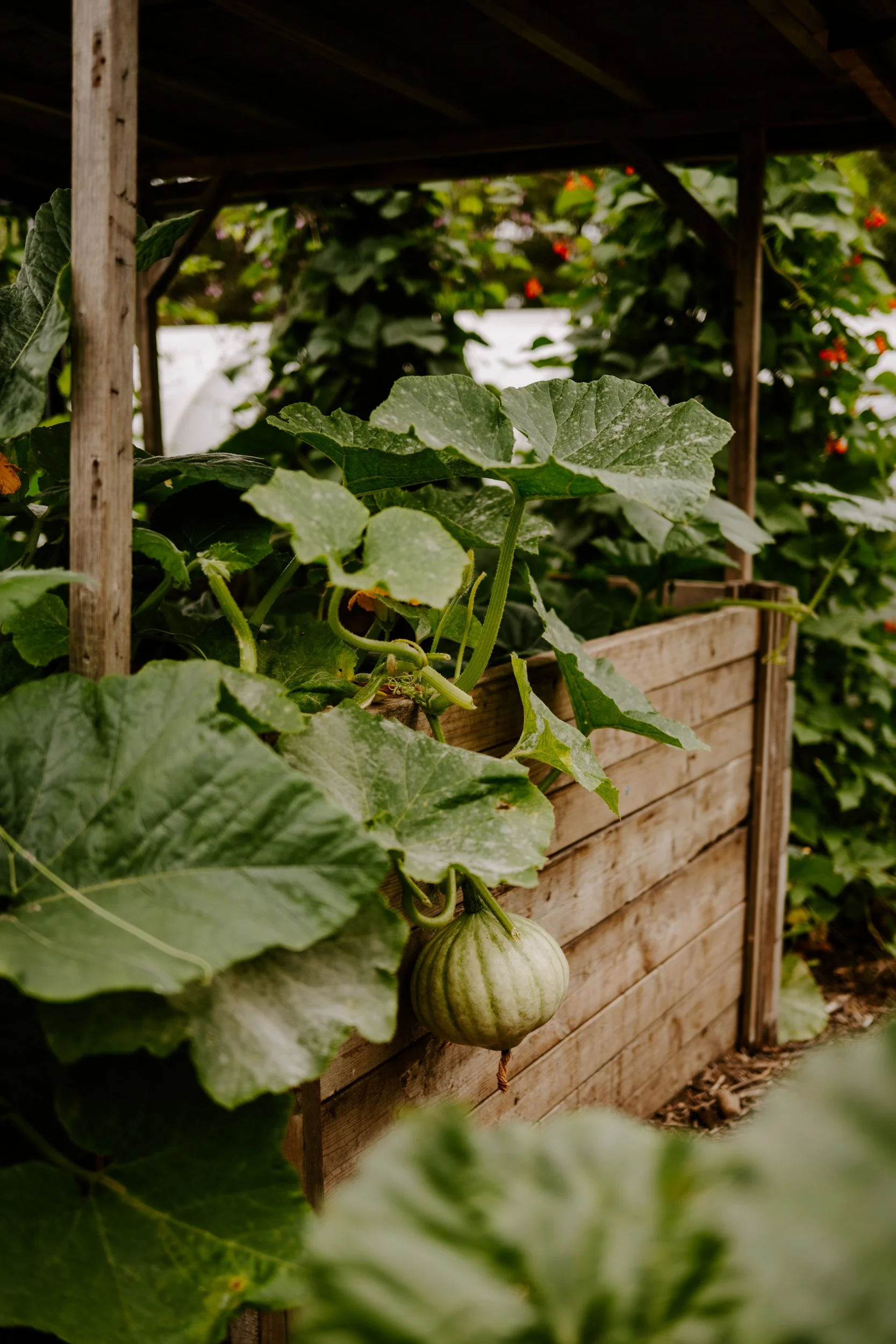
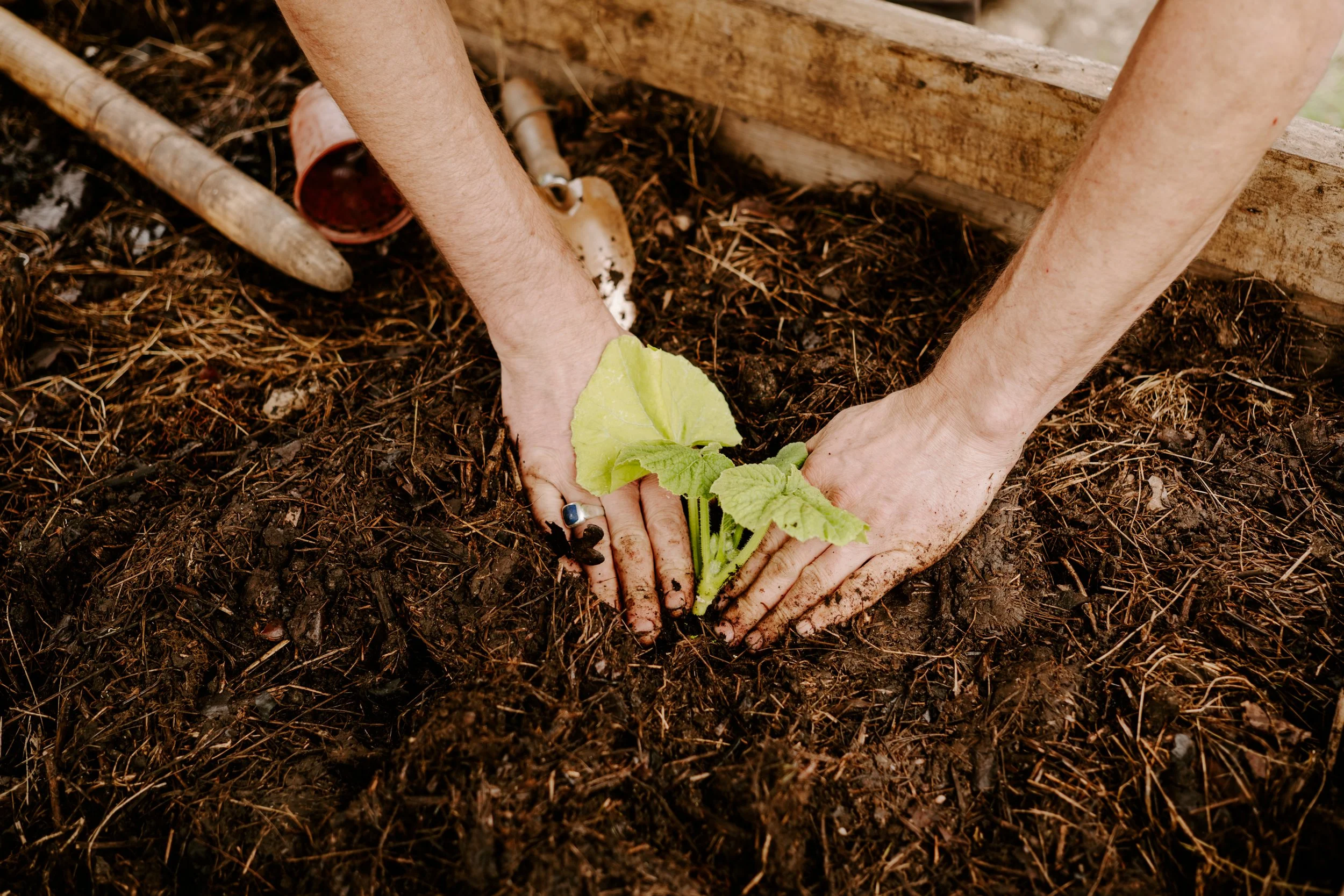
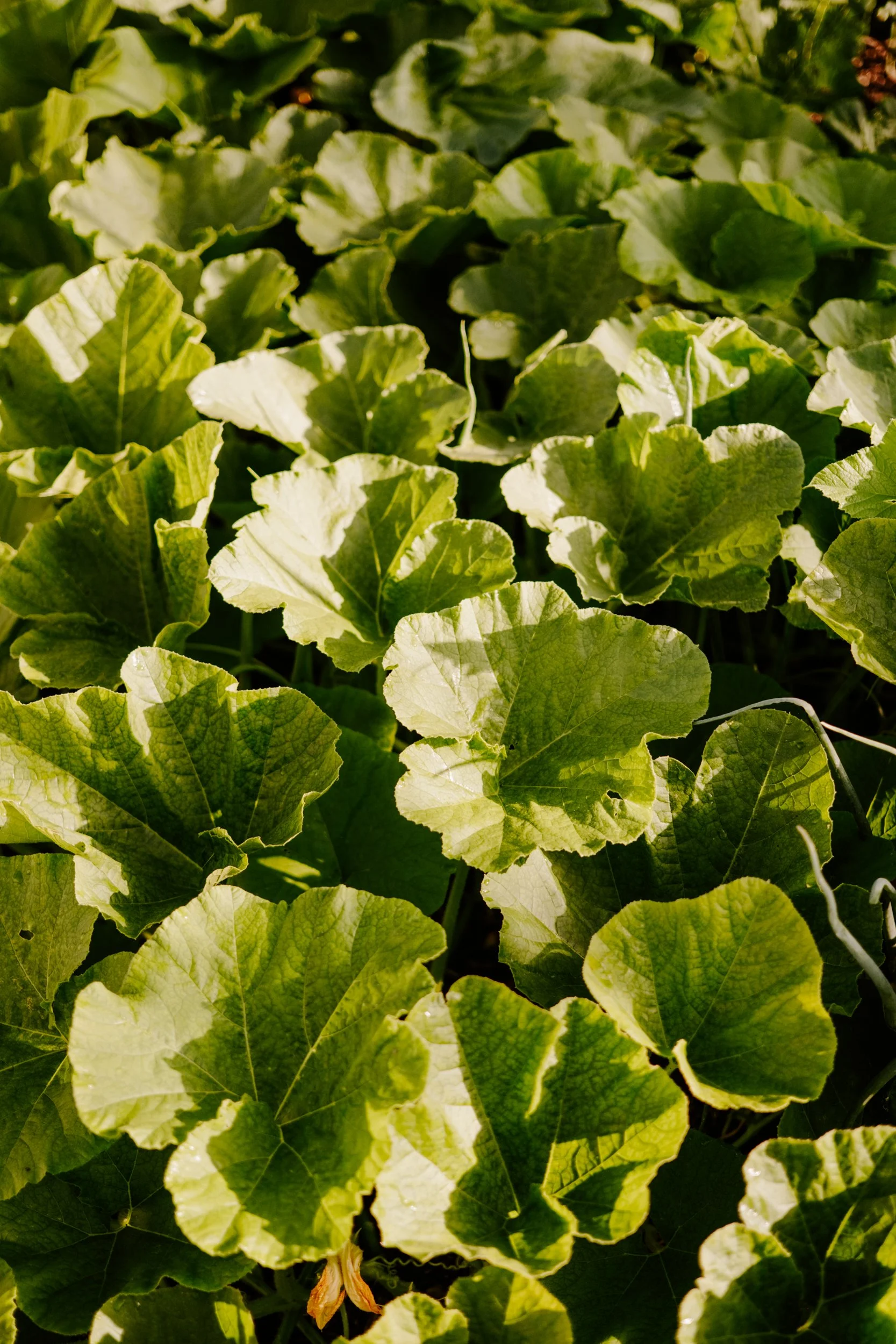
The squash have gone wild. A few planted directly into the compost heap as an experiment have absolutely flourished, tumbling over the sides and setting fruit amongst the rich, loose material.
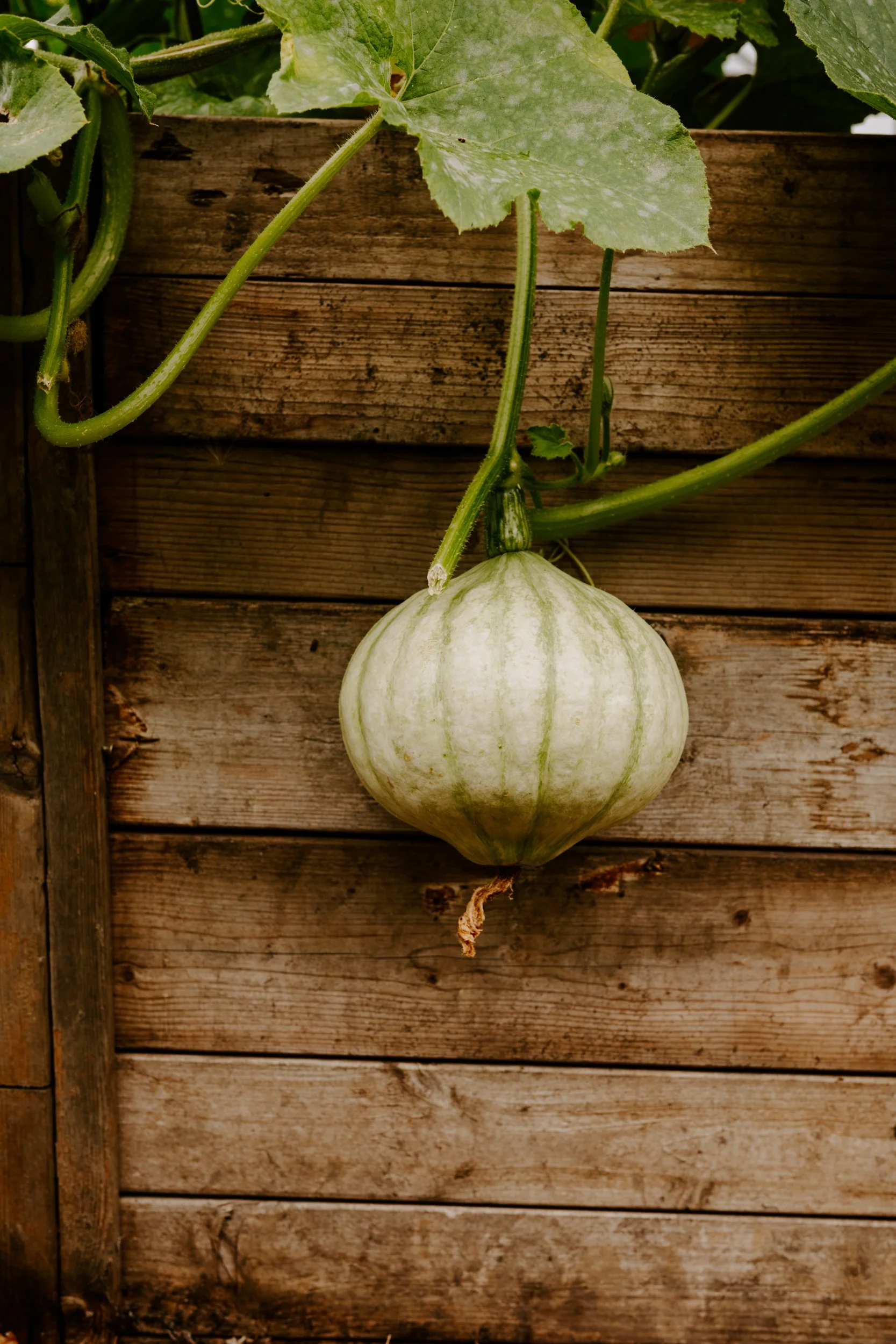
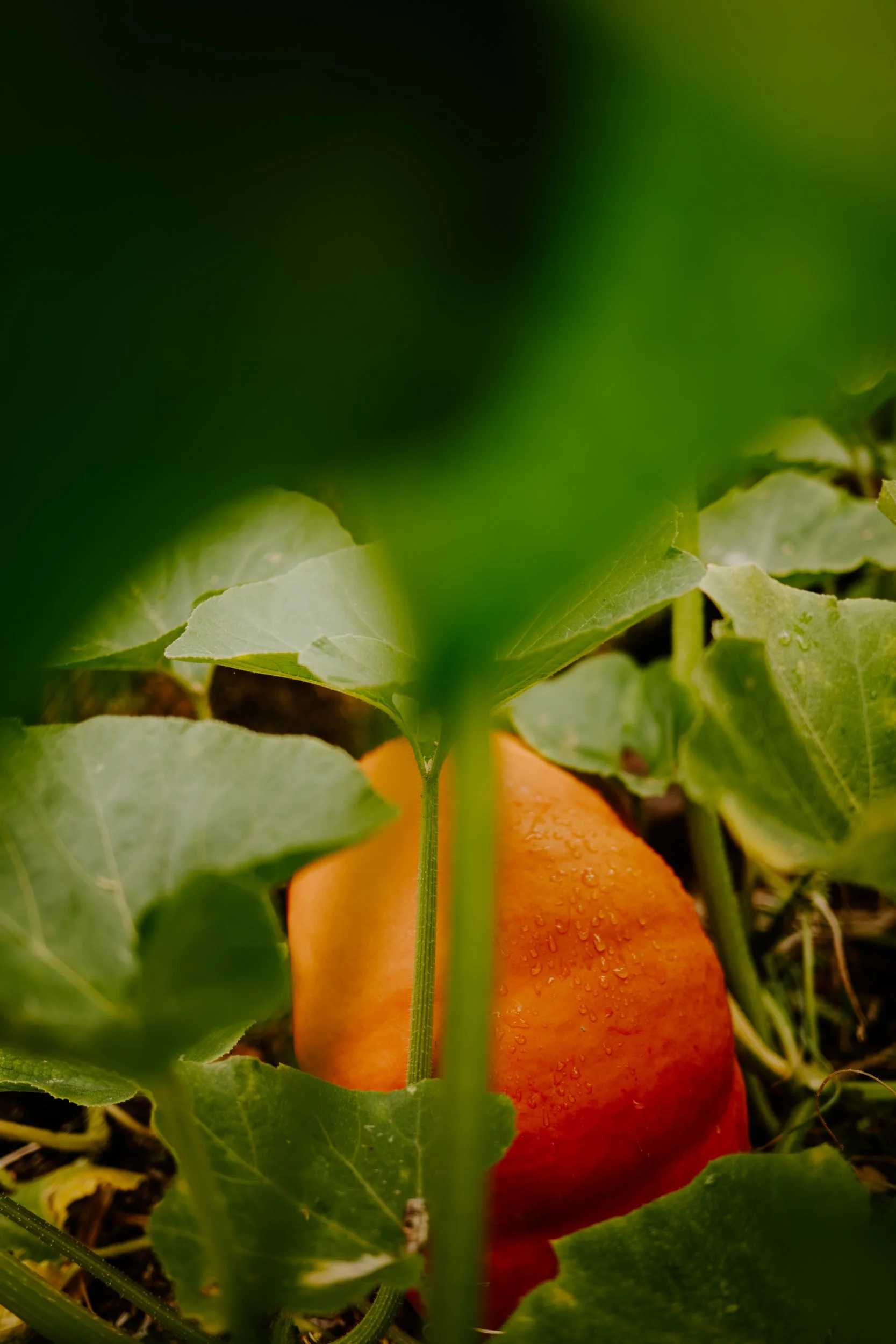
The squash in the beds are doing just as well. Big pumpkins. Crown Prince with its blue-grey skin. Butternut squash. Uchiki Kuri.
Inside the polytunnel, growth has reached another level.
The tomatoes have reached the roof. James has to lower the strings, letting the stems bend down before climbing upwards again.
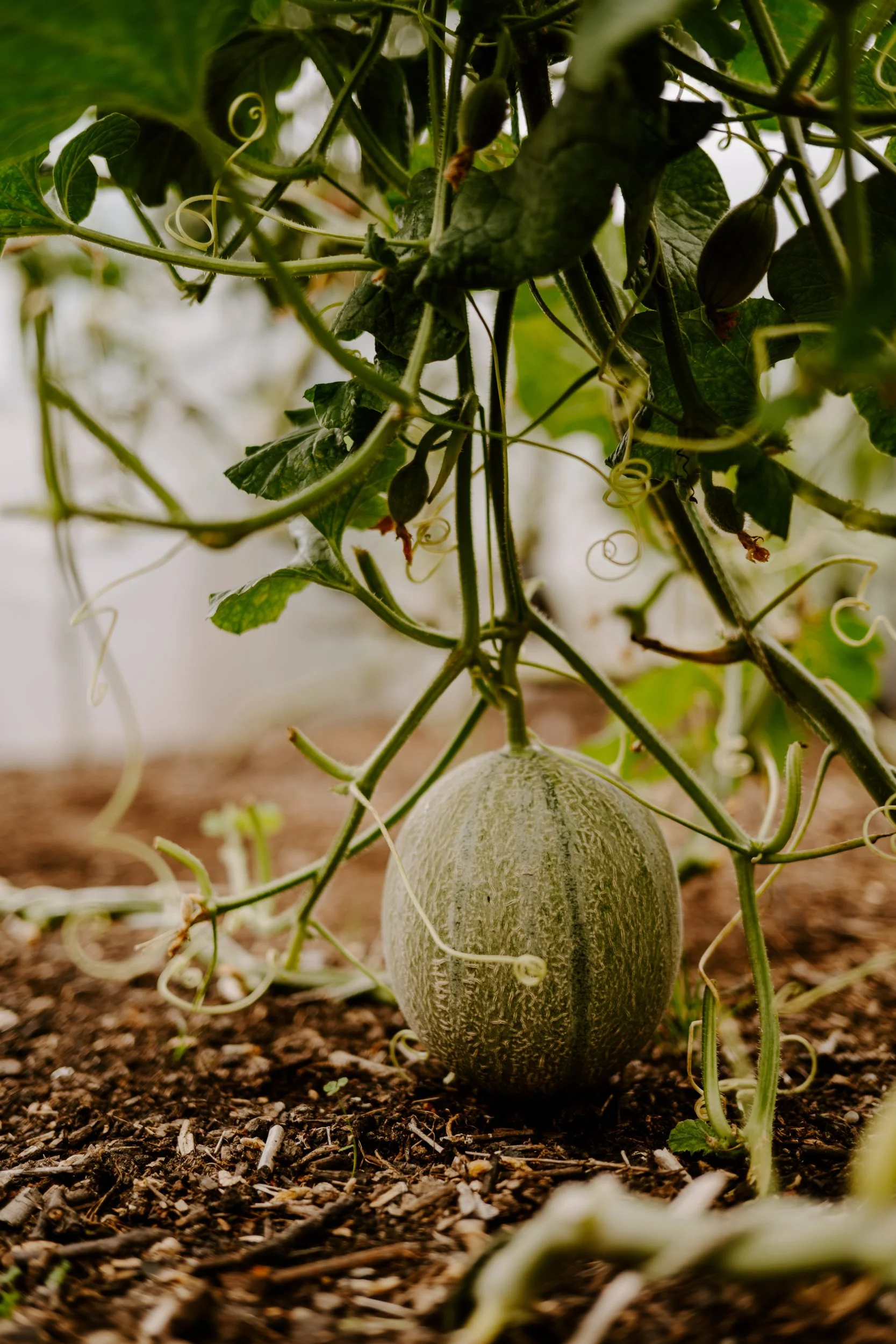
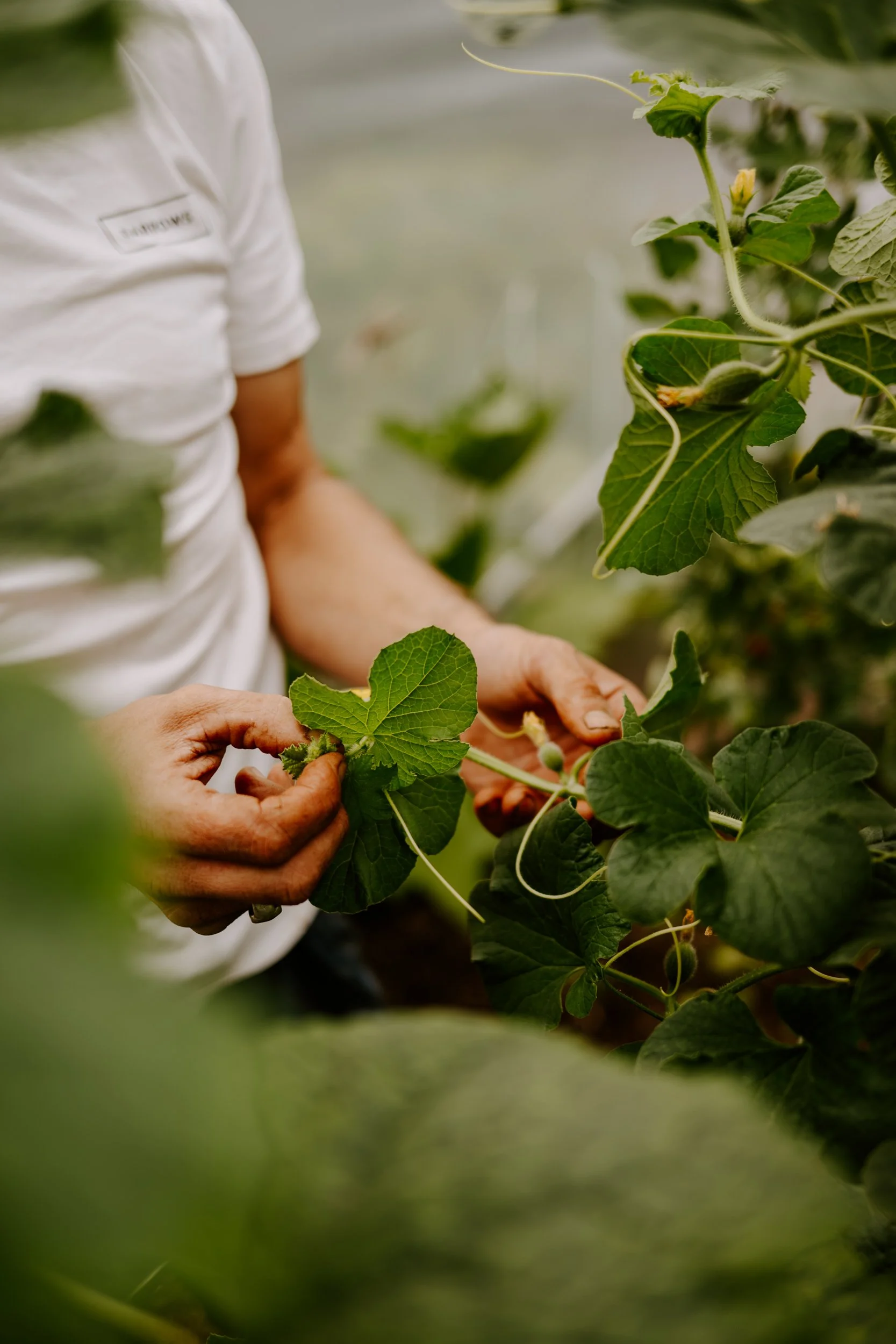
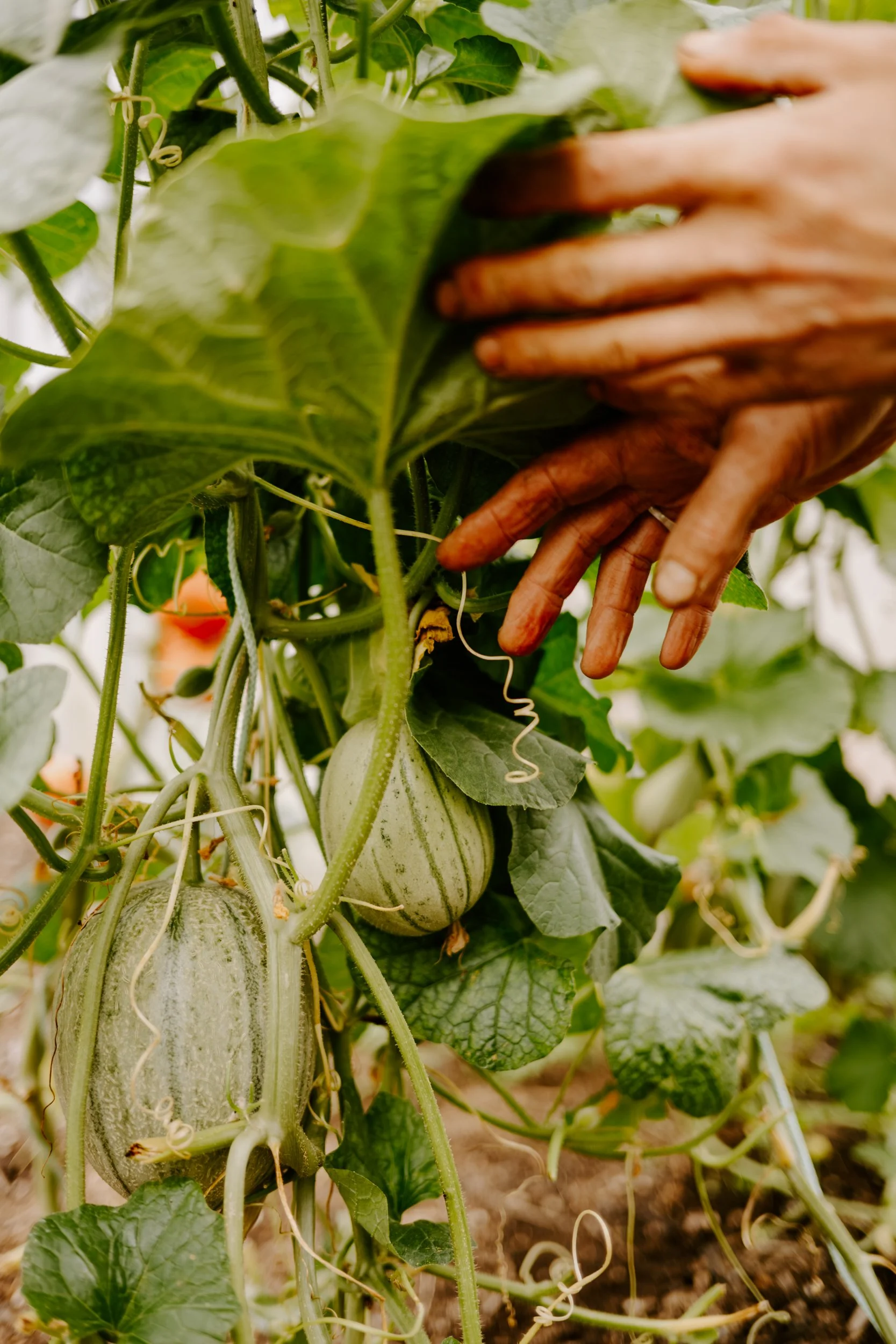
The melons are finally forming. Once a small fruit appears on a side shoot, James pinches out the growing tip, putting the plant's energy into the fruit rather than more stem and leaf.
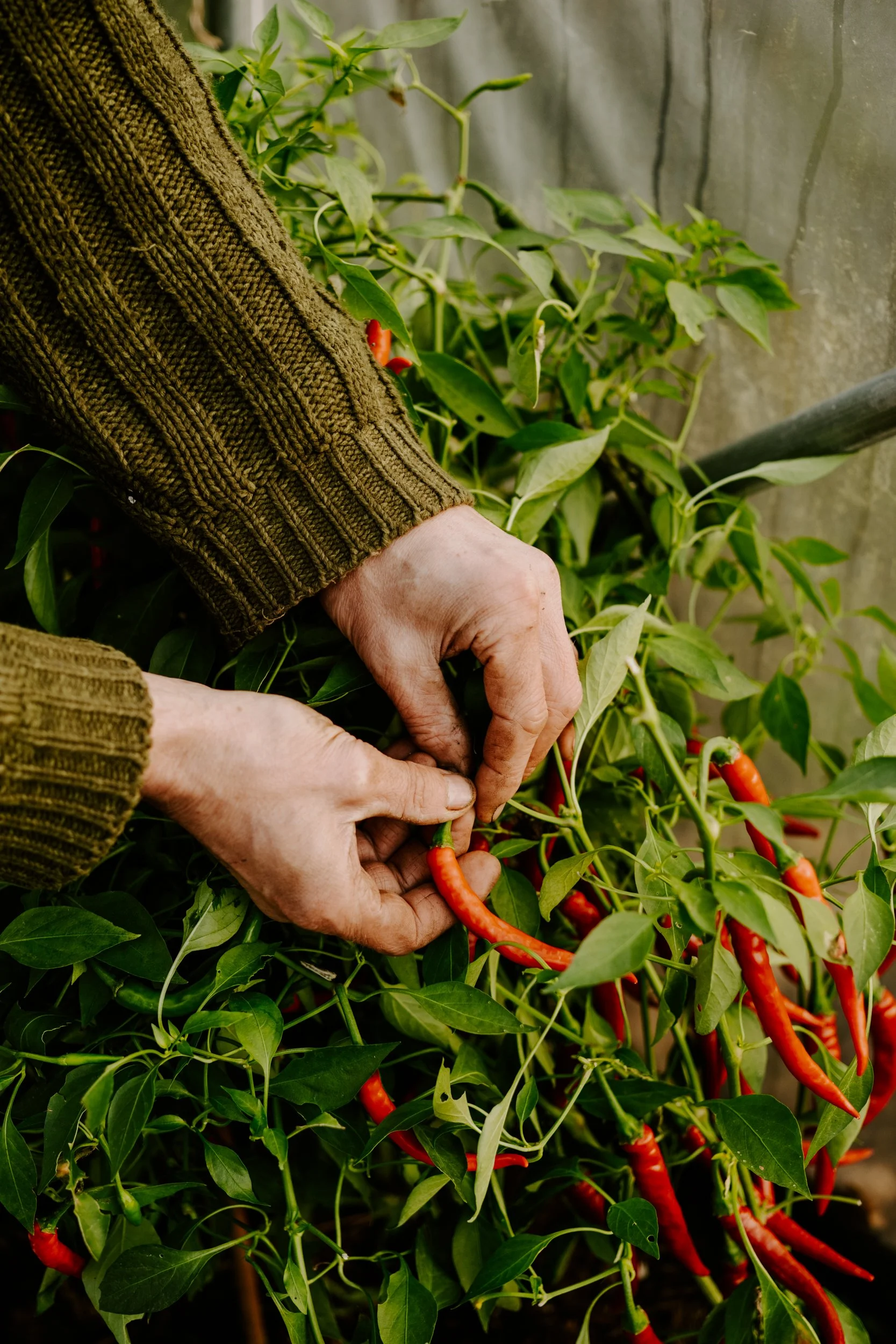
The cucumbers are almost finished now, the aubergines, on the other hand, are flourishing. Two main stems trained into a simple V.
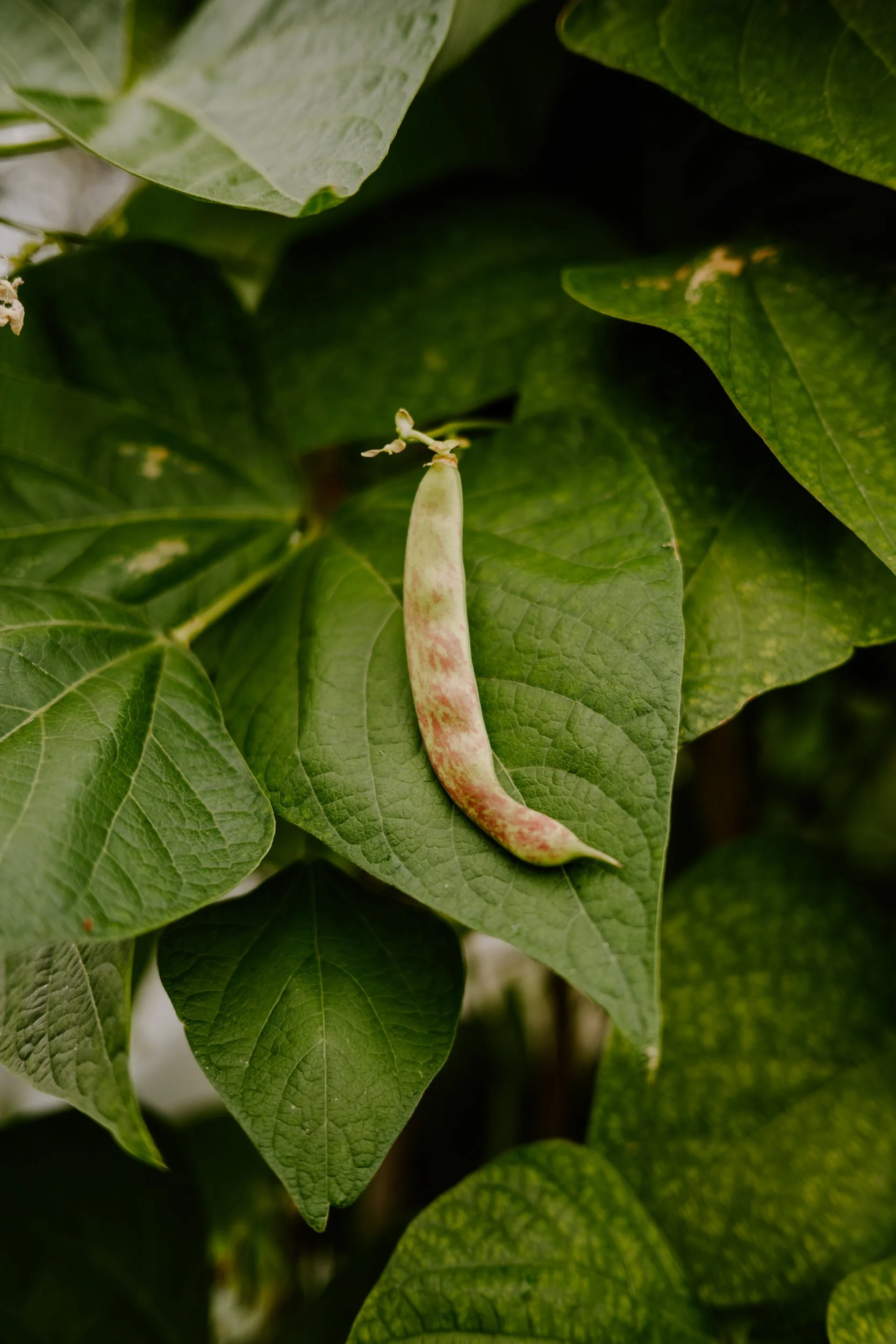
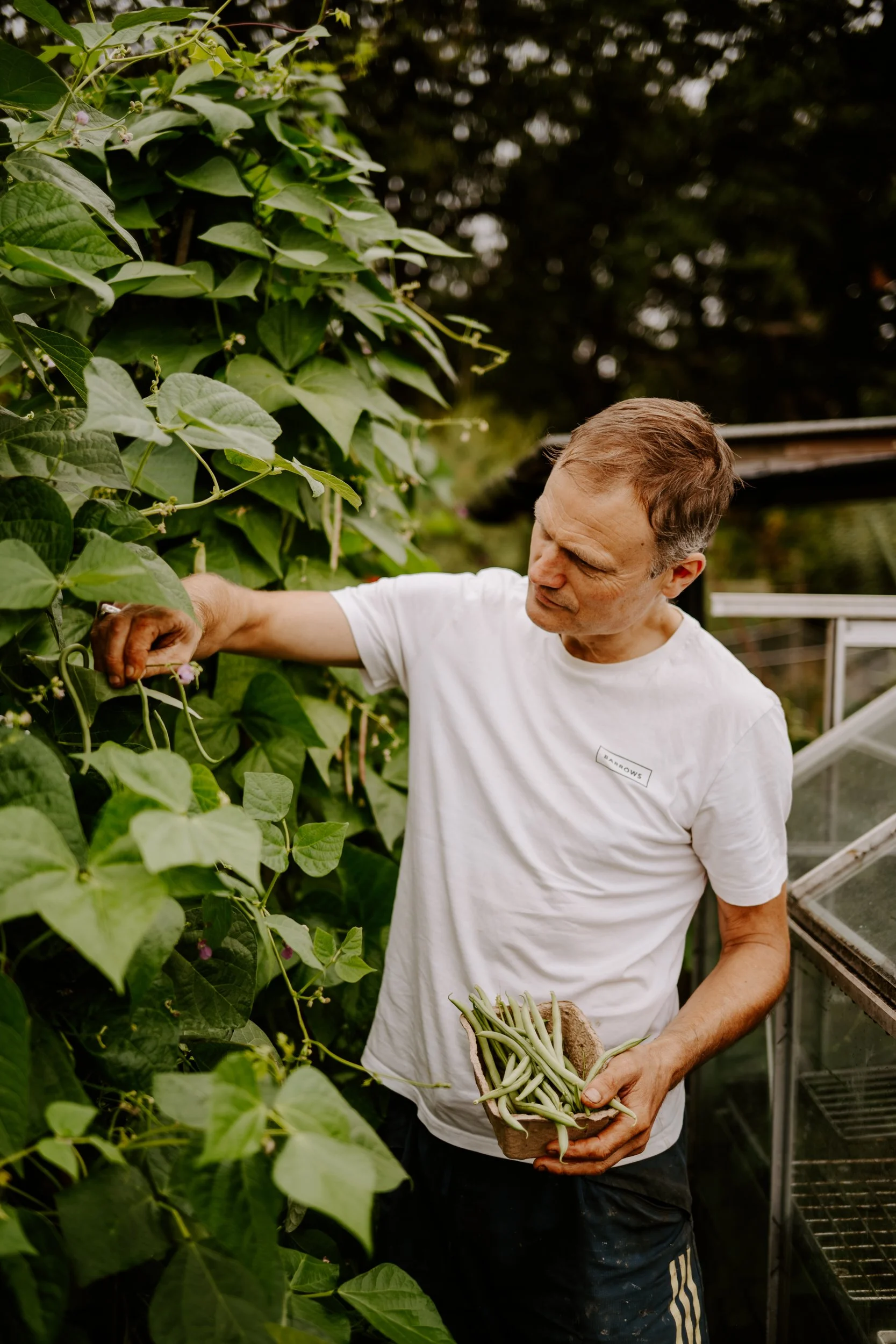
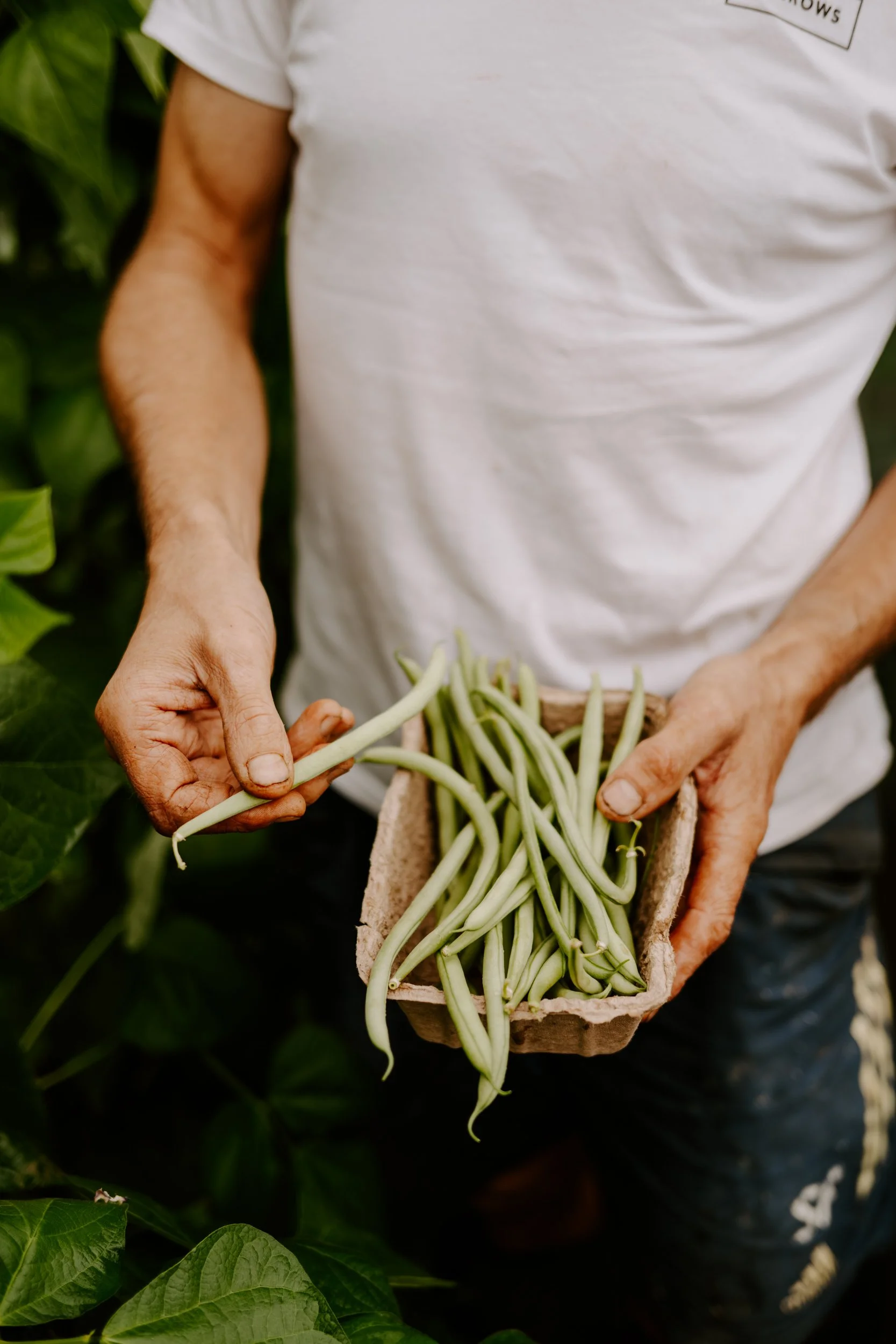
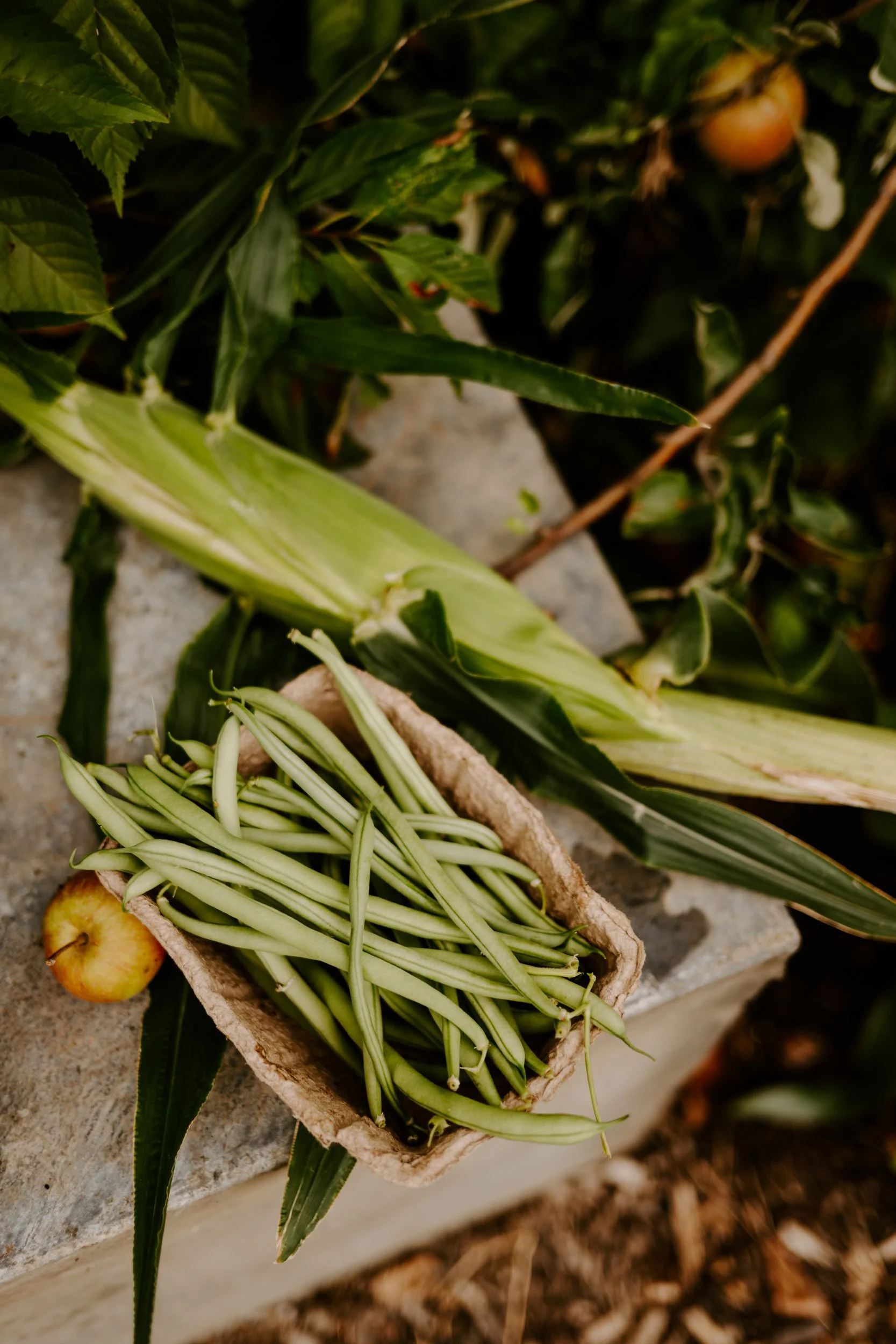
Outside, the beans have gone crazy. Cobra French beans, Blauhilde, Borlotti and runner beans. Five punnets already harvested. Another picked this morning.
The runner beans are struggling with the heat, flowering but finding it difficult to turn those flowers into beans.
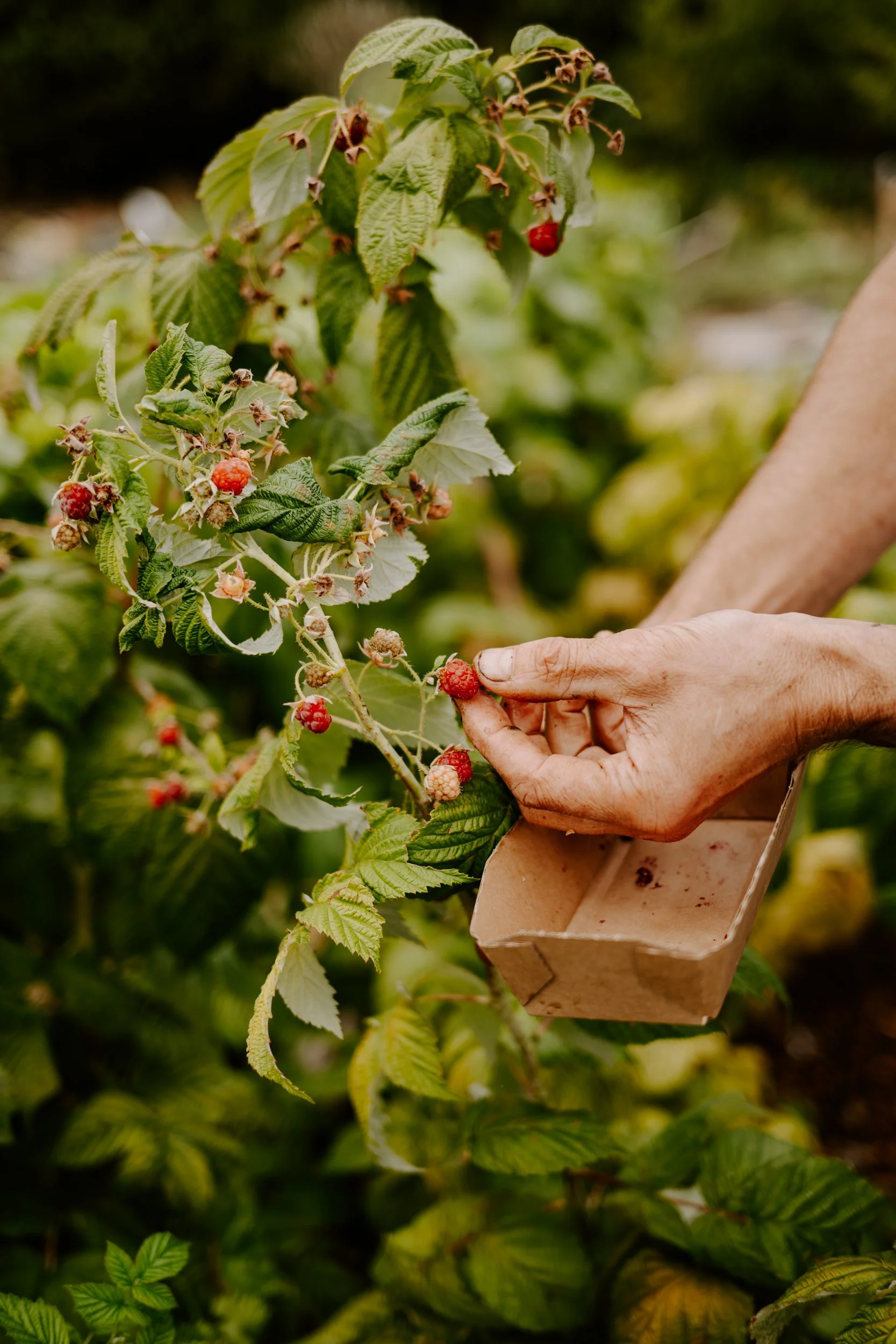
The raspberries are suffering too. Smaller than usual because of the lack of water, but still producing steadily. Every couple of days James fills another punnet.
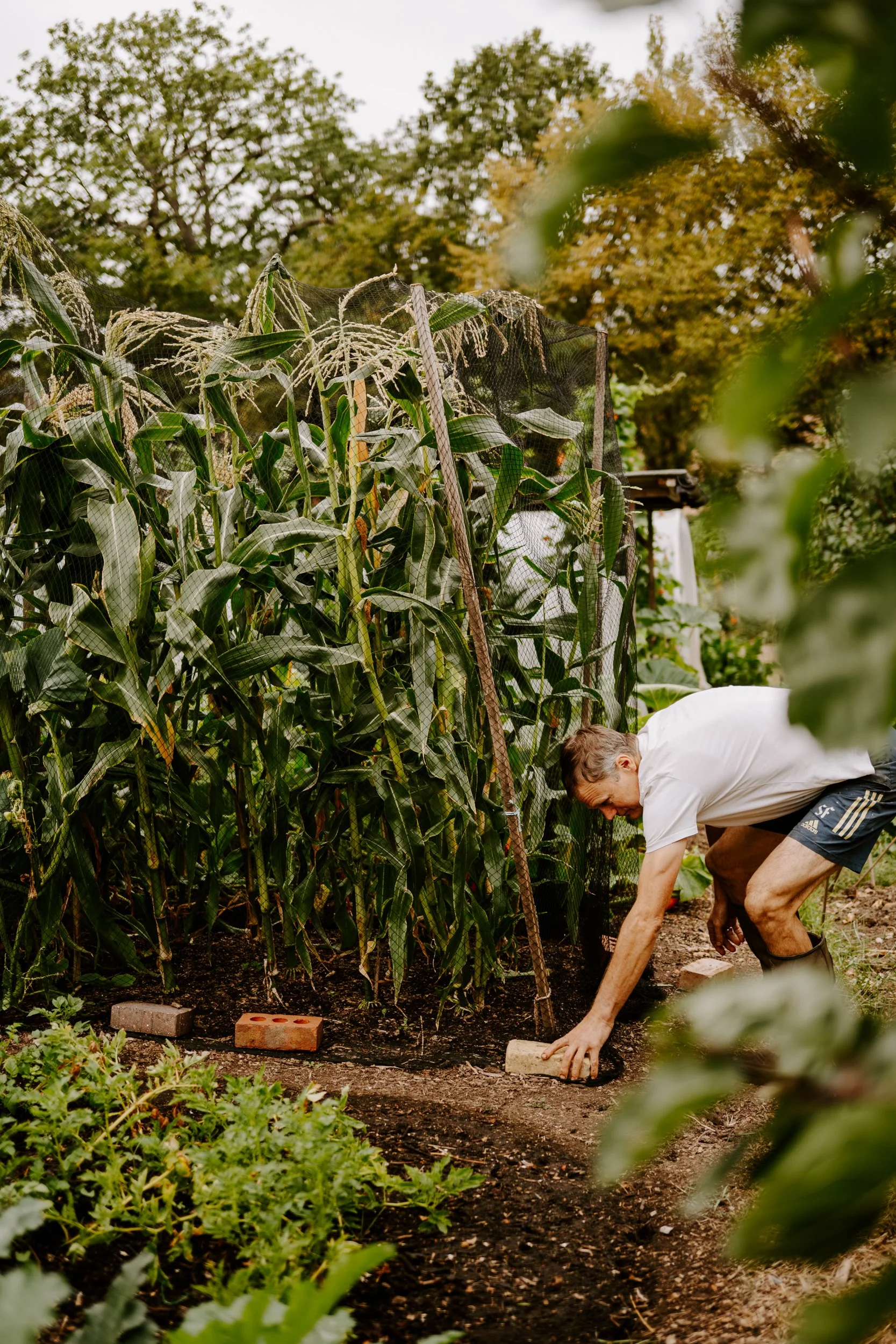
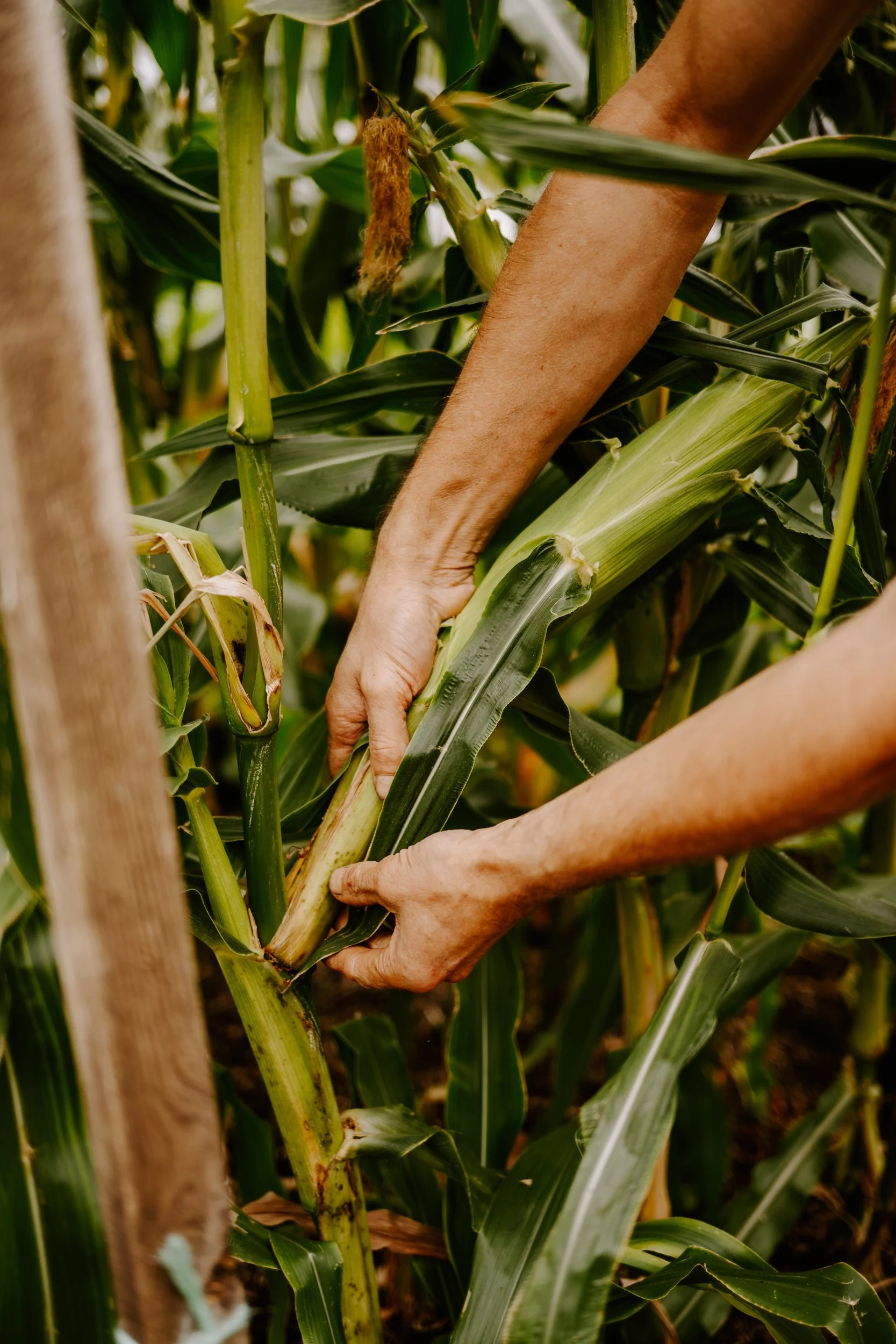
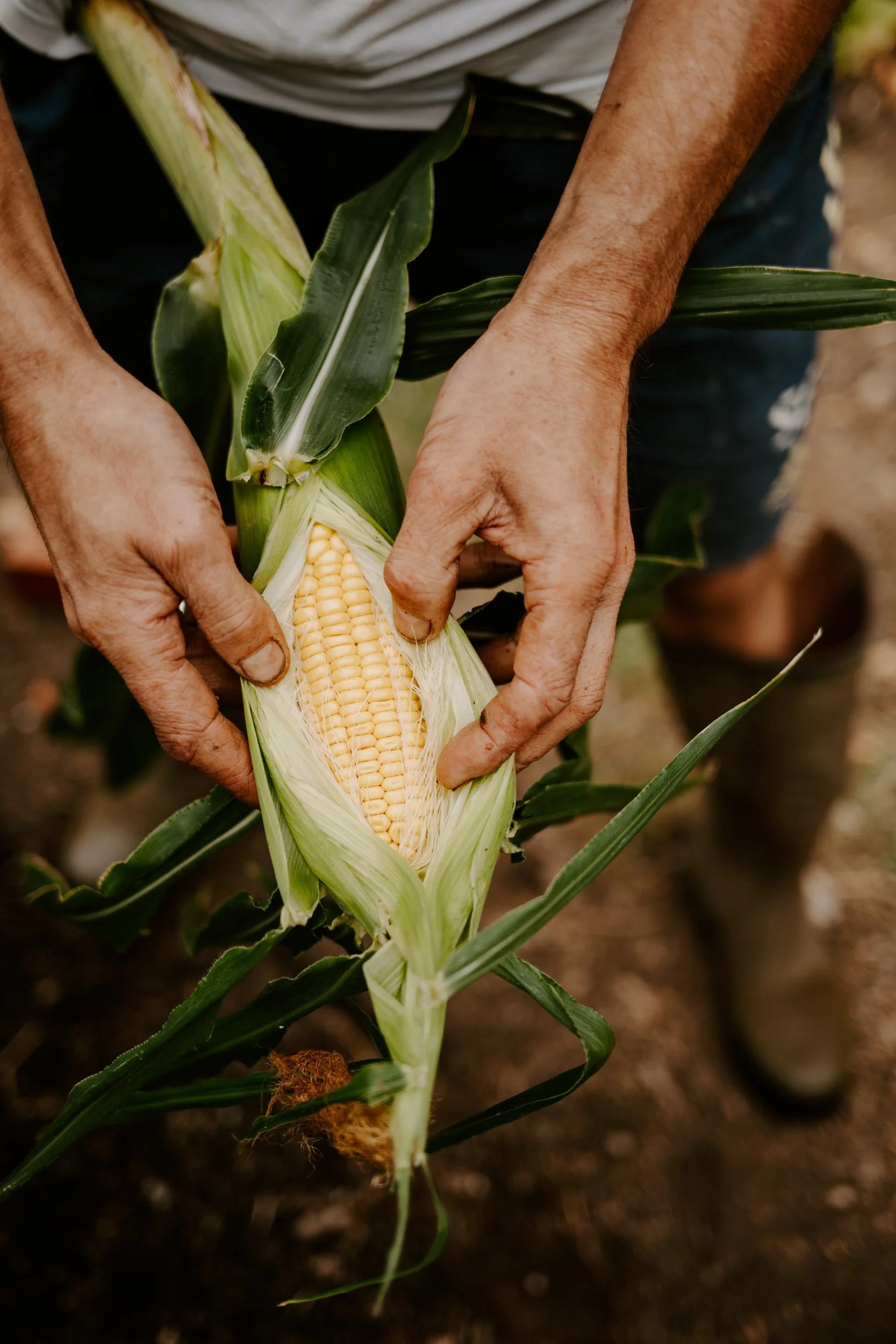
Then there is the sweetcorn. Seven feet high now. Huge cobs hanging from the stems. Yellow Bantam, already producing generously. The secret, once again, has been water.
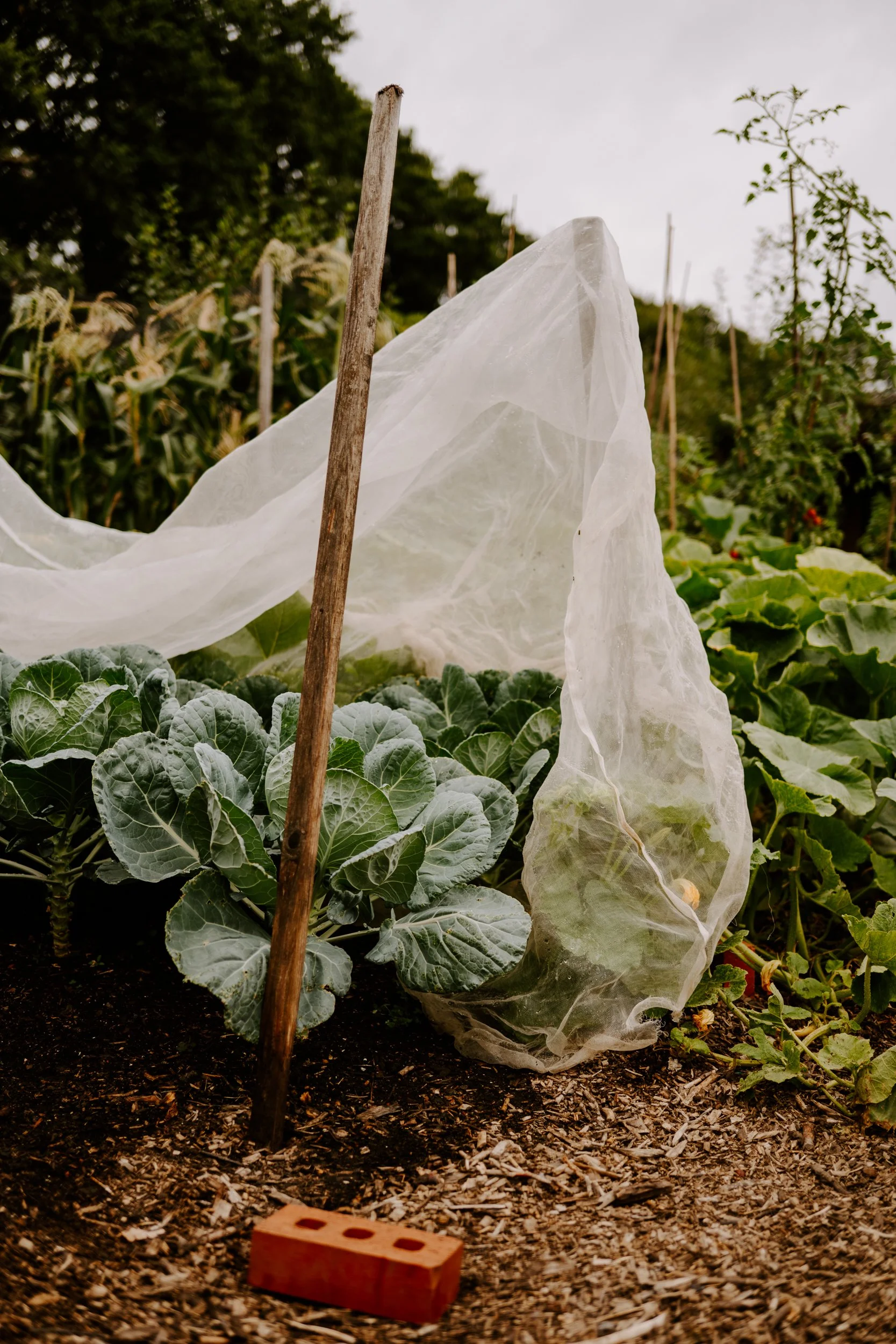
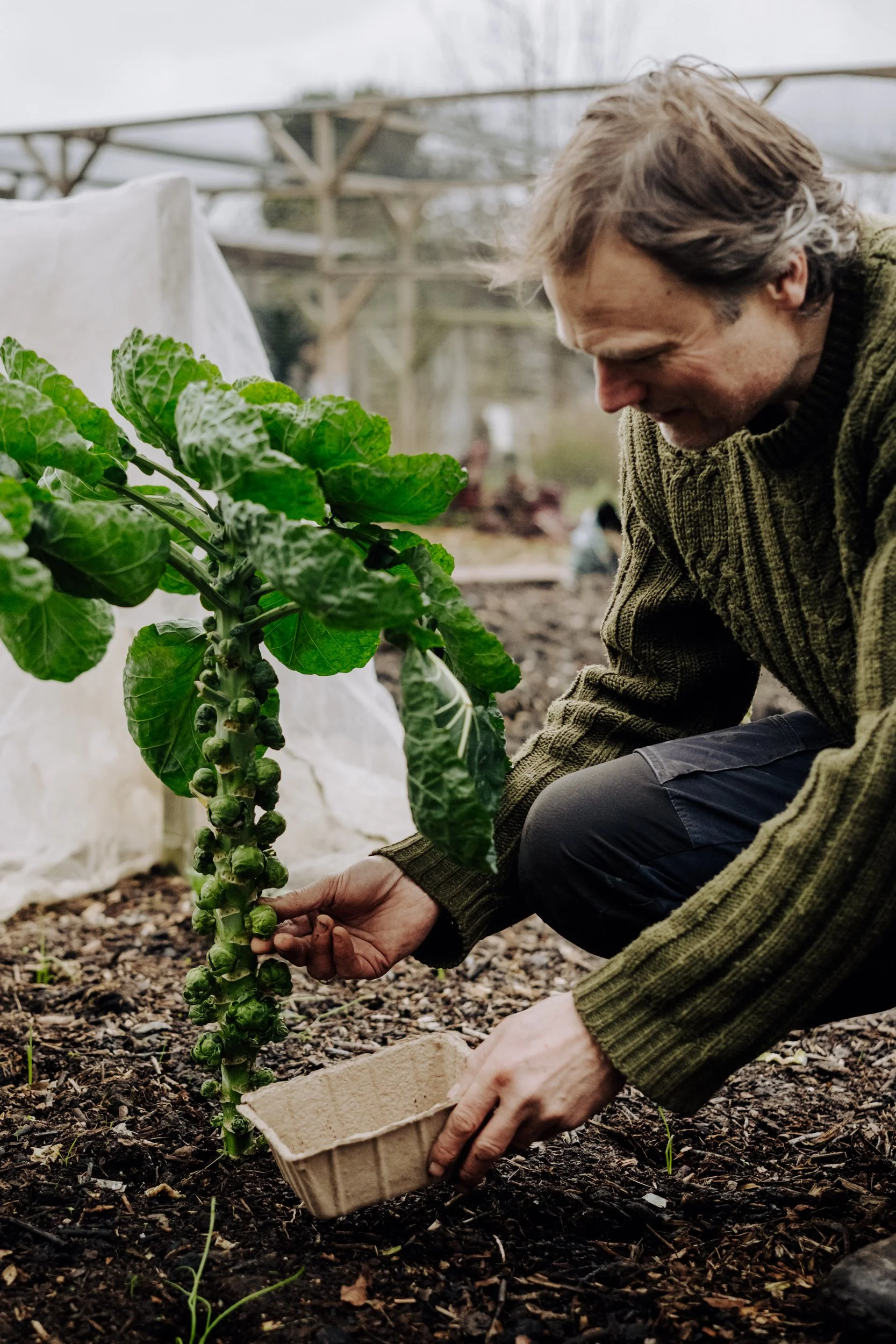
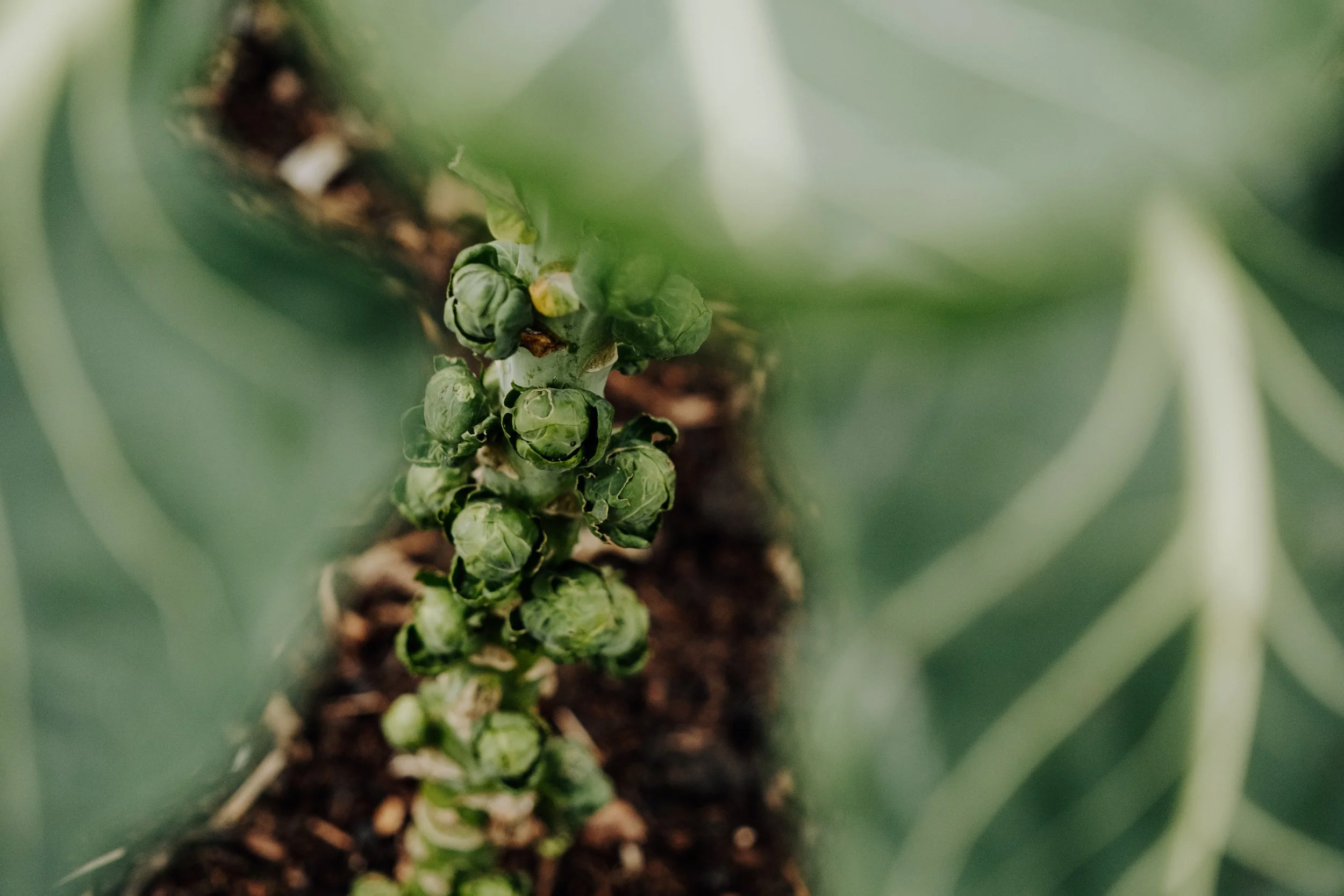
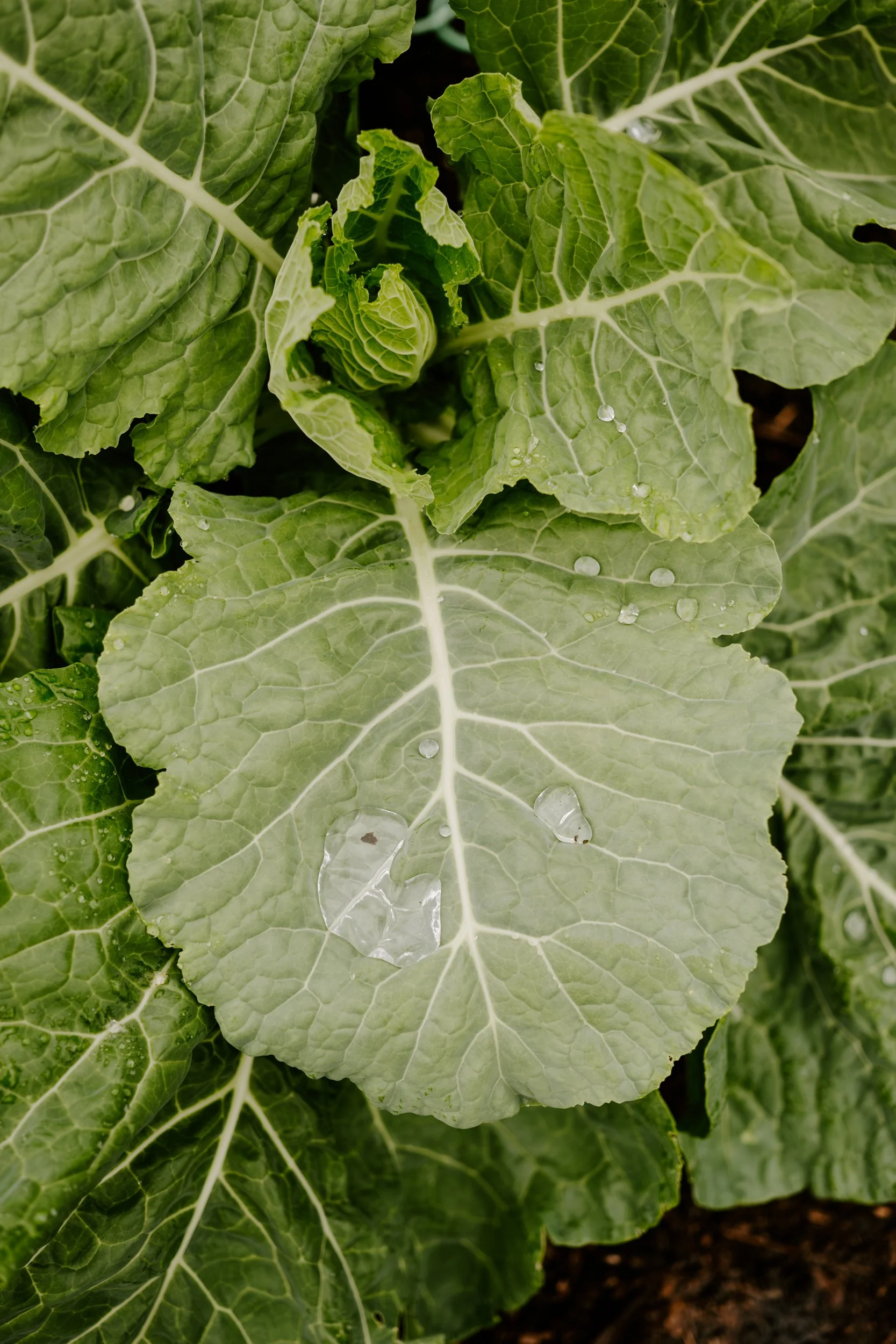
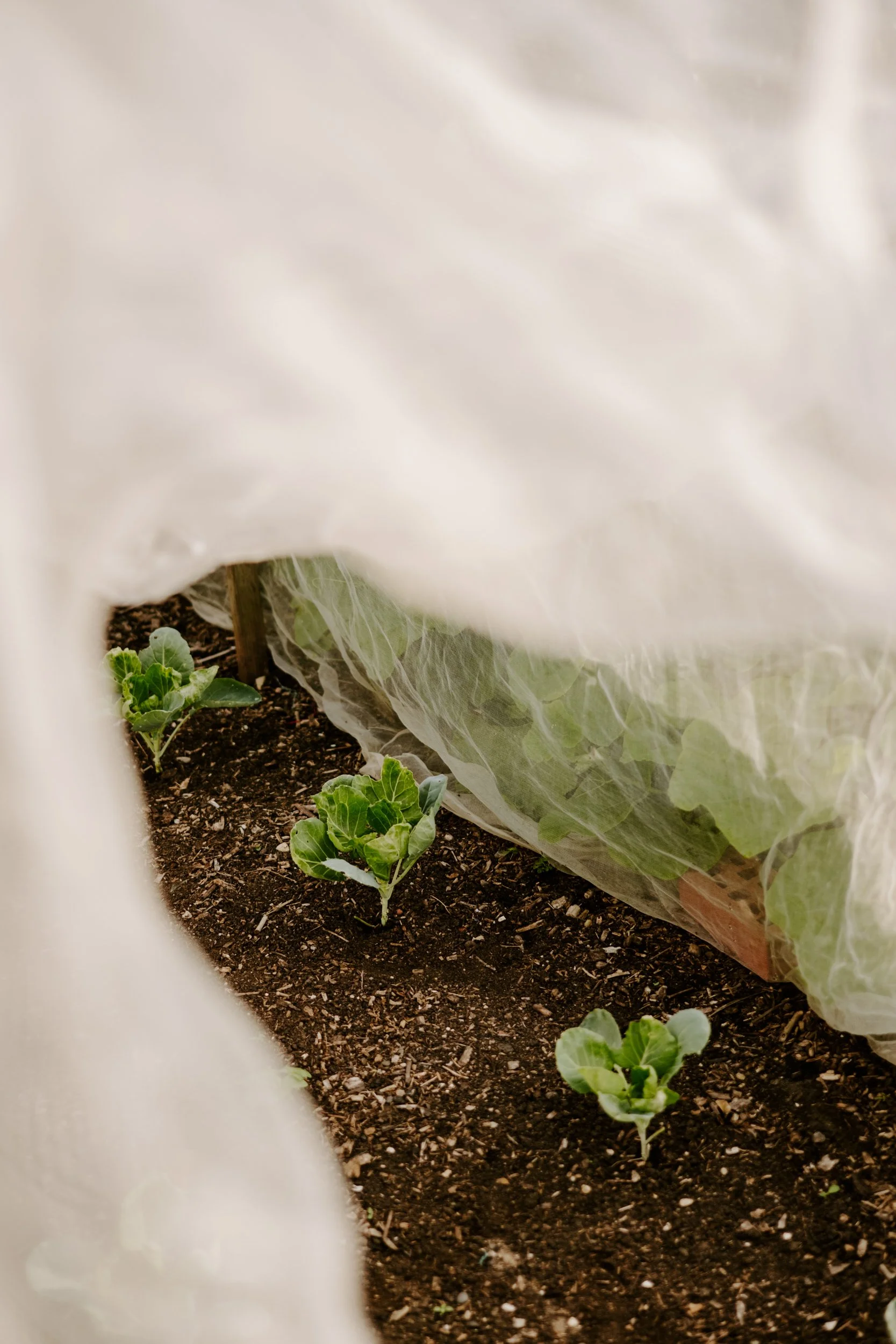
The Brussels sprouts are still disguised as cabbage bushes. For now they are simply growing, building strength. Later they will stretch upwards and form their familiar rows of sprouts along the stem. Even the leaves will keep providing food through winter and into early spring.
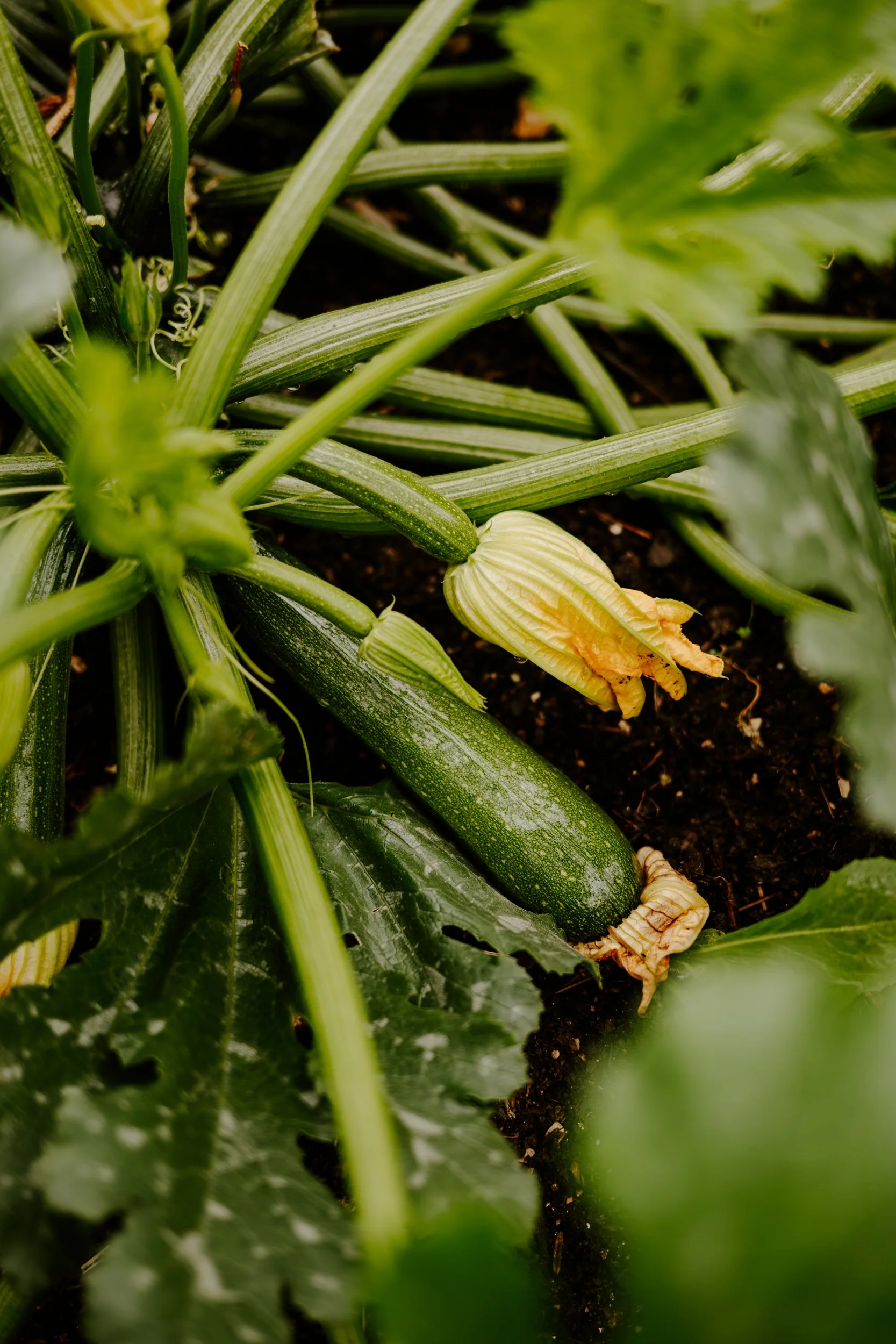
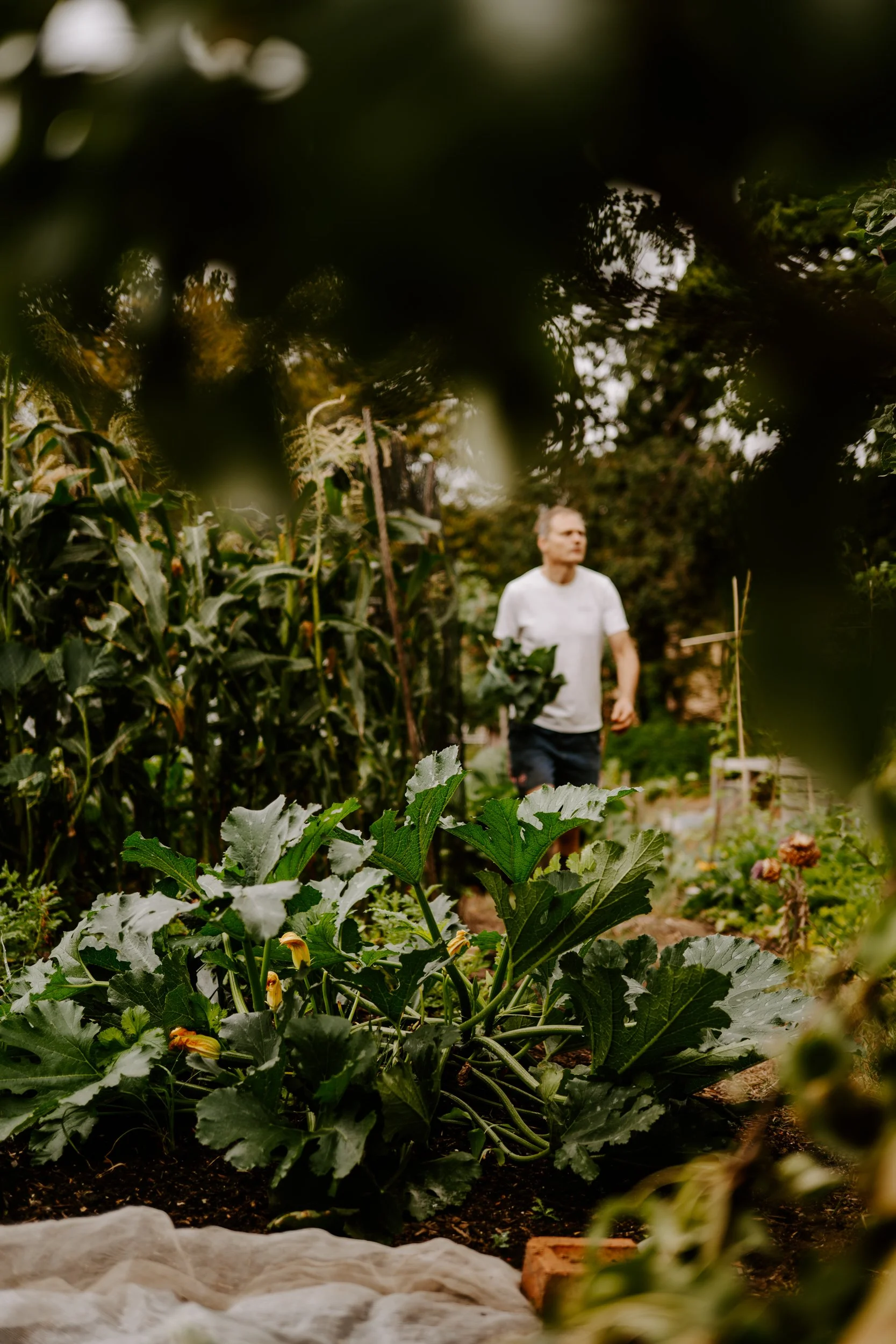
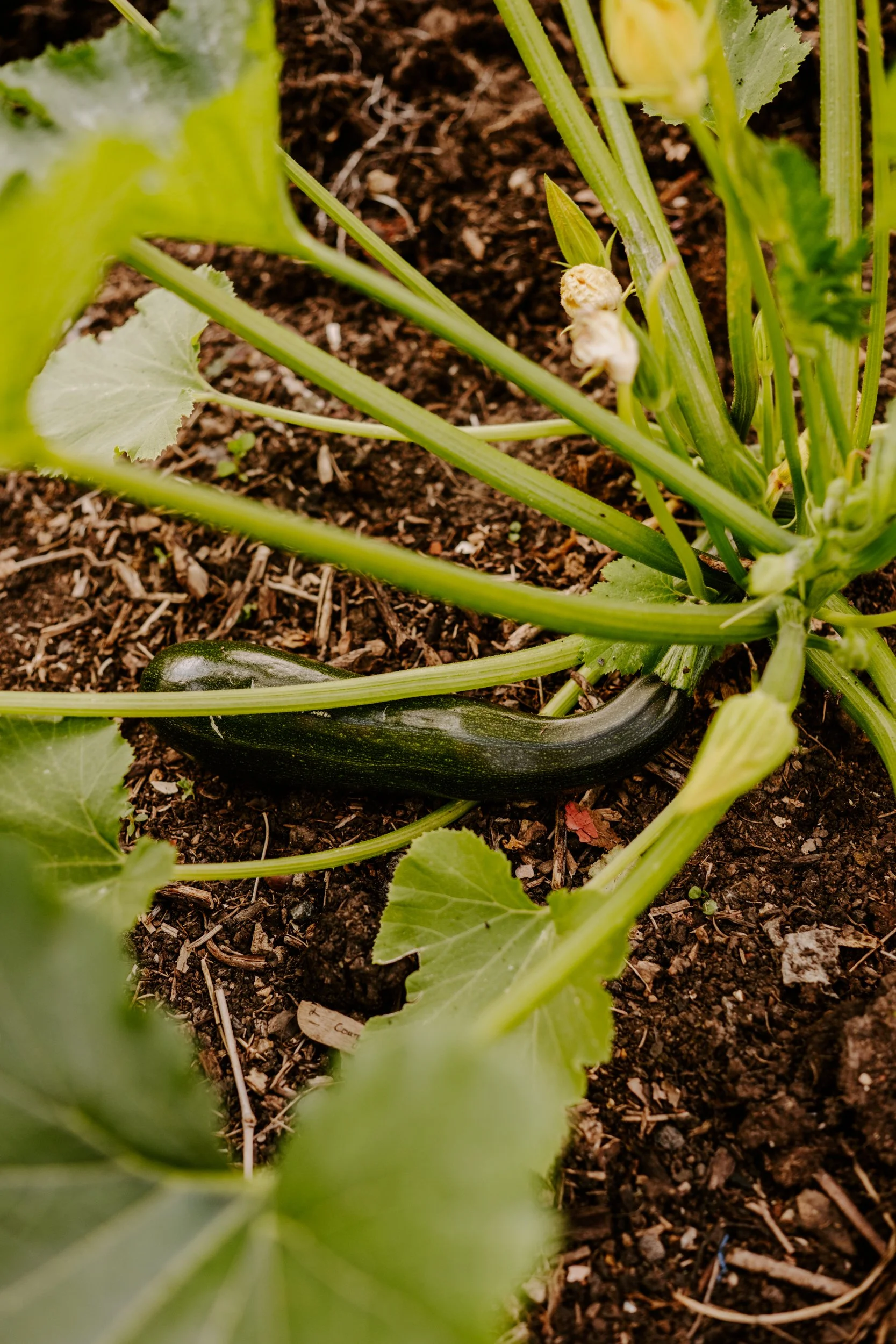
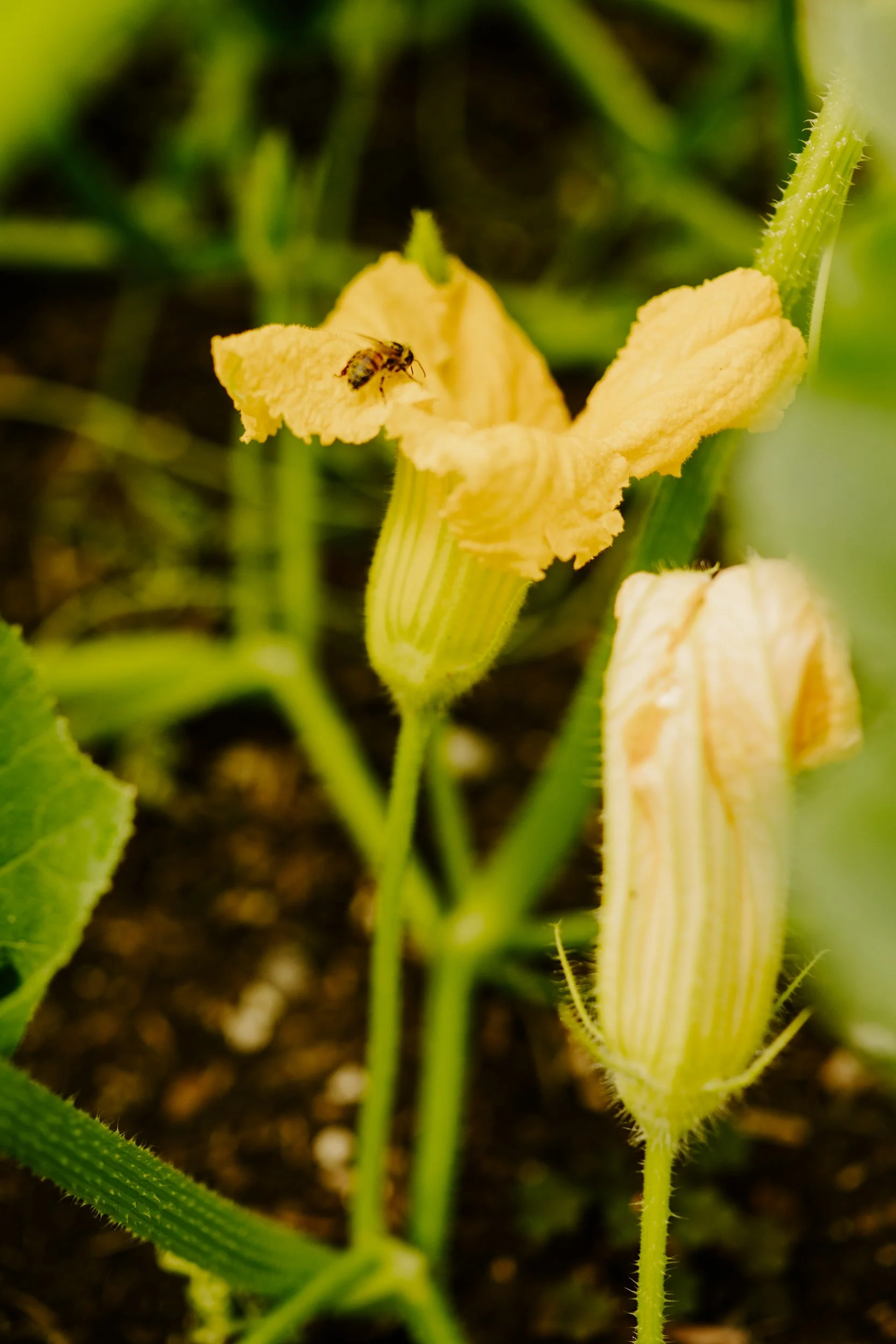
And then the courgettes. One plant. Around twenty already harvested. More flowers opening. More courgettes coming. It is almost impossible to keep up.
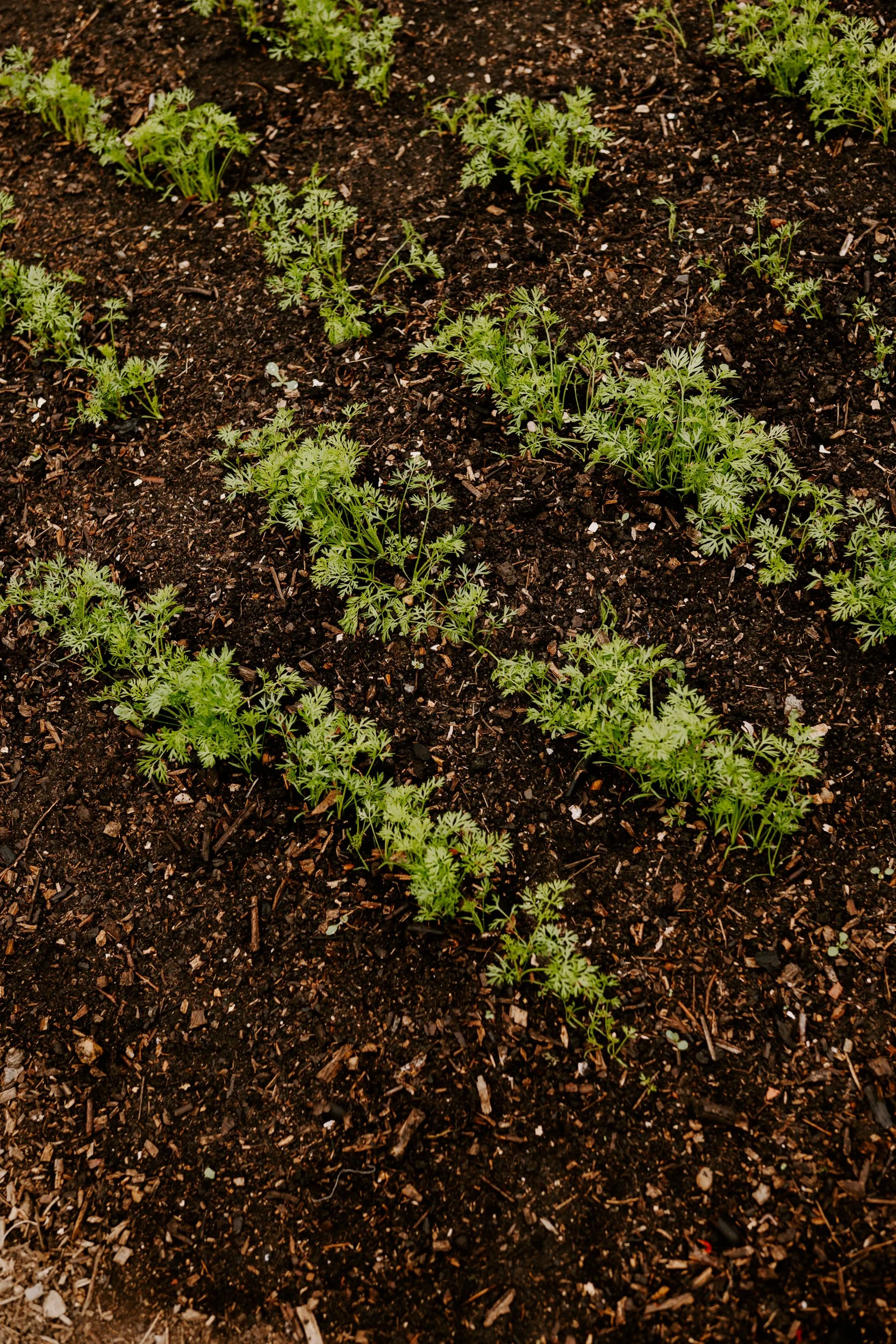
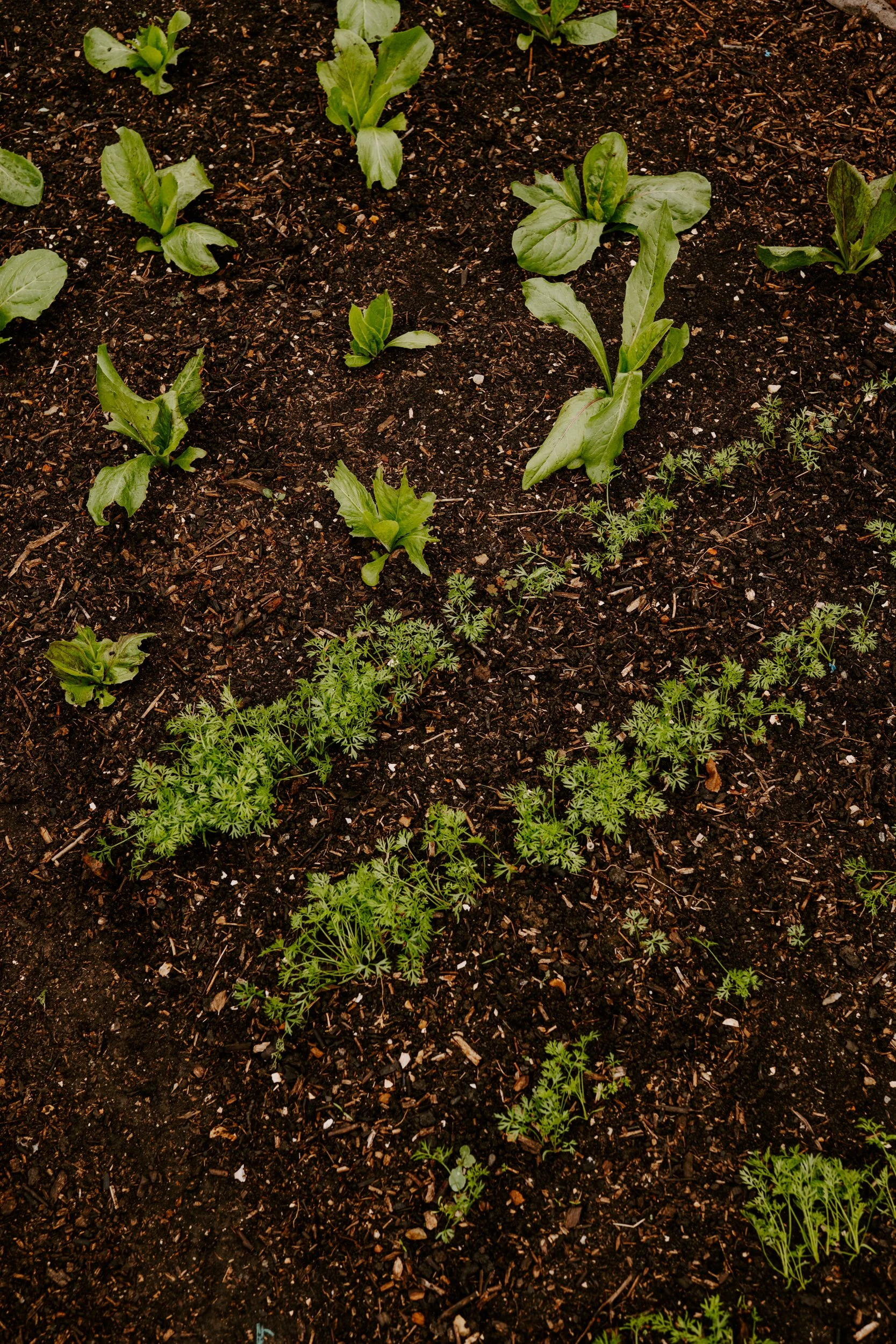
The old potato bed is changing again too. Leeks have gone in for overwintering. Radicchio is growing towards a September harvest. Carrots are quietly developing beneath the soil, waiting for late September or early October.
I keep looking back at the sky. Grey. Heavy. Finally promising something.