Artist Spaces:
A Room for Colour
Beatrice Nespega
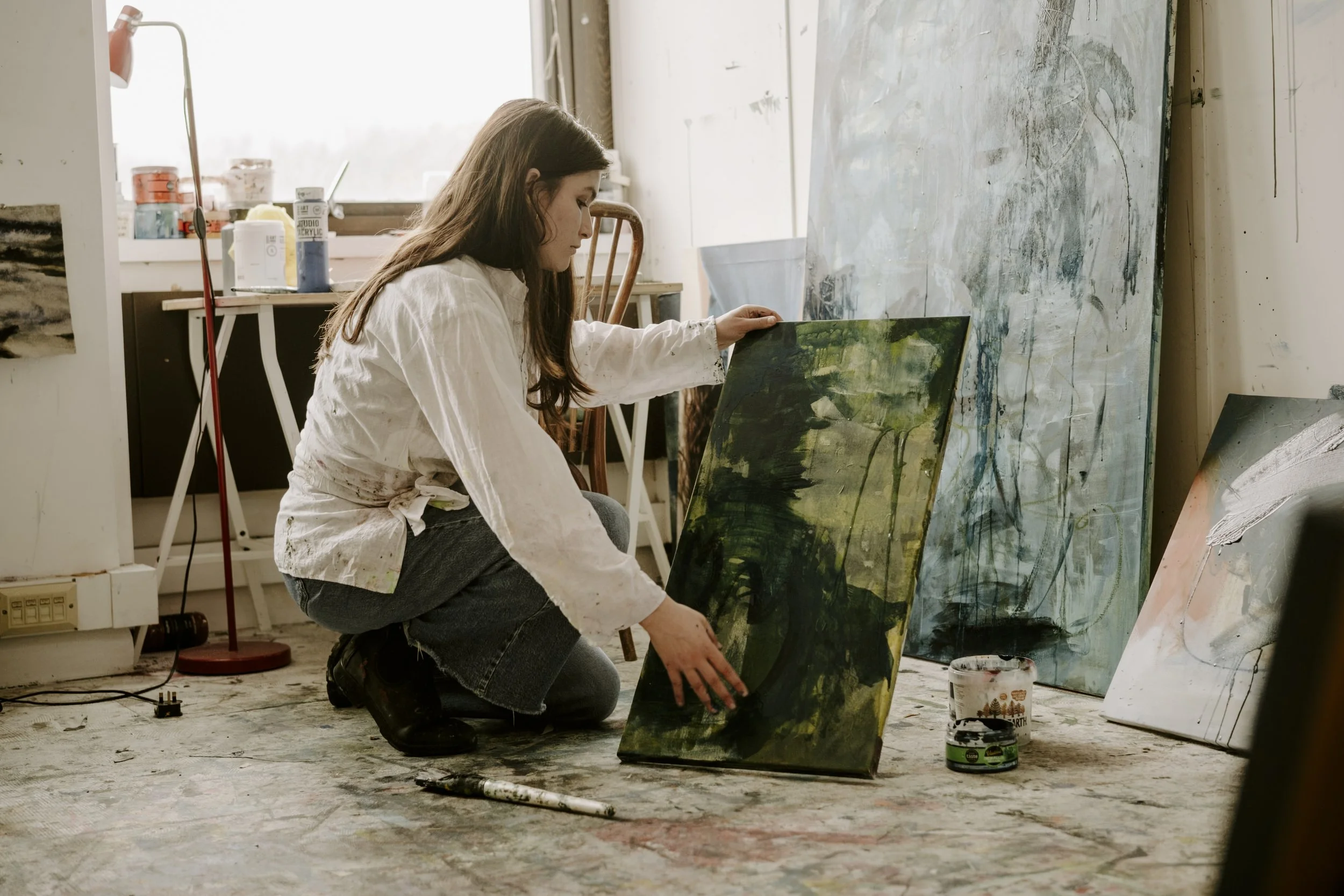
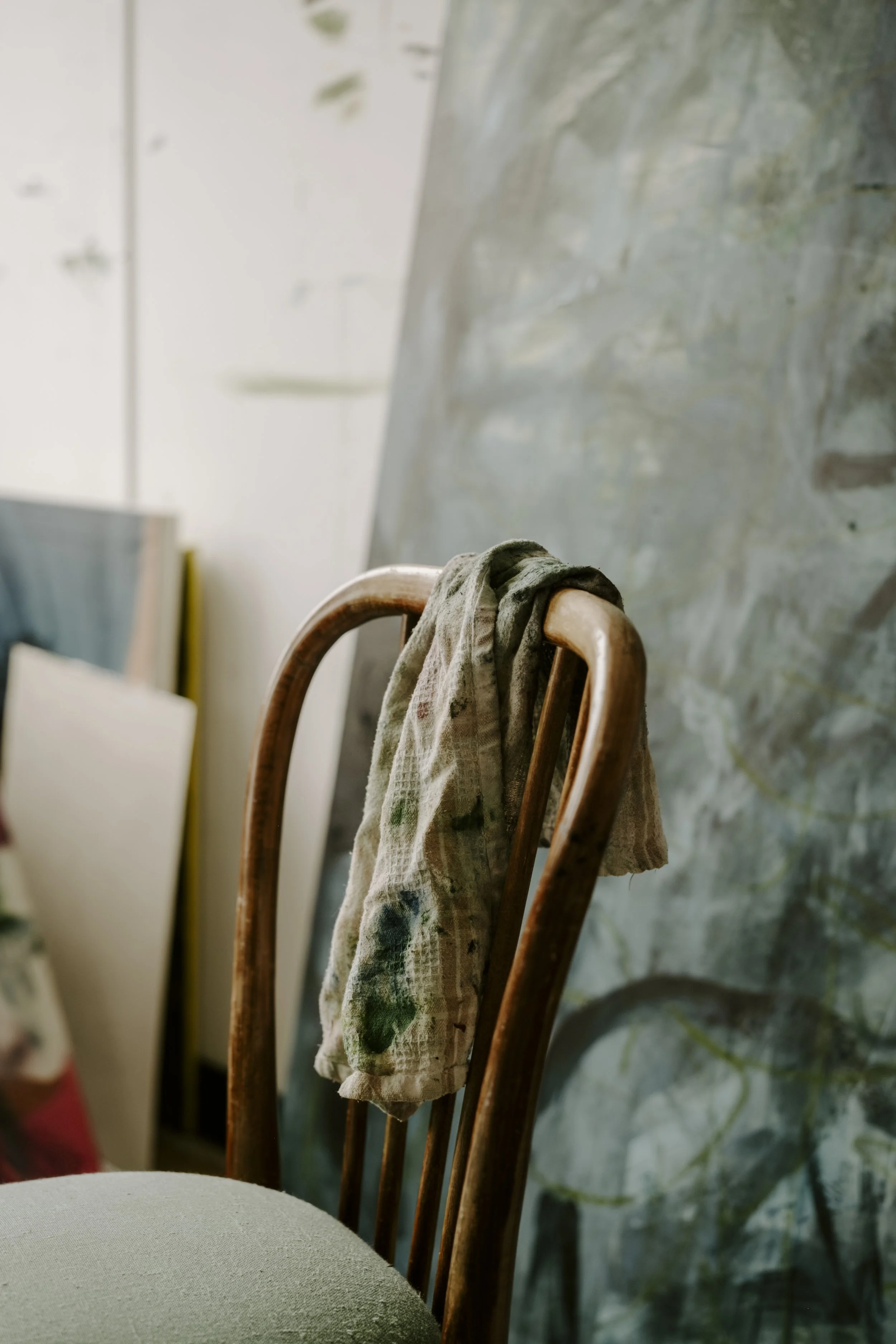
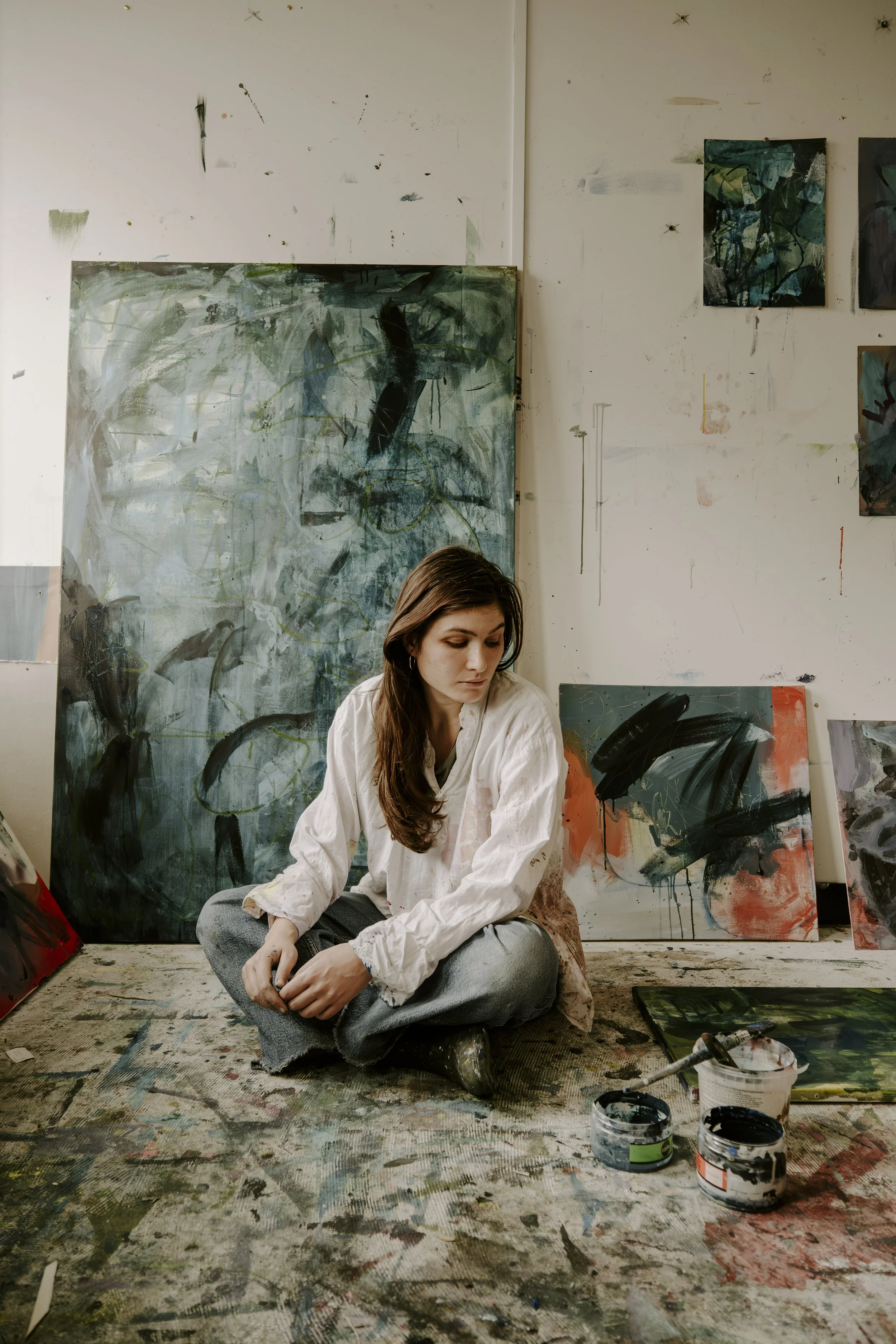
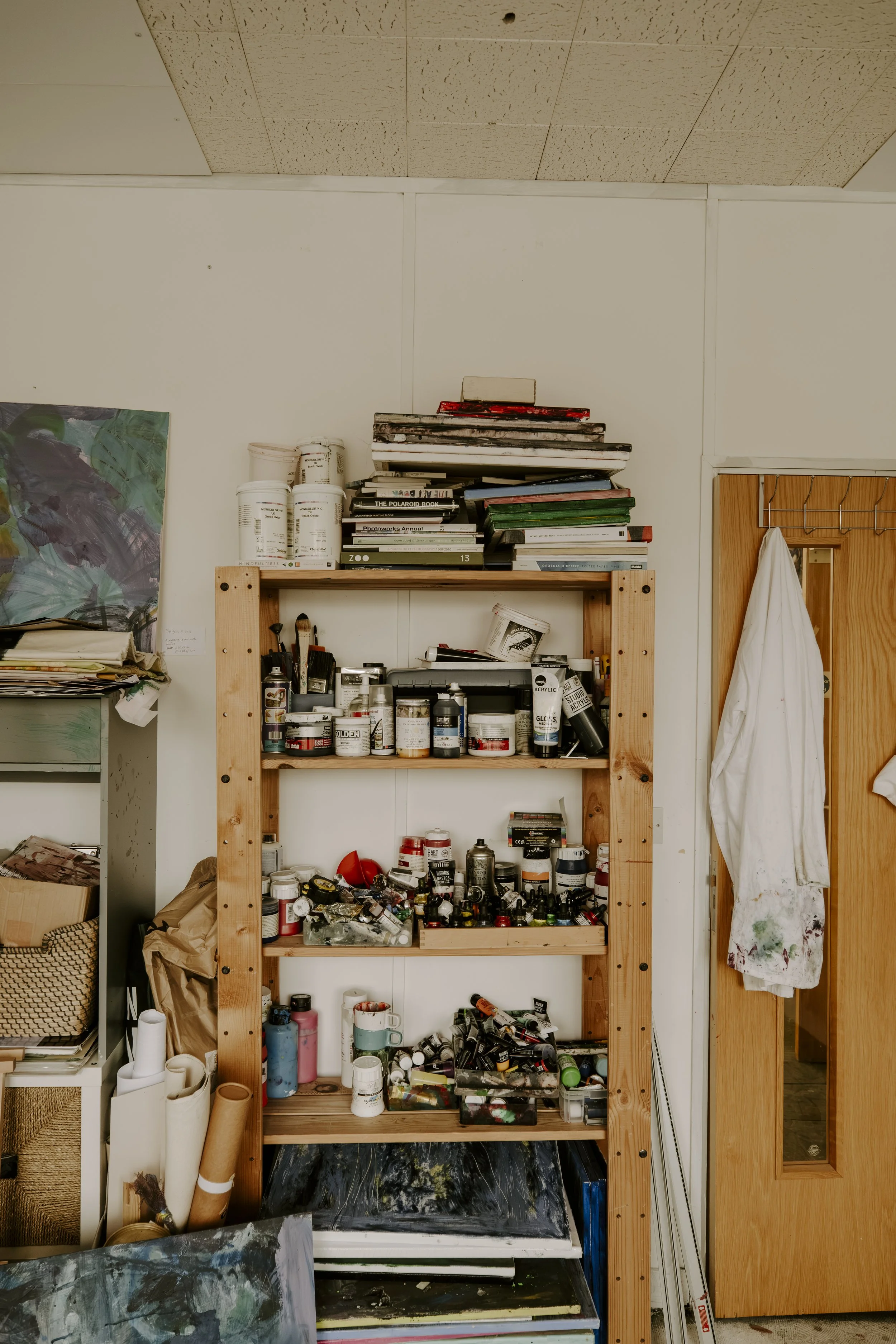
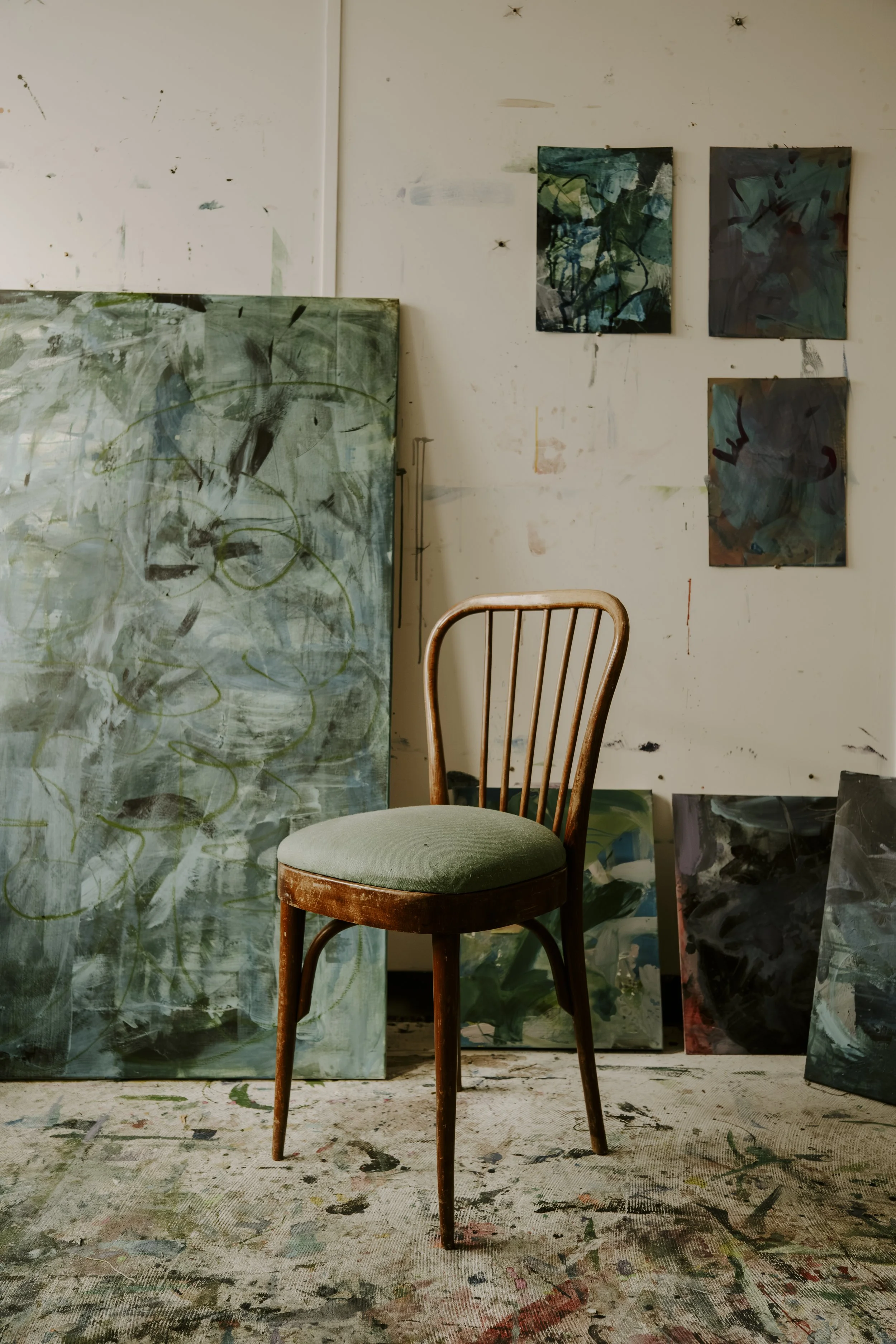
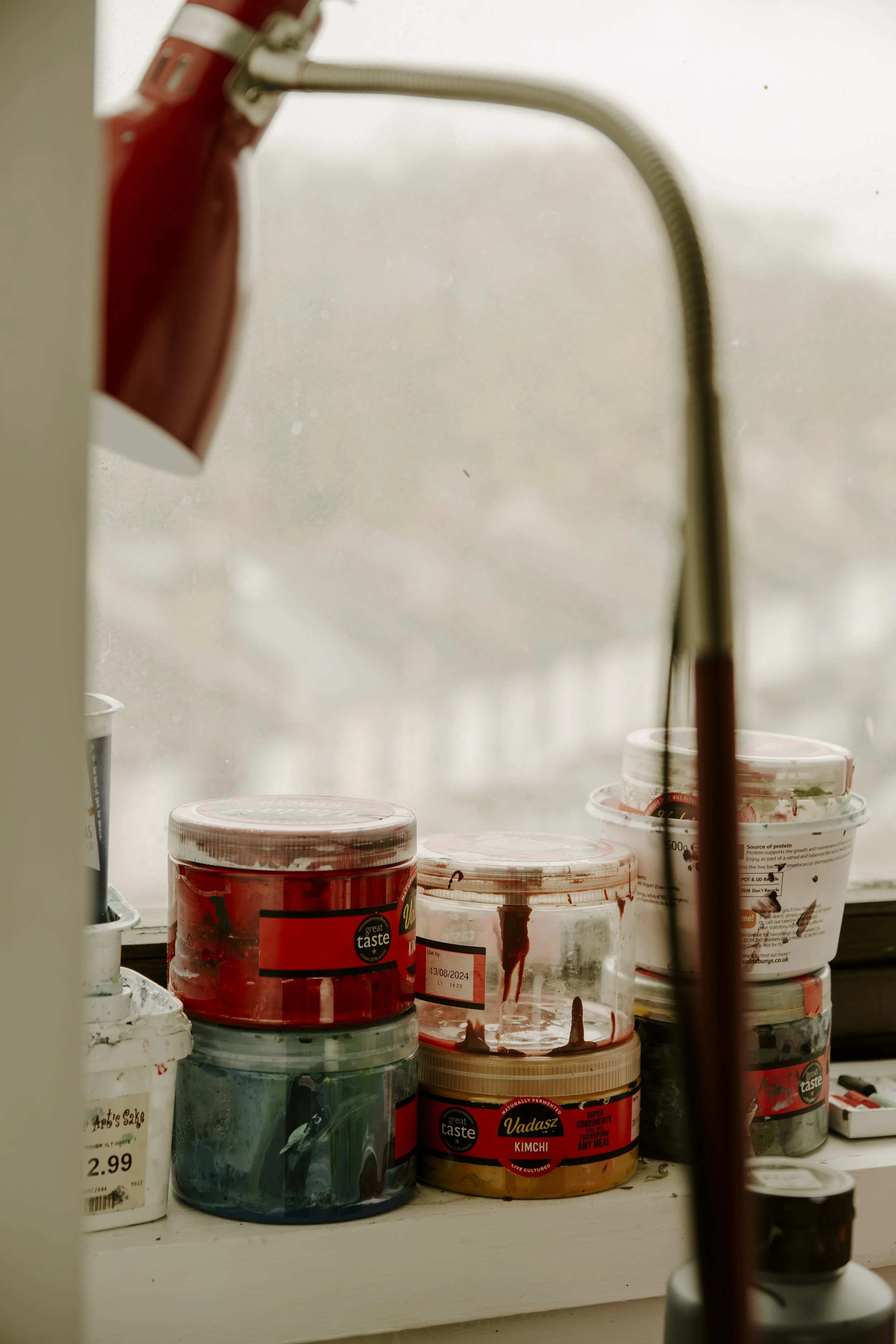
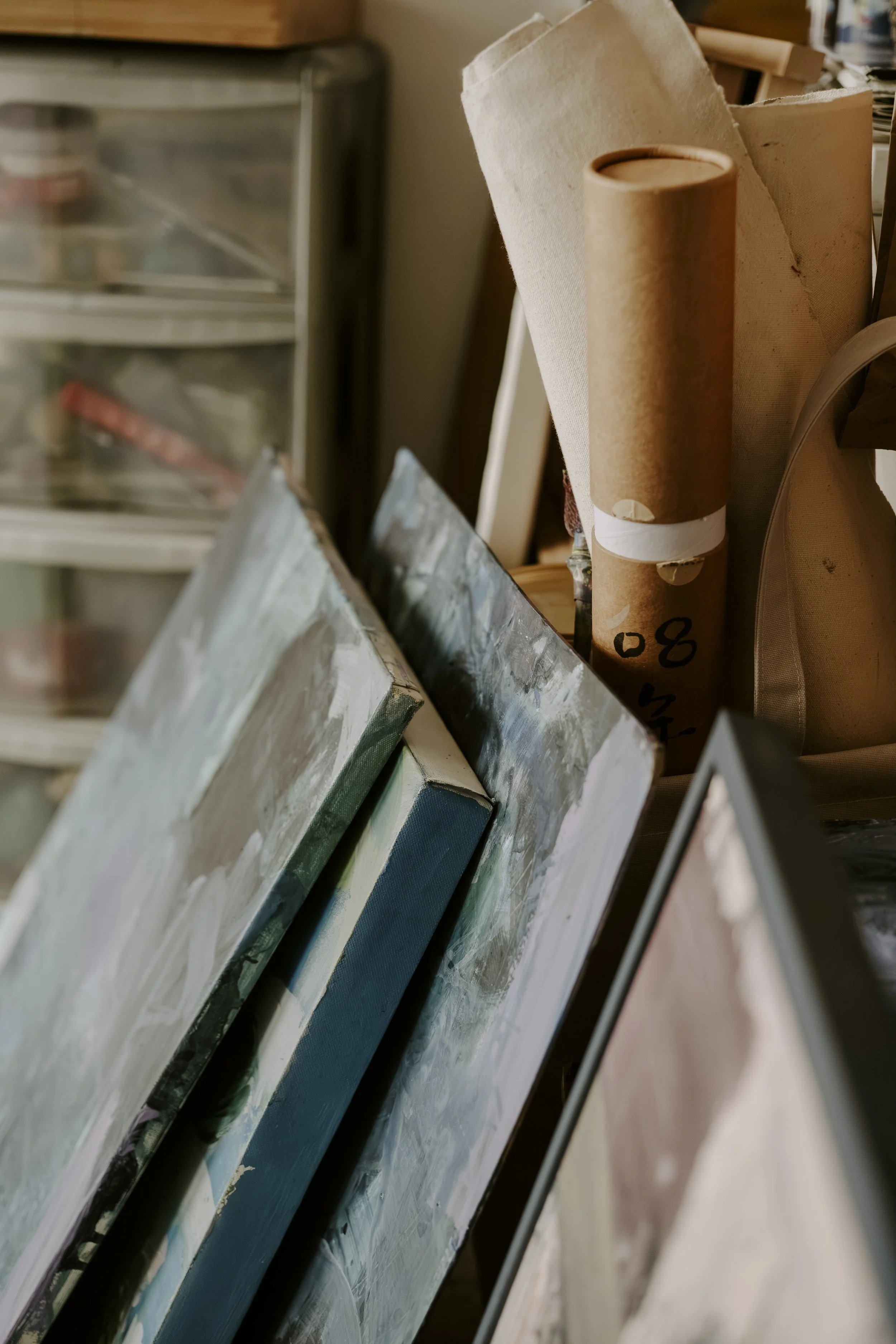
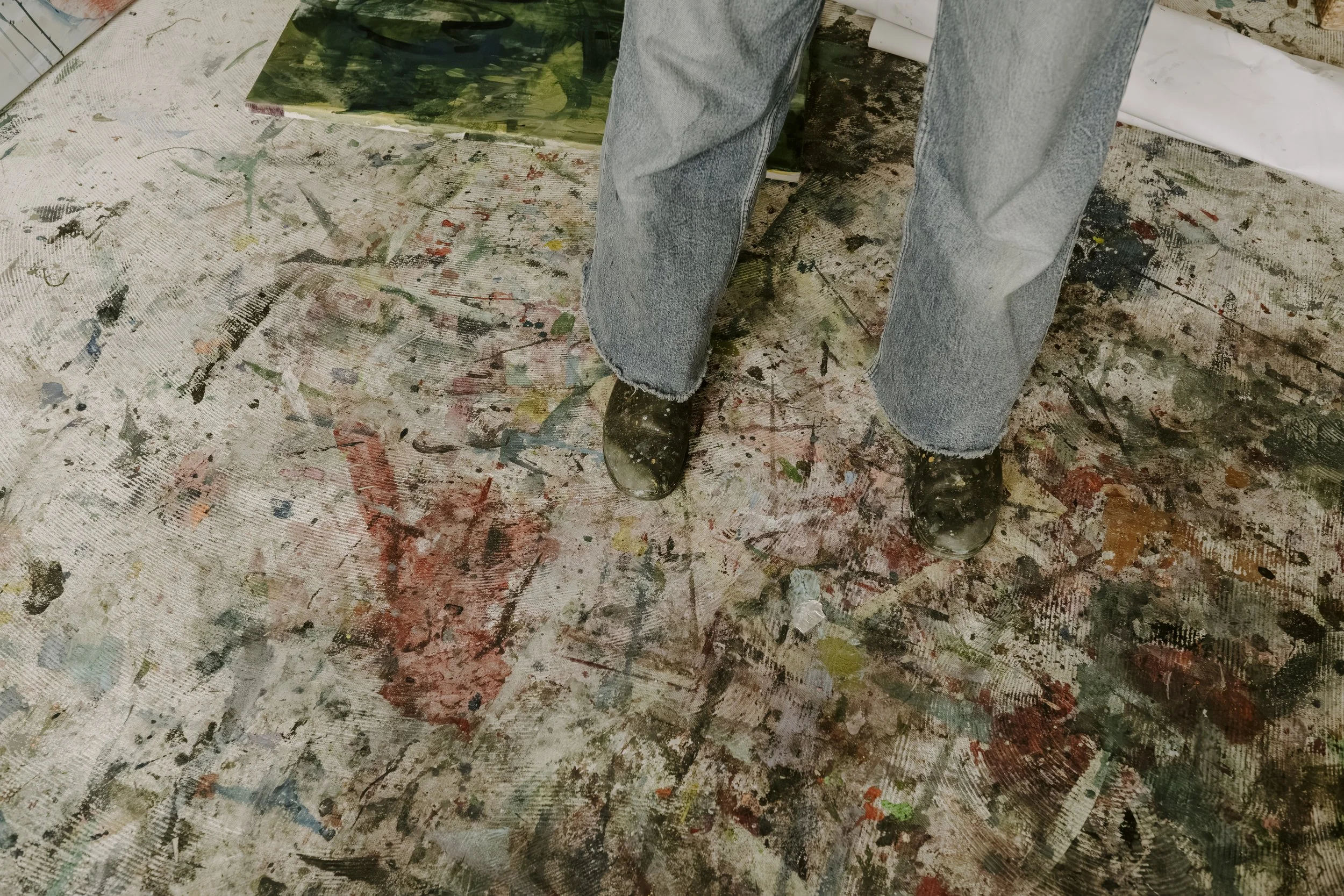
The studio is a bright, busy space in an artist residence in Wood Green. Paint-covered worktables, canvases leaning against the walls, sketchbooks filled with colour. Some things finished, others still finding their way.
North-facing windows bring a steady light into the room. There is a sense of activity, but no particular order. Ideas, materials and unfinished work share the same space.
Beatrice Nespega is an Italian artist and lighting designer. She moved to London five years ago, having lived in Amsterdam before that. It was here, she says, that she finally felt comfortable calling herself an artist.
In Italy, despite growing up surrounded by art and beauty, the word had always felt difficult to claim. In London, something changed.
“When I moved here, I finally felt free enough to say it. To say I am an artist.”
Painting came into her life in Amsterdam, thirteen years ago. She was looking for something to do outside work and signed up for a course in intuitive abstract painting. What began as a hobby became a way of slowing down, finding some space for herself.
Her approach hasn't changed much. She rarely begins with a plan. Instead, she starts with a colour, an instinct or simply how she feels that day.
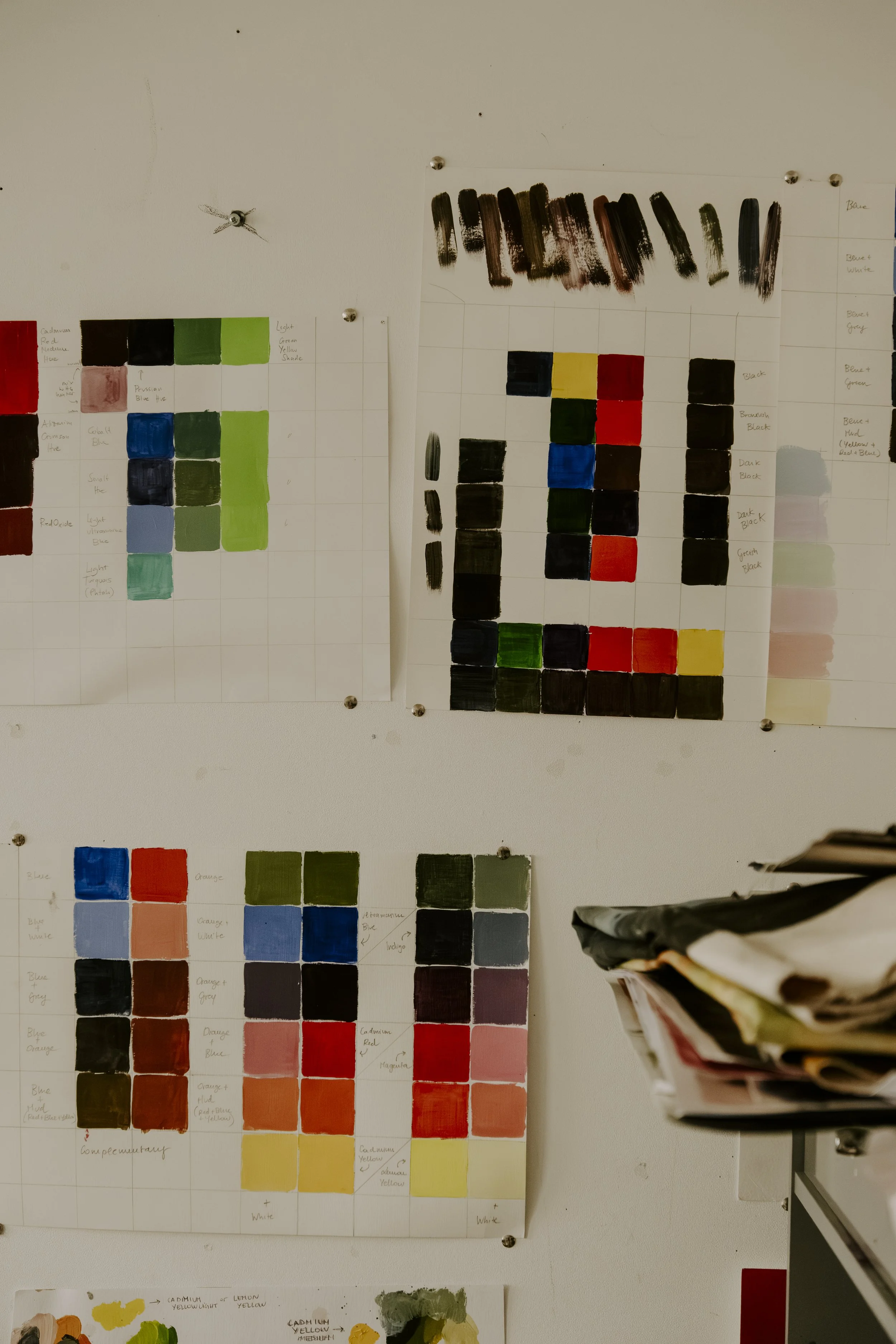
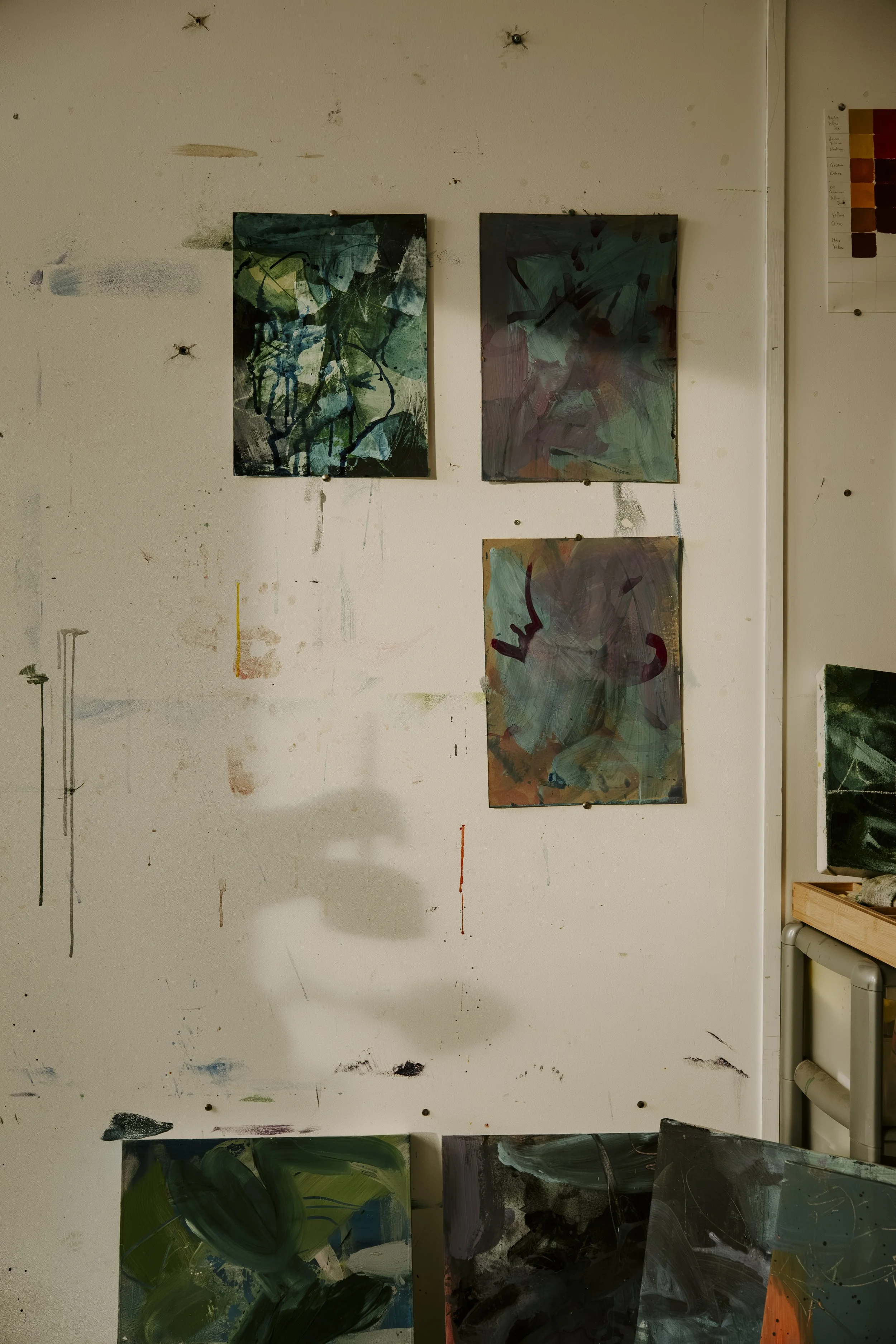
She moves around the studio, showing me sketchbooks and paintings in various stages of completion. Pages of ochre, sienna and raw umber sit alongside more adventurous combinations. There is a willingness to experiment, to try something and see where it leads.
Her background in lighting design has given her a particular interest in colour and its relationship with light. She thinks about how different tones sit together, how warm and cool colours affect one another, and how light can change the feeling of a space.
One painting, La Brina, meaning frost in Italian, has a quieter palette. Painted in January, it is made up of cool colours and soft textures. Everything feels still.
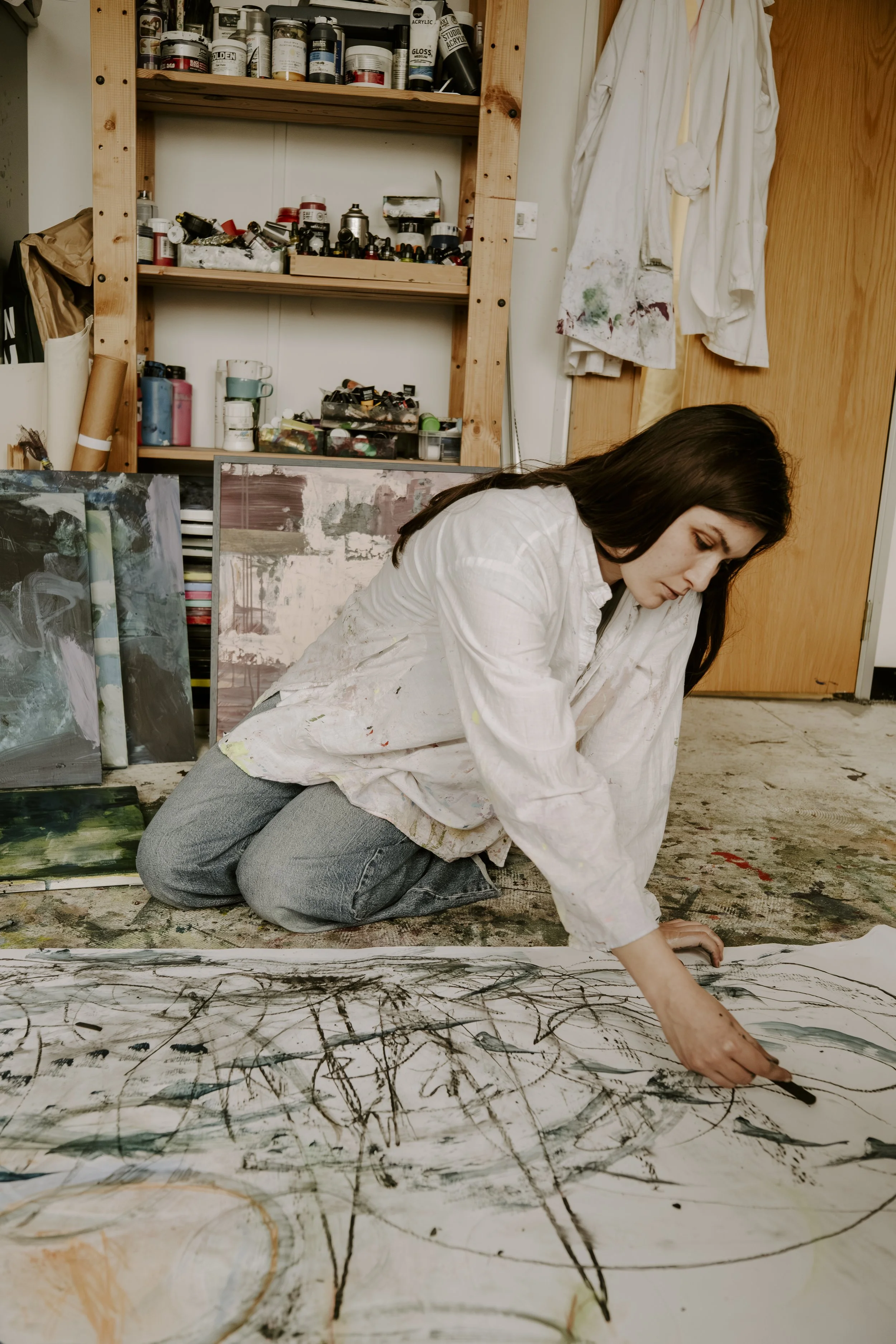
There is no fixed routine to her work. She paints in bursts, usually a few hours at a time. Knowing when to stop is part of the process.
“If I stay too long, I overwork it.”
She smiles when talking about how painting has changed her. Once a perfectionist, she has gradually learnt to let go. Mistakes are part of the process. Nothing is too precious to be changed.
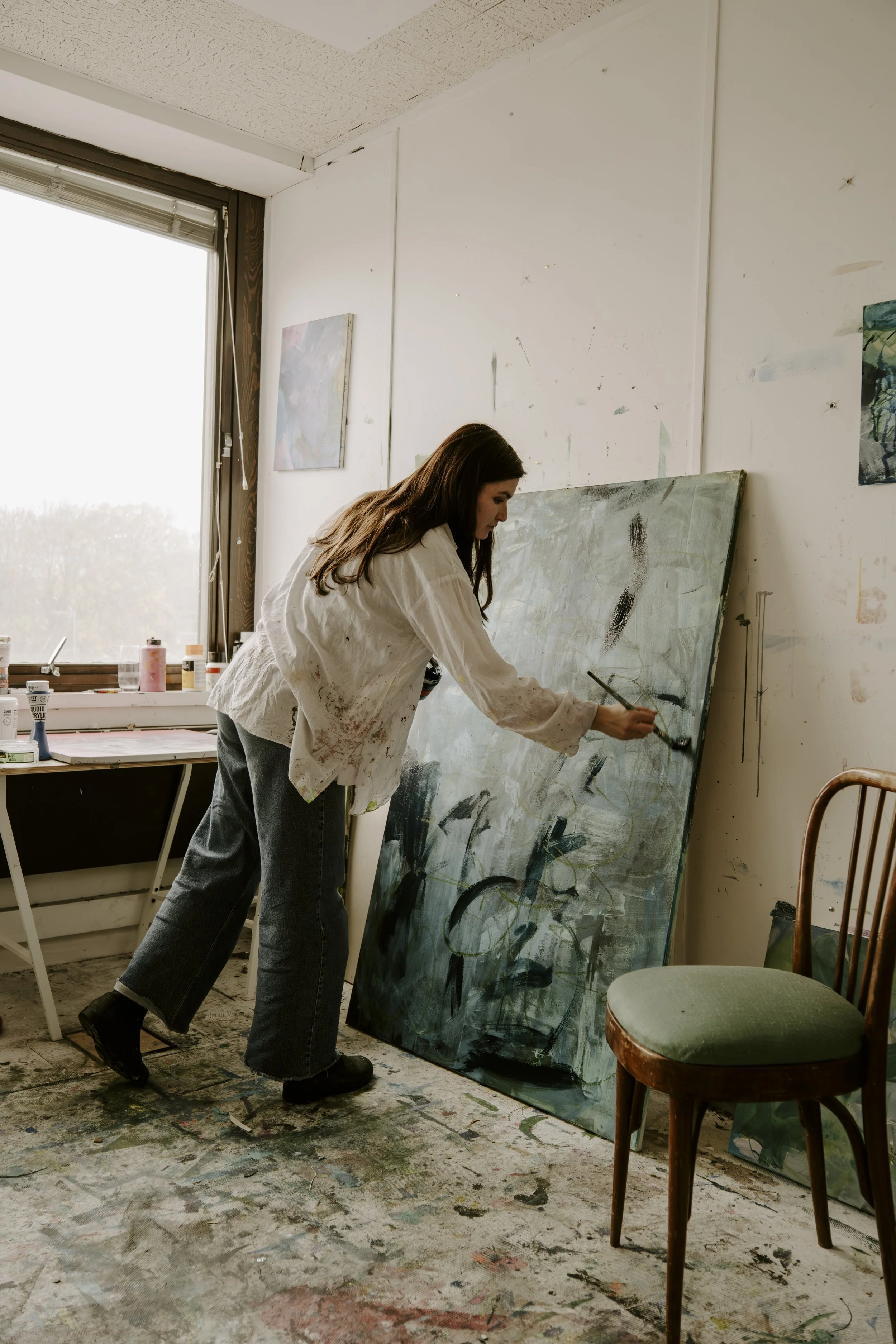
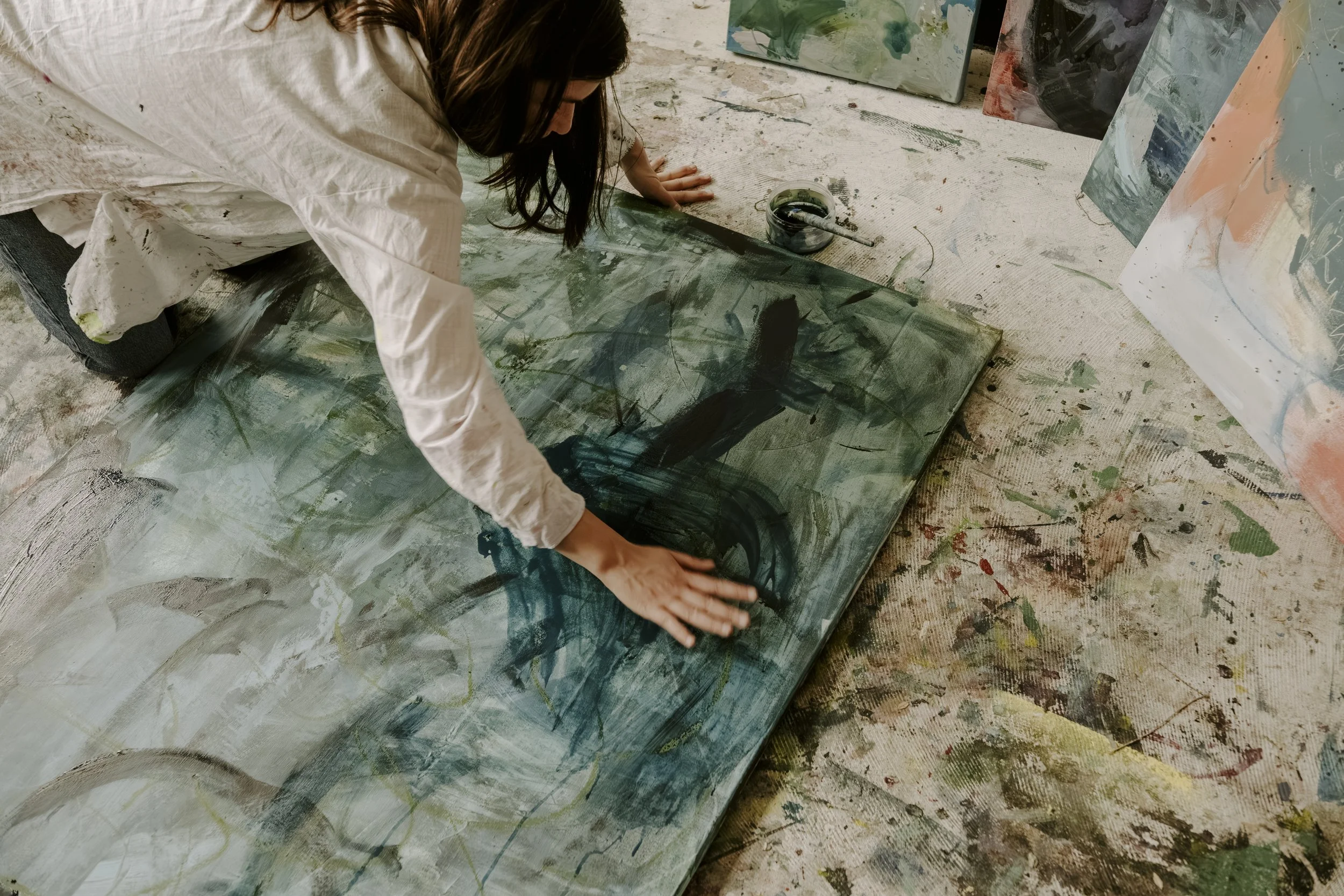
A large canvas leans against the wall. It is noticeably bigger than the work she usually makes and has been waiting some time for its turn. Now, with an exhibition approaching, she has finally started.
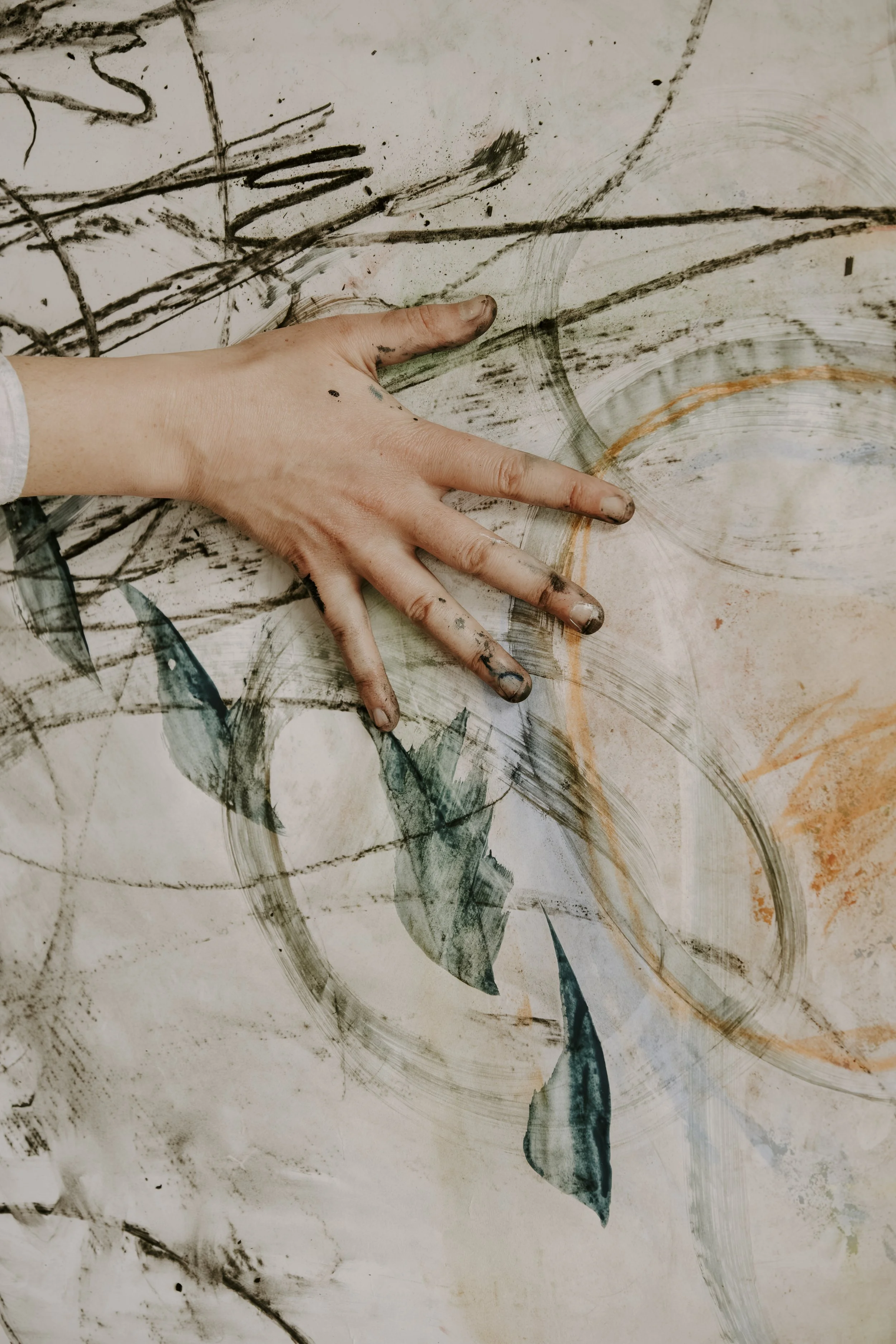
She runs a hand across the canvas. Its surface is layered with paint, some areas more settled than others. She has been using cardboard and her hands to move the paint around, working beyond the familiar reach of a brush.
She began with turmeric water and white paint, building up layers of blues and greens. Lately, she has started introducing pinks and pushing towards a looser, more expressive style.
“Before, I needed references, shapes, structure. Now I'm just trying to let go.”
She steps back, looking at a darker patch in the middle of the canvas. Perhaps it needs lightening. Perhaps something else will happen. It is still a work in progress.
She steps back, looking at a darker patch in the middle of the canvas. Perhaps it needs lightening. Perhaps something else will happen. It is still a work in progress.
There are sketchbooks everywhere in the studio. Beatrice is keen for other people to start one too. Somewhere to experiment without worrying about making finished work.
“Just play. Explore.”
She likes the idea that painting should be accessible to everyone. You don't need much to begin. A brush, some paint, a little space.
Standing in the studio, looking at the unfinished canvas and the layers of colour around it, I get the feeling that this is as much about freedom as it is about painting.
Beatrice seems less concerned now with making something pretty. More interested in seeing where the process takes her.
The large canvas is still waiting for its final decisions. There is no rush.