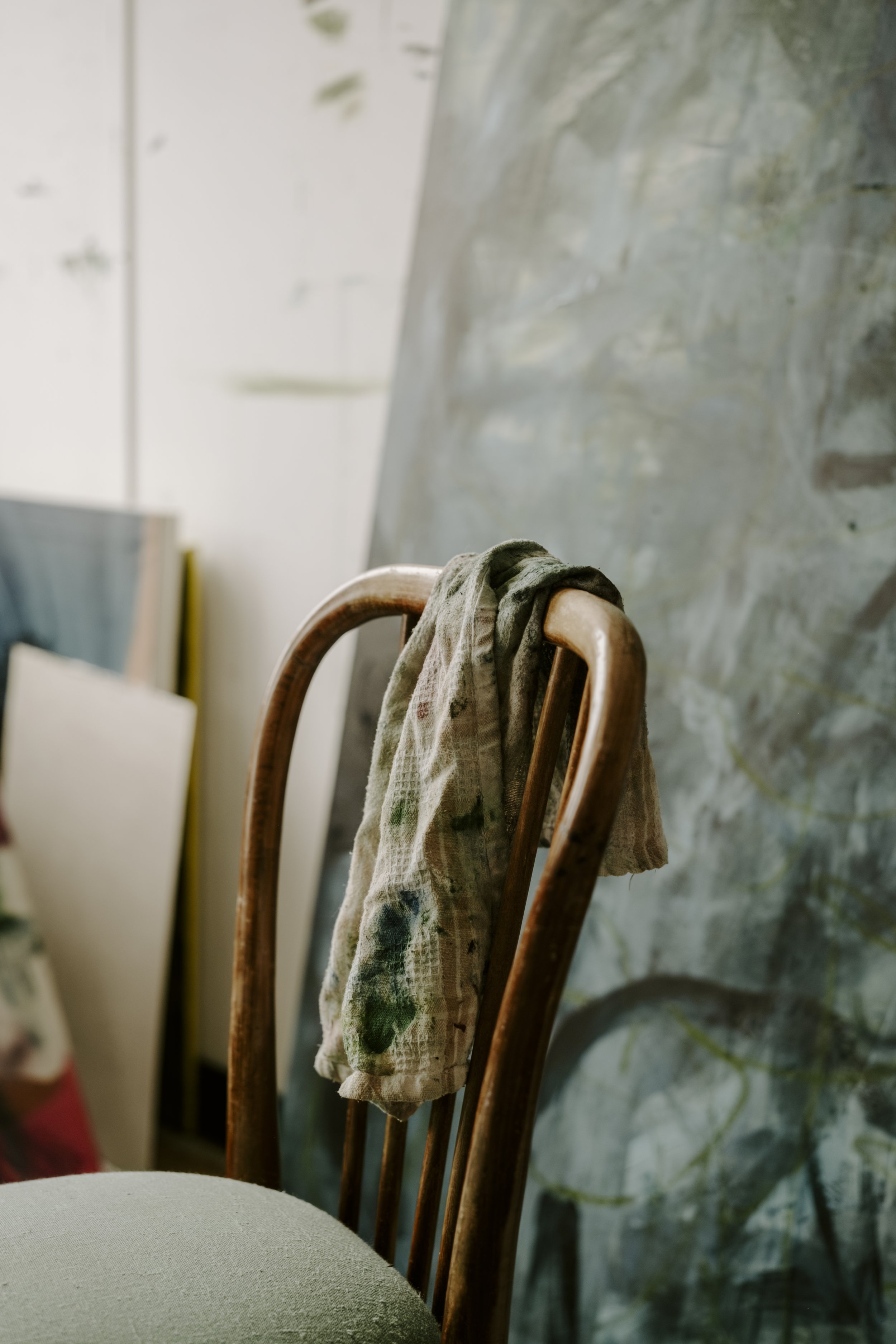
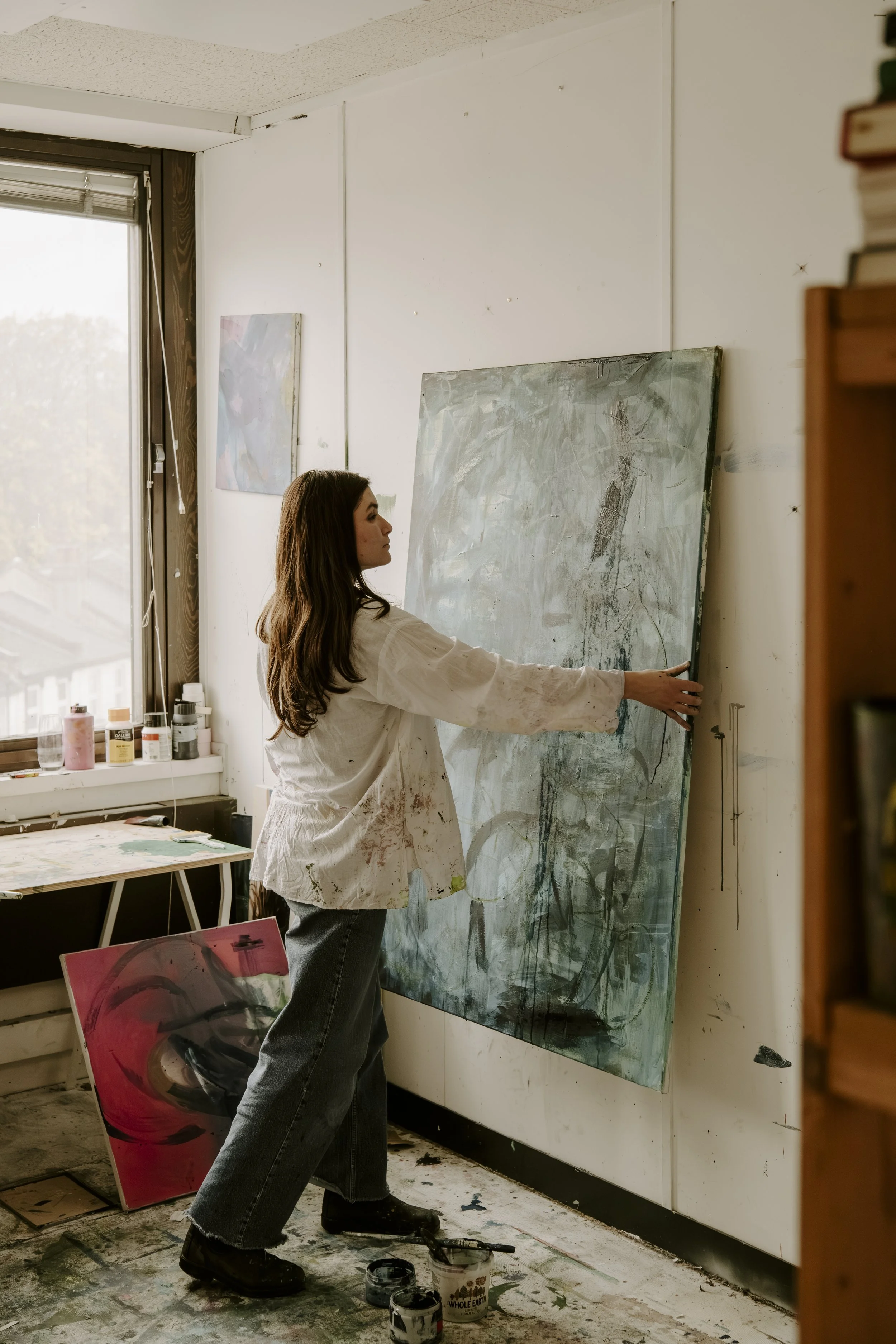
Beatrice Nespega
Finding Freedom in Colour
She calls herself an artist first. Then a lighting designer. An Italian living in London. “When I moved here five years ago, I finally felt free enough to say it. To say I am an artist - and be taken seriously.”
“It’s strange, how Italy can breathe art through every crack of its marble walls, yet still see the word ‘artist’ as almost untouchable. Back home, if you say you’re an artist, people think it’s a hobby. Not a real job. You grow up surrounded by beauty, history, sculpture… and still, the word feels off-limits.”
London felt different. “Here you can be who you want. You can say you’re an artist and people believe it. They might even ask what kind.”
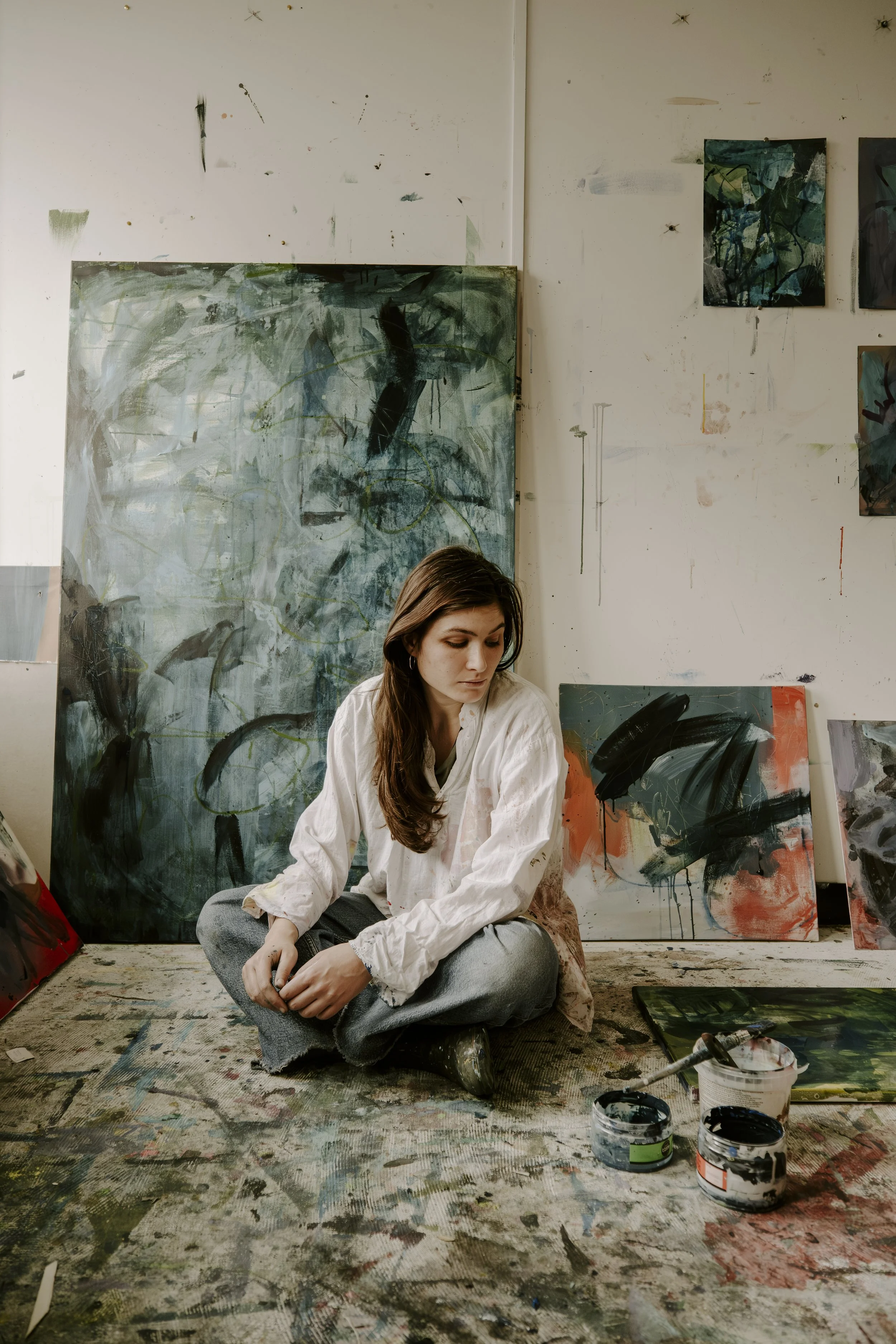
“I never start with a plan. I start with colour. With how I feel that day."
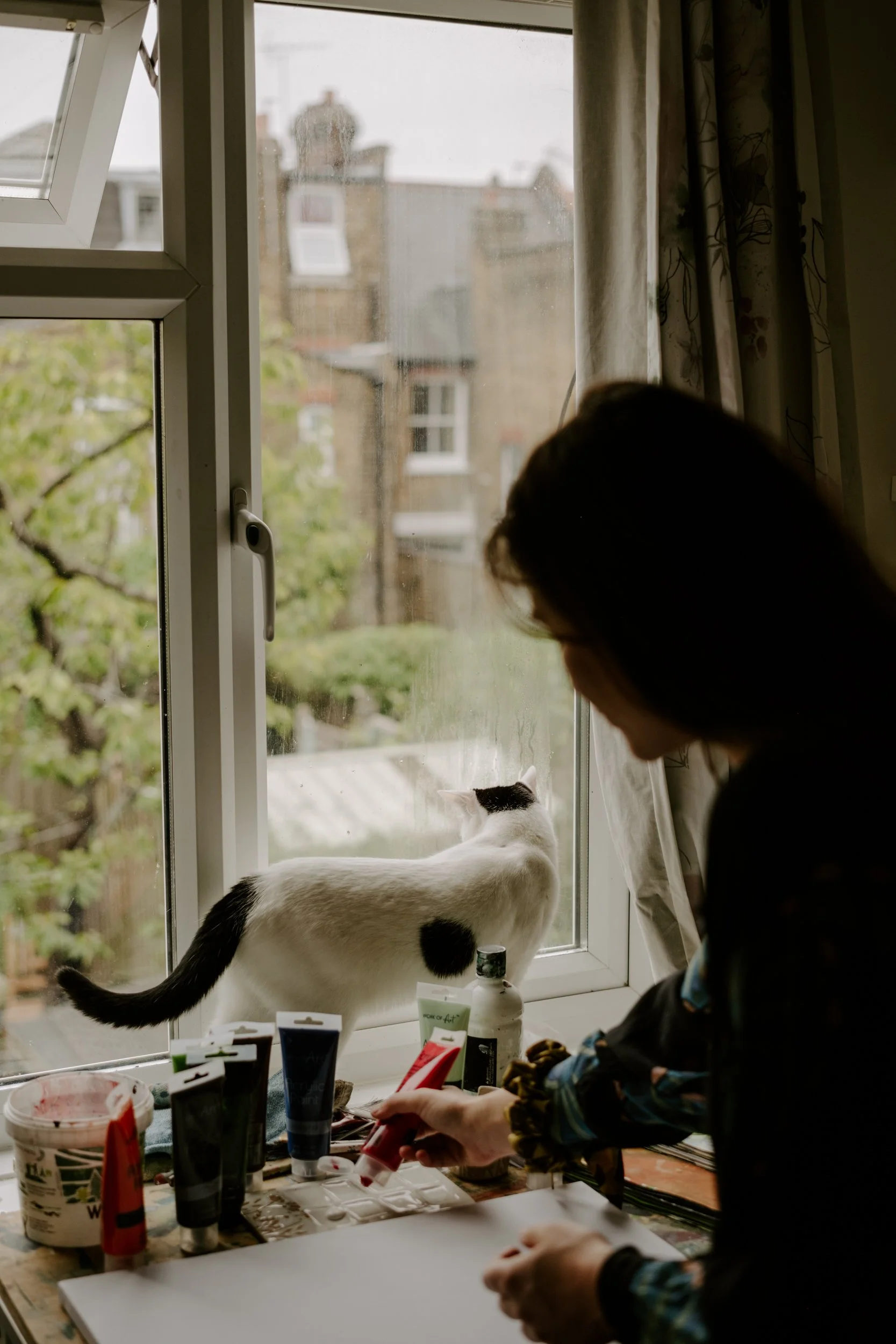
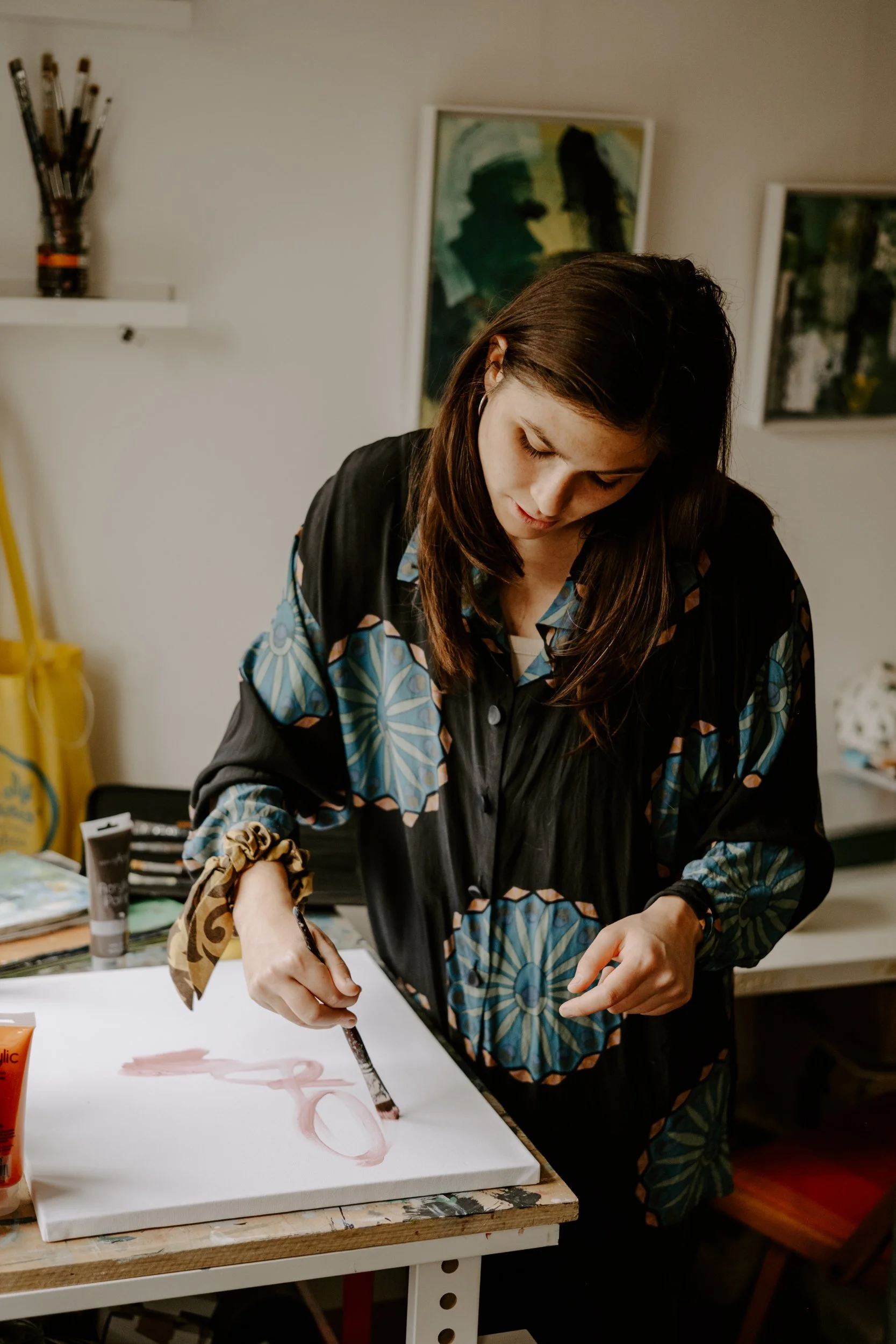
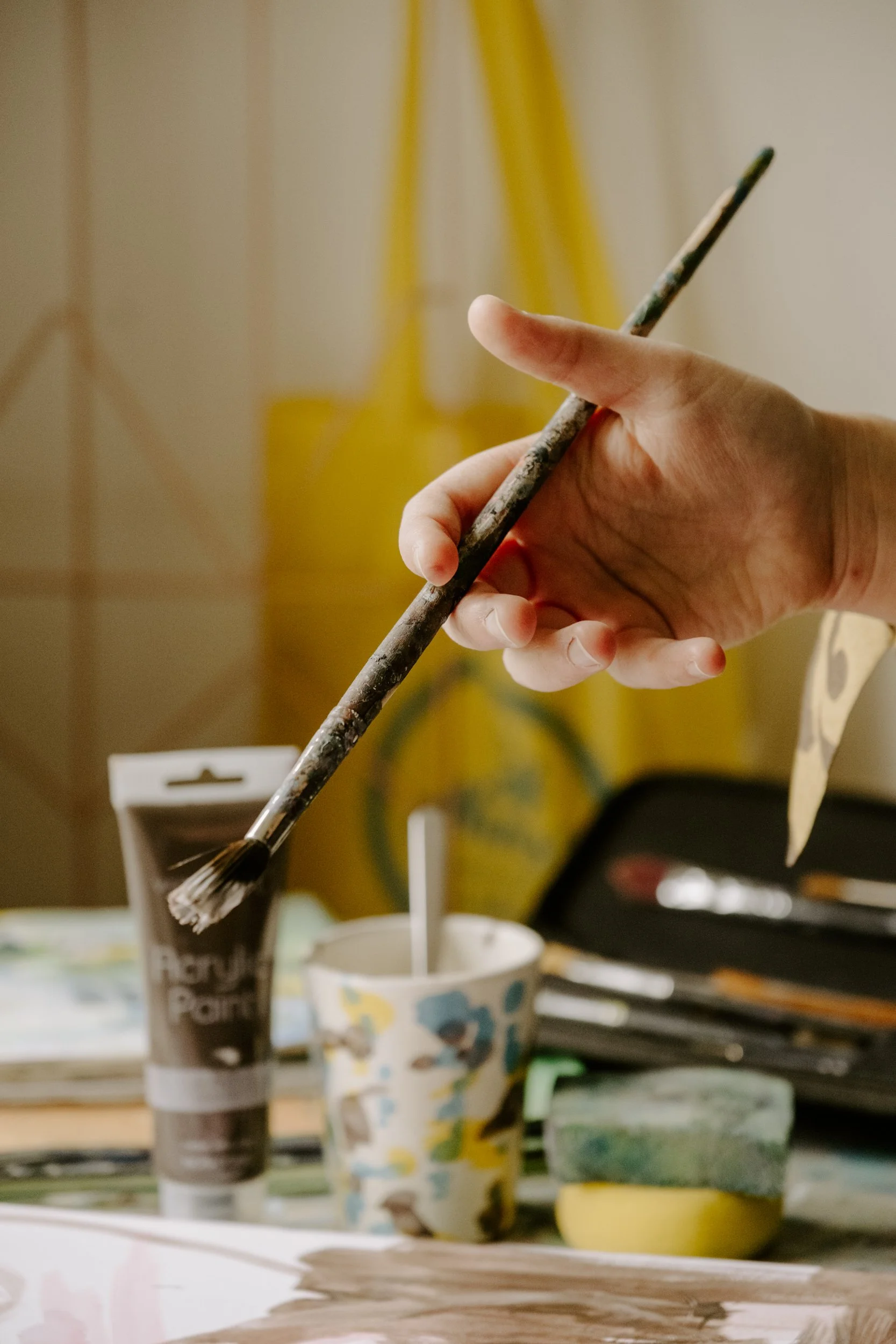
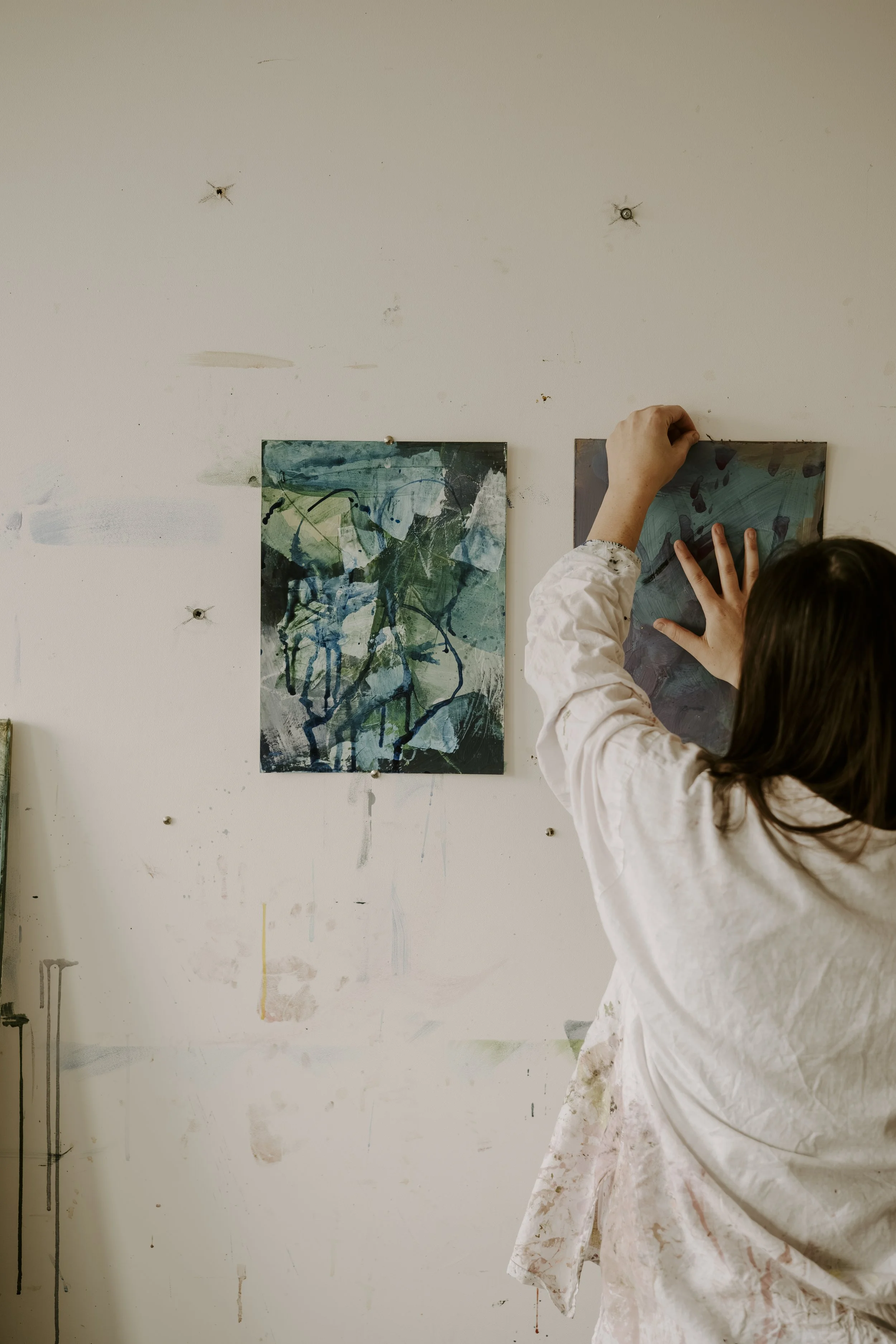
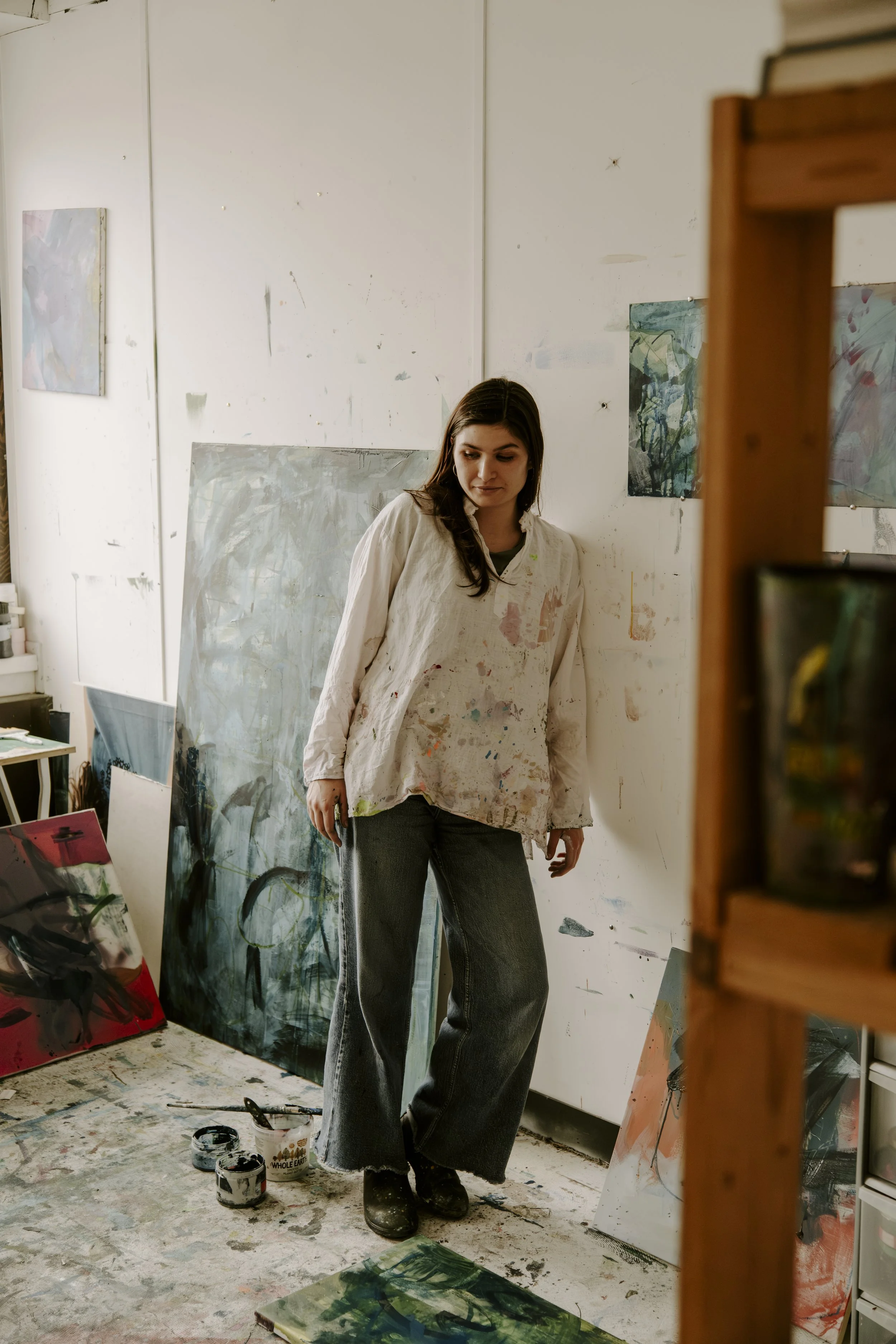
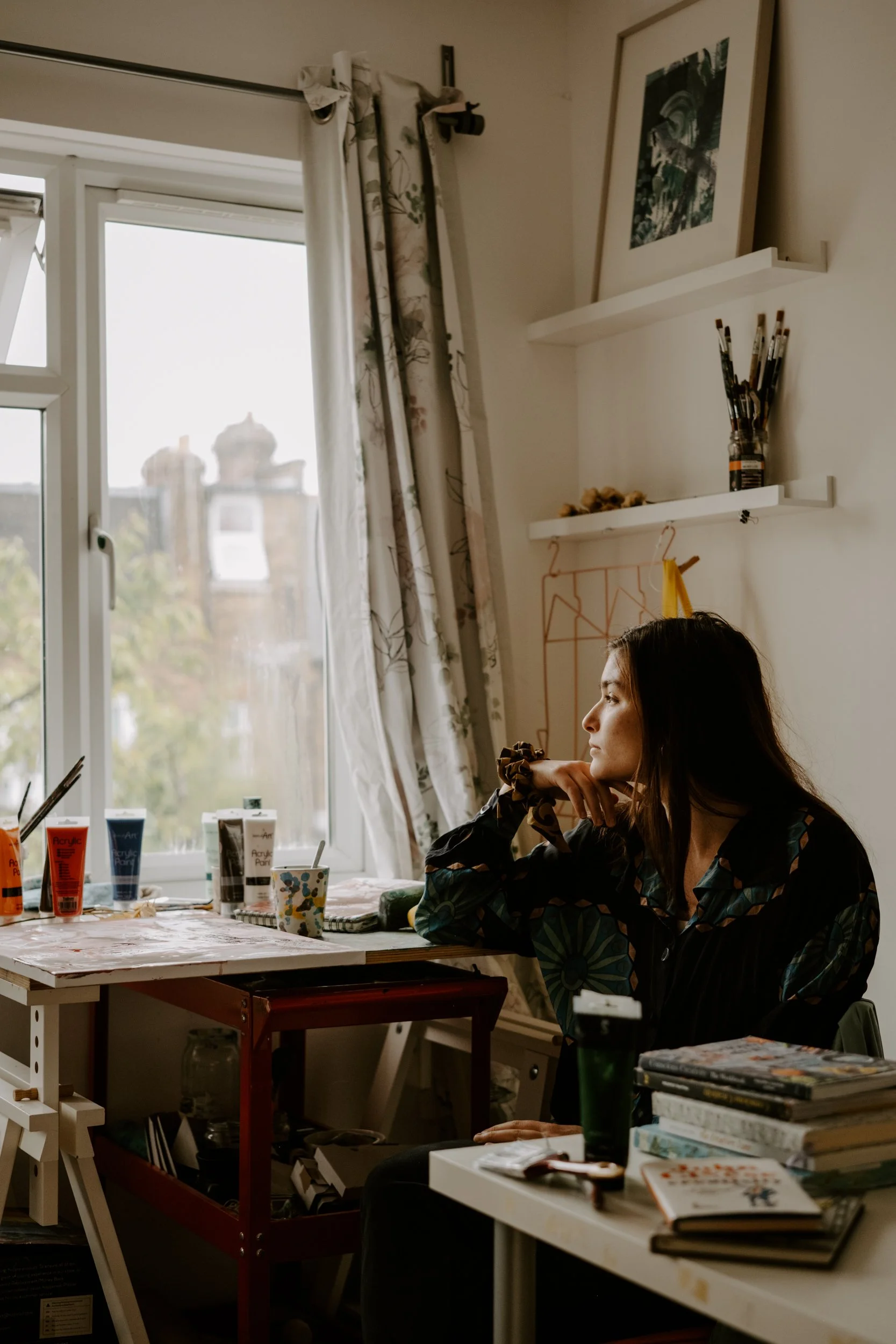
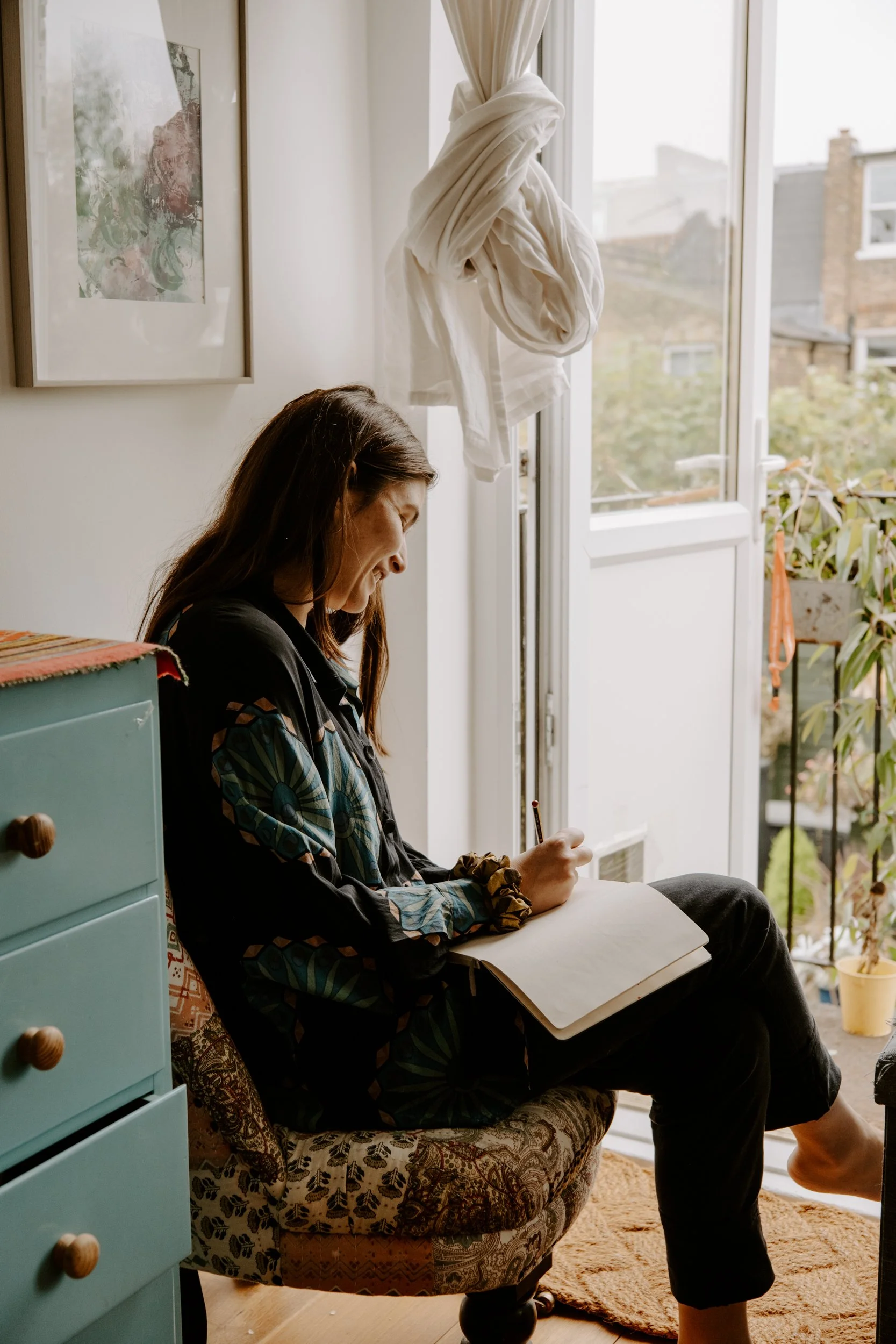
We met twice. Two sessions on two different days. From the quiet hush of her home studio to the bright, buzzing artist residence in Wood Green. Different rooms, different light, same gentle energy.
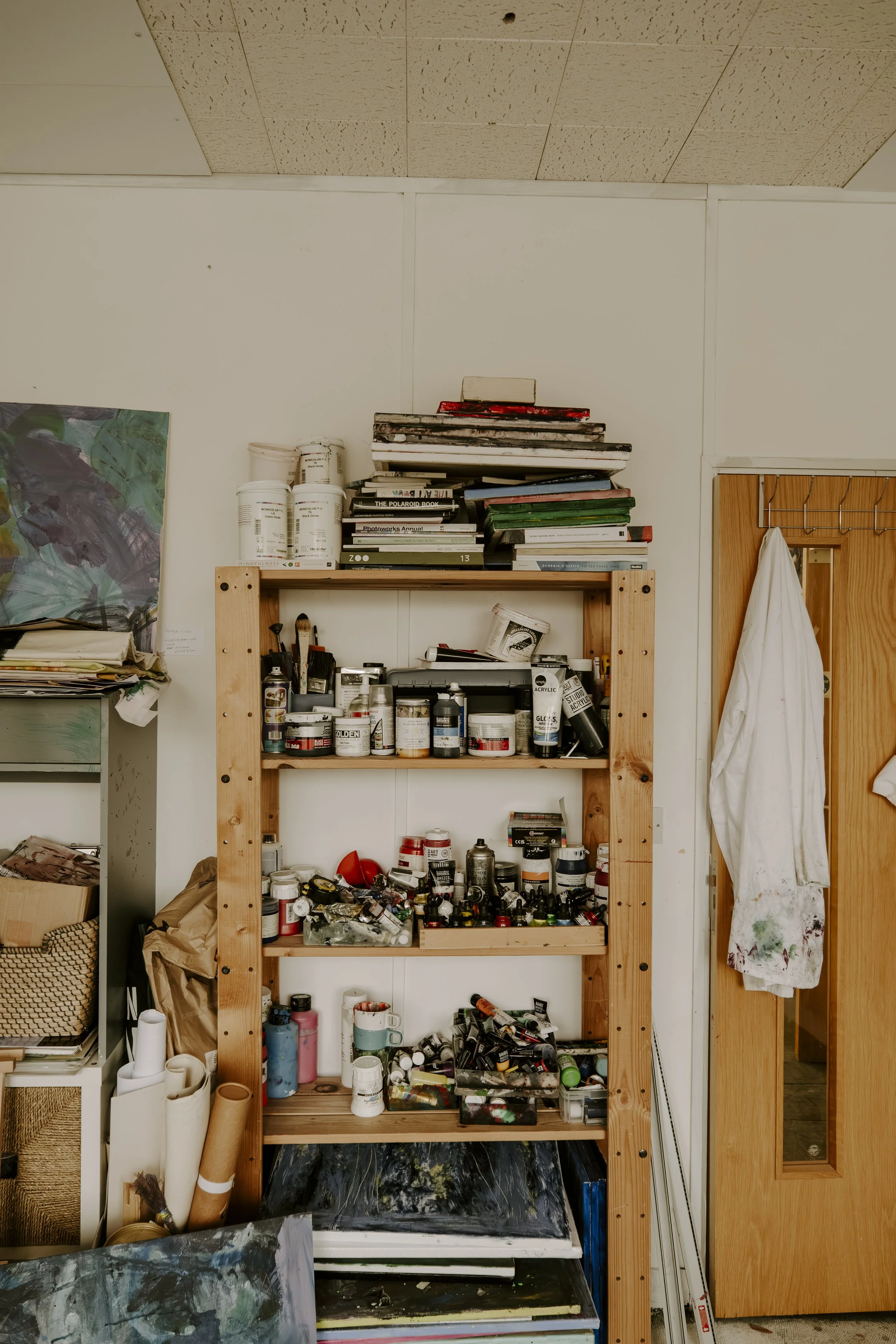
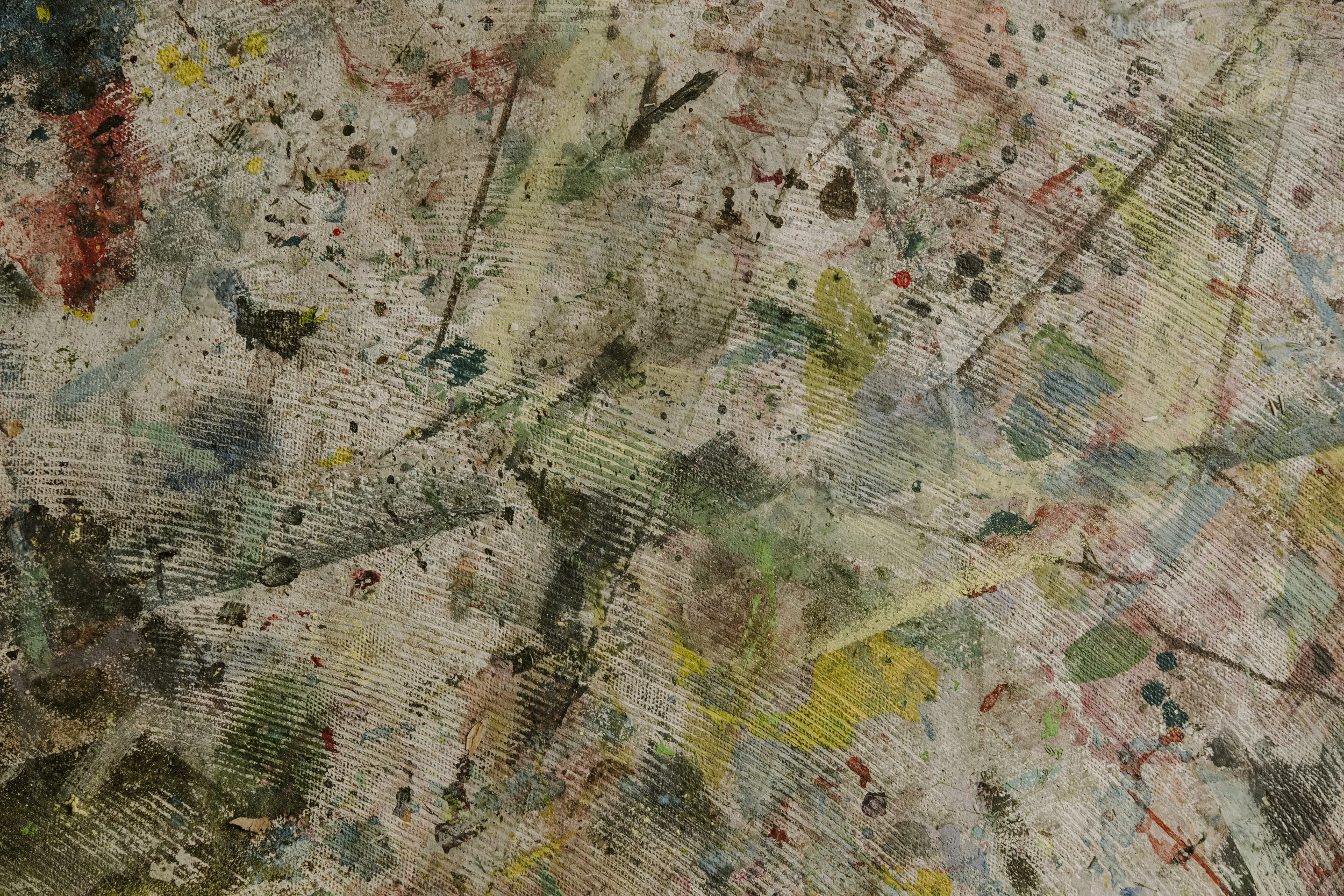
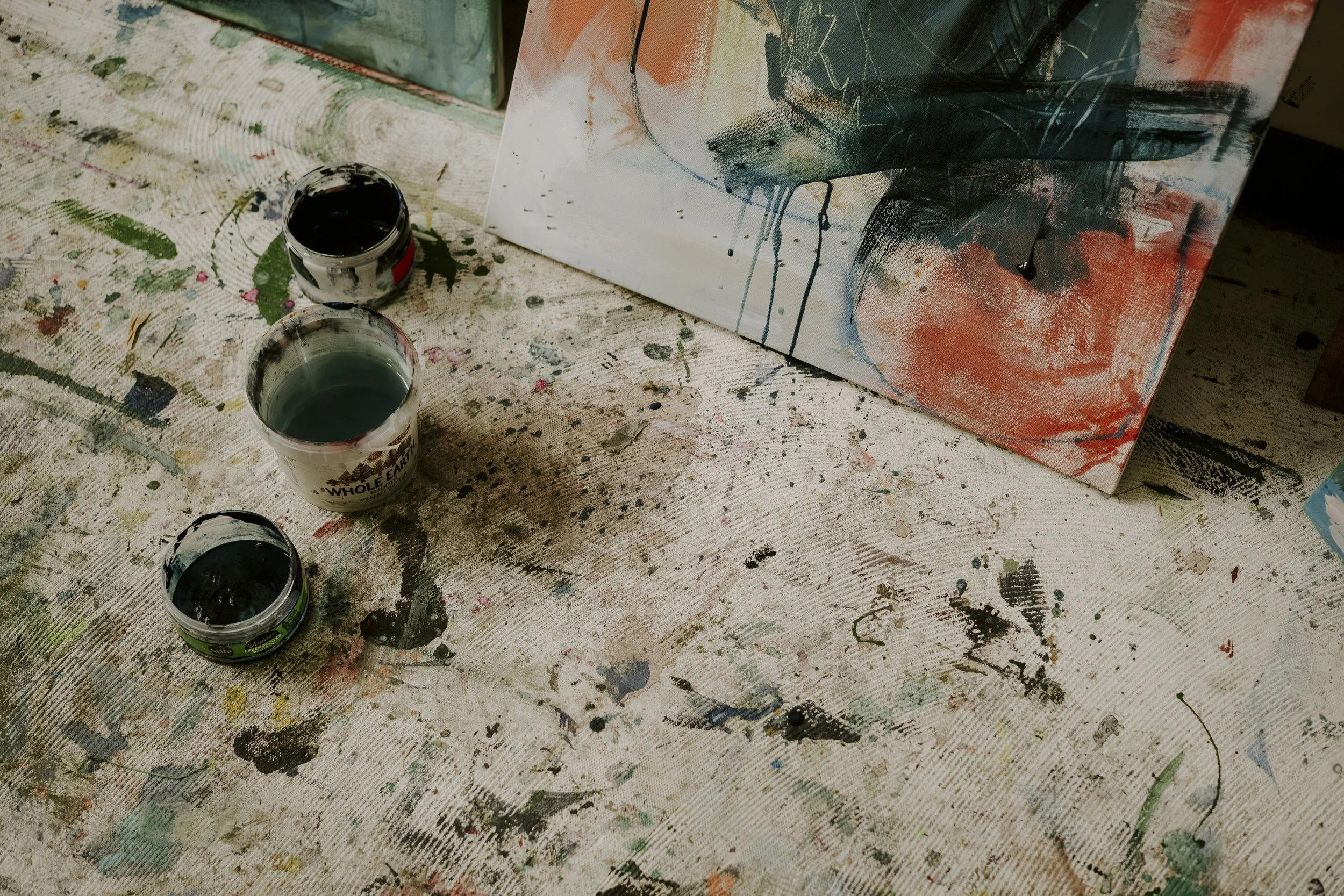
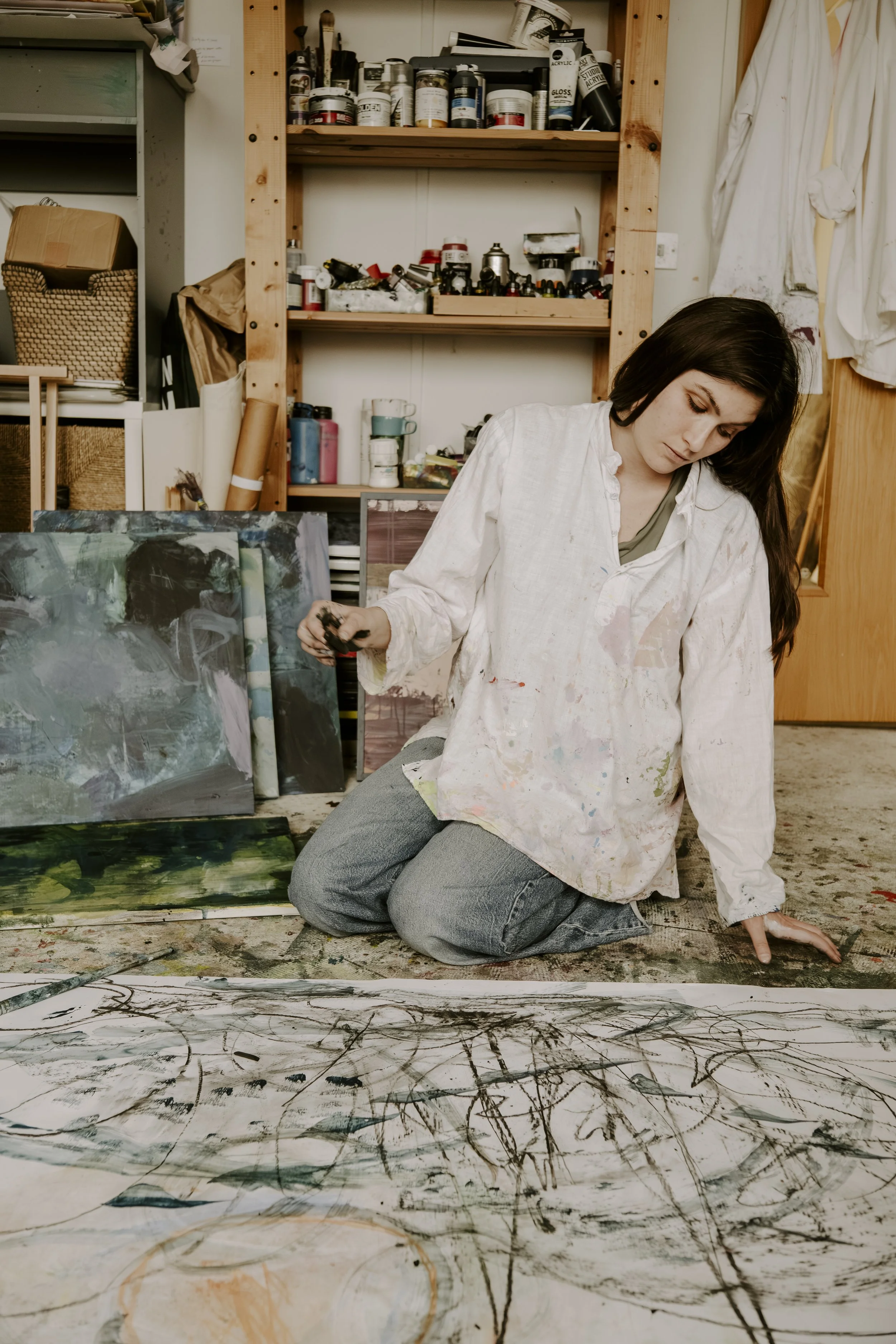
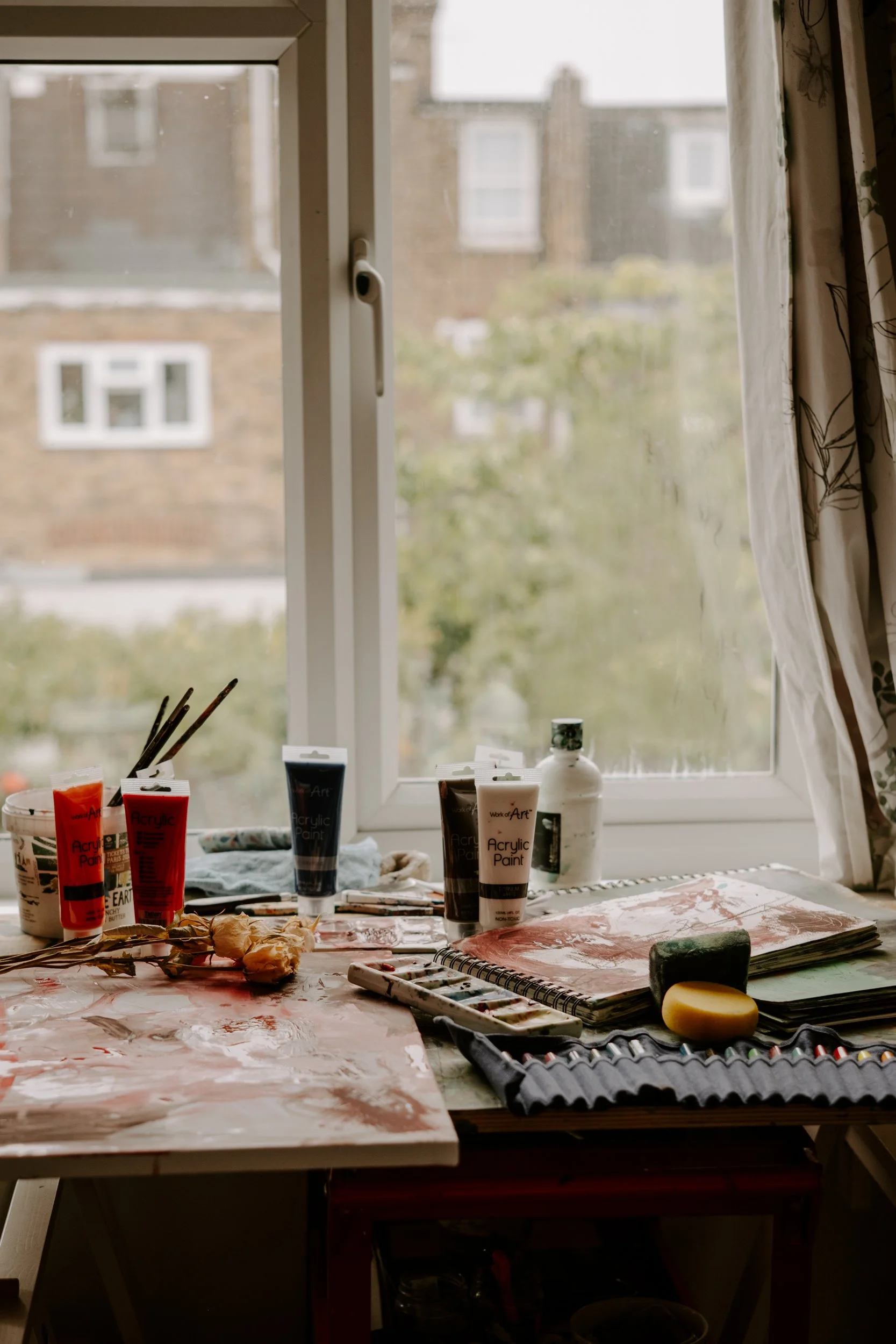
At both her studios the light falls softly through the north facing windows all year long. Streaks of paint across the worktables, the traces of someone fully absorbed in making.
As a child, she watched Art Attack - the old TV show with glue, cardboard, and impossible ideas. “No one around me was creative,” she laughs. “But I was obsessed. I’d make a mess of everything.”
“I think it’s just something inside me, a need to make things.”
Art took a backseat until she began painting in Amsterdam, thirteen years ago. “I was twenty-one. Alone in a new city. I wanted a hobby. Something small after work. I took this course in intuitive abstract painting. I liked that it was simple. Accessible. You don’t need much. Just a brush, some paint, a corner of a room.”
It became her way to ground herself. “Don’t go to the art shop first. Use what you have. Anything. You can make something from almost nothing.”
Then came London. The city, its grey skies broken by rays of sunshine, changed her. “It’s the light, it makes you pay attention. In Italy, light is generous. Here, you have to look for it.”
She met a yoga teacher. Together they started something new - painting and mindfulness. “We wanted to help people stop overthinking,” she says.“
“Just paint. Let it happen.”
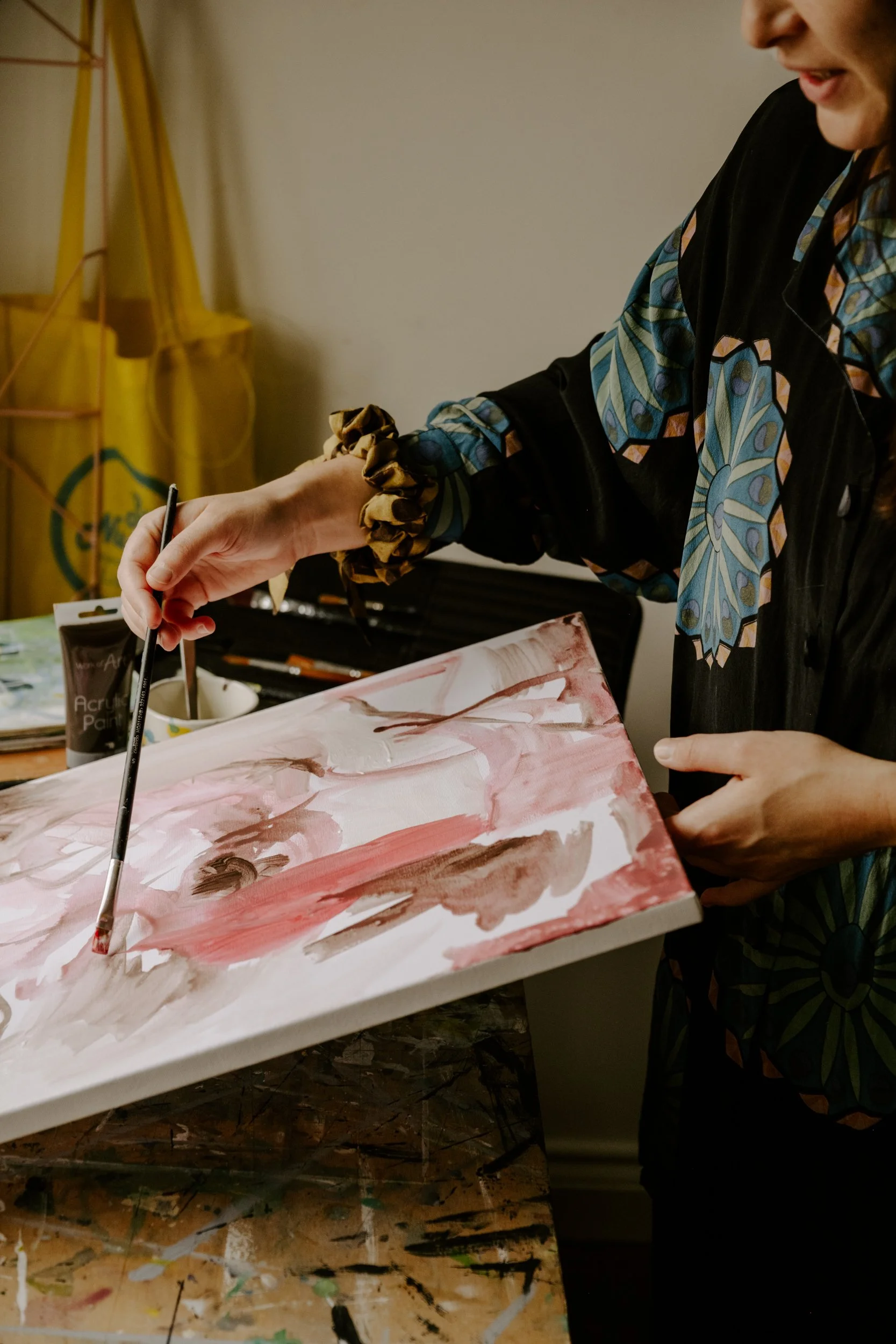
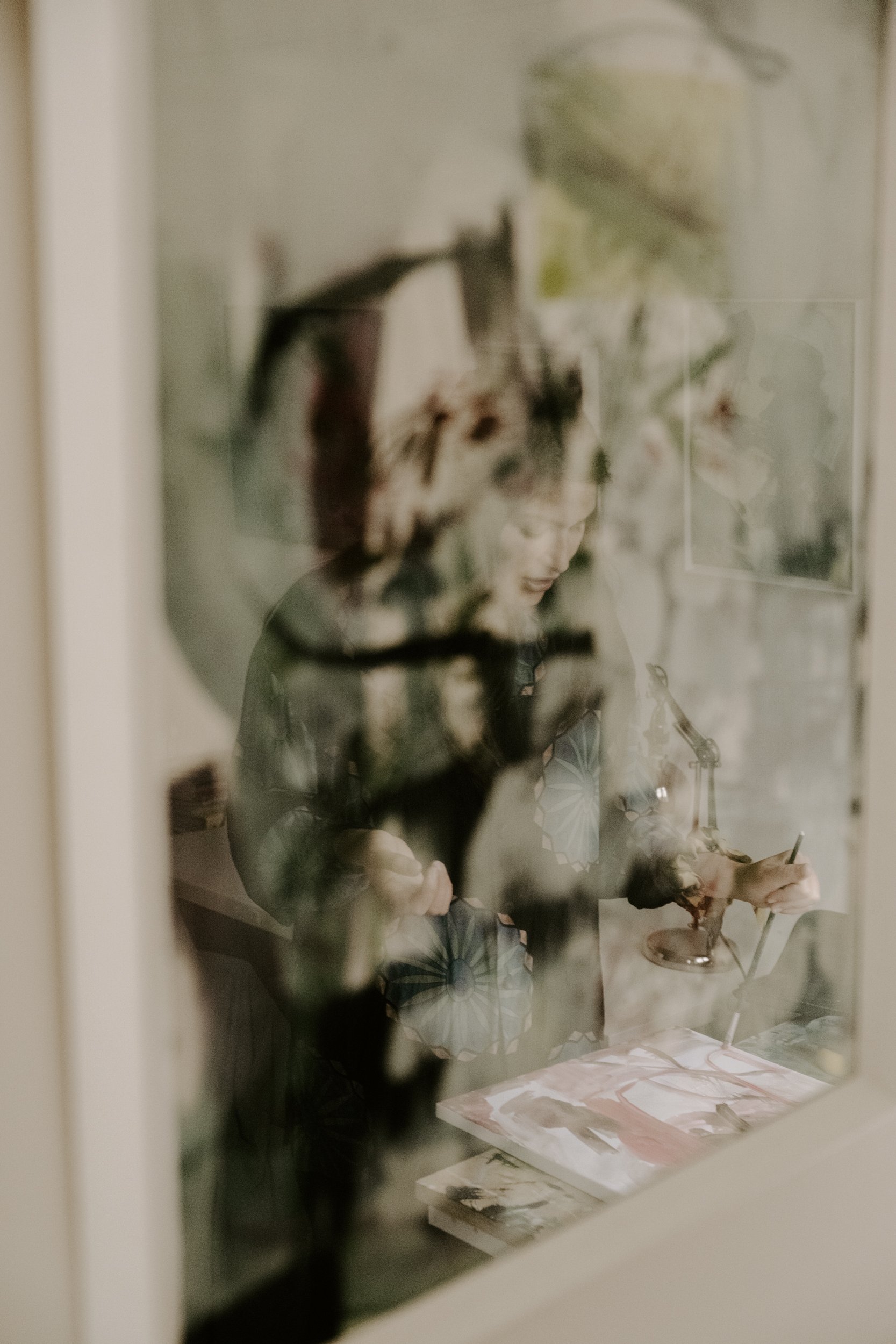
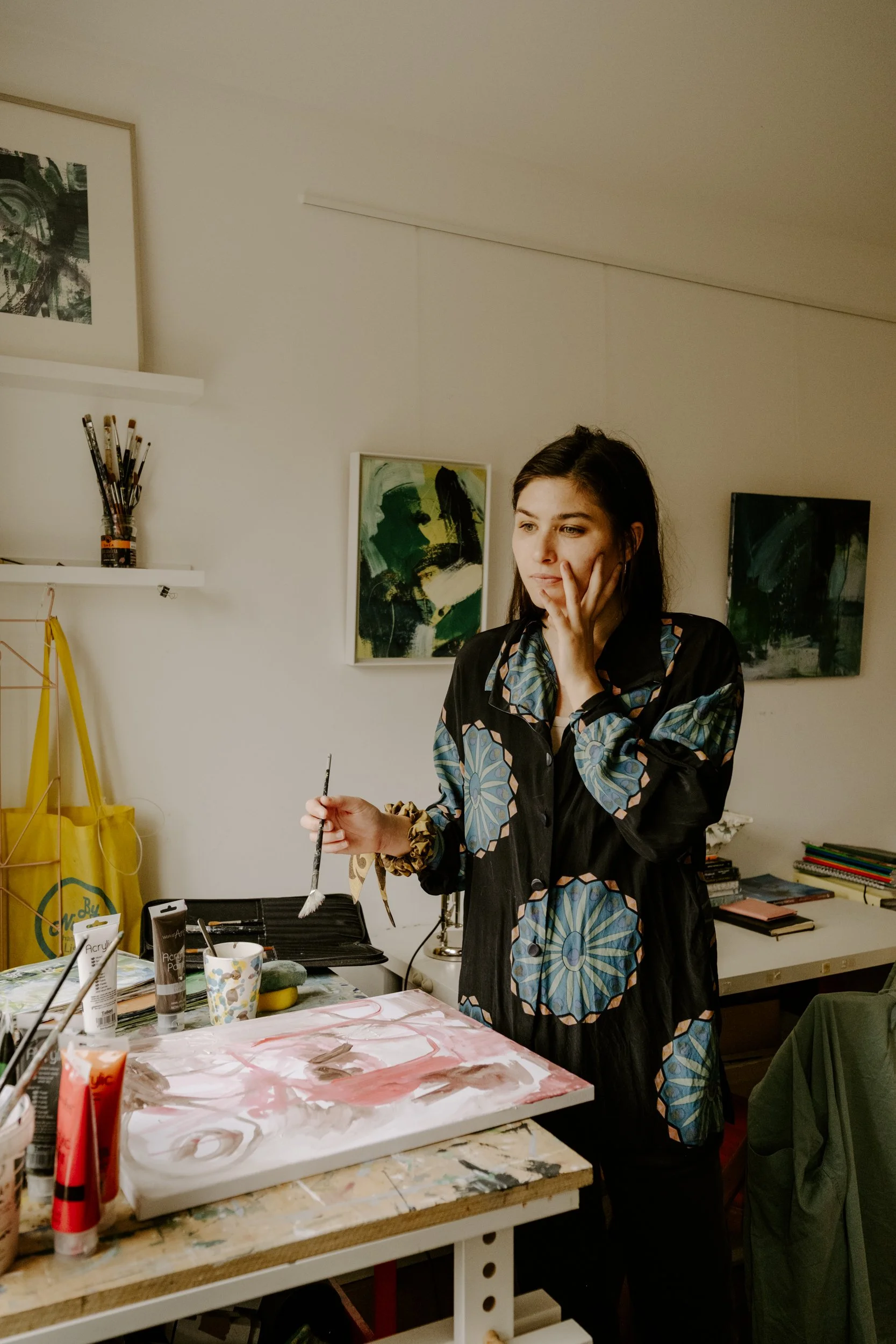
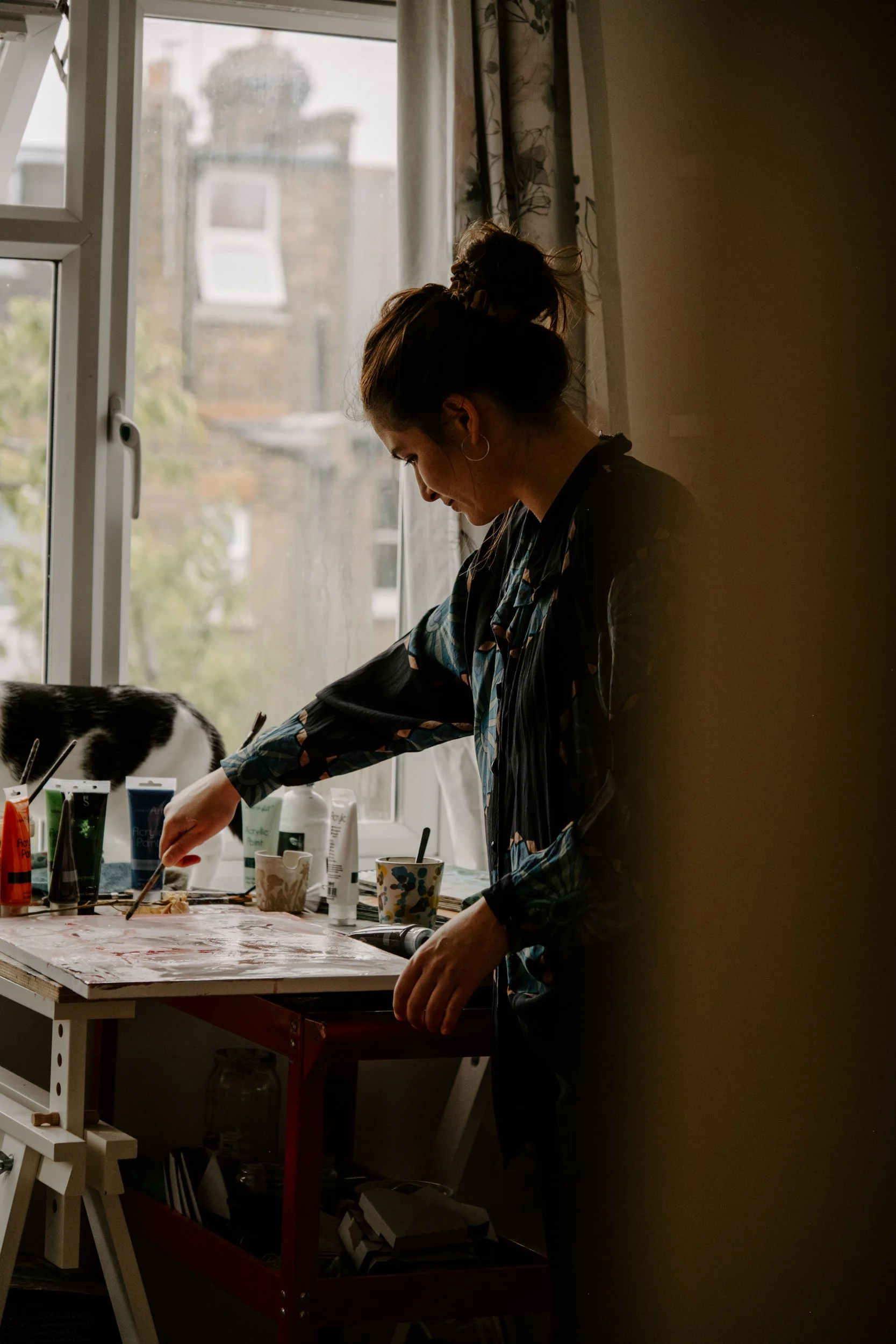

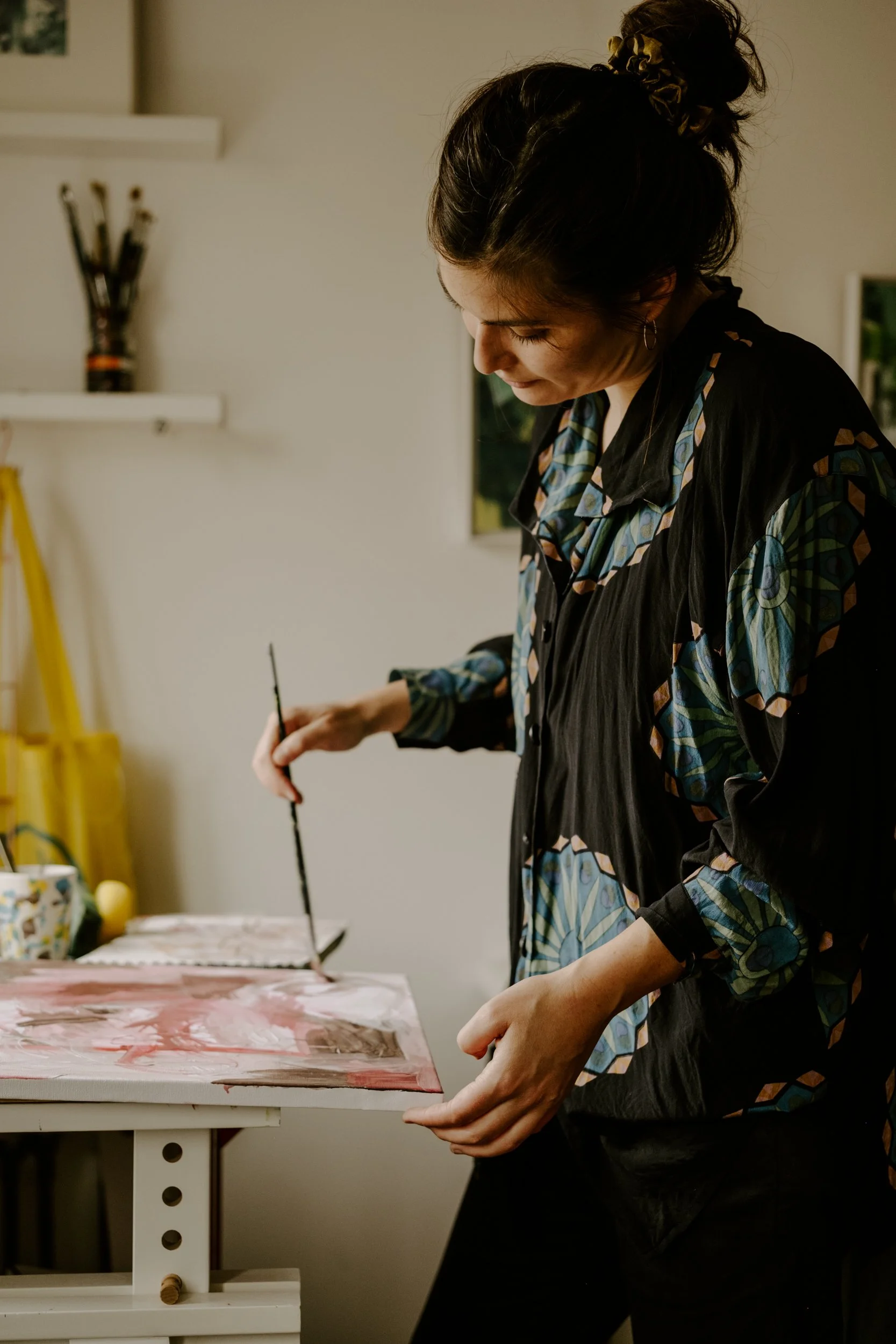
The workshops grew, small at first, then steady. And then lockdown came. The world closed, but she kept going, moving her workshops online. “People needed something to hold on to, so did I.”
She stayed in her London flat that year. “I couldn’t go home. I missed my family. My friends. Everything familiar.” Painting became her companion. “It anchored me. It gave me purpose.”
Her approach is simple. “No right or wrong. Whatever I say, you can do the opposite. It’s not school. You can’t fail.”
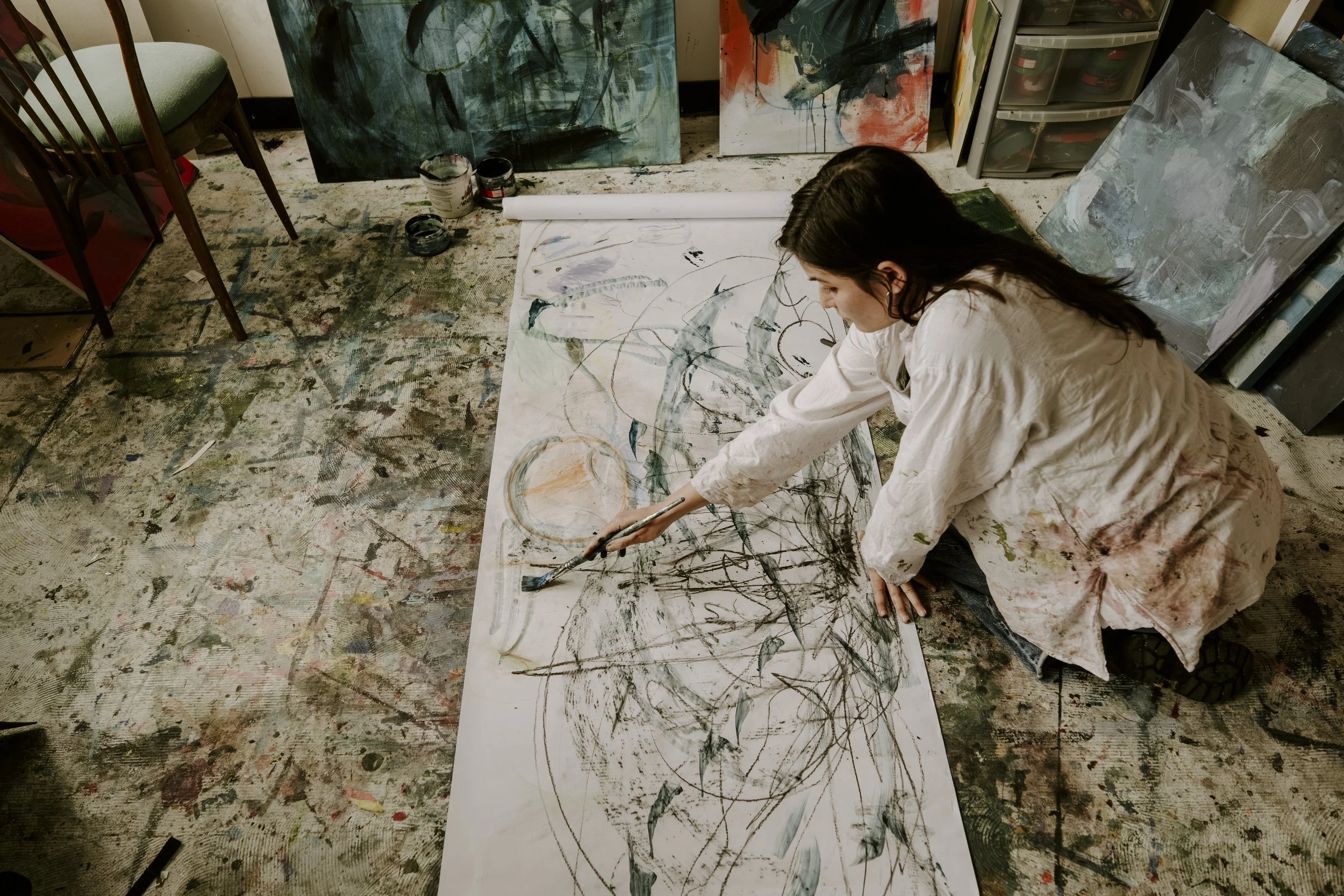
She laughs mid-thought, paint moving across the canvas. “I like the freedom. The imperfection. I used to be a perfectionist. Painting cured that.”
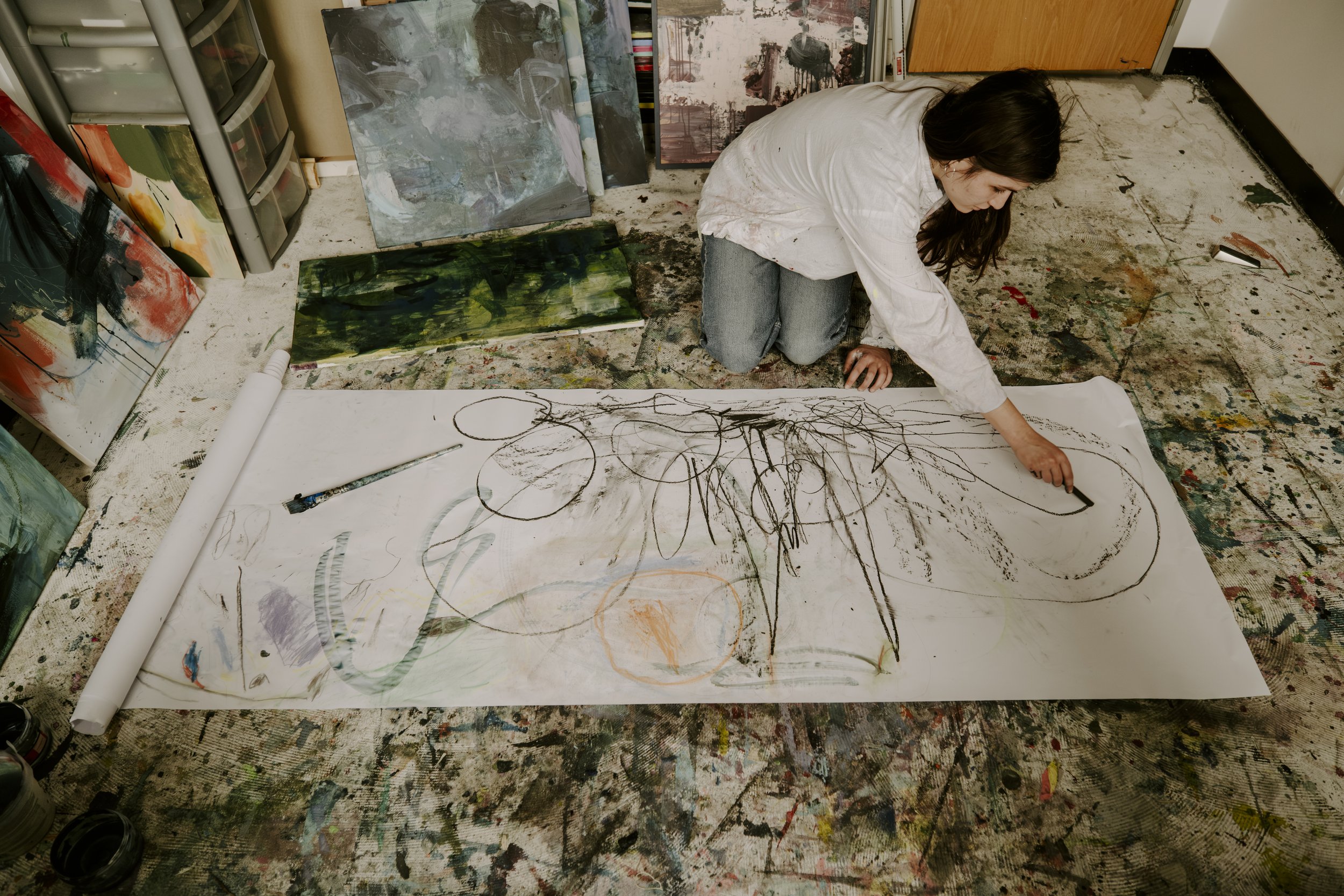
There’s no fixed routine. She paints in bursts – a few hours at a time. “If I stay too long, I overwork it. You have to know when to stop.”
Her background in lighting design shaped how she see colour and light. It’s not just visual – it’s psychological and physiological.
“Different cultures respond differently to light. In Asia, cool light feels fresh; in Northern Europe, we crave warmth. That understanding seeps into the paintings. The balance between warm and cool, light and dark – it’s instinctive.”
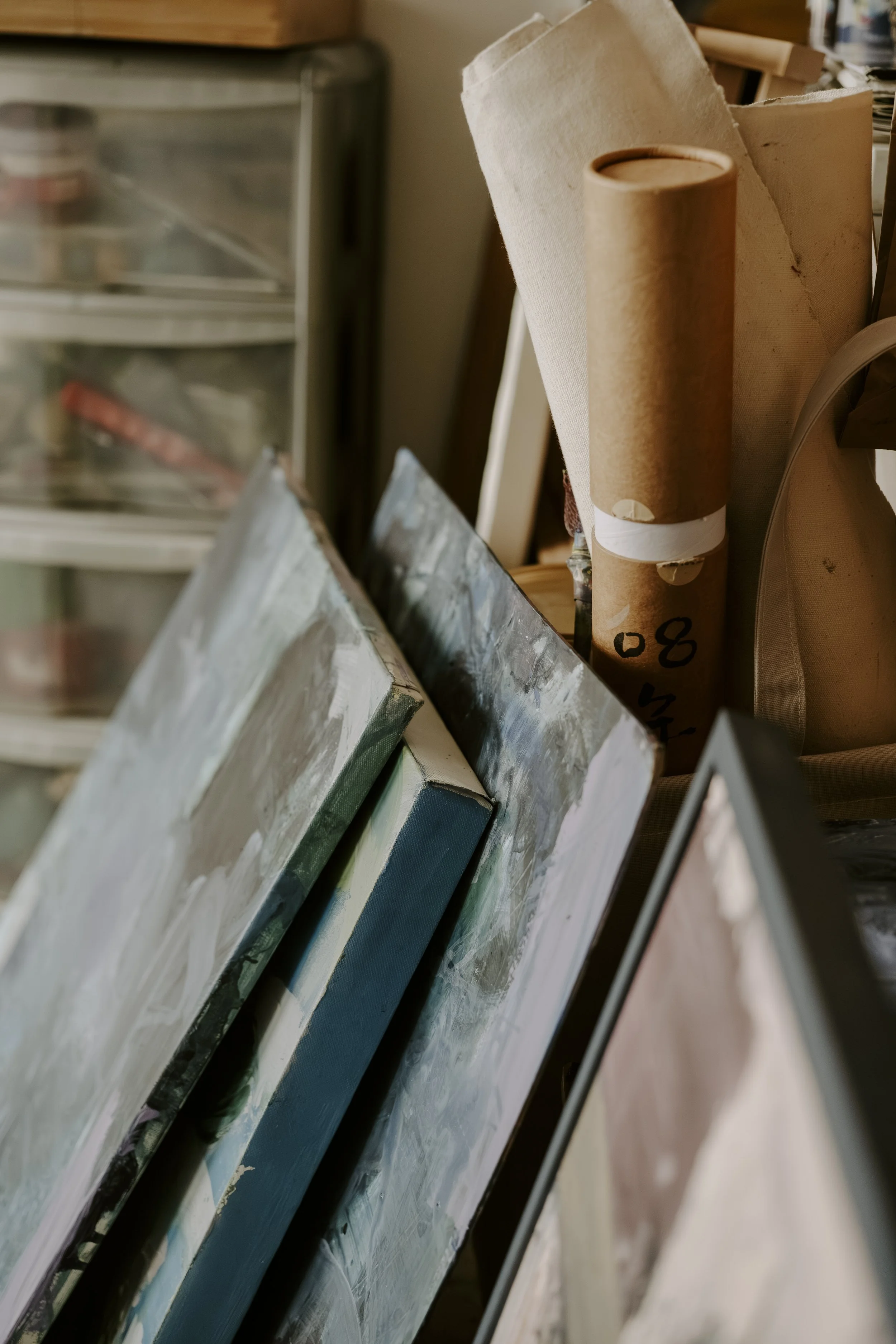
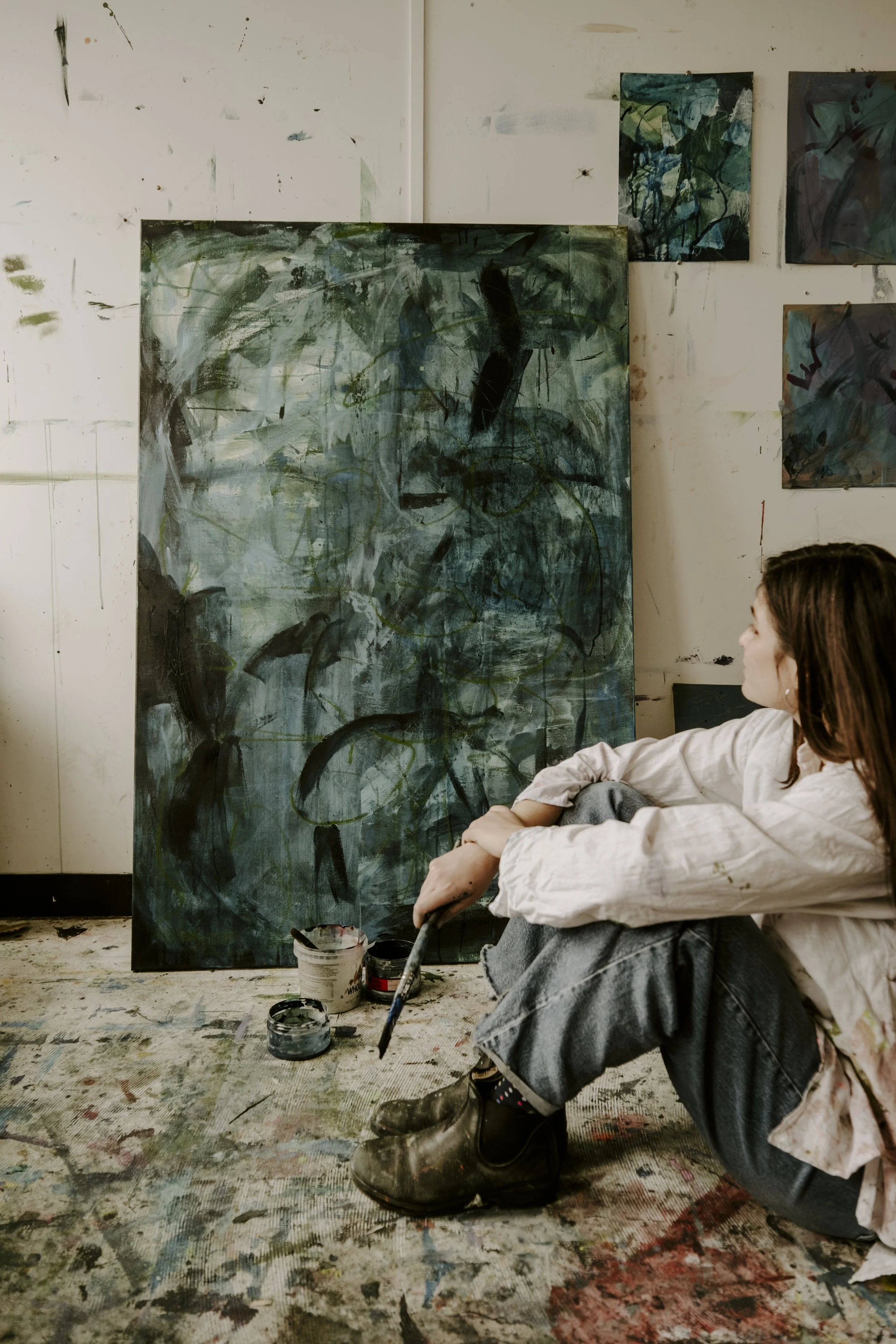
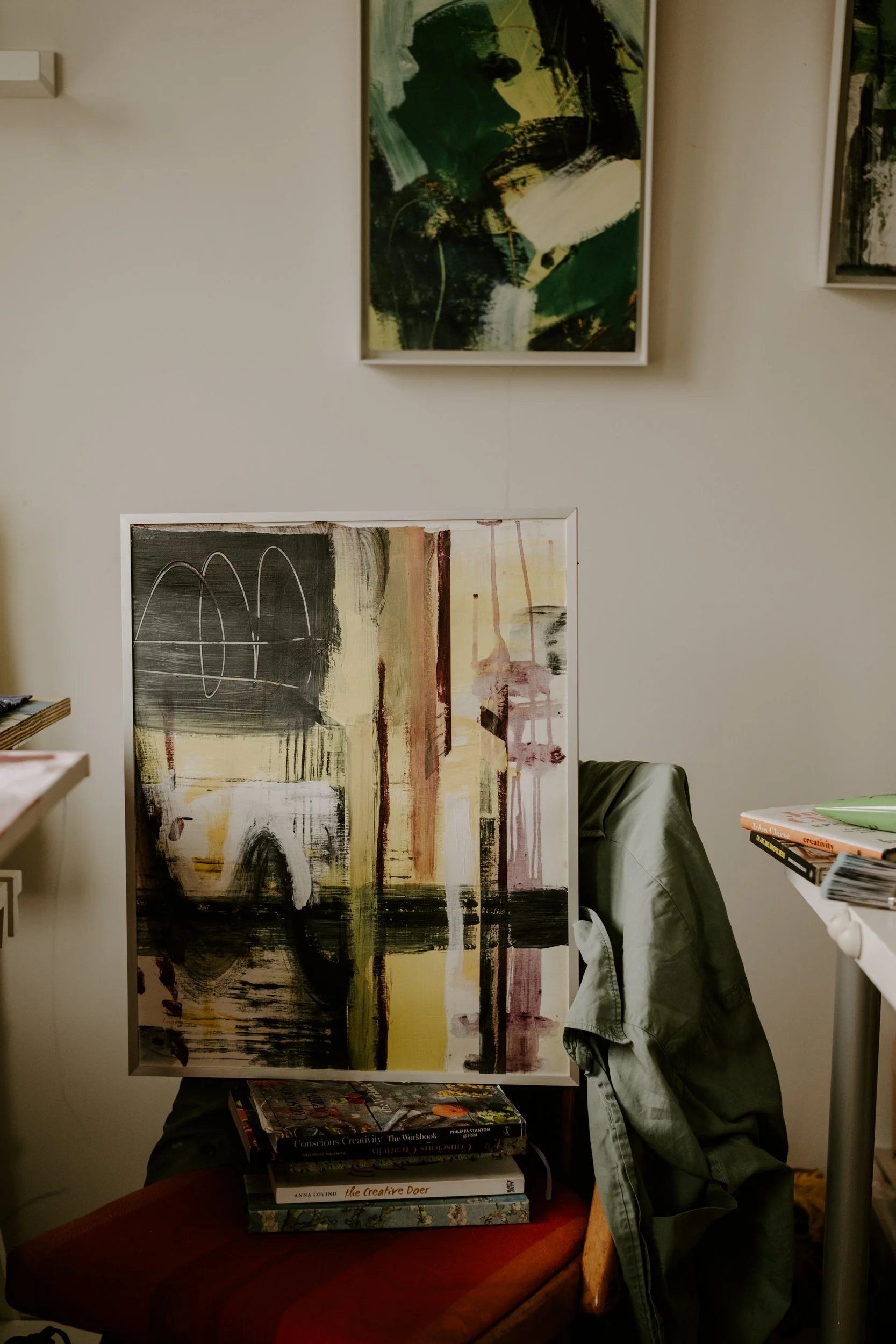
She gestures to a canvas tucked away against the wall – muted, textured, soft. La Brina. ‘The frost’ in Italian. Painted in January. Cool colours across the canvas. Everything feels still.
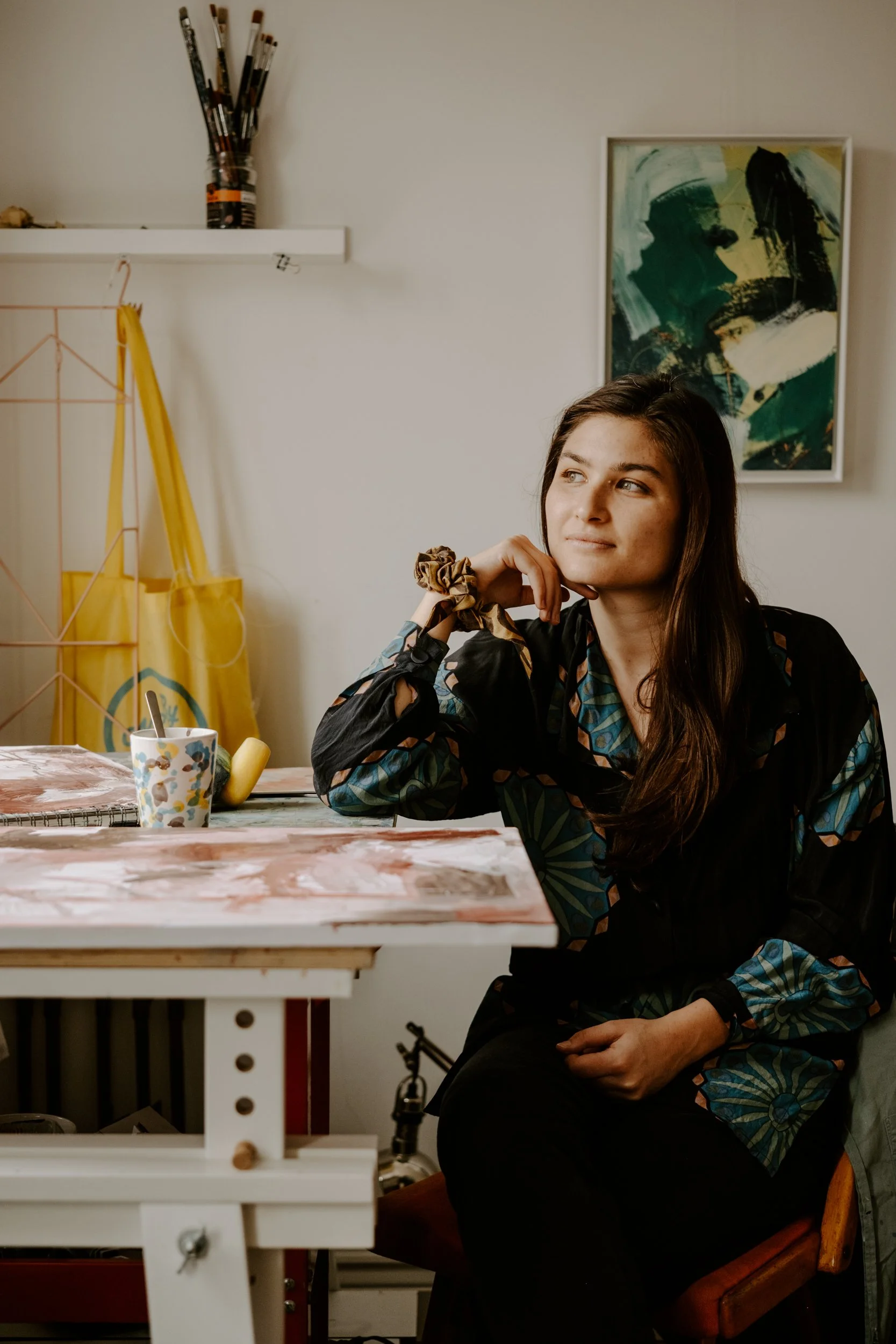
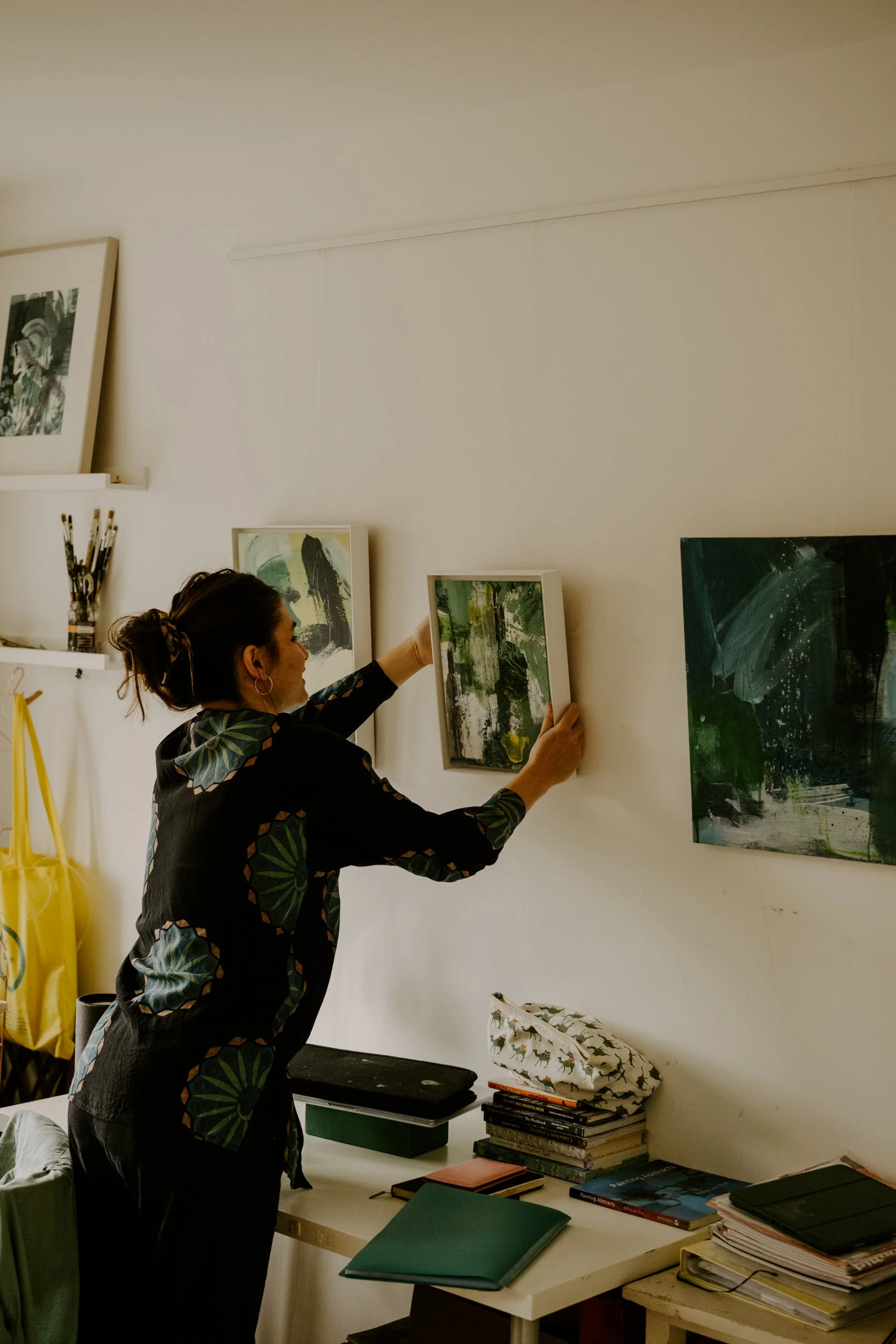
When a piece feels done, she shares it online. Sometimes someone buys it, sometimes not. “You can’t predict it. People connect more when they see it in person — the texture, the light.” Sometimes she opens her studio and invites people in. “There’s no pressure, just come and look.”
A small artist community has grown around her, the Crouch End Open Studios, local collaborations, friends who paint, sculpt, design. “Art needs to be shared. It lives when people see it. Community is part of being an artist.”
“Sometimes people write after seeing my art. Sometimes I don’t know them. Lovely, really. Something I made, reaching someone I’ve never met.”
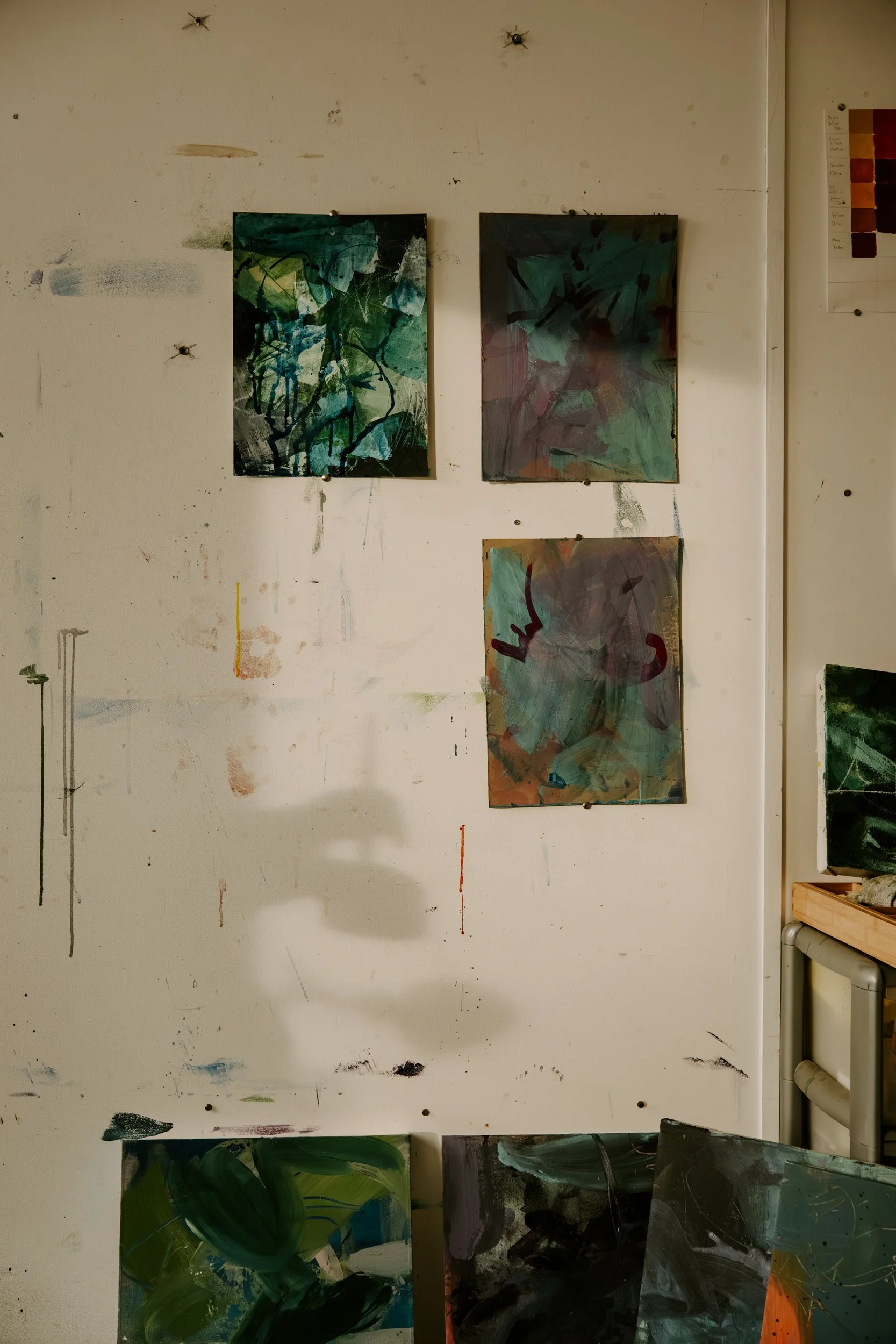
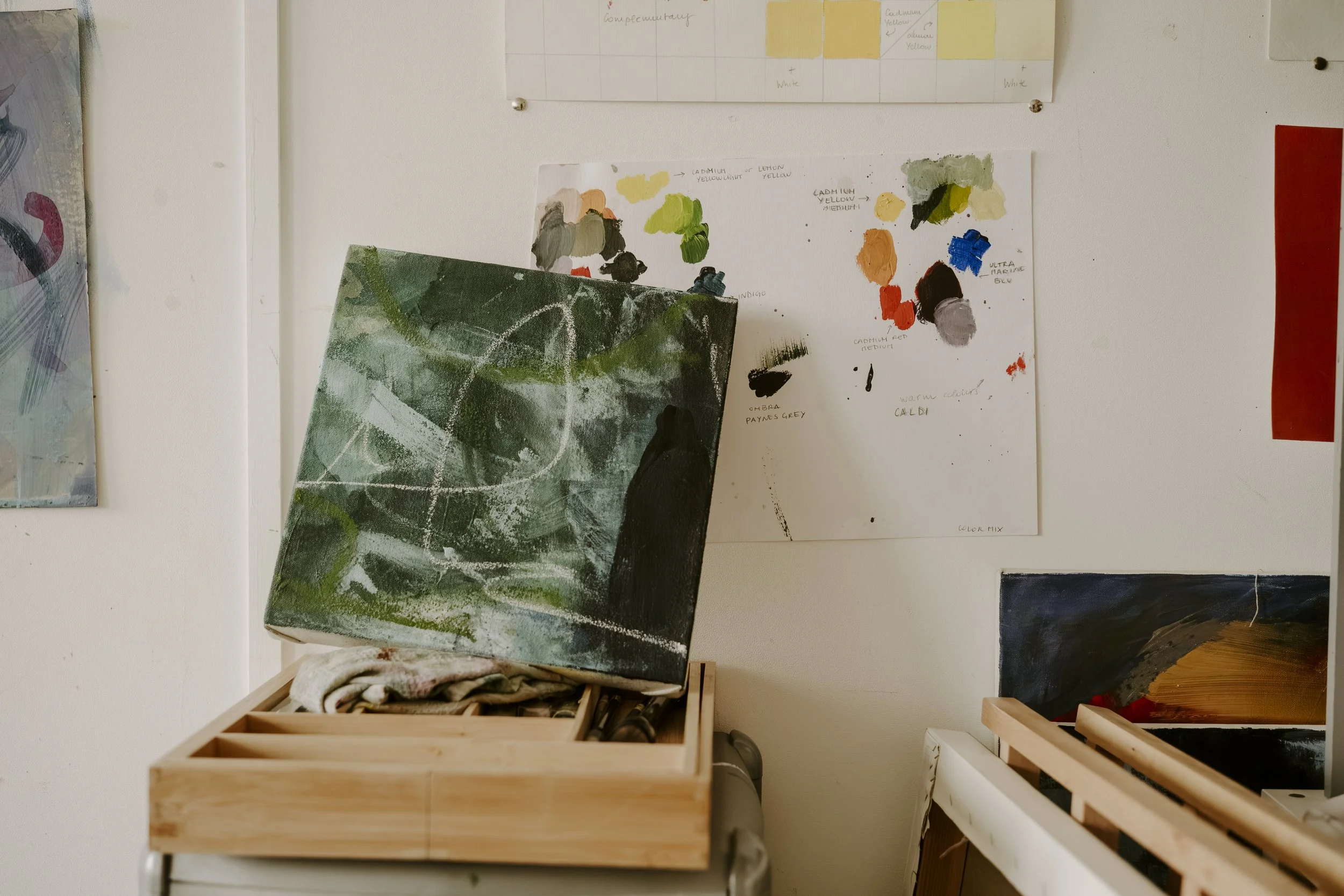
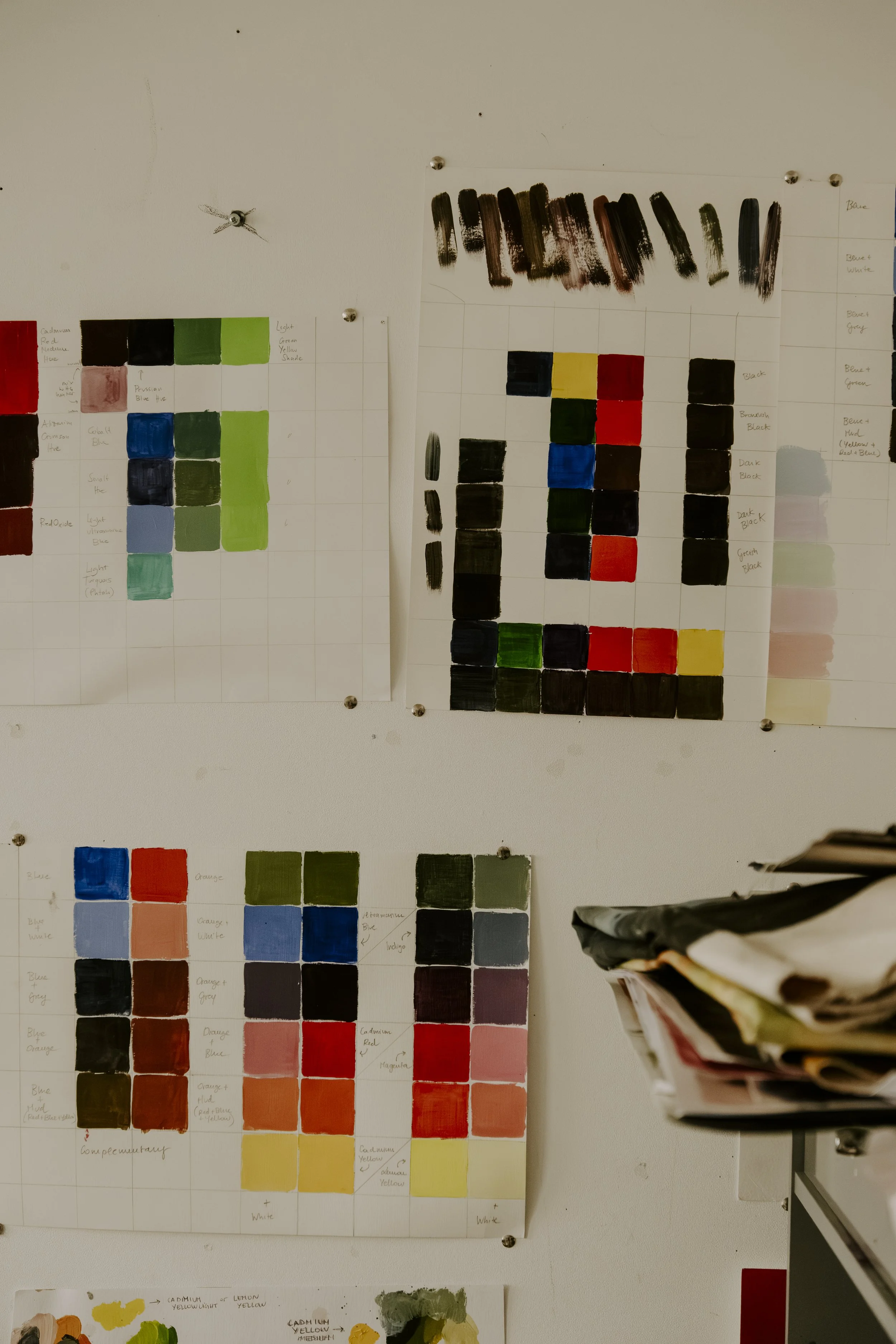
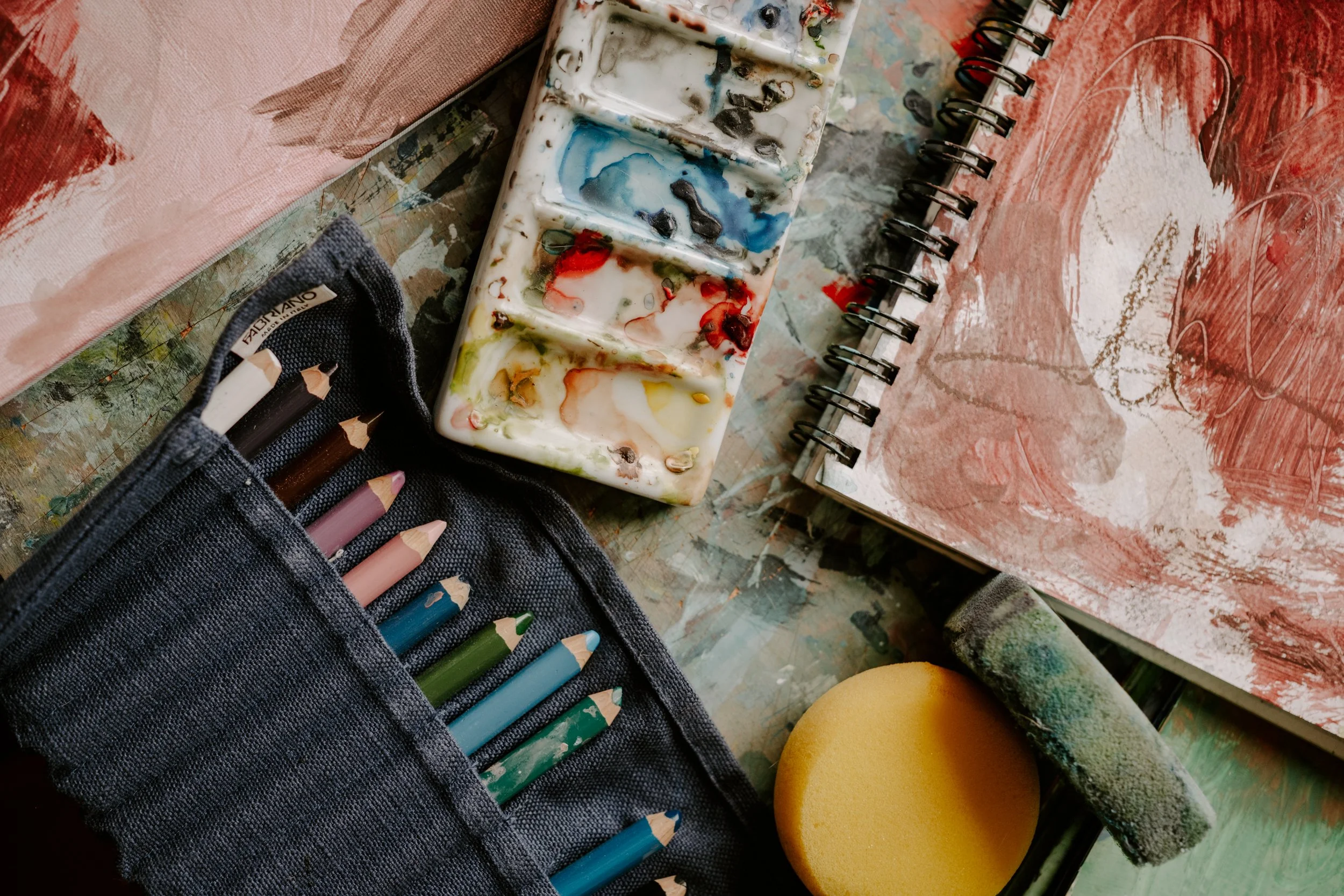
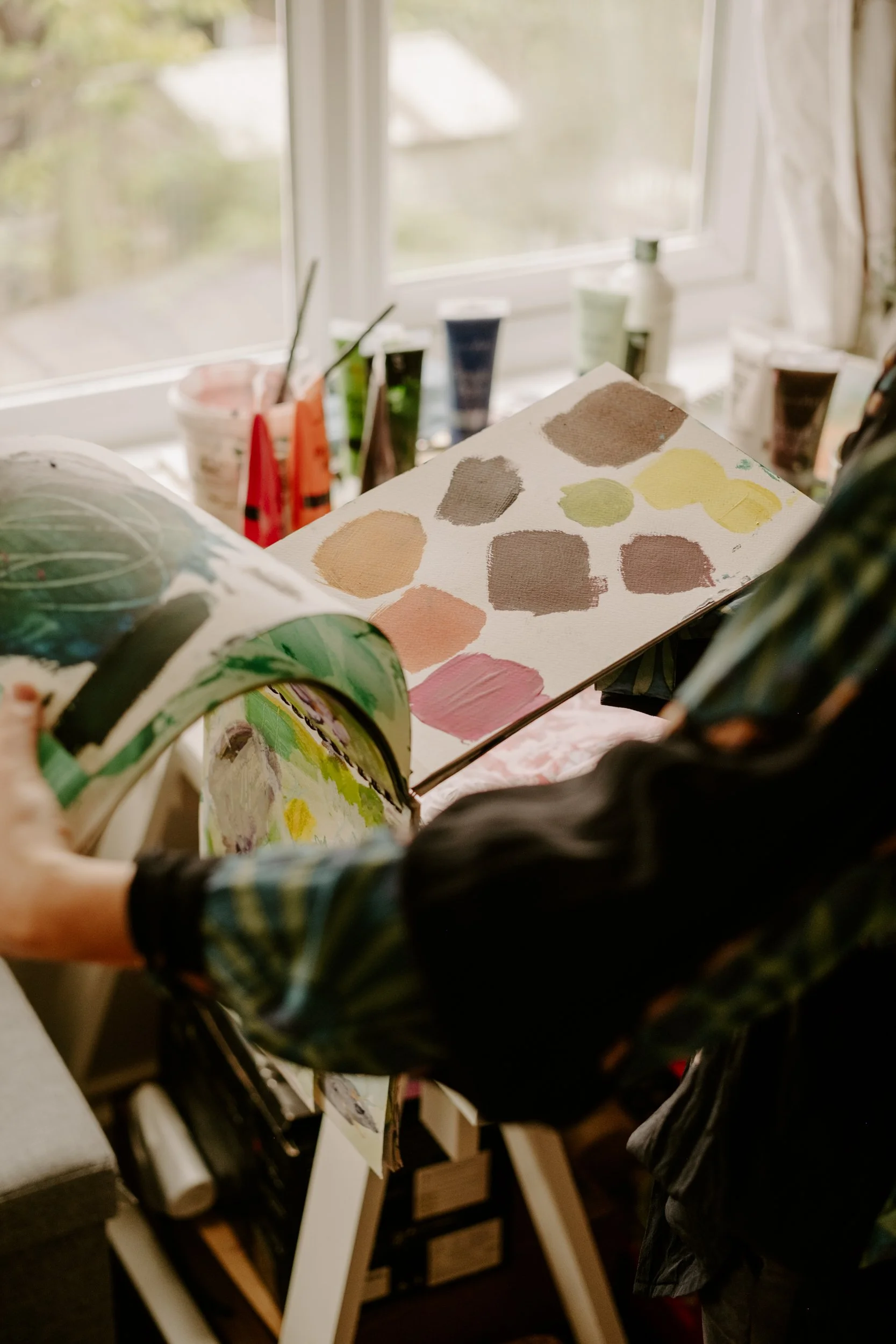
She opens her sketchbook full of colour swatches - ochre, sienna, raw umber.
“Get a sketchbook, that is what I tell everyone. Seriously, get a sketchbook. You need somewhere to feel free, where there’s no pressure for it to be finished art. Just play. Explore.”
“The other day, I was mixing colours – burnt sienna, a touch of ochre - and I absolutely loved it. That tone just felt alive. My favourite.”
“It’s funny though, it ended up all over my face! I dropped the paint and thought, well, I can’t waste it, so I just started painting in my sketchbook, no plan.”
A reminder of home? The soil, the light?
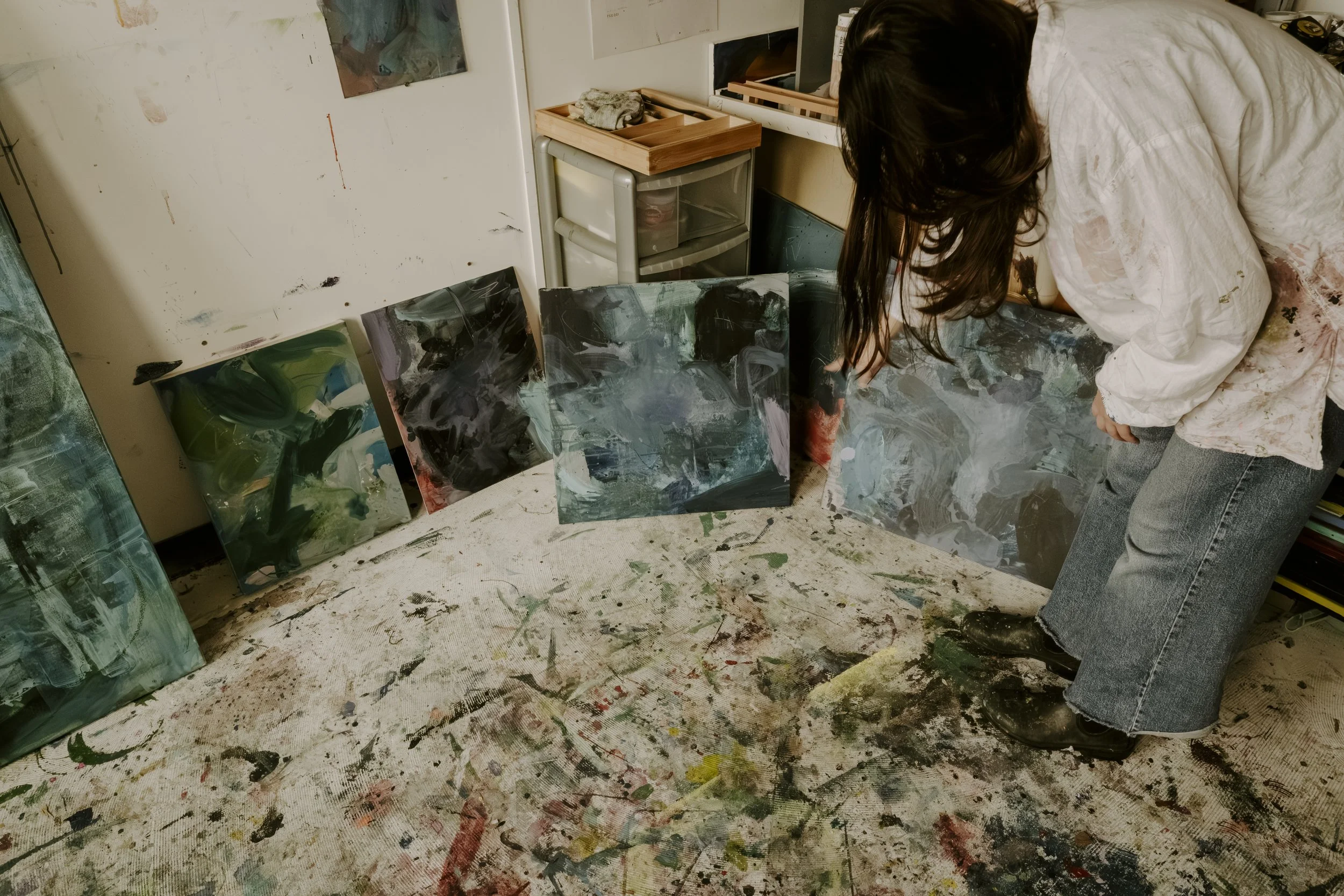
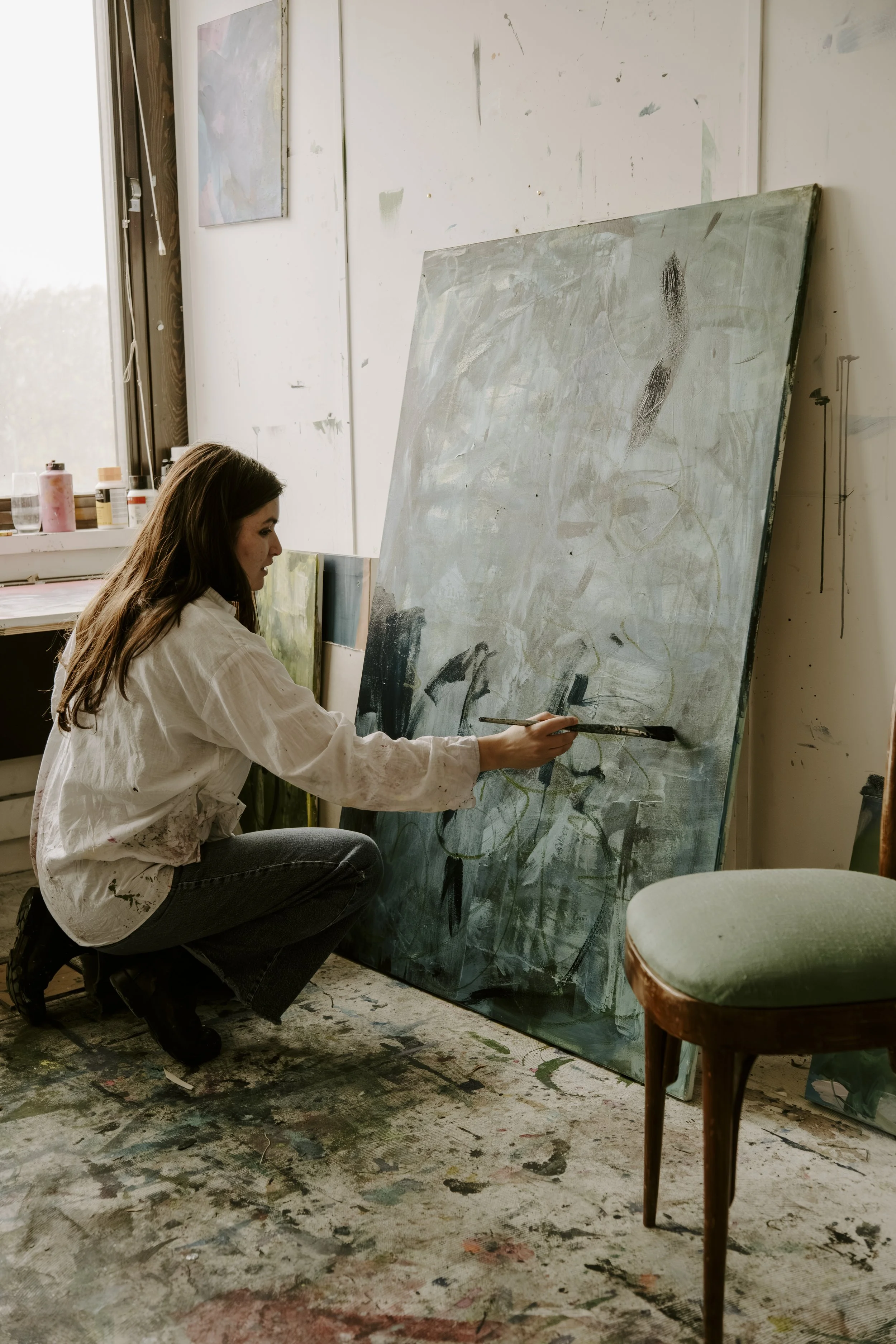
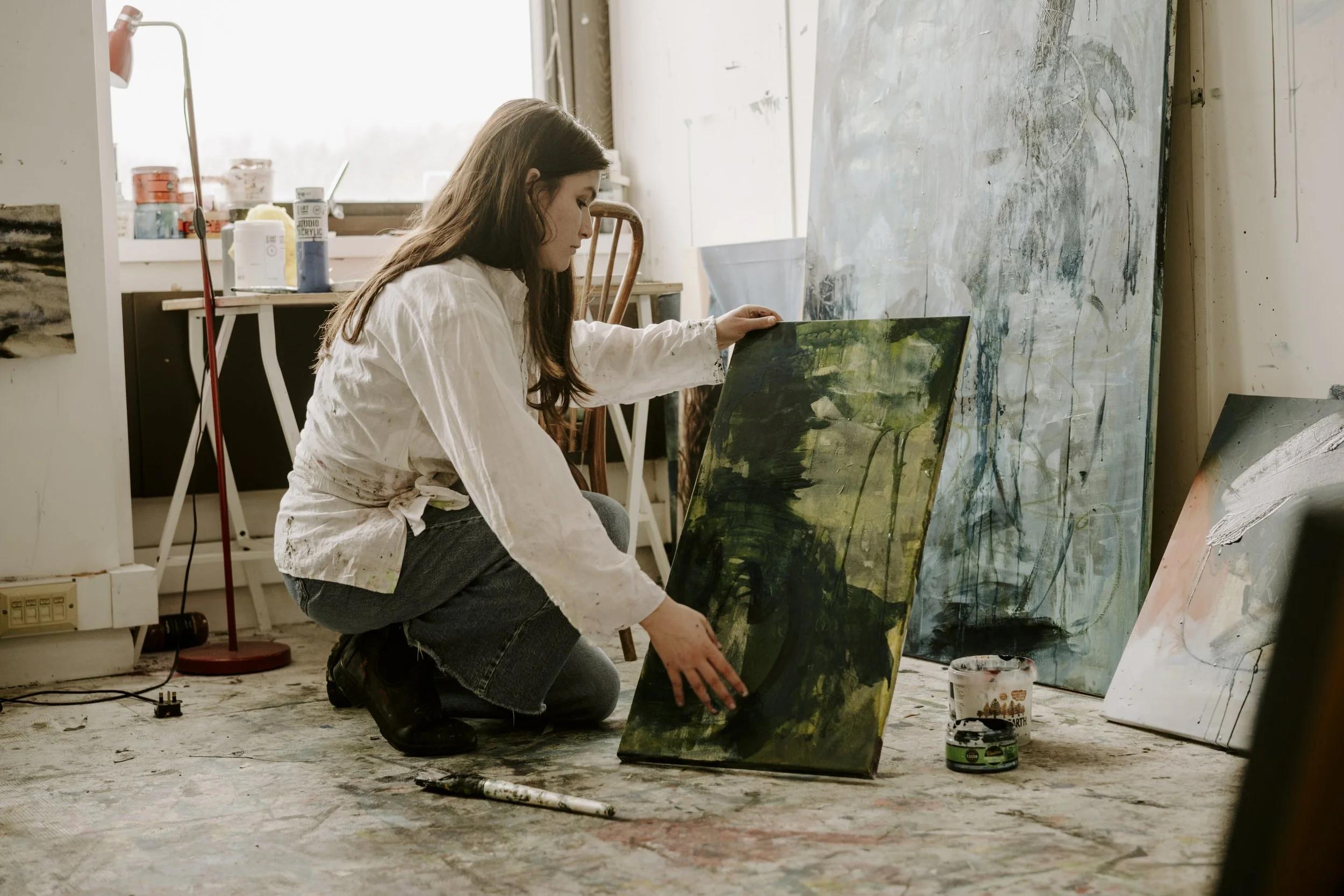
A large canvas leans quietly in the corner, clearly mid-story, waiting for whatever comes next.
She laughs when I ask if she’s painted something like this before. "No, never. I’m only doing it now because we have this show in January. It’s with my studio mate and another artist downstairs.”
"Three women, all abstract painters. We’re calling it The Rule of Three – three voices, three approaches, all coming together."
“My big canvas. It’s been sitting in my garden shed. I kept saying I wanted to paint bigger, but it never happened. And now my tutor – she’s a proper abstract painter, way more experienced than me – said we each need a large piece for the show. I didn’t have one ready to go. So… here we are.”
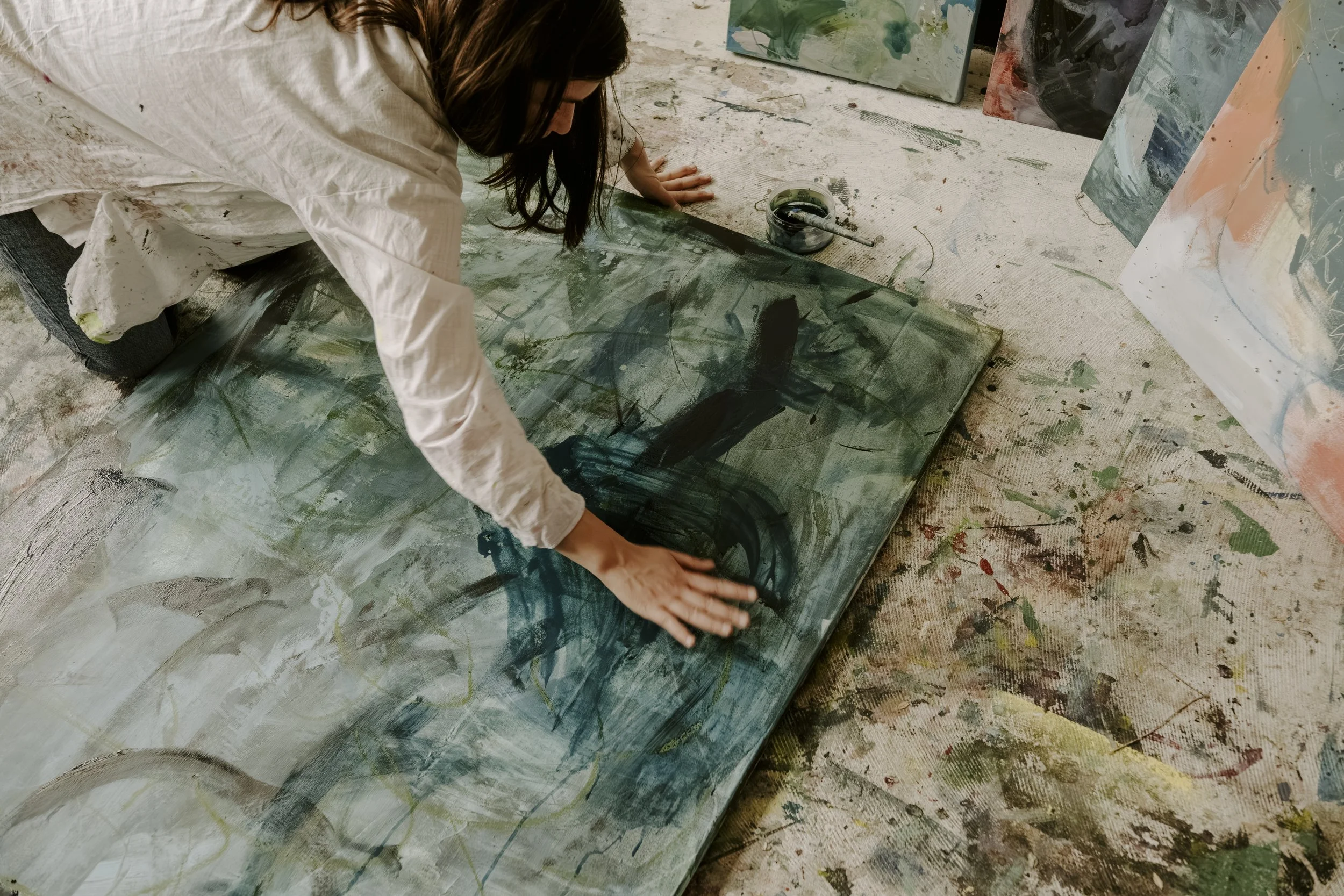
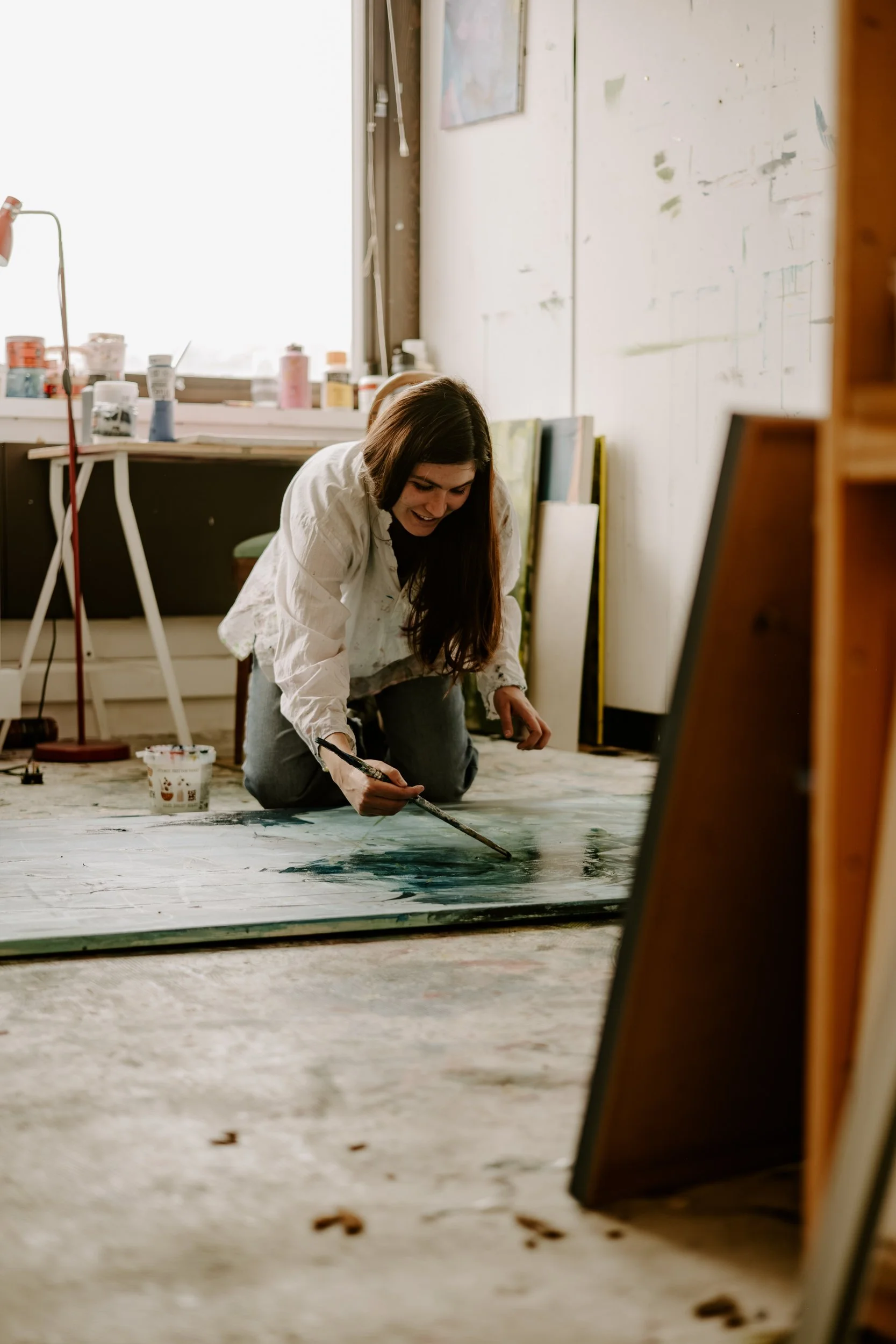
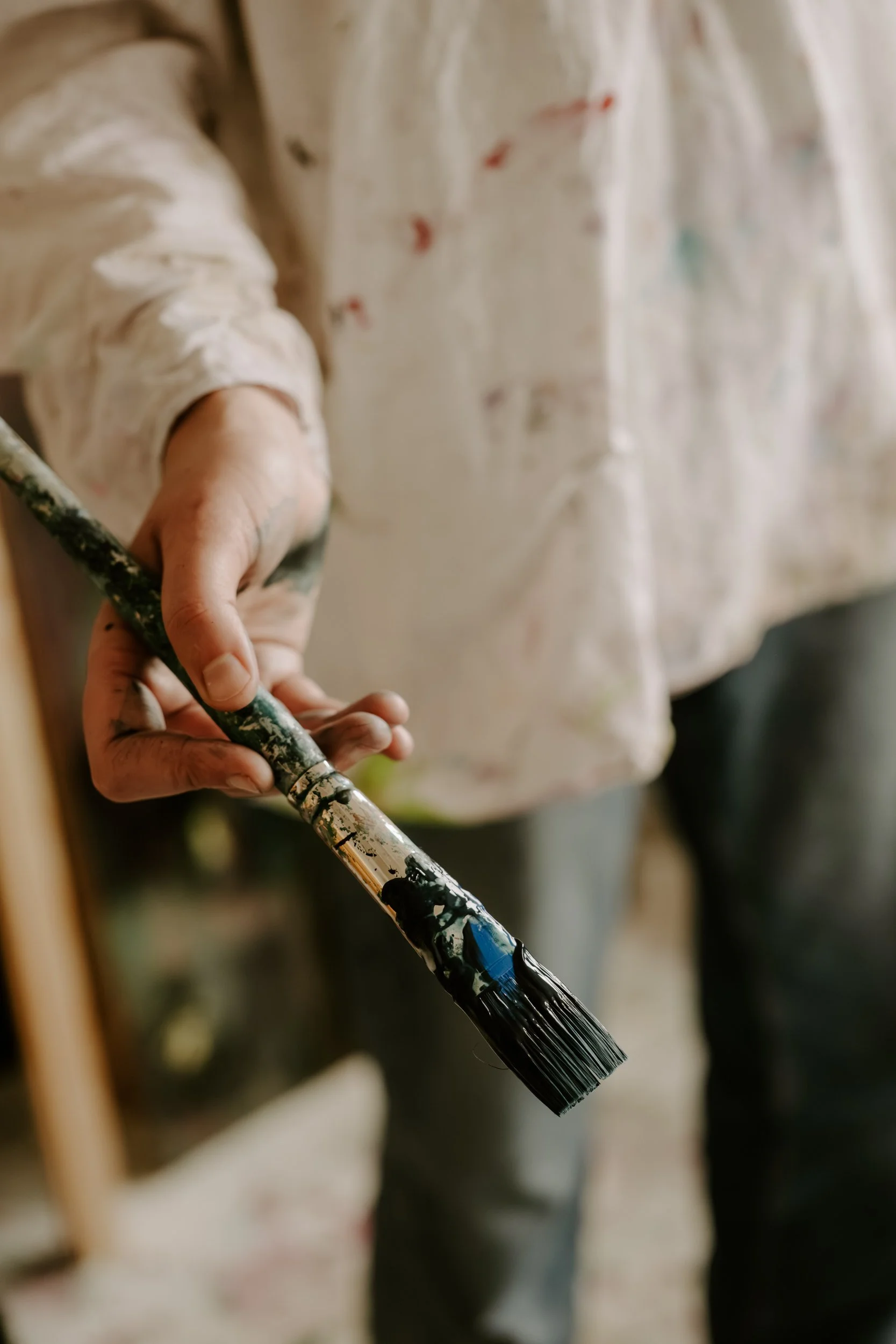
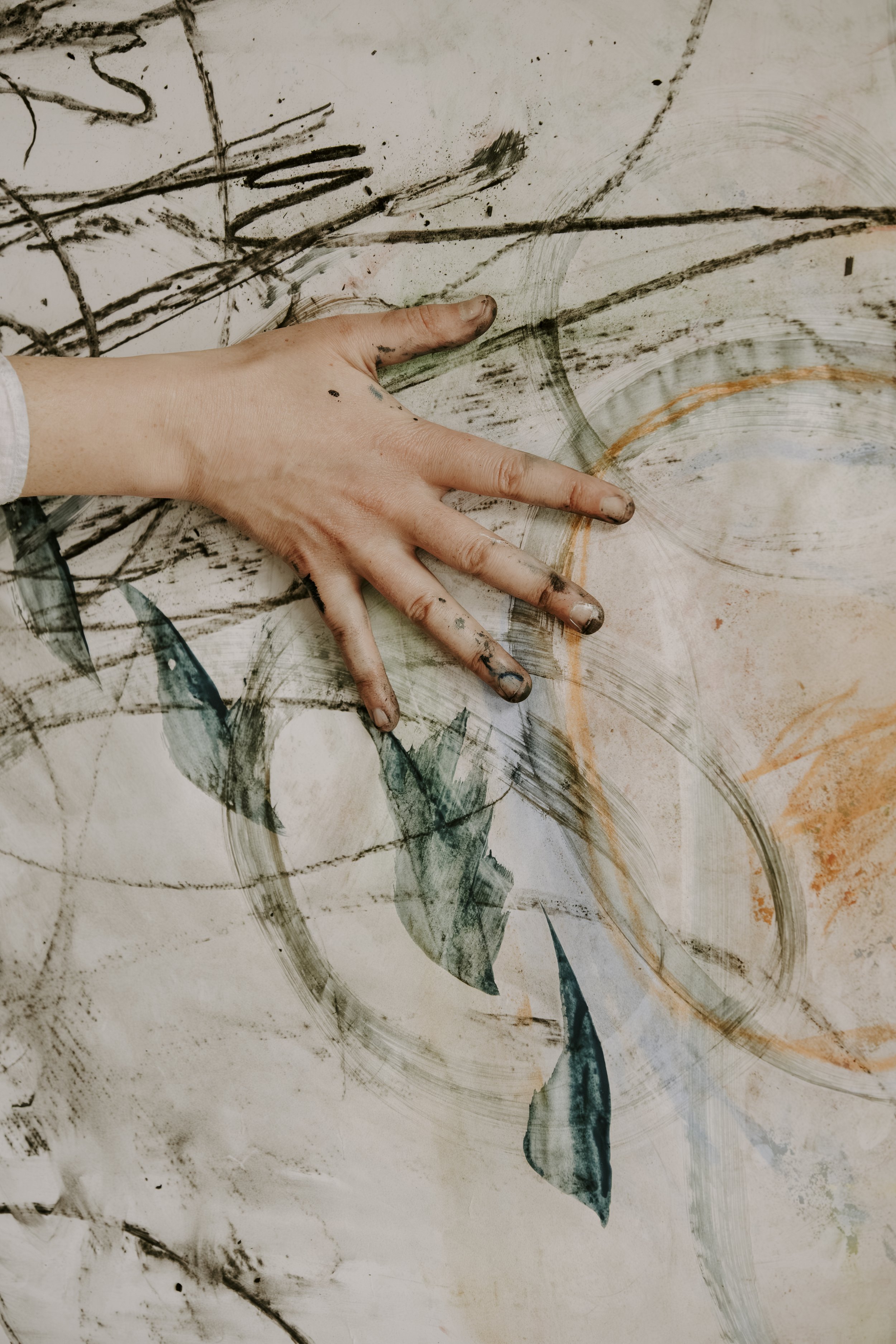
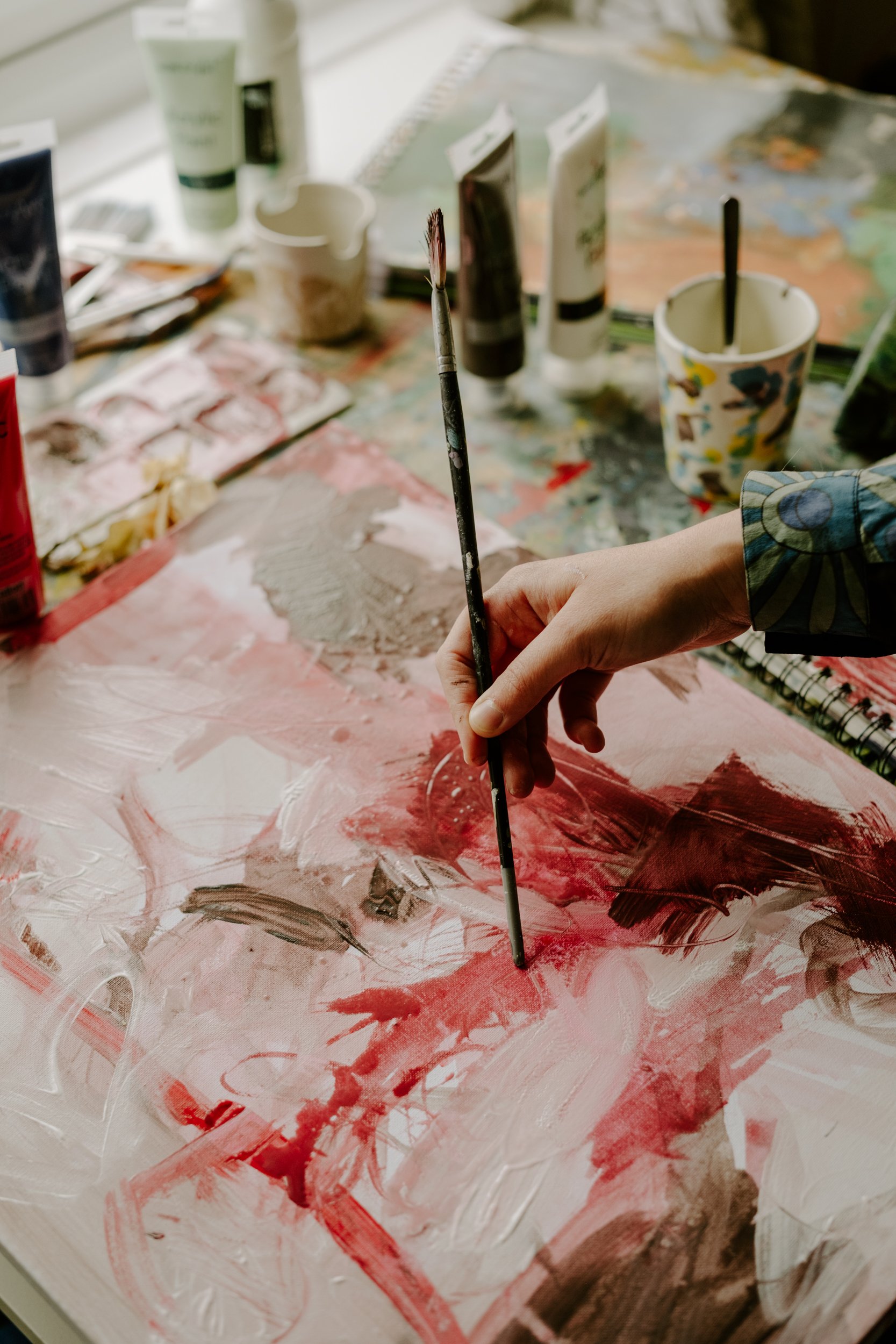
She runs her hand across the surface. “The process is the same as the smaller ones, just harder. A brush isn’t enough at this scale. So I’ve been using cardboard, even my hands, moving the paint around. I started with turmeric water and white paint — that soft layer underneath – then built it up with blues and greens. Safe colours.”
She smiles. “Lately I’ve been pushing myself. Adding pinks. Trying new palettes. Pure abstract now. I come here and just want to throw paint, let go. Before, I needed references, shapes, structure. Now I’m slashing, freeing it up.”
She pauses, looking at the canvas again. "I like this direction. But I need to find what’s happening here”, gesturing to a darker patch. "Maybe lighten it. Bigger scale is tricky. You can work in sections – each one the size of a smaller painting – but they still have to speak to each other."
“I guess as I grow, I care less about making something pretty. I want to make something that moves. Not everyone will get it. That’s fine."
To see more of Beatrice’s work, check out her website at www.beatricenespega.com